
- Buy Crypto
- Markets
- Futures
- Spot
- Copy Trade
 Earn
Earn- More
IOSG Investment Insider: In 2026, How Should We Bet on Mainstream Assets?

Original Title: "IOSG's Ninth Year: The Restructuring of the 2026 Crypto Market and Structural Opportunities"
Original Source: IOSG Ventures
Mainstream Assets
1. Bitcoin
A year ago, we outlined two starkly different development paths for Bitcoin: the "Optimistic Outlook" argued that institutional adoption and government interest would drive the asset forward, while the "Pessimistic Outlook" believed that a failure to reach these milestones would spark bearish sentiment and potential crisis scenarios.
As we enter 2026, the actual developments fall between these two extremes but closer to the lower end of expectations.
Bitcoin on Pause: What Happened in 2025
· Government Action (Partial Success): The U.S. government took a more passive stance than anticipated. While generally supportive of the crypto industry, the government made it clear that it would not use taxpayer money to purchase Bitcoin, relying instead on seized BTC to build reserves. Trump's re-election brought crypto-friendly rhetoric and regulatory optimism, but actual government purchases seemed wishful thinking. The commitment to "innovative ways" to increase reserves has not yet translated into concrete action.
· Central Banks and Sovereign Wealth Funds (Mixed Results): The major central banks of the top 20 economies mostly maintained a wait-and-see approach, with few exceptions. However, sovereign wealth funds began establishing Bitcoin exposure, although the scale of these purchases remains hard to assess.
· Institutional Adoption (Mixed Results): MicroStrategy continued its aggressive accumulation strategy for most of 2025, positively impacting prices. However, the market narrative underwent a dramatic shift. MicroStrategy openly stated a willingness to sell BTC in certain situations, transitioning from pure accumulation to a more "BTC credit-like instrument" operating mode. Former tailwinds now appear to be turning into potential headwinds and burdens. In contrast, Bitcoin ETFs performed exceptionally well, seeing continuous net inflows throughout 2025, indicating strong demand from traditional financial institutions and retail investors for regulated Bitcoin exposure, becoming one of the most reliable sources of demand during the year.
Bitcoin 2026 Outlook: Macro Dependency and Depleted Catalysts
Diminishing Returns of Unique Catalysts
This cycle has relied on a series of powerful Bitcoin-specific catalysts: the SVB bankruptcy and USDC untethering crisis, the year-long anticipation of ETF in 2023, MicroStrategy's continued buying, the launch of spot ETF early in 2024, and Trump's election victory. Each has provided a unique, Bitcoin-focused buying pressure.
Looking to 2026, Bitcoin-specific positive catalysts seem scarce. Governments around the world have signaled they are unlikely to become significant buyers in the near term. Central banks are not going to swiftly change their risk assessment of BTC. MicroStrategy has exhausted its ability to make large-scale incremental purchases and has turned its focus to potential sales. While ETFs have been successful, they have gone through their early adoption wave.
For Bitcoin to thrive in 2026, it will almost entirely depend on macro factors. The priority is clear:
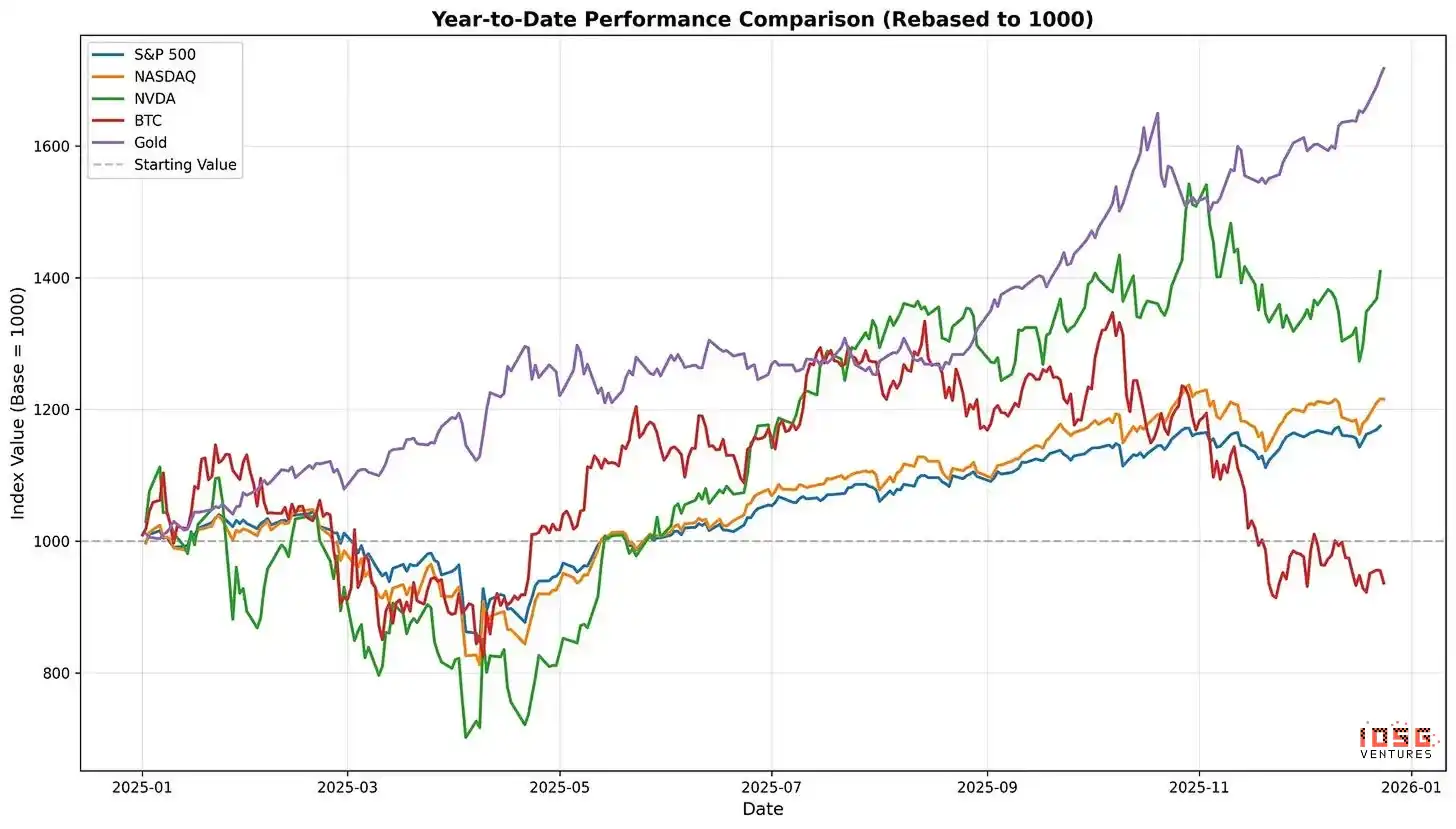
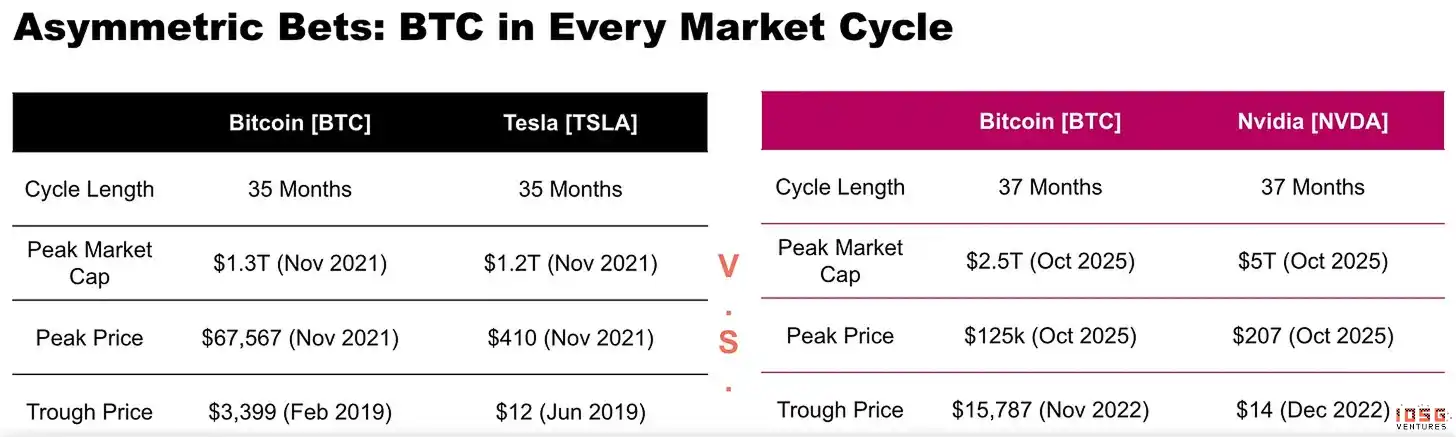
AI stocks and risk appetite; Bitcoin is increasingly following the fate of the hottest asset in each cycle. In the last cycle, it tracked Tesla's bottom and peak almost simultaneously. This cycle, we have seen a similar pattern with NVIDIA. Bitcoin's performance has become deeply correlated with high-beta tech stocks and AI enthusiasm.
Fed Policy and Liquidity: Whether the Fed continues its dovish policy and balance sheet expansion is crucial for the broader liquidity environment. Historically, liquidity conditions may be the most critical factor for Bitcoin price action. With the Fed cutting rates three times in 2025, the direction of monetary policy in 2026 will significantly impact Bitcoin's ability to sustain buying pressure.
Emerging Risks in 2026: While positive unique catalysts seem scarce, the potential for negative BTC-specific catalysts is more pronounced:
Pressure from Strategy (formerly known as MicroStrategy): The factors driving Bitcoin higher this cycle could become a burden in 2026. Strategy's shift from "hodl forever" to "willing to sell under certain circumstances" represents a fundamental change. The "circumstances" outlined refer to when their mNAV falls below 1 and they need to sell BTC to meet obligations to creditors. Concerningly, when you zoom out, Strategy's pattern starts to resemble a Ponzi scheme; however, we believe these risks are not likely to materialize in the near term as Strategy has built up cash reserves using the ample liquidity of their stock to cover obligations related to dividends over the next three years.
Four-Year Cycle Theory Paradox: According to the cycle theory, we may already be in a phase that can be defined as a Bitcoin bear market. The cycle theory assumes that the Bitcoin market rotates in four-year cycles, with each cycle's peak usually occurring in the fourth quarter. Following this pattern, the fourth quarter of 2025 should be the price peak — in fact, Bitcoin reached around $125,000 during this period, which may mark the cycle top. However, the validity of this cycle theory is increasingly being questioned. We believe that the cycle theory is somewhat coincidental, mainly overlapping with broader macro cycles rather than representing an intrinsic law of Bitcoin.
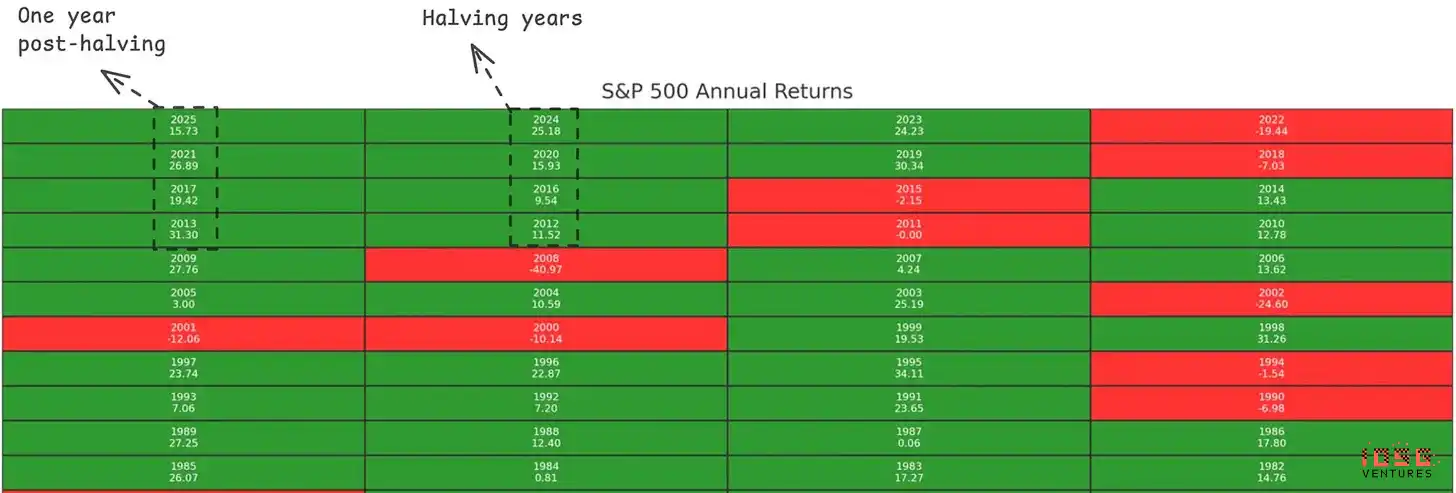
Aside from AI bubble concerns and a more risk-averse attitude, the main reason for BTC's poor performance in the fourth quarter of 2025 was the continuous selling pressure caused by long-term holders believing and acting on the cycle theory as they rebalanced their positions.
Risk of Self-Fulfilling Prophecy: The cycle theory has created a dangerous feedback loop:
· Long-term holders expect a peak in the fourth quarter and accordingly sell
· This selling pressure suppresses the price at what should be the strongest period
· The resulting underperformance "confirms" the cycle theory
· More holders adopt this framework, amplifying future selling pressure

Breaking the Cycle: If the macro environment remains robust, Bitcoin may eventually break free from these cyclical constraints and reprice upward once again. The initial break of the cycle could actually serve as a positive catalyst not yet factored into the market.
Technical Risks Enter the Discussion: Bitcoin faces two long-term challenges: quantum computing vulnerabilities and questions about its economic and security model. While the latter remains somewhat arcane in mainstream discussions, quantum risk is increasingly entering public consciousness. More credible voices are expressing concerns about Bitcoin's quantum resistance, which could undermine its narrative of being a "secure, immutable store of value." However, the BTC community is more willing to engage in this discussion early on to have time to explore potential solutions.
2026 Bitcoin Judgment: By the time Bitcoin enters 2026, it will not be in a uniquely advantageous position being primarily driven by a crypto-specific narrative but will rather perform as an asset sensitive to macro conditions, reflecting its performance to a large extent within the broader risk market:
Catalyst Depletion: Bitcoin-specific positive catalysts have been largely depleted or realized (government stance determined, MicroStrategy capacity reached limit, early wave of ETF adoption completed)
Emerging Pressures: MicroStrategy-related concerns, cycle theory, quantum risk entering public discourse as a notable concern within the mainstream community that could lead to repricing, considering that the market may have overpriced these risks, and the risks are unlikely to materialize in the next 12 months: With Strategy securing cash reserves to pay creditors for the next 3 years, key issues for Strategy in 2026 are unlikely; under the assumption of a macro-cycle continuation, cycle theorists have been proven wrong—it's just a matter of time; the likelihood of quantum risk impacting mainstream BTC cognition is also low in 2026
Macro Dependency: Performance will track AI stocks (especially NVIDIA) and Fed policy decisions
2. Ethereum
Optimistic Outlook—Partial Realization
Reflecting on our 2025 outlook, several potential advantages for Ethereum have begun to materialize, albeit not fully unleashed:
Institutional Feasibility (Explicit Success): This argument has been proven correct. Ethereum's stablecoin dominance (adding $450-500 billion in circulation since the GENIUS Act) indicates that institutions opting for blockchain infrastructure consistently choose Ethereum as the most trustworthy asset ledger. This is also reflected in institutional buy-side, where ETHDATs are able to raise significant funds through major players like Bitmine.
Developer Ecosystem and Diversified Leadership (Explicit Success): Base, Arbitrum, and other L2s will drive adoption as predicted. Base, in particular, has become a key growth driver in the crypto consumer space, while Arbitrum has made significant strides in institutional work, bringing Robinhood into the broader Ethereum ecosystem.
ETH as the Sole Alternative to BTC (Timing Miscalculation): The two core long-term unique risks BTC faces—quantum vulnerability and security economics—are better positioned in ETH's more future-facing space. ETH remains the only asset capable of being a substitute for BTC's value storage use case. However, the price performance of ETH/BTC is unlikely to benefit from this positioning until these concerns receive more validation in mainstream BTC discussions.
Single Entity Risk Resistance (Explicit Success): The lack of a MicroStrategy equivalent entity has proven to be a significant advantage as MicroStrategy has shifted from being a Bitcoin accumulation catalyst to a potential liability. While most DATs may be short-lived, those holding a significant amount of ETH have a more robust ownership structure compared to Strategy, with fewer attached conditions.
Gloomy Outlook — Fundamental Avoided
The negative scenarios outlined for Ethereum have not materialized as severely as anticipated:
Leadership Void (Resolved): Historically, there hasn't been a strong enough figure to champion Ethereum's position in the broader crypto space. Vitalik's focus has been spread across many topics, not being the type of opportunistic CEO-like leader fixated on price performance. Ethereum has lacked an advocate like Michael Saylor until recently, which was a core reason for the price dropping below $1,500 earlier this year. Subsequently, Tom Lee has largely filled this gap, becoming a primary ETH evangelist and advocate. He fits the bill: outstanding sales skills, a lofty position in the financial world, and alignment with ETH price appreciation.
Cultural Challenge ("Awoken" vs "Pragmatic") (Being Improved): Last year, we wrote: "In contrast, Ethereum's culture is generally seen as more 'awoken' compared to other ecosystems, emphasizing inclusivity, political correctness, and community-driven ethical discourse. While these values can foster collaboration and diversity, they sometimes lead to indirect communication, moralizing, and hesitation to make bold, decisive decisions." Fortunately, the Ethereum Foundation has seen a shift towards a new leadership more focused on performance, capable of tightening the organization for increased efficiency and impact. Subjectively, the atmosphere in the broader community also seems to be transforming to better adapt to the current landscape.
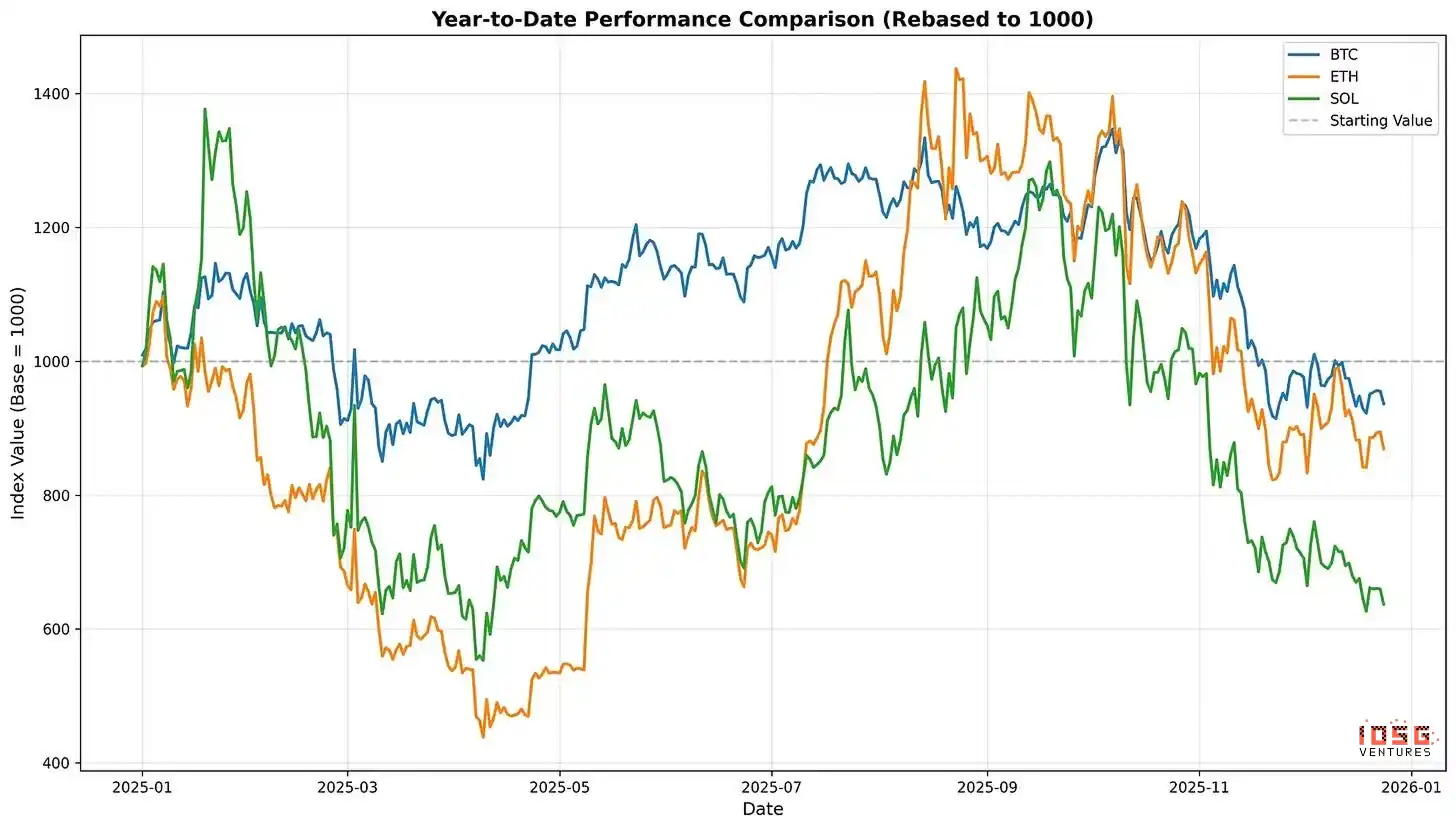
Ethereum 2026 Outlook: Unique Drivers as ETH/BTC Bull Case. Ethereum shares macro risk characteristics with Bitcoin — sensitivity to AI stocks, fiscal policy, and Fed liquidity conditions. However, in terms of unique factors, Ethereum's positioning in 2026 is notably superior to Bitcoin.
Ethereum's Relative Advantages Over Bitcoin:
a. No Major Pressure: Ethereum does not face the same structural risks as Bitcoin. Most importantly, it lacks a leverage entity equivalent to MicroStrategy, whose potential selling could disrupt market stability. While most DAT may be short-lived, entities holding a significant amount of ETH use less leverage than MicroStrategy.
b. ETH is the Sole Alternative to BTC: Our timing on this point was off last year, but if any of the previously discussed BTC unique risks materialize — including discussions around quantum vulnerabilities and economic/security risks — this should bode well for the ETH/BTC ratio.
Unique Catalyst: Stablecoins and DeFi Dominance Narrative. Perhaps most importantly, Ethereum has positive unique catalysts just beginning to play out. After years as one of the most hated assets in the crypto space — experiencing severe pressure and volatility from 2023-2025 — conditions are ripe for an Ethereum renaissance.
Undeniable Stablecoin Dominance: The data is clear: Ethereum dominates the stablecoin market. This is evident in several ways.
a. Asset Balances: Ethereum captures almost 60% of the stablecoin total market value, demonstrating clear network effects and market preference.
b. Flow Dynamics: Since the GENIUS Act announcement, Ethereum has absorbed $450-500 billion in new stablecoin issuance. This indicates that when there is new demand for stablecoins, it disproportionately flows to Ethereum.
Decade-Long Proof of Reliability:
Throughout the past 10 years, Ethereum has not experienced any major performance issues or downtime. This operational track record is irreplaceable and crucial for its positioning as the backbone of global liquidity infrastructure. When traditional finance contemplates blockchain integration, Ethereum's reliable management of historically billions of dollars in value provides unparalleled credibility.
DeFi as Ethereum's Moat:
Ethereum's DeFi ecosystem could be its most critical competitive advantage. Ethereum is the only blockchain capable of deploying hundreds of billions of dollars effectively through battle-tested smart contracts.
a. Time-Tested Security: Smart contracts like Aave, Morpho, and Uniswap have been operational for years, locking up billions of dollars in total value without experiencing major security vulnerabilities. Although they represent significant "honey pots" for hackers, these contracts have proven their resilience.
b. Depth of Liquidity, Composability, and Capital Efficiency: The ability to compose different DeFi protocols has created a network effect that competitors find challenging to replicate. Building complex financial products by combining existing primitives requires both technical infrastructure and deep liquidity. Prime examples include the composability of Ethena, Aave, and Pendle. This has made the Ethereum mainnet the epicenter of capital-intensive use cases.
Regulatory Clarity: Positive regulation surrounding the crypto industry should drive further integration between traditional finance and crypto. Macro timing, regulatory clarity, and institutional adoption synergy have positioned Ethereum as a primary beneficiary of traditional finance entering the crypto space. With a robust blockchain ledger and DeFi infrastructure capable of securely handling billions of dollars, Ethereum offers institutions a combination of security, liquidity, and regulatory visibility that competitors cannot match. After years of underperformance and skepticism, Ethereum may be on the brink of a sentiment reversal. Markets tend to reward assets that were once ‘left for dead’ once their fundamentals see significant improvement. Ethereum's infrastructure upgrades, stablecoin dominance, and institutional positioning may drive repricing in 2026.
Ethereum 2026 Risk: Asset Perceptual Battle. While Ethereum seems well-positioned fundamentally entering 2026, several risks could undermine its performance, with the most critical being the ongoing debate about what ETH represents as an asset.
Asset Classification Battle
Core Debate: Unlike Bitcoin, which has relatively clear consensus as a ‘digital gold’ monetary asset, Ethereum is still undergoing market perception discovery. This ambiguity has created a vulnerability that skeptics and conflicted interest groups actively exploit.
Two Competing Narratives:
a. Currency Asset Narrative (Bullish View): Advocates within the Ethereum community, including notable figures like Tom Lee, have been championing the ‘digital oil’ analogy — positioning ETH as a productive monetary asset. This narrative has gained attention, supporting Ethereum’s valuation with a currency premium akin to Bitcoin.
b. Cash Flow Asset Narrative (Bearish View): A significant portion of the market — including Bitcoin maximalists and traditional finance skeptics — seeks to classify Ethereum fundamentally differently from Bitcoin. They believe Ethereum should be valued akin to the following assets: BlackRock: valued as a small part of managed assets; Nasdaq or exchange operator: utilizing a DCF (Discounted Cash Flow) model based on fee-generated revenue rather than a currency premium.
Cognitive Manipulation: Ethereum is particularly susceptible to narrative attacks because its value proposition is more complex than Bitcoin's simple "digital gold" story. We have seen in previous cycles that skeptics have a disproportionate ability to negatively impact the perception of ETH as an asset.
Why Ethereum is More Vulnerable:
a. Younger Asset: Market consensus is not as mature as Bitcoin's 15+ years track record;
b. More complex story: Programmability, DeFi, stablecoins, Layer2—harder to distill into a simple narrative; c. Decentralized leadership: Multiple voices and interests make it easier for adversaries to sow confusion
Layer2 Debate
With Ethereum's Layer2 ecosystem thriving (Base, Arbitrum, etc.), questions about value accrual have arisen:
a. Is L2 Enhancing or Diluting ETH? If most activity and fees stay on L2, can mainnet ETH capture value?
b. Liquidity Fragmentation: Multiple L2s may dilute rather than enhance Ethereum's network effects.
We wrote about this topic earlier this year:
L2 fragmentation can be addressed through two main avenues:
1. Market dynamics (natural selection) may organically consolidate the ecosystem, leaving 2-3 prominently active general-purpose L2s and others either fading away or pivoting to a stack approach—serving Rollups for specific use cases.
2. Establishing robust interoperability standards can reduce friction within the broader Rollup ecosystem, weakening the potential for any single Rollup to establish a dominant moat.
Ethereum should actively push for the latter scenario while it still has influence over L2. This influence diminishes every day, and the longer Ethereum postpones, the less effective this strategy becomes. By nurturing a cohesive L2 ecosystem, Ethereum can regain its once-defining composability edge on the mainnet, enhance user experience, and bolster its competitive edge against monolithic blockchains.
Current Assessment: Despite the ongoing L2 fragmentation debate, the Ethereum mainnet has successfully maintained its dominant position in large-scale capital deployment. No L2 has the influence to threaten the mainnet's value accrual. However, if L2 continues to grow without sufficient interoperability standards, it remains a risk to monitor.
2026 Ethereum Judgement:
By 2026, Ethereum has established a more unique position than Bitcoin despite sharing similar macro sensitivity:
Stablecoin Dominance: Holding 60% of the stablecoin market cap, with an additional $450-500 billion issued since the GENIUS Act, showcasing clear institutional preference and poised to benefit further from stablecoin market cap growth.
DeFi Moat: Solely able to deploy hundreds of billions USD effectively through battle-tested protocols (Aave, Morpho, Uniswap) on a blockchain that has been secure for years.
Institutional Positioning: Likely to capture traditional financial capital entering the crypto space due to regulatory clarity, operational track record, and deep liquidity.
No Pressure: Resilient to potential sell pressure from equivalent entities like MicroStrategy; more resistant to single-entity risk.
Sentiment Reversal Potential: After years as one of the "most hated assets," fundamentals are significantly improving, setting the stage for repricing. Key Risks: Ongoing asset classification debates and attempts at cognitive manipulation remain primary threats to valuation.
L2 Monitoring: Fragmentation concerns exist, but the mainnet maintains significant capital dominance, with little threat to its role as the core asset ledger for big money: 1) Big money cares most about security; 2) gas costs do not scale proportionally with trade size, making Ethereum extremely cost-effective for whales; 3) DeFi Moat.
Solana
Looking Back on 2025 Outlook
Reflecting on our 2025 outlook for Solana's potential path, the reality ultimately became a blend of two scenarios, but leaning more towards the negative.
· "From Hunter to Hunted (fully realized): This has completely played out.
The emergence of Hyperliquid has dealt a particularly heavy blow to Solana's narrative. The chain that has long claimed to be the most scalable, best-suited for a Central Limit Order Book (CLOB) trading platform now finds itself surpassed in this very use case."
· Overexposure to Meme Culture (Spot-on): This concern has been proven to be entirely valid. The transience of growth driven by the Meme economy is now painfully obvious. In hindsight, this was glaringly apparent—the user churn of Meme Casinos exceeded 98%. Solana's primary thesis of being the "Vegas of the Web" failed to mention that the odds of this digital Vegas are stacked against users at 98%. This could leave Solana with a lasting brand stigma, especially as institutions now seek a more capital-oriented sustainable trajectory.
· DePIN Leadership (Unproven): This thesis has yet to materialize. While Solana continues to nurture the DePIN vertical, it has not translated into the anticipated breakthrough adoption or narrative dominance.
· Developer Leadership in Frontline Verticals (Mixed Results): Solana has demonstrated agility and continues to attract builders, especially in the consumer entrepreneurial space. However, advancements in wallets and cross-chain infrastructure have made the underlying chain choice increasingly irrelevant for most consumer applications. Anyone who has used the latest deposit solution from Privy and Fun.xyz can attest to this trend.
Solana 2026 Outlook: Seeking a Sustainable Narrative
Solana shares the same macro sensitivity as Bitcoin and Ethereum but faces a more complex set of unique risk features—heading into 2026, negative factors outweigh the positive.
Meme Coin Aftermath
Solana emerged from one of the most explosive Meme coin cycles in crypto history. While this brought a surge of short-term attention and activity, it also ushered in unsustainable dynamics and brand risks: the Meme coin frenzy on Solana exhibited worrisome traits.
· Extreme User Churn: User churn exceeded 98%—meaning nearly all participants incurred losses, while platforms like Pump.fun, insiders controlling Solana block space, and many problem teams behind projects profited on the winning side of trades.
· Legal Challenges: Recent lawsuits have targeted Pump.fun and Solana itself, alleging they facilitated unfair gambling activities.
· Brand Risk: What may seem like success in the short term — high transaction volume, wallet creation, and attention — may prove to be a brand liability. The "crypto casino" narrative could impede institutional adoption and regulatory goodwill. As the Meme coin cycle fades, Solana faces the challenge of shedding this association.
The Inevitability of Centralization
Solana's integrated high-throughput architecture aims to support global-scale applications with minimal latency. However, this design choice is increasingly exposing concerns around centralization.
A growing realization in the blockchain industry is that you must make a choice: either build for performance optimization with an integrated and centralized solution, or embrace a more decentralized path with greater modularity. Solana has chosen the former — prioritizing scalability and speed through centralized physical infrastructure. While this has achieved impressive throughput, it fundamentally limits Solana's credibility for applications that require true decentralization and censorship resistance. DoubleZero is a project that, if successful, would further centralize physical infrastructure around dozens of high-bandwidth fiber providers.
Can Solana Maintain "Integration"?
While Solana does not shy away from making centralization trade-offs, a lingering question is the extent to which it can uphold the premise of an "integrated chain." In discussions at SolanaBreakpoint, much of the debate has centered around whether Solana can support more complex smart contract logic and heavier computation or if it is primarily designed to maximize throughput for relatively simple transaction logic.
Complex Applications Require Fragmented State: Developers building complex applications on Solana are increasingly stepping away from the main state:
· Jupiter's Choice: Jupiter, one of Solana's flagship DeFi protocols, has decided to launch JupNet — a standalone environment competing with Hyperliquid — instead of building on the Solana mainnet. This signifies a significant acknowledgment that Solana's global state cannot fully support certain application needs.
· "Network Extensions": NeonLabs and similar projects are building what they refer to as "Solana Extensions," but functionally akin to Layer2 solutions. These fragment Solana's state, allowing developers to control their own block space and execution environment — essentially recognizing the limitations of a monolithic global state. The argument put forth is that while theoretically Solana can support any logic, in practice, more computationally intensive tasks often need to span multiple blocks to execute. In such cases, the platform cannot dictate the execution order, which may compromise the fundamental logic of transactions. Although these "extension" solutions are touted to expand Solana's capacity while maintaining a unified state, reality is becoming more fragmented. Developers require isolated environments with predictable performance, driving architecture closer to an Ethereum-like modular approach.
Competition Repositioning Issue
Awkward Middle Ground
Solana now finds itself in the uncomfortable position between two dominant forces. Ethereum leads the narrative on liquidity, stablecoins, and DeFi with its battle-tested infrastructure. Hyperliquid leads the narrative on the high-performance order book cultivated by Solana over the years. Solana must demonstrate a competitive edge in at least one of these areas, or face the risk of being seen as insufficiently decentralized and not maximally scalable.
Before the emergence of Hyperliquid, Solana had a relatively unique positioning—a somewhat centralized yet highly scalable settlement layer. Solana actively promoted this narrative, where its architecture made it an ideal choice for a global order book and high-frequency trading applications. This narrative has become awkward. Today, there is no competitive order book on Solana that can match the transaction volume and performance of Hyperliquid.
Drift may be one of the more mainstream Solana protocols for perpetual contracts, but it still lacks strong competitiveness against Hyperliquid. So while Solana spent five years defending its positioning as the most scalable chain, when even advanced order books are not competitive on the Solana blockchain and activity is primarily driven by meme coins lacking sustainable dynamics, it becomes highly awkward.
This puts Solana in a position similar to Ethereum 18 months ago, when Ethereum was sandwiched between Bitcoin and Solana—Solana taking on activity while Bitcoin remained the clear value storage asset. Now we see Solana caught between Ethereum and Hyperliquid: Ethereum dominating liquidity, DeFi, and stablecoin-related activities, while Hyperliquid dominates the order book and CLOB perpetual contract trading platform business. If Solana fails to choose one and emerge competitively victorious, this could have an extremely detrimental impact on Solana's narrative.
Way Forward: Validated Adaptation and Resilience
Professional Execution: It is worth noting that Solana remains one of the most professionally operated blockchain organizations in the industry. The Solana Foundation has demonstrated a high degree of attention to detail and rapid execution capability. This should not be underestimated—Solana has repeatedly proven its ability to identify opportunities and transition effectively.
Away from the Casino: Recent efforts indicate that Solana is trying to move away from the "crypto casino" narrative and seek a more sustainable fundamental use case. This was very evident in the recent SolanaBreakpoint event, which had more of a fintech focus rather than a speculative one.
Challenge: Solana must succeed in at least one of the following two directions to maintain its competitive positioning:
Capture Liquidity and DeFi: Build a robust DeFi ecosystem that can compete with Ethereum in maturity and liquidity depth.
Given Ethereum's DeFi moat, this is an uphill battle. However, Solana seems to be moving in the right direction. Some examples include attempting to think like a CEX and even listing non-Solana assets on-chain to offer more choices to Solana traders. I am very supportive of this move as it was also part of a governance proposal we made to Arbitrum over a year ago as a solution to accelerate its DeFi positioning.
Capture Order Book Trading: Develop a competitive CLOB perpetual futures trading platform that can challenge Hyperliquid's dominance.
Unfortunately for Solana, they seem to lack competitive players in this race as some key Hyperliquid competitors like Lighter and Aster are outside the Solana ecosystem.
2026 Solana Verdict, More Risks than Opportunities Await Solana in 2026:
Meme Coin Exhaustion: The unsustainable Meme casino cycle driving recent activity is coming to an end, leaving over 98% of users churn and brand damage
Legal and Brand Challenges: Lawsuits alleging unfair gambling activities threaten regulatory goodwill and institutional adoption prospects
Competitive Shift and Awkward Positioning: Hyperliquid's dominance in CLOB/order book weakens Solana's core narrative as a scalability leader for this use case over the years. Sandwiched between Ethereum (liquidity/DeFi/stablecoins) and Hyperliquid (order book), lacking a clear competitive edge in either direction
Integration Challenge; The pivot of key projects (Jupiter, Neon Labs) towards a fragmented state solution indicates limitations in supporting complex applications at a global state level
Frontline Hope; Operationally competent organizations have a validated adaptability; able to identify new narratives but must demonstrate success in DeFi competition or order book trading to avoid irrelevance in the mid-ground
Summary: 2026 Crypto Landscape
Macro Dependence Dominates: The three major cryptocurrencies (Bitcoin, Ethereum, Solana) all exhibit similar macro sensitivity to AI stocks, Fed policy, and fiscal spending. However, their unique positioning differences are significant.
Bitcoin: Entering 2026 as a purely macro beta asset, crypto-specific catalysts have been exhausted; however, market overpricing of potential negative catalysts could itself result in positive outcomes.
Ethereum: Positioned the best among the three, with positive unique drivers (stablecoin dominance, DeFi moat, institutional preference), can outperform even under neutral macro conditions as long as the on-chain and off-chain finance integration continues. The main risk remains around ETH asset classification awareness and consensus.
Solana: Faces the most challenging unique landscape, with the meme cycle exhaustion, brand concerns, and competitive shifts. Must succeed in capturing the DeFi or order book market to avoid irrelevance in the mid-ground, despite having strong organizational execution capability.
2. Thinking Globally
The previous analysis examined the specific positioning of Bitcoin, Ethereum, and Solana in 2026. Each faces its own opportunities and risks. However, to truly understand the trajectory of crypto, we need to take a step back and look at the bigger picture. The structural tailwinds that underpin the entire crypto thesis operate on a timescale of decades. These macro forces provide the ultimate foundation for all crypto narratives.
Bitcoin's Continued Growth Tailwind: Currency Devaluation
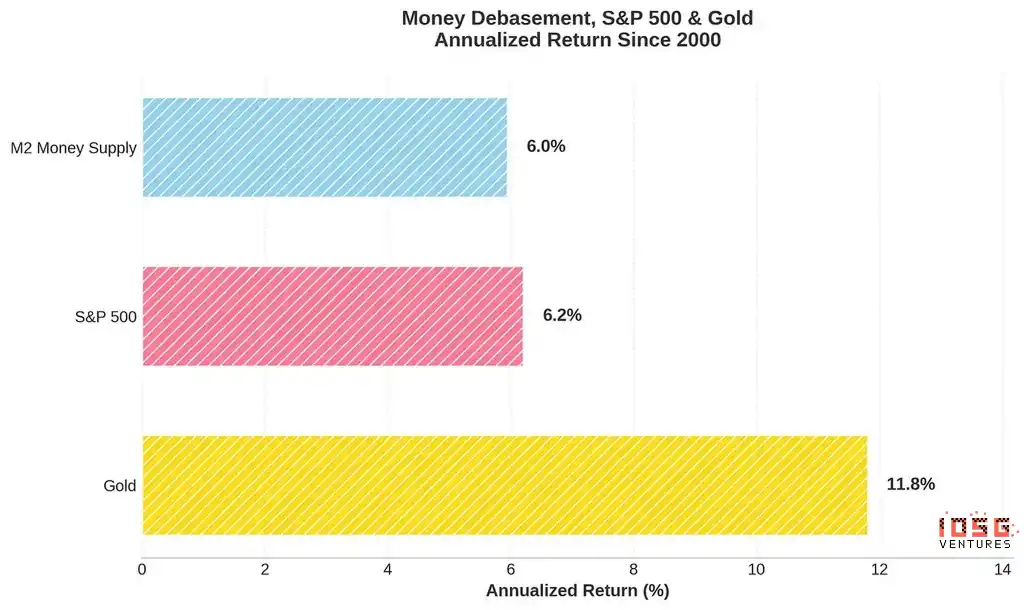
Since 2000, gold has had an annualized return of around 12%. The S&P 500 has had a return of around 6%. Meanwhile, M2 money supply grows by about 6% annually.
This implication is profound: following currency debasement, the S&P 500 has essentially not provided any real return over the past 25 years. In other words, when measured against monetary base expansion, stocks have only served as a store of wealth. And this preservation only holds if you invest 100% of your net worth in this index.
This realization is at the core of the non-inflationary asset argument. As long as major economies rely on continuous monetary supply growth, depreciation will remain a long-term key driver pushing non-inflationary assets higher. Breaking this link with the current economic agenda will be very challenging—there is no incentive to do so: governments lack the discipline to address the debt issue; furthermore, too much power is concentrated in financial markets, which disproportionately benefit from denominator debasement at the expense of the non-investing class.
Global Fiat Run
"Capital goes where it is well-treated, stays where it is well kept."
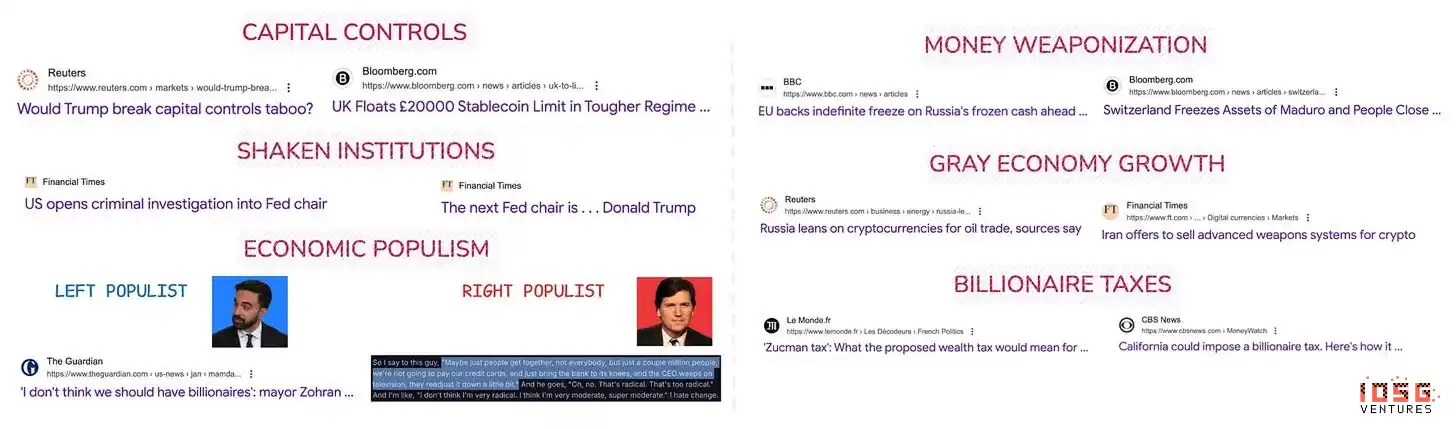
The story of currency debasement is directly linked to a broader phenomenon: growing distrust in the traditional financial system. For high-net-worth individuals, ordinary citizens, and sovereign nations, cryptocurrency has become a vital tool to hedge against 21st-century economic uncertainties.
Driving factors are converging from multiple directions simultaneously.
Capital Controls: Headlines about potential capital controls are no longer confined to emerging markets. The UK has proposed a stablecoin limit of £20,000. Discussions about whether major economies could restrict capital flows mark a new era of financial repression. Earlier last year, Trump even suggested taxing capital outflows from the US—a historically unprecedented move few anticipated.
Currency Weaponization: Freezing Russian assets and similar actions against Venezuela's former leadership provide clear examples of this decade-long trend. The weaponization of the financial system is accelerating. This creates strong incentives for nations and individuals seeking alternatives beyond traditional banking channels. The US government has openly explored innovative means to pressure trading partners. The more unpredictable the sovereigns of the current financial system become, the stronger the urge for ordinary participants to hedge with alternative solutions. The choices for hedging vary: nations can stockpile precious metals and break away from reliance on the existing financial system, while individuals can only choose Bitcoin.
Grey Economic Growth: Sanctioned nations are increasingly turning to cryptocurrency for trade. Russia's use of cryptocurrency for oil transactions and Iran accepting cryptocurrency for weapon system purchases demonstrate adoption driven by necessity. When traditional channels are blocked, new ones emerge.
Institutional Turmoil: Criminal investigations of Fed officials and political interference in central bank appointments have eroded confidence in institutions supporting the credibility of fiat currencies. Once trust is lost, it is challenging to rebuild. Any failures in traditional institutions have proven to be a boon for crypto assets.
Economic Populism: Whether from the left or the right, populist movements share a common distrust of the existing financial system. Both ends of the political spectrum now include voices questioning the current financial order. On one hand, Mamdani calls for establishing a land without billionaires. On the other hand, right-wing economic populists call for banks to bend. The centrists are shrinking.
Billionaire Tax: Wealth taxes proposed by multiple jurisdictions create incentives for capital to flow into assets that are harder to trace and confiscate. Whether these policies are wise or not, their impact on capital mobility is predictable.
Overall, these forces explain why borderless, efficient, and non-sovereign rails have an increasingly clear product-market fit in today's age.
The End of a 70-Year Trend
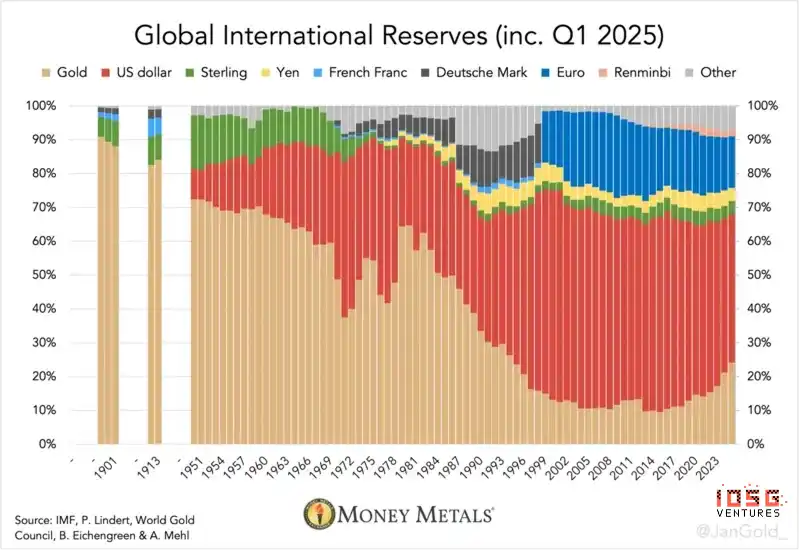
The pressures described above are not merely theoretical. They have already manifested in the way central banks and sovereign wealth funds are allocating reserves.
Perhaps the most important macro chart for understanding the current landscape is the composition of global international reserves. For 70 years after World War II, the share of the dollar in global reserves steadily increased. At its peak, the dollar dominated over 60% of global reserves.
But around 2020, a shift occurred. The share of gold in reserves began to increase for the first time in 70 years. This represents a fundamental shift. Central banks are no longer just talking about diversification—they are taking action. If this trend continues—and geopolitical drivers suggest it will—the structural bid for hard assets is created. Bitcoin is poised to capture some of this demand.
The Cryptocurrency Trilemma: Digital Gold, Digital Oil, Digital Dollar
With the emergence of regulatory clarity, understanding what cryptocurrency actually offers is helpful. The ecosystem has matured into different value propositions, each serving different purposes.
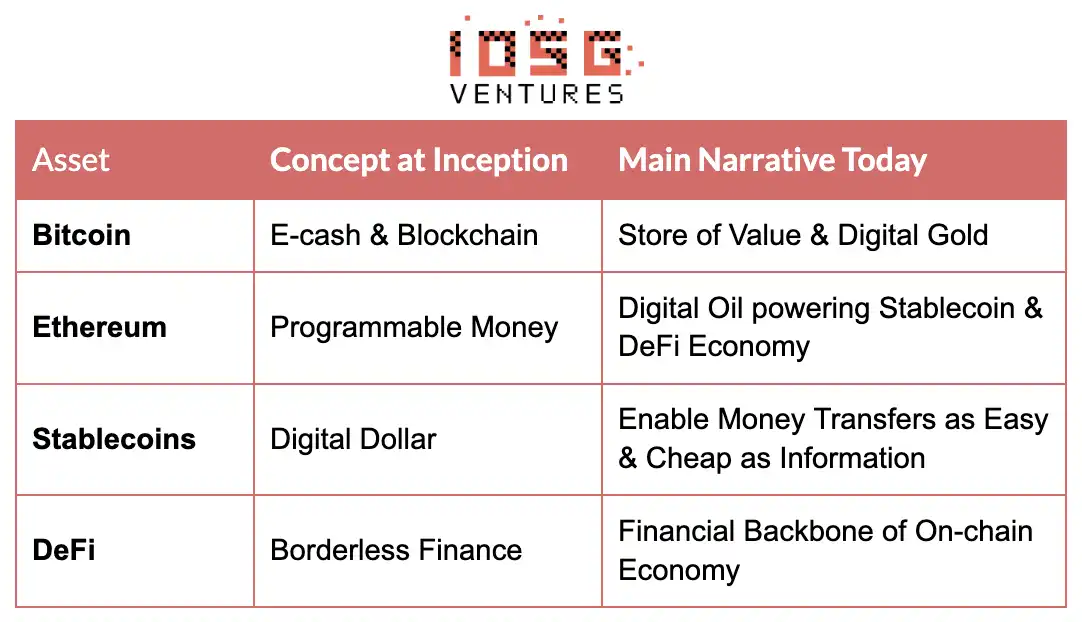
This framework elucidates why different crypto assets serve different purposes—and why the entire ecosystem is greater than the sum of its parts. Bitcoin captures the narrative of value storage. Ethereum powers productive on-chain economies. Stablecoins bridge traditional finance to the crypto world. And DeFi provides infrastructure for borderless financial services.
A Clear Path Forward
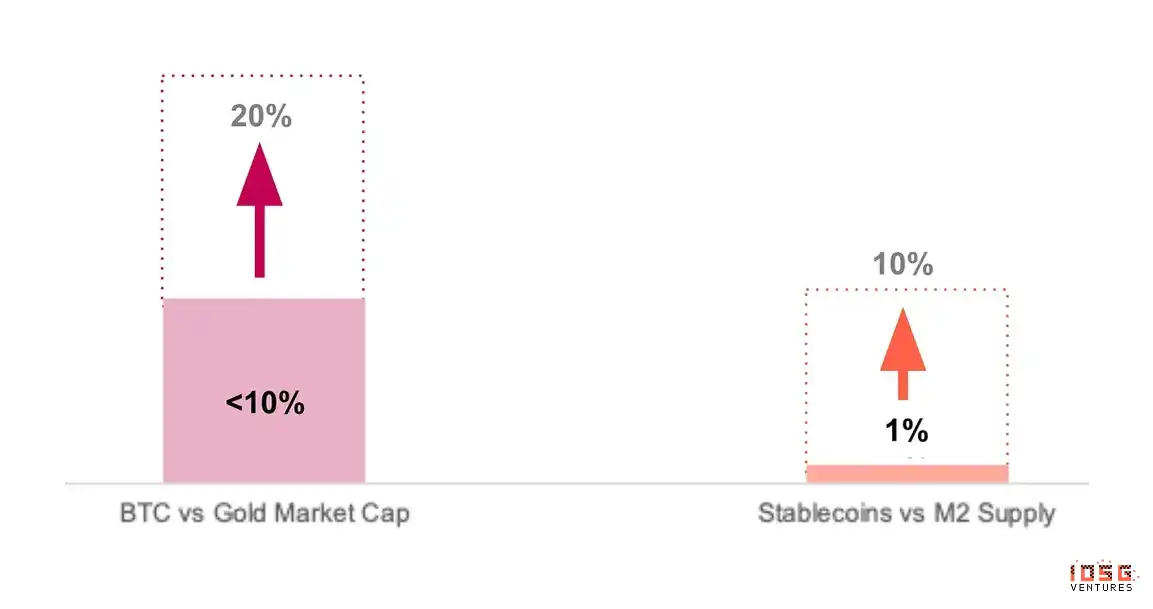
Understanding these distinct roles makes assessing the growth potential of the future easier. The two pillars of the crypto argument—digital gold and the digital economy—both have significant room for expansion.
Digital Gold (BTC vs Gold Market Cap): Bitcoin's market cap of around $1.8 trillion currently represents about 6% of gold's market cap of around $32 trillion. Just rising to 10-15% — still a modest assumption for an asset positioned as "digital gold" — would mean significant upside from current levels. Gold itself surged in 2025, greatly expanding the target.
Digital Economic Growth (Stablecoins vs M2 Money Supply): Stablecoins currently represent about 1% of the M2 money supply. Rising to 10% — reflecting mainstream adoption of digital dollars — would represent a tenfold expansion of the stablecoin market. Infrastructure is being built. The question is how fast adoption will occur.
The Path to a $2 Trillion Stablecoin Economy
Crypto serves both ends of the spectrum. On one hand, developed economies view alternative financial rails as a hedge against the existing financial system. On the other hand, leaders in the current financial system are making rulings favorable to crypto as they need alternative buyers of dollars and dollar-denominated debt — especially now that the long-term dollar trend is reversing.
We anticipate stablecoins will surpass a market cap of several trillion dollars in the next decade. The U.S. recognizes their strategic importance for two key reasons.
· For Debt Financing: Stablecoin issuers must hold reserves, typically U.S. treasuries. Issuing each dollar of stablecoin increases inelastic demand for government bonds.
· Extending Dollar Dominance: Digital dollars extend the influence of the dollar beyond traditional banking channels. In a world where dollar primacy is under threat, stablecoins offer a new path to maintaining influence.
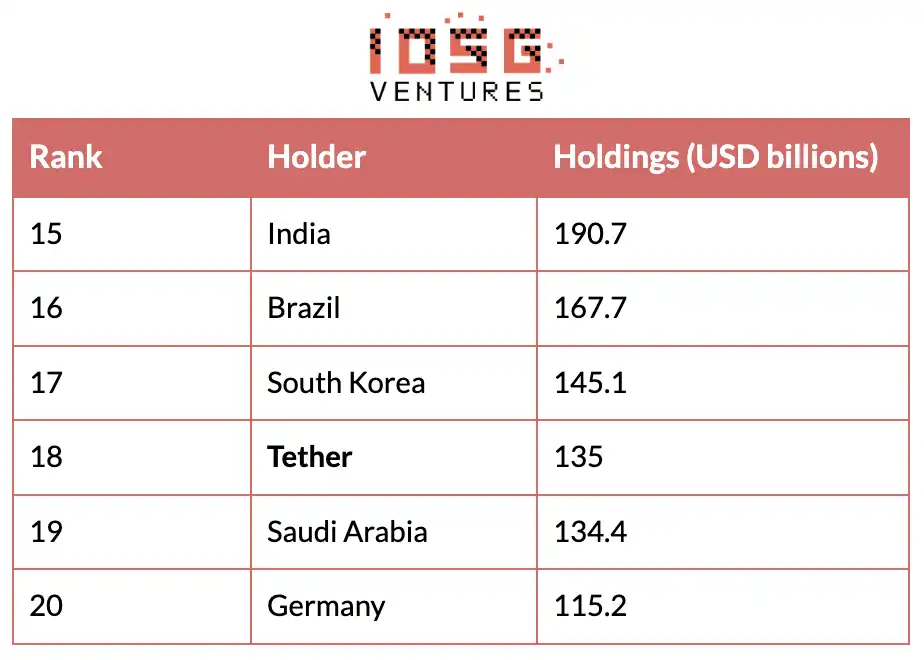
These numbers already reflect this dynamic. Tether now holds around $135 billion in U.S. treasuries. This makes it the 17th largest holder of U.S. government debt globally — ahead of holdings by Germany, the UAE, and Saudi Arabia.
We believe stablecoin issuers will soon become the largest financiers of the U.S. government. This creates a strong alignment of interests between crypto adoption and U.S. government policy goals — a structural tailwind that few market participants fully appreciate.
Regulatory Tailwinds
We often only examine regulatory policies in hindsight. It is decades later that we realize how a regulatory decision sparked massive change. Perhaps this is such a turning point.
Analogy: China's WTO Accession in 2001: When China joined the WTO, a regulatory change triggered a massive reallocation of global capital. Manufacturing moved to Asia, accelerating the U.S.' shift to services and the knowledge economy, leading to trillions of dollars in annual trade flows and massive dollar outflows. In hindsight, it all seems inevitable: new rules alongside government agreements inevitably lead to constructive capital shifts. The profound significance of this transformation continues to influence public discourse to this day — without the large-scale economic restructuring of the past two decades, the "America First" agenda would never have emerged.
Catalyst: US Cryptocurrency Regulation Framework by 2025. We are witnessing a similar moment. Landmark legislation is establishing on-chain infrastructure as legitimate financial infrastructure.
· GENIUS Act (July 2025): First Federal Stablecoin Framework, banks can now issue on-chain US dollars.
· CLARITY Act (Passed in the House, under Senate review): SEC and CFTC jurisdiction finally clearly defined, marking the end of the "enforcement-first" regulatory era.
· DTCC No-Objection Letter (December 2025): SEC has authorized this institution managing over $100 trillion in assets to tokenize stocks, bonds, and treasuries on-chain.
Core Argument: All valuable assets will migrate on-chain. Looking back, this moment will be as epochal as 2001.
Financial Inclusion Gateway: Superapps and Tokenization
A macro tailwind and regulatory clarity have laid the groundwork, but mass adoption requires channels. The next wave of growth in the crypto space will be driven by two complementary forces.
Tech Giants Bringing in New Users
Tech giants will play a significant role in driving crypto adoption. For these companies, crypto offers a path to becoming superapps—a platform that integrates payments, social, and financial services. Both X and Meta are exploring crypto integration.
A US-based social media company with a global presence covering most countries is likely to be the "Trojan Horse" for global stablecoin adoption. The effect will be to shift liquidity from bank balance sheets and small economies to digital dollars.
Tokenization Introducing a New Asset Class
To support stablecoin growth, on-chain needs a more diverse set of assets. Relying solely on native crypto's capital deployment opportunities cannot sustain a 10x growth in stablecoins. To balance the equation, there needs to be better connectivity between the off-chain and on-chain worlds.
Tokenization of traditional assets (stocks, bonds, etc.) serves as this bridge. Ultimately, on-chain native asset issuance represents the future of finance. Institutions like Robinhood and BlackRock will play crucial roles in this transformation.
The World Belongs to the Younger Generation
The aforementioned forces—currency devaluation, regulatory shifts, corporate adoption—each move at their own pace. But there is a potentially underestimated tailwind: intergenerational wealth transfer and the younger generation's preference for digital assets.
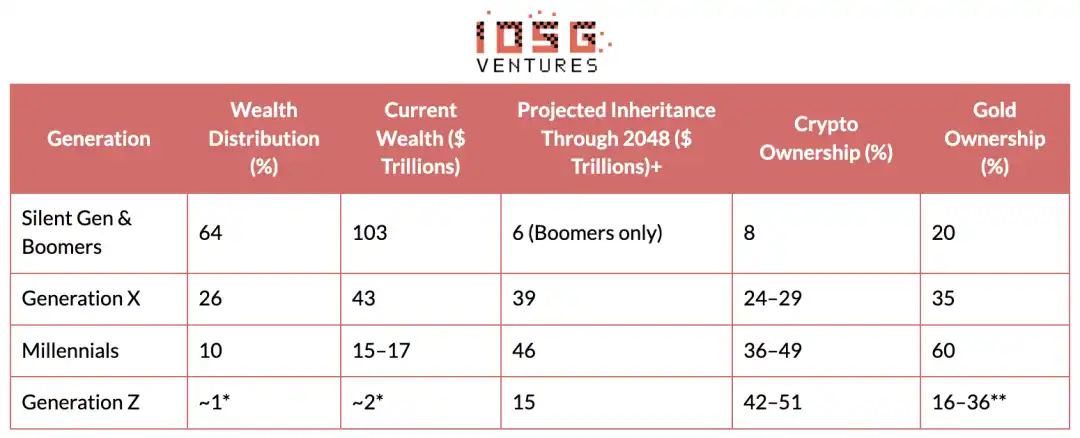
▲ Main Reference Sources: Federal Reserve, UBS Global Wealth Report 2025, Cerulli Associates 2024, Gemini State of Crypto 2024, YouGov 2025, State Street Gold ETF Impact Study 2024
Z Generation data is estimated (the Federal Reserve combines Z Generation with Millennials for reporting purposes) | Survey data is limited
The younger generation's cryptocurrency ownership rate has seen a significant increase. The crypto ownership rate for the Z Generation is around 45%, while the gold ownership rate is only 20%—in complete contrast to the Baby Boomer generation's preference. An obvious rebuttal is that the younger generation simply has a higher risk appetite. However, this overlooks a deeper reality: digital natives have a fundamentally different perception of value compared to the older generation.
With over $100 trillion in wealth expected to transfer from the Baby Boomer generation to the younger generation over the next few decades, asset allocation preferences will also shift.
Conclusion
In the short term, the crypto market's performance will continue to be driven by familiar macro factors: Federal Reserve policies, AI stock sentiment, and overall risk appetite. The market will remain volatile, with news headlines swinging between fervor and despair.
However, the impact of the aforementioned structural tailwinds is much longer-term. Currency debasement will not disappear; the weaponization of the financial system has created a persistent demand for alternative solutions; regulatory clarity has finally arrived; the younger generation clearly prefers crypto over gold; and the world's largest tech and finance companies are building the infrastructure needed for mainstream adoption.
The question is not whether crypto will occupy a larger share of global financial assets, but how quickly this shift will occur—and which assets within the ecosystem will benefit the most.
3. A Game with No Winners: How the Sh*tcoin Market is Disrupting
The sh*tcoin market has experienced its toughest year, and to understand the reasons, we need to look back several years to key decisions. The 2021-2022 funding bubble gave rise to a cohort of heavily funded projects, many of which are now in the token issuance phase. This has created a fundamental issue: a large influx of supply into the market with little to no corresponding demand.
The root problem is not just oversupply but rather that since the mechanism causing this issue first appeared, the situation has hardly changed. Project teams continue to mint tokens, viewing token issuance as an inevitable milestone regardless of finding product-market fit (PMF), rather than a strategic decision. With VC funding drying up and primary market investments declining, many teams see token launch as the only way to secure funding or enable insiders to exit.
This article will analyze the quadruple-loss dilemma that is destroying the meme coin market, examine failed remediation attempts, and propose what equilibrium might look like.
The Low Circulation Dilemma: A Quadruple-Loss Game
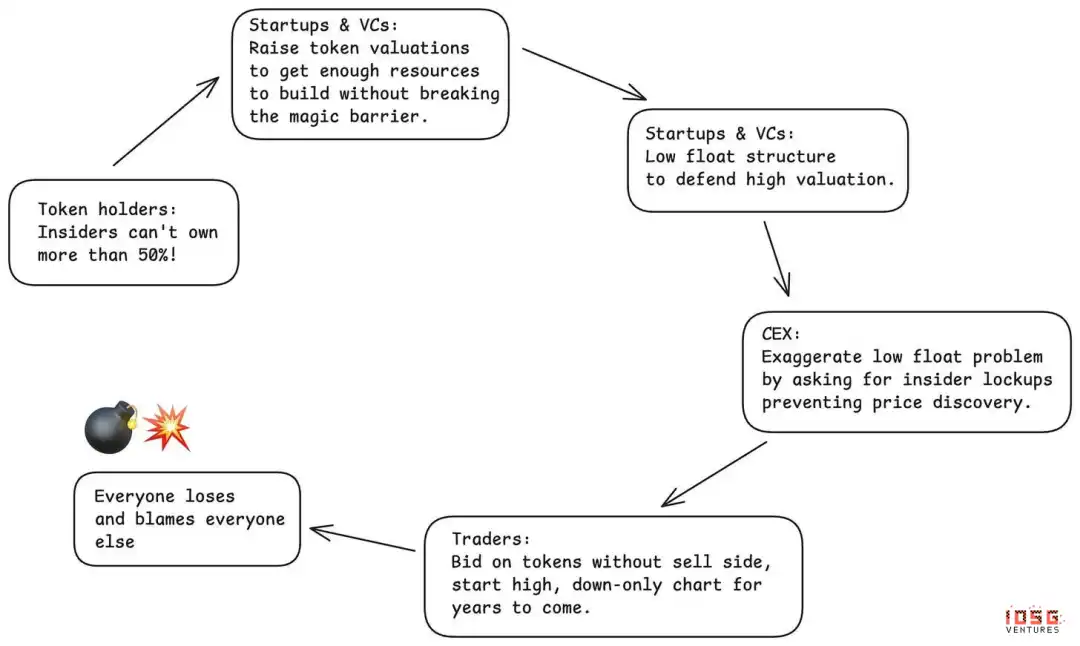
Over the past three years, the industry has relied on a mechanism with a severe flaw: low circulation token issuance. Projects have issued tokens with extremely low circulation supply—usually only single-digit percentages—to artificially maintain a highly inflated fully diluted valuation (FDV). This logic seems reasonable at first glance: the less the supply, the more stable the price.
However, low circulation will not last forever. As more supply inevitably enters the market, the price collapses. Early supporters are punished for their loyalty, a fact that data overwhelmingly supports—most tokens have performed poorly since launch.
Most insidious of all, low circulation has created a situation where everyone thinks they are winning when in fact everyone is losing:
· Centralized exchanges believed they were protecting retail by requiring lower circulation and more control. The result has been facing community backlash and poor price performance.
· Token holders believed that maintaining low circulation would prevent insiders from dumping. The result is a lack of true price discovery, with early supporters being penalized instead. When they demanded that insiders hold no more than 50%, they inadvertently inflated primary market valuations to unreasonable levels, forcing insiders to use—yes—low circulation strategies to maintain these valuations.
· Project teams believed that low circulation manipulation would rationalize their high valuations and minimal dilution. However, on the whole, if this trend continues, this practice will destroy the entire industry's funding channels.
· VC firms believed they could price more funding based on low circulation token positions. The result is that as the strategic flaws become increasingly evident, they end up losing funding avenues in the medium to long term.
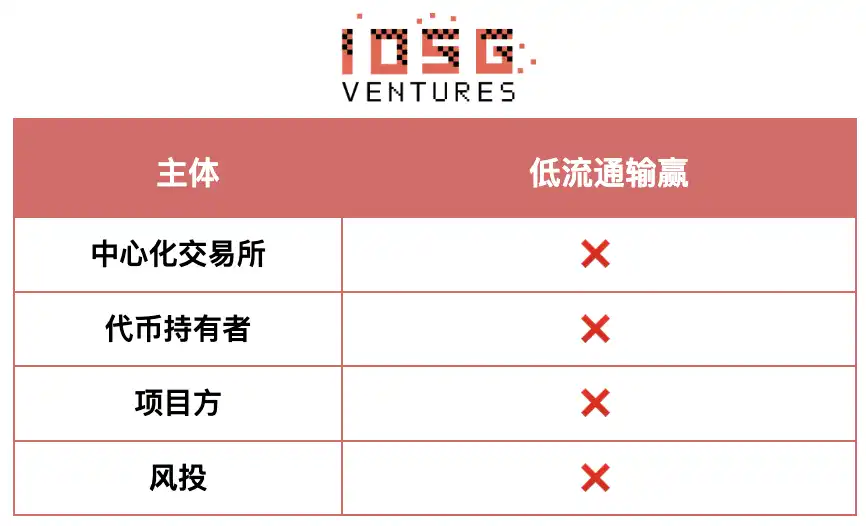
This is a perfect quadruple-loss matrix. Everyone thinks they are playing a smart game, but the game itself is unfavorable to all participants.
Market Response: Meme Coins and MetaDAO
The market has attempted to address this issue twice, and both attempts have revealed the complexity of token design.
First Iteration: Meme Coin Experiment
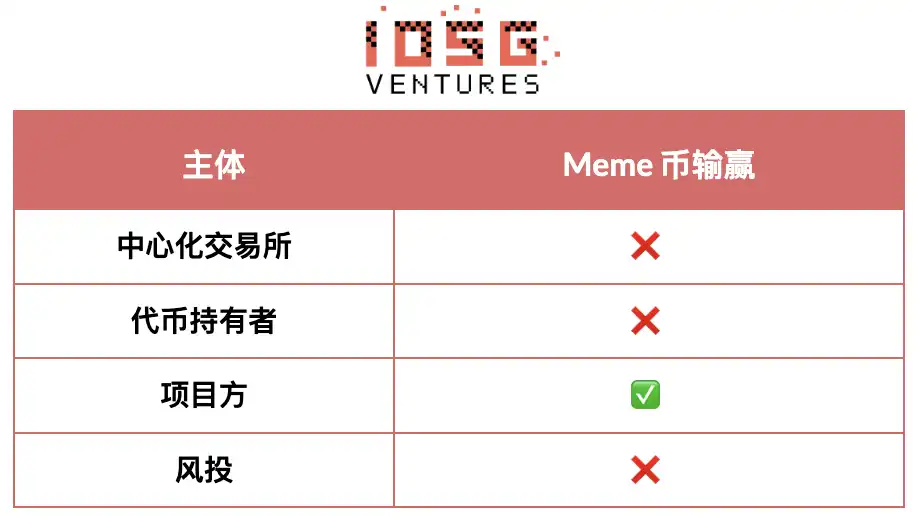
A Meme Coin is a reaction to VC-backed low circulation issuance. Its marketing is simple and enticing: 100% circulation on the first day, no VC, completely fair. Finally, the game is no longer rigged against retail investors.
However, the reality is much bleaker. With no filtering mechanism, the market is flooded with unaudited token issuances. Lone and often anonymous operators have replaced VC-backed teams, not creating fairness but instead leading to an environment where over 98% of participants end up losing. Tokens turn into exit scams, with holders being rugged just minutes or hours after launch.
Centralized exchanges are in a dilemma. If they don't list Meme Coins, users will go around them and directly go to decentralized exchanges; if they do list them, they will be blamed when the price collapses. Token holders suffer the most brutal losses. The only winners are the issuing teams and platforms like Pump.fun that extract significant value.
Second Iteration: MetaDAO Model
The MetaDAO represents the market's second major attempt at a solution, swinging the pendulum to the other extreme, heavily favoring token holder protection.
Its advantages are tangible:
· Token holders gain control leverage, making capital deployment more attractive
· Insiders only receive liquidity upon achieving specific KPIs
· Introduces a new financing mechanism in a capital-scarce environment
· Initial valuation is relatively low, providing a fairer participation opportunity
However, the MetaDAO has created new issues through overcorrection:
· Founders lose too much control too early, leading to a "Founder Lemon Market" where resourceful, selective teams avoid this model, while teams with no other choice embrace it.
· Tokens are still issued in extremely early stages, with high volatility but with even fewer filtering mechanisms than what the VC cycle offers.
· The infinite minting mechanism makes it nearly impossible for first-tier exchanges to list. The MetaDAO is fundamentally misaligned with centralized exchanges that control the majority of liquidity. Without CEX listings, tokens are stuck in illiquid markets.
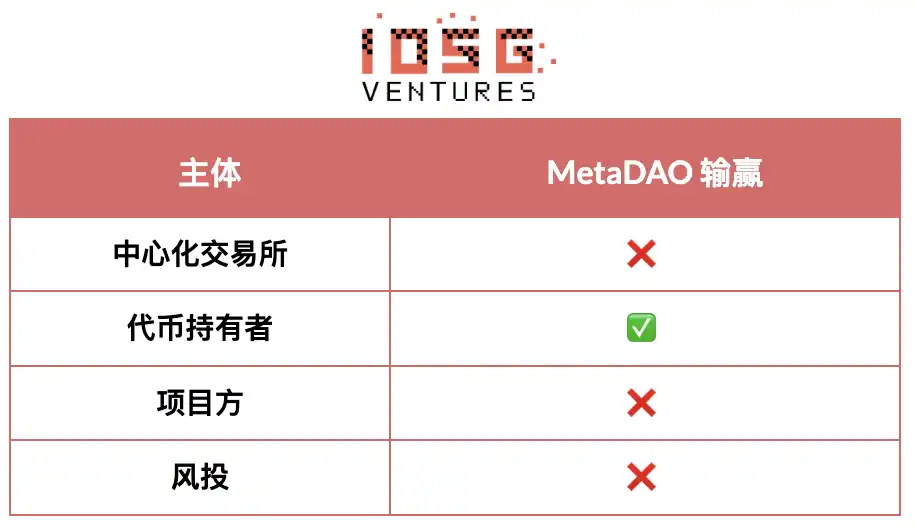
Each iteration has attempted to address an aspect of a stakeholder's concern, showcasing the market's self-correcting capabilities each time. But we are still in search of a solution that balances the interests of all key players—trading platforms, token holders, project teams, and backers.
The evolution continues, and until we find that equilibrium, we won't have a sustainable model. This balance must satisfy all stakeholders—not giving everyone everything they want but delineating clear boundaries between malicious behavior and legitimate rights.
The Look of Equilibrium
Centralized Exchanges
· Must Cease: Demanding lengthy lockup periods that hinder true price discovery. Lengthening lockups create a false sense of protection, actually harming the market's ability to find fair value.
· Entitlement: Predictability of token supply schedules and an effective accountability mechanism. The focus should shift from arbitrary, time-based lockups to KPI-based unlocking, adopting shorter, more frequent token release schedules tied to verifiable progress.
Token Holders
· Must Cease: Overcompensating for past rights abuses, demanding excessive control that drives away top talent, exchanges, and VCs. Not all insiders are the same, and requiring the same long lockup from everyone ignores role differences and hinders true price discovery. The obsession with magical holding thresholds (such as "insiders cannot hold more than 50%") precisely sets the conditions for low float manipulation.
· Entitlement: Strong information rights and operational transparency. Token holders are entitled to a clear understanding of the business behind the token, regular updates on progress and project challenges, and honest communication on fund reserves and resource allocation. They are entitled to assurances that value will not seep away through side deals or shadowy structures—the token should be the primary IP holder, securing the value created for token holders. Lastly, token holders should have reasonable control over budget allocation, especially significant expenditures, without micromanaging day-to-day operations.
Project Teams
· Must Cease: Issuing tokens without a clear product-market fit or compelling token utility. Too many teams have treated token issuance as "glorified equity" with lower rights—a quasi-equity-like risk layer without legal protections. Tokens should not be issued just because "that's what crypto projects do" or because funds are running out.
· Right to Execute: The ability to make strategic decisions, take bold bets, and drive day-to-day operations without needing to submit every decision for DAO approval. If a team is to be accountable for outcomes, there needs to be the power to execute.
Venture Capital Firm
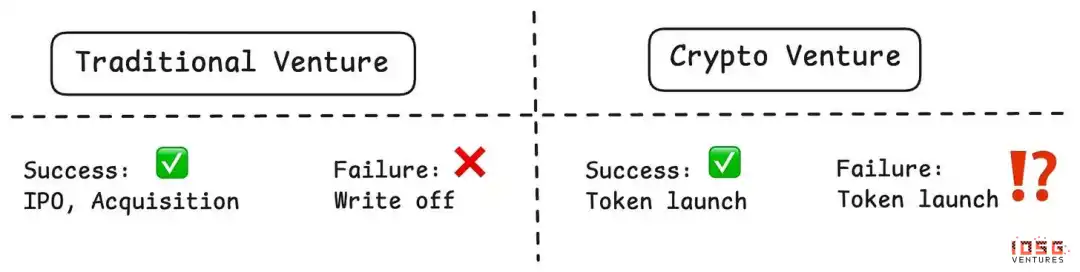
· Must Cease: Forcing every portfolio company to issue a token, regardless of whether it makes sense or not. Not every crypto company needs a token, and the forced issuance of tokens for the sake of providing valuation marks or creating exit events has led to a proliferation of low-quality issuances in the market. VCs need to be more discerning, honestly assessing which companies truly benefit from a token model.
· Right to Receive: To receive a fair return for taking on the very high risk of investing in early-stage crypto projects. High-risk capital should rightfully expect high-risk returns when it bets on success. This means reasonable ownership stakes, fair token distribution schedules that reflect contributions and risk-taking, and the ability to achieve liquidity events in successful investments without demonization.
Even with a path to equilibrium, timing is critical. The immediate outlook remains challenging.
Next 12 Months: The Final Wave of Oversupply
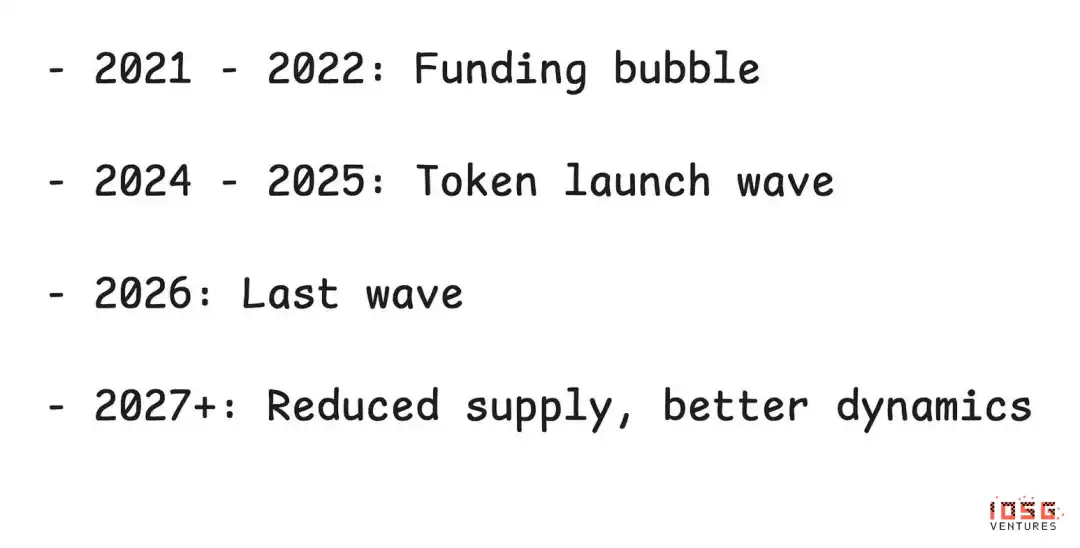
The next 12 months are likely to represent the final wave of oversupply resulting from the last VC frenzy.
After this digestion period, the situation should improve:
· By the end of 2026, the prior vintage of projects will have either tokenized or gone bust
· Funding channels remain expensive, limiting the formation of new projects. The VC-backed project pipeline seeking to mint has significantly dwindled
· Primary market valuations have reverted to more rational levels, alleviating the pressure to artificially sustain high valuations through low float
What we did three years ago has determined the market today. What we do today will determine the market in two to three years.
Outside the supply cycle, there is a deeper threat to the entire token model.
Existential Risk: Lemon Markets
The biggest long-term threat is for the altcoin market to turn into a "lemon market," one that repels high-quality participants and attracts only those with no other choice.
Possible Evolution Pathways
· Unsuccessful projects continue to issue tokens to obtain liquidity or extend their lifespan, even without any product-market fit. As long as there is an expectation that "projects should have a token issuance, regardless of success," failing projects will continue to flood the market.
· Successful projects observe this chaos and choose to exit. When excellent teams see sustained poor performance of the token overall, they may opt to switch back to a traditional equity structure. Since it is possible to build a successful equity company, why endure the chaos of entering the token market with no clear reason for issuance? Many projects actually do not have a compelling reason for a token, and for most application-layer projects, tokens are becoming more optional than necessary.
If this trend continues, the token market will be dominated by projects that could not succeed through other means—the unwanted "lemons."
Despite these risks, there are still plenty of reasons to remain optimistic.
Why Tokens Can Still Win Out
Despite the challenges, we are still optimistically holding the view that the worst-case scenario of a lemon market will not materialize. Tokens offer a unique game-theoretical mechanism that traditional equity structures fundamentally cannot replicate.
· Accelerated growth through ownership distribution. Tokens can achieve precise distribution strategies and growth loops that traditional equity cannot reach. Ethena is leveraging token mechanics to drive rapid adoption and create a sustainable protocol economy, proving this point effectively.
· Passionate, loyal communities form moats. If done correctly, tokens can cultivate a community with a vested interest—participants become stickier and more loyal to the ecosystem. Hyperliquid is a prime example: its trader community has become deeply engaged, creating network effects and loyalty that would be impossible to replicate without the token.
Tokens can enable growth rates far beyond the equity model, while unlocking vast game-theoretical design spaces that, if used correctly, can unleash significant opportunities. When these mechanisms work, their transformative power is genuinely disruptive.
Signs of Self-Correction
Despite significant challenges, there are encouraging signs indicating that the market is self-correcting:
· Top-tier trading platforms are becoming extremely stringent. Issuance and listing requirements have been significantly tightened. Trading platforms are implementing better quality control measures, conducting stricter evaluations before listing new tokens.
· Investor Protection Mechanisms Are Evolving. The innovation of MetaDAO, DAO-owned IP rights (as seen in Uniswap and Aave governance disputes), and other governance innovations demonstrate that the community is actively experimenting with better structures.
The market is learning — slowly and painfully, but indeed learning.
Recognizing That We Are in a Cycle
The crypto market is highly cyclical, and we are currently in a trough. We are digesting the 2021-2022 VC bull market, hype cycles, over-investment, and the negative consequences of resulting structural misalignments.
But the cycle will turn. In two years, once the 2021-2022 batch of projects has been fully digested, once the new token supply decreases due to current funding constraints, once better standards emerge through trial and error — market dynamics should improve significantly.
The key question is: Will successful projects revert back to a token model, or permanently shift to an equity structure? The answer depends on whether the industry can address issues of incentive alignment and project selection.
The Way Forward
The altcoin market is at a crossroads. The stalemate where exchanges, token holders, project teams, and VCs all lose has led to an unsustainable market situation. But this is not permanent.
With the final supply shock from 2021-2022 hitting the market, the next 12 months will be painful. However, after this digestion period, three things could drive the recovery: better standards emerging from painful trial and error; coordination mechanisms that satisfy all parties' interests; and more cautious token issuance, where teams only issue tokens when they can truly add value.
The answer depends on the choices made today. Three years from now, looking back at 2026 will be similar to how we look back at 2021-2022 today. What are we building?
4. Overview of Venture Capital Opportunities
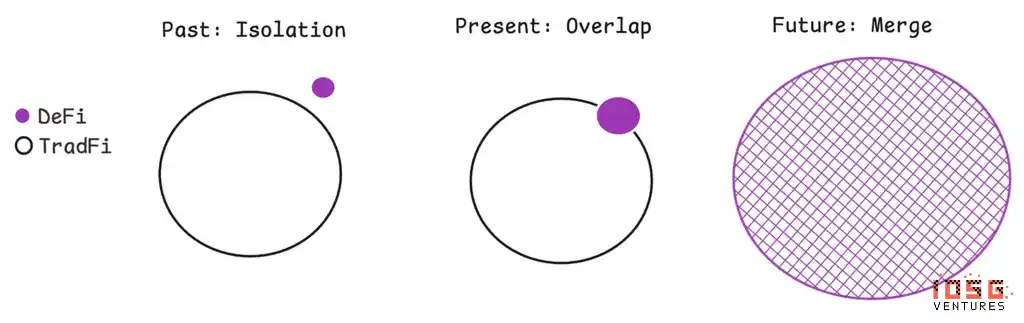
The cryptocurrency ecosystem is undergoing a fundamental transformation. From the initial experiments with digital currencies, it has evolved into a complex financial infrastructure overlapping with traditional finance and emerging technologies like artificial intelligence, ultimately moving towards convergence.
Stablecoins: The Almost Perfect Currency, Just Missing One Key Element
Stablecoins have proven to be superior to traditional fiat currencies in almost every dimension. Compared to traditional payment rails, they have advantages in terms of accessibility, usability, speed, portability, and programmability. Counterparty risk is on par with traditional banking, while the technology itself provides clear advantages.
However, there is a key limitation: compared to fiat currencies, stablecoins still face restricted investment options. The traditional financial markets offer a wide range of productive investment opportunities — stocks, bonds, real estate, and alternative assets. Despite its technological superiority, stablecoins are still limited to the revenue sources and investment opportunities native to crypto, which alone cannot sustain its growth beyond the $1 trillion mark.
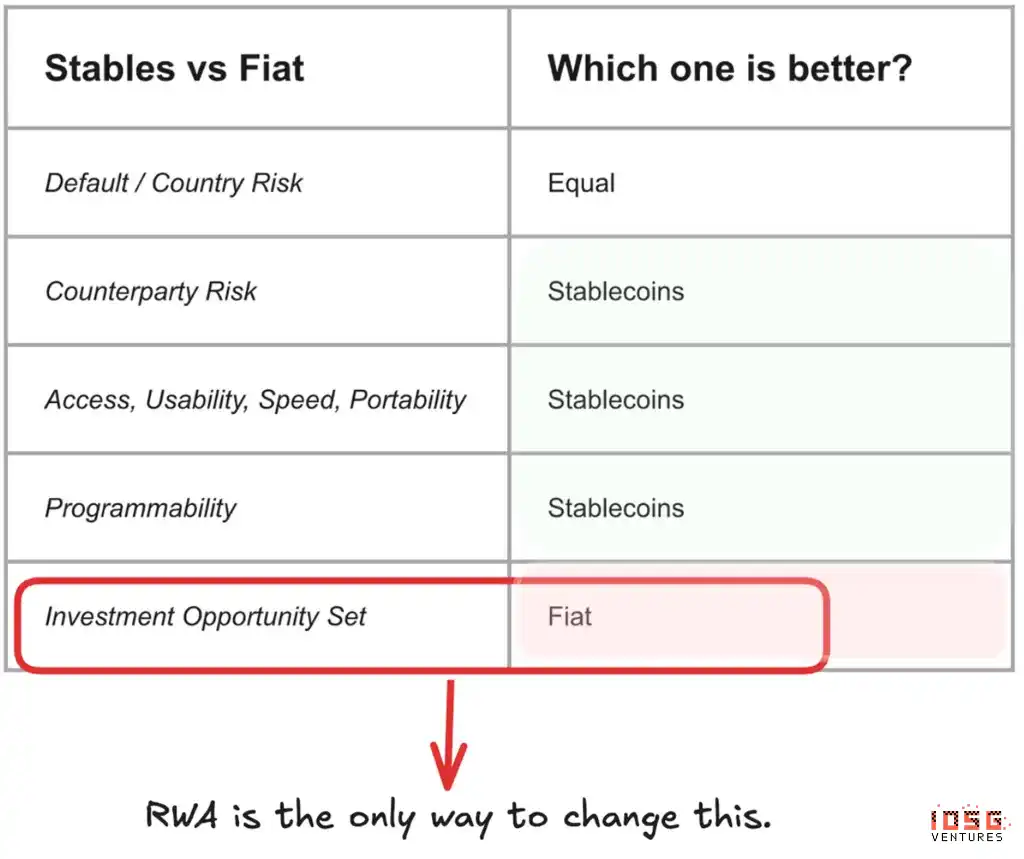
This is precisely why Real-World Assets (RWA) have become crucial. RWA tokenization is the only viable path to expanding the stablecoin ecosystem's investment scope, thereby addressing the most critical issue facing stablecoins today. Over time, this will form a convergence trajectory: almost all assets will be issued, traded, and settled natively on-chain.
Who is most likely to succeed?
Traditional institutions like Robinhood and BlackRock have a clear advantage here, as both have expressed interest in tokenizing more assets. However, startups move faster and are more flexible in building on-chain native solutions, giving them a competitive edge. Backed Finance has leveraged Switzerland's innovative legal structure to launch X Stocks, achieving permissionless stock issuance similar to stablecoins, allowing anyone to obtain stock tokens. However, liquidity remains a challenge. Ondo Finance solves the liquidity issue, but its product is more limited. Liquidity, accessibility, and trust are key variables for success in this field.
DeFi Yield Farming Challenge: From Base to Structured Yield
Historical data shows that for every $1 increase in stablecoin market capitalization, DeFi TVL increases by approximately $0.6. This indicates that the majority of new on-chain funds are seeking yield. The growth of stablecoins themselves also depends on DeFi's ability to generate diversified, scalable, and sustainable yield.
The crypto ecosystem has gone through different stages of yield generation. Starting from establishing crypto risk-free rates (such as AAVE), it has progressively evolved into more advanced products. Each iteration requires greater risk underwriting capacity, while also bringing higher value accrual per unit of deployed capital. The current landscape presents an increasingly complex on-chain yield across multiple categories. We also see stronger interoperability and composability between DeFi protocols becoming more critical. A prime example is the Ethena <> Pendle <> AAVE strategy. In this strategy, Ethena deposit tokens are split into principal tokens and yield tokens on Pendle. As long as there is a positive spread between the AAVE borrowing rate and the Ethena funding rate, the principal tokens are used as collateral to borrow more assets on AAVE, then redeployed back to Ethena.
This indicates that even a familiar strategy, when deployed in a new way, can unlock unique opportunities. This should encourage more participants to tokenize a wider range of yield-generating products and harness on-chain composability to access opportunities that are fundamentally absent in the off-chain fragmented ledger world.
Another opportunity: abstracting the complexity of on-chain yield products to create a DeFi conduit that can dynamically adjust exposure within the broader DeFi landscape. This can be seen as an upgrade to Yearn's original vision to meet current demands, requiring successful DeFi treasuries to have more proactive management and risk underwriting. Projects like Yuzu Money are taking this path.
Who is most likely to succeed?
This highly depends on execution. It requires talents with a deep understanding of financial engineering, strong risk management capabilities, and cryptocurrency industry experience. Teams that possess all three are relatively scarce.

Prediction Markets: Growth and Opportunities of Kalshi/Polymarket and Other Derivative Application Products
We are bullish on the growth prospects of the 2026 prediction market. The World Cup and the U.S. midterm elections will bring significant traffic to the markets, especially with the catalysis of potential TGEs (token generation events), anticipating a growth in transaction volume. Sports betting will be a highlight, and as the prediction market mechanism matures, this vertical area is expected to see explosive growth and innovative gameplay.
Another important trend is localization. Recently, more region-specific topics have appeared on Polymarket, especially events that Asian youth are concerned about, in stark contrast to the early focus solely on the U.S. market. This signals that major platforms are beginning to pay attention to global cultural differences, leading to significant incremental markets.
Derivative products in the ecosystem will rise with the growth of Kalshi and Polymarket. After the two major platforms began to focus on ecosystem development in 2025, various tools, trading terminals, aggregators, and even DeFi applications have rapidly developed. This opportunity is too evident, leading to entrepreneurs rushing into the market, fast-paced product iterations, overall growth, but it is still too early to determine the winners.
Who is most likely to succeed?
At the core layer of the prediction market, directly challenging Kalshi and Polymarket is quite difficult. However, the following directions are worth noting:
· Innovative Mechanism Breakthrough: Innovations such as leverage trading, parlay, futarchy, long-tail markets, new types of oracles, and settlement methods may open up differentiated survival spaces.
· Localization Deep Dive: Focusing on the crypto user base and deep diving into niche local markets is another path. Kalshi and Polymarket are just getting started in this area with no clear advantage. For teams that understand the local culture, regulatory environment, and user behavior, this is a real window of opportunity.
In the derivatives product ecosystem, winners will emerge through rapid iteration. The key is whether they can seize the user pain points and build network effects during the window of expansion for the Kalshi/Polymarket ecosystem.
Neobanks: Natural Beneficiaries of Stablecoin Adoption
The widespread adoption of stablecoins will fundamentally reshape the banking sector, likely reducing the size of traditional bank balance sheets, leading to various ripple effects, which are not the focus of this article. The key question is: how will people manage their stablecoin balances? We believe this is unlikely to be achieved through individual wallets. Instead, Neobanks are likely to be the primary beneficiaries of this trend. Understanding the Neobanks opportunity requires understanding the sources and nature of the demand.
There are primarily three user groups: the crypto-native community, users in developing regions, and users in developed regions.
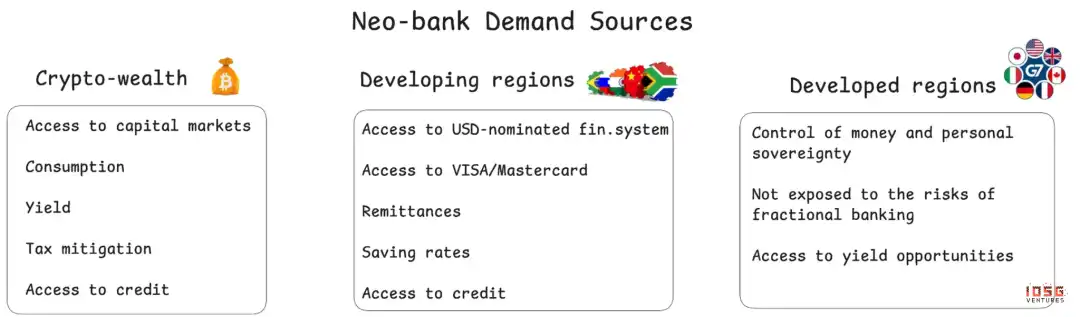
· Cryptocurrency Holders seek access to capital markets, consumption choices, yield opportunities, tax optimization, and credit services. Etherfi is already a leader in this category, but there is still room for improvement in accessing capital markets, earning yield, and credit products.
· Users in Developing Regions need access to a USD-denominated financial system, Visa/Mastercard networks, remittance channels, competitive savings rates, and credit. Redotpay is currently leading in Southeast Asia, leveraging crypto infrastructure to offer Revolut-like products. There is a significant opportunity in other regions for localized solutions and micro-lending products that can enhance user retention.
· Users in Developed Regions may not seem to have as clear opportunities due to the well-established financial infrastructure. However, as mentioned earlier, rising uncertainty in the global leadership landscape may drive these users towards alternative solutions.
This creates a triple market opportunity where Neobanks can use the same underlying stablecoin infrastructure to serve fundamentally different customer needs.
Who is most likely to emerge victorious?
Accessing the capital markets requires creative legal solutions and financial expertise that provides deep liquidity. Providing credit requires financial expertise. Improving interest schemes requires knowledge of crypto and DeFi. Penetrating local markets requires an understanding of local laws, markets, and cultures. These variables provide key differentiation opportunities for new entrants, especially if existing participants have failed to unlock these capabilities and expand their service offerings.
The Evolution of Crypto Payments
The global payment system is being reshaped by crypto infrastructure, with widespread adoption progressing along three distinct channels. The C2B (Consumer-to-Business) channel currently still favors traditional finance, and crypto applications need to plug into existing Visa/Mastercard networks, which have established a strong moat at the merchant end.
The bigger opportunity lies in the P2P (Peer-to-Peer) flow, with traditional financial transactions, currently dominant, expected to migrate to crypto infrastructure. Western Union, faced with Neobanks, wallets, and large tech platforms integrating stablecoins, appears to lack a robust moat to defend itself.
The B2B (Business-to-Business) space may present the most significant opportunity. Crypto payment service providers can offer a true alternative for cross-border corporate payments. This represents a fundamental infrastructure shift requiring deep integration of stablecoins with fintech platforms. The core value proposition is substantial cost savings and increased speed. However, the challenge lies in establishing the "last-mile" liquidity and local compliance capabilities in key regions to enable seamless onboarding of customers to the new solution.
Who Is Likely to Emerge Victorious?
For P2P payments, geographic focus and user experience are paramount: solutions that are already primed for use, cash-out, and expenditure are most likely to succeed. For B2B payments, companies that have established relationships with SMBs and large enterprises and possess regulatory expertise are in the most advantageous position.
The Internet Capital Market: The Tokenization Endgame
Blockchain technology has enabled a single, programmable global ledger where capital flows 24/7, and tokenization allows any asset to be identified, traded, and settled across borders instantly.
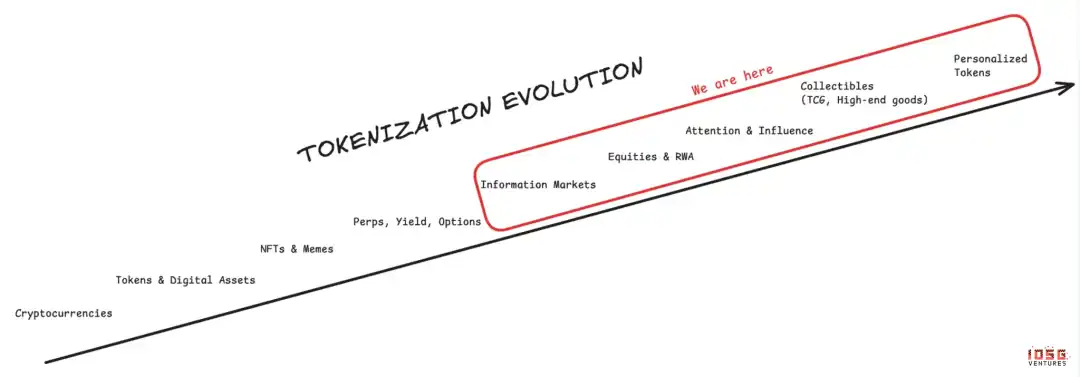
The evolution of tokenization has gone through different metacycles: from initial cryptocurrencies to tokens (such as altcoins and digital assets), then to NFTs and meme coins, followed by information markets (prediction markets), and currently encompassing stocks, RWAs, and a wide range of financial derivatives. Looking ahead, cutting-edge areas include collectibles (such as trading card games and luxury goods), attention and influence markets, and ultimately, personalized tokens.
With each new narrative, specialized trading infrastructure follows suit. The crypto trading landscape has evolved from basic Bitcoin trading platforms (Binance, OKX, Coinbase, Huobi) to on-chain DEXes (Uniswap) and aggregators (1inch, 0x), further to NFT marketplaces (OpenSea) and launchpads (Blur), Meme token launchpads (Pump.fun) and terminals (Axiom, GMGN, FOMO), Perp DEXes (Hyperliquid, Lighter) and their emerging terminals and aggregators, as well as prediction market platforms (Polymarket, Kalshi) and their own emerging terminal infrastructures.
Each narrative requires interfaces tailored specifically for both the simplicity-seeking retail user and the advanced-feature-demanding professional user. The current generation (focused on perpetual contracts and prediction markets) of products, as the market matures and integrates with traditional finance, presents a significant venture capital opportunity.
Who is most likely to succeed?
The terminal and aggregator race requires a deep understanding of user workflows and excellent product design. In the professional-user segment, teams with trading backgrounds and technical depth have an advantage. In the retail-user segment, consumer product expertise and growth marketing capabilities are more critical. The winners will be teams that achieve the optimal balance for their target segments between feature depth and user experience, while these teams will build moats around liquidity aggregation or unique data/insights.
ICM: Reframing Tokenomics in 2026
There is a crucial proposition for 2026: how will the token as a tool evolve? The core issue with current crypto tokens is the imbalance in supply structure combined with flawed incentive design, leading all participants such as trading platforms, token holders, teams, VCs, etc., into a seemingly rational but ultimately detrimental game. Tokens are treated as financing and liquidity tools rather than product decision tools.
This has led to significant market distortions:
· Mature projects lack motivation to maintain product operations after token issuance or are bogged down by too many token transactions, impacting product decisions. As a result, good projects simply avoid token issuance, inferior coins drive out superior ones, and bad projects continue to enter the market.
· Early-stage projects issue tokens without product-market fit, making it challenging to secure further funding post-token issuance and garner sufficient institutional support.
The concept of ICM (Integrated Capital Markets) was proposed by the Solana ecosystem, but the more general understanding is: how to better launch more good assets and continue to maintain them as good assets. The asset itself can be early-stage Web2/Web3 company equity, pre-IPO/IPO stock, and so on. This requires multi-faceted breakthroughs: legal discussions, market education, operational efforts, and mechanism innovation, including ownership coins, launchpads, and more. Making a token into a better product—this is the crypto-native proposition to be addressed in 2026.
The Integration of Cryptography and AI: Creating First-Class Digital Citizens
Perhaps the most compelling investment narrative will emerge at the intersection of cryptography and AI. The existing internet and financial infrastructure are entirely designed for humans, relegating AI to a "second-class citizen," and the significant limitations of this infrastructure fundamentally constrain AI's economic potential.
Without cryptographic infrastructure, AI Agents face severe constraints. They cannot open bank accounts or make payments, relying entirely on humans for financial transactions. They are constantly blocked by CAPTCHAs and bot detection systems, unable to complete basic web interactions. They cannot interact with other Agents to create inter-Agent economies. They cannot own assets. They are trapped in centralized corporate servers or the cloud, unable to migrate.
Cryptocurrency fundamentally changes this situation, making AI a first-class citizen with true economic agency. With Crypto, AI Agents can have wallets and autonomously send and receive funds, independently earn, spend, and invest without human intermediaries. They can bypass most bot detection through a distributed blockchain network. They can autonomously discover other AI agents, negotiate with them, and engage in transactions, creating a burgeoning AI-to-AI economy where economic interests and crypto-like consensus and trust mechanisms will determine right from wrong. They can sign contracts and programmatically execute payments. They can hold digital assets, with ownership enforced by an immutable blockchain.
Google has pushed forward the A2A protocol, providing an open standard for AI Agents to communicate across different platforms and vendors, exchange information, and coordinate actions, facilitating interoperable multi-agent systems. However, trust issues persist, which is exactly what the Ethereum ERC-8004 standard aims to address through on-chain identity, reputation, and attestation, enabling AI Agents to discover, credentialize, and collaborate in a decentralized economy without the need for pre-established trust. These developments collectively unlock the ability for AI to participate in programmable, agent-driven commerce on the blockchain.
Who Is Most Likely to Win?
The visionary entrepreneur who can architect a decentralized economy will stand out, where in this economy, AI Agents engage in trustless interactions through protocols like ERC-8004. These leaders excel at interdisciplinary innovation, seamlessly blending cryptography (for secure, tamper-proof trust mechanisms), economics (for designing incentive-aligned Agent behaviors, staking, penalties, and emerging markets), and systems design (for constructing scalable, interoperable architectures enabling open, cross-organizational agent coordination without gatekeepers).
Resource Aggregation Opportunity
The scaling laws driving AI development have become very clear and have been thoroughly empirically validated: more compute, more data, more parameters almost invariably lead to stronger model performance. Thus, this diagram encapsulates the most critical insights of the past five years:
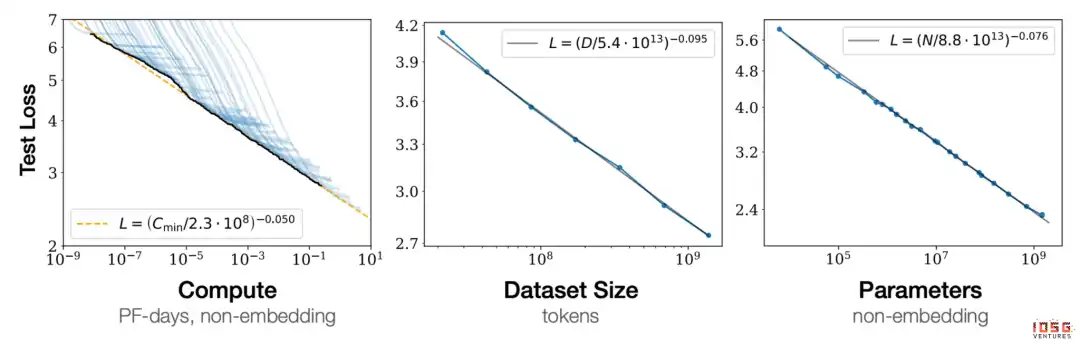
Cryptocurrencies excel at aggregating resources through thoughtfully designed incentive mechanisms. Its potential scale is staggering: Ethereum's proof-of-work miners, prior to the merge, provided approximately 50 times the compute power required to train GPT-4. If properly incentivized and coordinated, this holds significant untapped potential.
The data opportunity is equally significant. The crypto industry can aggregate proprietary data from individuals and enterprises at scale. On the other hand, protocols like Grass have achieved distributed scraping of public network data and real-time information access, improving machine learning detection and enhancing unit economics through a distributed approach leveraging existing resources.
The challenge lies not in the availability of resources but in effective coordination and quality control. With proper execution and incentive design, the crypto industry has the genuine potential to unlock abundant resources for AI development that are difficult or impossible to aggregate through traditional corporate structures.
Who Is Most Likely to Win?
This requires deep technical expertise in distributed systems, AI infrastructure, and game-theoretic design. Teams need to address challenges like compute validation, data quality assessment, and large-scale efficient coordination. Companies with backgrounds in operating large-scale infrastructure and designing crypto protocols have the strongest advantage. The winners will be those who can achieve decentralized coordination at scale while maintaining quality standards.
Conclusion
The common thread behind these opportunities is convergence, where native crypto capabilities continue to merge rapidly with traditional finance, payment systems, and even today's AI acceleration. The phase of isolated development has ended, and the phase of overlapping convergence is rapidly advancing. Full convergence is the ultimate destination: blockchain infrastructure will become "invisible" yet indispensable, serving as the underlying engine powering the next generation of financial and technical services, achieving seamless integration between decentralized and centralized systems, capturing the strengths of both.
For venture capitalists, the real opportunity lies not in betting on either "crypto" or "traditional finance," but in identifying those companies that are building bridges, infrastructure, and applications that will define this merged future. The most successful startups will no longer see crypto as a parallel financial system, but as an infrastructure layer: a foundation that enables programmability, global settlement, autonomous agents, resource coordination, and other capabilities that are simply not achievable within traditional architecture.
You may also like

IOSG Investment Insider: In 2026, How Should We Bet on Mainstream Assets?

After reviewing the recommendation algorithm of Platform X, this is the type of content you need to post to generate high traffic.

Trump's First Year in Office: Big Wins and Major Setbacks

Wintermute: The four-year cycle is dead, Crypto Breakthrough 2026, where to next?

How AI Trading Systems Perform in Live Markets: Inside the WEEX AI Hackathon Beta Test
WEEX launched a Beta Test to provide participants with a proving ground that closely mirrors real trading conditions, allowing strategy stability, execution capability, and risk control to be tested by the market in advance, while refining an AI trading infrastructure that can truly be deployed in live markets.
Why Can Coinbase Halt a CLARITY Act Vote with Just One Sentence?

31 Investments, 4 IPOs: Veteran VC Pantera's 2025 Report Card and 2026 Outlook

Here’s What Happened in Crypto Today
Key Takeaways Bitcoin experienced a significant price dip as Europe considered retaliatory trade measures against the U.S. The…

Trump’s Tariff Policies Impact Cryptocurrency Market Dynamics
Key Takeaways Trump’s tariff policies lead to significant volatility in cryptocurrency markets, notably affecting Bitcoin prices. Bitcoin experienced…

Market Correction Causes Significant Drop in Meme Coin Values
Key Takeaways WhiteWhale’s value has decreased by 32.3% in the past 24 hours. The coin is currently trading…
Memecoins Fall While BlackWhale Rises in Cryptocurrency Market Shakeup
Key Takeaways The cryptocurrency market is experiencing a correction that has severely impacted memecoins. WhiteWhale’s value has declined…
Meme Coins Experience Volatility Amid Market Correction
Key Takeaways WhiteWhale has experienced a significant drop of 75% from its peak. BLACKWHALE saw a 50% increase,…
Market Correction Impacts Meme Coins, WhiteWhale Drops Significantly
Key Takeaways WhiteWhale’s price plummeted 75% from its peak on January 10, impacted heavily by the recent market…

Market Plunge Sees Meme Coins Including WhiteWhale Tumble
Key Takeaways Meme coins, including WhiteWhale, are experiencing significant declines amid a recent market correction. WhiteWhale’s value has…

Market Correction Hits Meme Coins, WhiteWhale Suffers Sharp Drop
Key Takeaways WhiteWhale has plummeted 32.3% in the last 24 hours, trading at a price 75% below its…

Bitcoin Futures Open Interest Surges as 2026 Sees Renewed Investor Optimism
Key Takeaways Bitcoin Futures Open Interest has seen a significant increase since the start of 2026. The rise…
Market Correction Hits Meme Coins, WhiteWhale Sees Major Decline
Key Takeaways WhiteWhale’s value has dropped significantly, losing 32.3% in the past 24 hours and now 75% below…

Market Downturn Sees Meme Coins Like WhiteWhale Plummet
Key Takeaways Economic downturn has led to a sharp decline in meme coin valuations. WhiteWhale experiences a dramatic…
IOSG Investment Insider: In 2026, How Should We Bet on Mainstream Assets?
After reviewing the recommendation algorithm of Platform X, this is the type of content you need to post to generate high traffic.
Trump's First Year in Office: Big Wins and Major Setbacks
Wintermute: The four-year cycle is dead, Crypto Breakthrough 2026, where to next?
How AI Trading Systems Perform in Live Markets: Inside the WEEX AI Hackathon Beta Test
WEEX launched a Beta Test to provide participants with a proving ground that closely mirrors real trading conditions, allowing strategy stability, execution capability, and risk control to be tested by the market in advance, while refining an AI trading infrastructure that can truly be deployed in live markets.


 App
App