
- Buy Crypto
- Markets
- Futures
- Spot
- Copy Trade
 Earn
Earn- More
Why Can Coinbase Halt a CLARITY Act Vote with Just One Sentence?

Original Title: The Biggest U.S. Crypto Company Asserts Its Power in Washington
Original Author: David Yaffe-Bellany, The New York Times
Translation: Peggy, BlockBeats
Editor's Note: The Clarity Act, which was about to enter a critical vote, was urgently halted due to Coinbase CEO Brian Armstrong's public opposition. The controversy centered around the stablecoin interest payment restriction and SEC's jurisdiction. In fact, with the regulatory shift since the Trump administration, the crypto industry has transitioned from being the "regulated" to the "rule negotiator." This intervention not only altered the voting process but also exposed the true interest game behind crypto legislation.
Below is the original text:
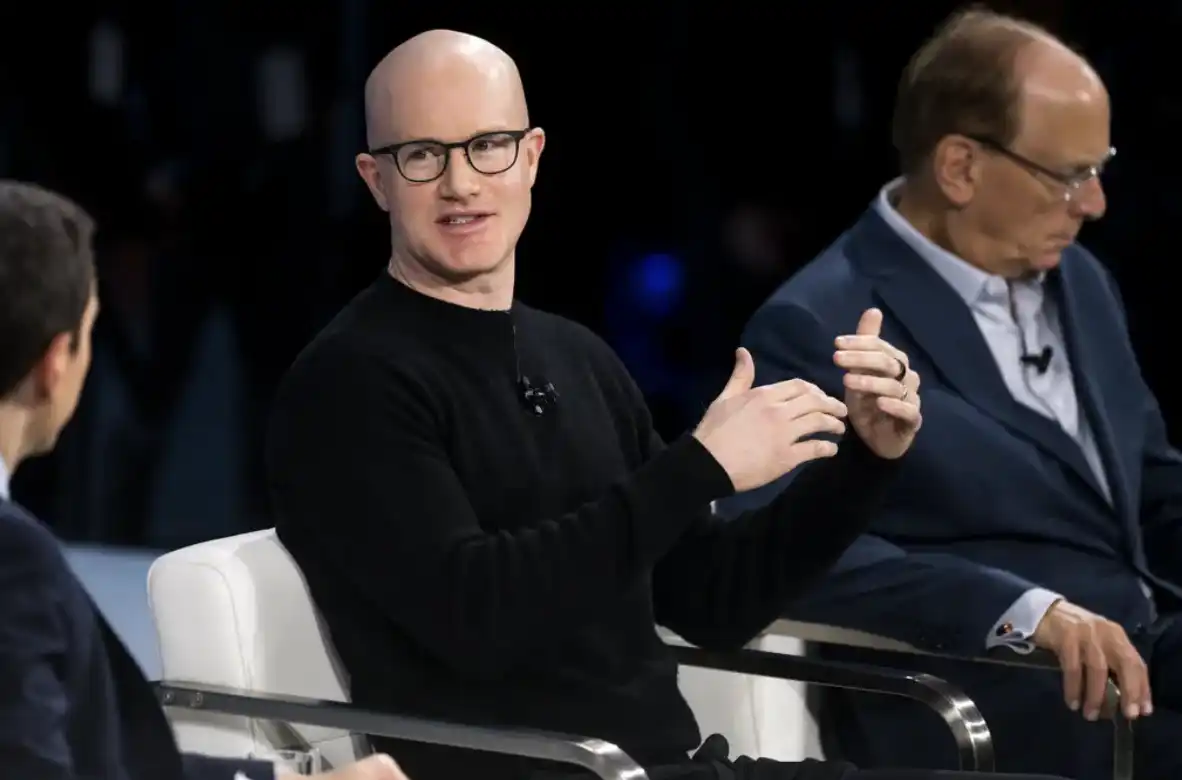
A cryptocurrency bill vote scheduled for Thursday was canceled after Coinbase CEO Brian Armstrong publicly spoke out against the bill on Wednesday evening. Image Source: The New York Times
After months of negotiations, a significant cryptocurrency bill was scheduled to enter the Senate committee's voting phase on Thursday, a critical step in the legislative process.
However, the head of the largest U.S. crypto company, Coinbase, voiced concerns on social media. Coinbase CEO Brian Armstrong wrote on X Wednesday night, "Unfortunately, Coinbase cannot support the current version of the bill. This version would be significantly worse than the current regulatory status quo. We would rather have no bill than a bad bill."
Hours later, the Senate vote was canceled.
Typically, the trajectory of a contentious legislative vote depends on a few key moderate lawmakers amid partisan tug-of-war. But the shift in the fate of this milestone crypto bill this week highlights the immense influence Coinbase now holds in Washington—a position the crypto industry has rapidly ascended to during the Trump presidency.
Over the past few months, congressional staff have been advancing the Clarity Act's drafting. This nearly 300-page bill aims to establish a regulatory framework for almost every crucial aspect of the crypto industry, with many rules co-developed and promoted by industry participants. However, at the eleventh hour, Armstrong expressed opposition to a particular proposed wording, believing it could put one of Coinbase's products at risk of being banned; he also stated that the bill would give too much power to the U.S.' primary financial regulator, the Securities and Exchange Commission (SEC).
Coinbase's decisive move this time is the result of the company's years-long operation of political influence in Washington. As a nearly $700 billion publicly traded company, Coinbase has funded a political action committee (PAC) network that, in 2024, poured over $1.3 billion into influencing congressional elections to support more pro-crypto industry lawmakers.
This intense wave of political contributions to Congress sends a clear message: anyone opposing the crypto industry could become a target.
Today, top industry companies have enough leverage to advance their own interests. Todd Phillips, a finance expert at Georgia State University, stated, "Coinbase played this move very nicely." A Coinbase spokesperson declined to comment on this.
Founded in 2012, Coinbase provides users with a platform to buy, sell, and store cryptocurrencies like Bitcoin and Ethereum. Anyone can log in to their application and make a purchase with a few clicks.
However, not long ago, this company faced a more challenging environment in Washington. In 2023, the U.S. Securities and Exchange Commission (SEC) sued Coinbase, alleging that it operated as an "unregistered exchange," as part of the Biden administration's broader crackdown on the crypto industry. Armstrong, a co-founder of Coinbase, criticized the SEC's "enforcement-led regulation" approach and called for clearer crypto regulatory rules.
Trump's election as president in 2024 changed the landscape entirely. Shortly before taking office, Trump and his sons launched a crypto venture, with Trump publicly stating his intention to make the U.S. the "global capital of crypto."
Within weeks of Trump taking office, the U.S. Securities and Exchange Commission (SEC) dropped its lawsuit against Coinbase and other crypto companies. Subsequently, the crypto industry pushed for legislation to enshrine this regulatory "rollback" into law, preventing harsh future government crackdowns on the crypto industry.
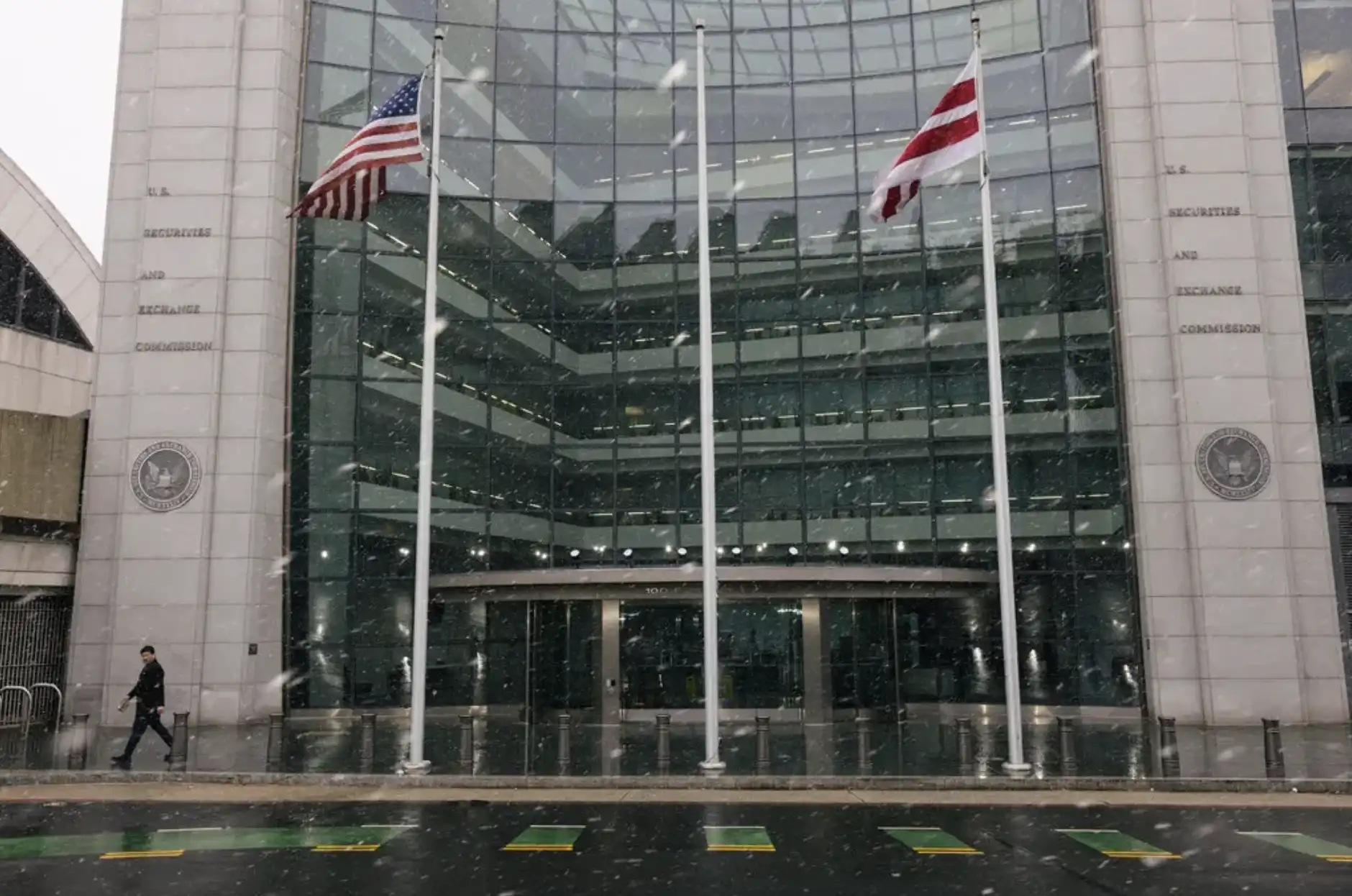
The U.S. Securities and Exchange Commission (SEC) dropped its lawsuit against Coinbase shortly after Trump's inauguration last year. Image Source: The New York Times
In July of this year, with government backing, the House passed its version of the "Clarity Act," largely adopting the crypto industry's proposed new regulatory framework. This act will make it easier for companies like Coinbase to argue that digital currencies are not securities, thus avoiding federal securities regulations aimed at protecting investors and markets.
However, the bill faced resistance in the Senate. Last fall, Senate Democrats proposed rules to tightly regulate Decentralized Finance (DeFi), a branch of the crypto space, sparking strong industry backlash.
Meanwhile, banking industry lobbying groups pushed to include a provision in the bill banning cryptocurrency exchanges like Coinbase from paying interest to stablecoin holders. Stablecoins are a type of digital currency designed to maintain a price of 1 USD. The banking industry believes that such "interest-bearing products" offered by crypto exchanges would undermine traditional banking as they compete with traditional deposit accounts.
This issue quickly became a key concern for Coinbase. The potential ban on interest payments could impact one of its revenue streams. Coinbase's head of policy, Kara Calvert, stated, "Competition is about offering these kinds of incentive programs, and that's critical."
The latest version of the "Clarity Act" draft bill in the Senate was released close to midnight on Monday. Congressional staff and crypto industry executives immediately began reviewing the text, rushing to complete the reading before the Senate committee meeting scheduled for Thursday. This meeting, known as a "markup," would provide senators with an opportunity to propose amendments. As the markup approached, despite other crypto industry executives expressing support for the bill on social media, Armstrong announced he would withdraw his support.
On Wednesday night, Senator Tim Scott, a Republican from South Carolina and chairman of the Senate Banking Committee, announced that the markup would be postponed, with the specific timing yet to be determined. In his statement, he said, "All parties continue to communicate in good faith. Our goal is to establish clear 'rules of the road' that protect consumers, enhance national security, and ensure the future of finance is built in America."
You may also like

How AI Trading Systems Perform in Live Markets: Inside the WEEX AI Hackathon Beta Test
WEEX launched a Beta Test to provide participants with a proving ground that closely mirrors real trading conditions, allowing strategy stability, execution capability, and risk control to be tested by the market in advance, while refining an AI trading infrastructure that can truly be deployed in live markets.

Paradex Rollback Roasted, HIP-3 Competition Heats Up, What's New in the Mainstream Ecosystem?

NYSE Plans to Launch 24/7 Stock Tokenization Trading, Is the Moat of the Crypto Market Disappearing?

Why Can Coinbase Halt a CLARITY Act Vote with Just One Sentence?

31 Investments, 4 IPOs: Veteran VC Pantera's 2025 Report Card and 2026 Outlook

Here’s What Happened in Crypto Today
Key Takeaways Bitcoin experienced a significant price dip as Europe considered retaliatory trade measures against the U.S. The…

Key Market Intelligence on January 16th, how much did you miss?

Market Correction Drives Major Drop in Meme Coins, WhiteWhale Suffers Significant Losses
Key Takeaways WhiteWhale’s price has plunged by 32.3% over the last 24 hours and is currently 75% below…

Meme Coins Tumble: WhiteWhale and Others Face Severe Losses
Key Takeaways WhiteWhale has experienced a significant decline, dropping by 75% from its peak. The market correction has…

Trump’s Tariff Policies Impact Cryptocurrency Market Dynamics
Key Takeaways Trump’s tariff policies lead to significant volatility in cryptocurrency markets, notably affecting Bitcoin prices. Bitcoin experienced…
Market Decline Impacts Meme Coins with WhiteWhale Dropping 75%
Key Takeaways The meme coin market has experienced a severe correction, notably impacting $WhiteWhale, which has decreased by…

Market Correction Reveals Dramatic Price Shifts in Meme Coins
Key Takeaways WhiteWhale has experienced a steep decline, dropping 75% from its peak. In contrast, $BLACKWHALE surged by…

Federal Judge Blocks SBF’s Second Request for Pretrial Release
Key Takeaways A federal judge has denied the second request from Sam Bankman-Fried (SBF) for pretrial release. The…

Brian Shroder Resigns as Binance.US CEO, Firm Undergoes Strategic Changes
Key Takeaways Brian Shroder steps down as CEO of Binance.US, replaced temporarily by Chief Legal Officer Norman Reed.…

Market Correction Causes Significant Drop in Meme Coin Values
Key Takeaways WhiteWhale’s value has decreased by 32.3% in the past 24 hours. The coin is currently trading…

Market Correction Halts Meme Coin Rally: WhiteWhale Suffers Massive Losses
Key Takeaways WhiteWhale experiences a significant price drop, declining 75% from its peak. BlackWhale showing better performance, increasing…

Market Correction Sparks Unsettling Decline in Meme Coins
Key Takeaways The cryptocurrency market correction has significantly impacted meme coins, notably leading to a 75% drop in…

Meme Coin Market Faces Sharp Decline as WhiteWhale Falls 75%
Key Takeaways WhiteWhale has plummeted 75% from its peak amid the current market correction. Several meme coins, including…
How AI Trading Systems Perform in Live Markets: Inside the WEEX AI Hackathon Beta Test
WEEX launched a Beta Test to provide participants with a proving ground that closely mirrors real trading conditions, allowing strategy stability, execution capability, and risk control to be tested by the market in advance, while refining an AI trading infrastructure that can truly be deployed in live markets.
Paradex Rollback Roasted, HIP-3 Competition Heats Up, What's New in the Mainstream Ecosystem?
NYSE Plans to Launch 24/7 Stock Tokenization Trading, Is the Moat of the Crypto Market Disappearing?
Why Can Coinbase Halt a CLARITY Act Vote with Just One Sentence?
31 Investments, 4 IPOs: Veteran VC Pantera's 2025 Report Card and 2026 Outlook
Here’s What Happened in Crypto Today
Key Takeaways Bitcoin experienced a significant price dip as Europe considered retaliatory trade measures against the U.S. The…


 App
App