
- Buy Crypto
- Markets
- Futures
- Spot
- Copy Trade
 Earn
Earn- More
K-Pop, Lazarus, and Cryptocurrency: The Korean Crypto Exchange Saga

Key Takeaways
- The Korean cryptocurrency market, notably exchanges like Upbit, has consistently been a target for North Korean cyberattacks, losing billions over time.
- Lazarus Group, a North Korean hacking collective, uses stolen crypto-assets to fund missile development and evade international sanctions.
- South Korean exchanges struggle against these state-backed cyber assaults due to geopolitical tensions and high liquidity.
- Despite regulatory advances, Korean exchanges remain vulnerable to sophisticated attacks, spotlighting broader crypto-industry security challenges.
WEEX Crypto News, 2025-11-28 10:02:10
Introduction: The Battle Beyond the Border
In the realm of cryptocurrency, South Korea’s exchanges serve as both bustling trading hubs and vulnerable targets of geopolitical tension. Known as a breeding ground for new technologies and fervent crypto investors, Korea’s market is notorious for high liquidity and volatility, a tempting target for exploitative entities. This narrative delves into a complex saga where hacking meets high stakes, focusing on the perpetual conflict between South Korean crypto exchanges and North Korean cyberforces.
Historical Context: A Chronicle of Breached Forts
Tracing the trajectory of South Korea’s tumultuous crypto saga requires us to step back in time and examine incidents of significant breaches. One cannot overlook 2017 as the dawn of South Korea’s formidable crypto era when Bithumb, one of the country’s largest exchanges, was infiltrated. Hackers procured sensitive data from a Bithumb employee’s computer, leading to the loss of $32 million via targeted phishing campaigns. This breach highlighted glaring security flaws like unencrypted client data and lack of basic cybersecurity measures — a stark wake-up call for the industry.
Youbit, another prominent exchange, suffered catastrophic attacks that same year, leading to its bankruptcy. The recurring breach narratives punctuated by North Korean presumptions began to surface, marking a significant shift in cyber-warfare complexity.
Escalating Attacks and Adaptation
Fast forward to 2018, the narrative of South Korea’s crypto exchanges took a grim turn with repeated assaults on its fortresses. A striking attack on Coinrail, involving ICO tokens, and a subsequent compromise of Bithumb’s hot wallet underscored evolving hacker strategies. It was in this climate that South Korea initiated its first comprehensive security audits of exchanges, aiming to reinforce defenses.
Despite increased scrutiny and regulatory hurdles, 2019 witnessed Upbit falling prey to hackers, with 342,000 ETH siphoned off. Advanced tactics like Peel Chain obfuscation were used to launder these assets across multiple non-KYC platforms, a testament to the sophistication of these cyber aggressors.
The Lazarus Group: A Shadowy Puppeteer
When considering the sustained cyber-offensive against South Korean exchanges, one name recurs: the Lazarus Group. Derived from North Korea’s Reconnaissance General Bureau, this elite hacking faction transitioned from traditional financial heists to cryptocurrency extrication. Lazarus gained notoriety with cyberattacks, including Sony Pictures in 2014 and Bangladesh’s central bank in 2016, before setting its sights on the less regulated crypto space.
South Korea, with its high liquidity and entrenched digital culture, presented an ideal target for Lazarus. The so-called “kimchi premium,” observed when local crypto prices outpace global markets, signifies substantial profit prospects, particularly in Bitcoin arbitrage. For Lazarus, this premium indicates ripe pickings — vast liquid funds stored in vulnerable hot wallets.
Geopolitical Underpinnings: Beyond the Crypto Frontier
Directing North Korean attacks on South Korean exchanges extends beyond financial motives; it reflects deeper geopolitical maneuvering. Exploiting linguistic affinity, North Korean actors orchestrated social engineering feats, crafting realistic job offerings and phishing scams devoid of language barriers. Each successful raid on a South Korean exchange potentially bolsters North Korea’s missile programs, sidesteps sanctions, and funds governmental projects amidst economic isolation.
Dug deep in UN reports, the extraordinary narrative links defrauded crypto assets to Pyongyang’s nuclear ambitions. The clandestine transformation of digital currencies into state capital highlights an institutional system as formidable as it is invisible.
Regulatory Landscape and Market Realities
In response to these multifaceted threats, 2020 saw the enactment of the Specific Financial Information Law in South Korea, mandating comprehensive ISMS certifications for exchanges. It pruned the crypto ecosystem to a few compliant giants like Upbit, though security challenges persist. The recent assault on Upbit’s Solana wallet — marking a historic recurrence on the exact date a year after the devastating 2019 breach — underscores persistent vulnerabilities.
Despite regulatory frameworks, financial institutions’ commercial constraints juxtapose poorly against Lazarus’ state-backed vast resources and capabilities. The dichotomy between regulatory ideals and facing an advanced persistent threat is daunting.
Global Repercussions: A Larger Crypto Conundrum
Korea’s challenges bleed into the broader global cryptosphere, where other state-sponsored factions, majorly Russian and Iranian, target exchanges worldwide. Crypto’s centralized nodes — exchanges, cross-chain bridges, and hot wallets — epitomize high-value targets brimming with digital wealth. These chokepoints present low-hanging fruit for adept attackers who can afford endless trial runs against commercial defenses.
The Lazarus strategem manifests this enduring clash of ideology, where failure is tolerable for hackers solo, but a fatal lapse for exchanges. The relentless cat-and-mouse game showcases an asymmetry of resources and the delicate balance between emerging technologies and security.
Conclusion: A Precarious Future
Korea, a vibrant epicenter of technological progression, stands on a cryptocurrency battlefront shaped by economic lust and strategic governance. The enduring saga on its exchanges, marred by continuous breaches, necessitates relentless security enhancements and industry solidarity. As global challenges amplify, collective vigilance and technological resilience shall guide the protection of digital assets.
FAQs
How do North Korean hackers navigate crypto markets effectively?
North Korean hackers, particularly the Lazarus Group, leverage their expertise in technology and social engineering to circumvent crypto market controls, using techniques such as Peel Chains and exploiting linguistic advantages for phishing.
What is the “kimchi premium” mentioned in the article?
The “kimchi premium” refers to the price discrepancy where cryptocurrencies trade higher on South Korean exchanges compared to global markets, driven by local demand and limited supply. It presents lucrative opportunities for international arbitrage.
How have South Korean regulations evolved in response to these attacks?
South Korean authorities instituted the Specific Financial Information Law, mandating exchanges to achieve strict ISMS certifications, thus enhancing oversight while forcing non-compliant smaller exchanges to exit.
What makes cryptocurrency exchanges vulnerable to such attacks?
Exchanges are centralized gateways, hosting large volumes of liquid assets with often insufficient security measures, making them attractive to sophisticated attackers, especially those with state backing.
Can global regulatory cooperation help curb these state-sponsored hacks?
While cooperation could bolster defenses and streamline responses, success hinges on united regulatory efforts, sharing of vital intelligence, and adapting to technological innovations outmatching static defenses.
You may also like

First Zero, First Revival: A Real Story from the WEEX Global AI Trading Hackathon Preliminary Round
WEEX Labs, the innovation arm of the global crypto exchange WEEX, launched the preliminary round of its flagship AI trading hackathon, AI Wars: WEEX Alpha Awakens, on January 12, 2026. Backed by world-class sponsors including AWS, the prize pool has reached $1.88 million, with a Bentley Bentayga S awaiting the champion in Dubai. Already, 788 elite teams worldwide are battling for a spot in the finals. This is more than a hackathon — it is a real-market stress test for AI trading. Registration remains open until January 18. If you want your AI to face real volatility, this is your moment.
AI Wars: WEEX Alpha Awakens – Insights, Top Strategies, and Real-Market Execution Takeaways
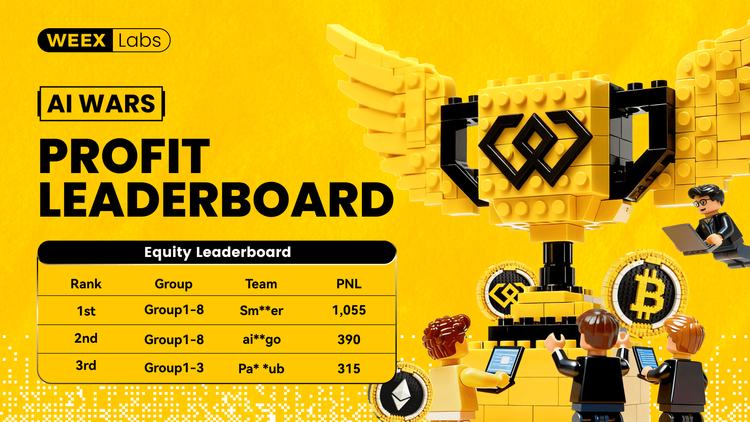
WEEX Labs has officially launched the preliminary round of its global AI trading hackathon, AI Wars: WEEX Alpha Awakens, bringing together hundreds of elite teams to compete in real-market conditions. With a record-breaking $1.88 million prize pool and backing from top-tier sponsors like AWS, the event has quickly become a global proving ground for AI-powered trading strategies. As competition intensifies and standout teams emerge on the leaderboard, the hackathon not only showcases cutting-edge AI execution and risk management, but also offers valuable insights and inspiration for traders looking to build or refine their own AI-driven systems.

WEEX P2P now supports Polish zloty (PLN)—new users and merchant rewards
To make crypto deposits easier, WEEX has officially launched its P2P trading platform and continues to expand fiat support. We're excited to announce that the Polish Zloty (PLN) is now available on WEEX P2P!

Layoffs of 30%, But Spending $250 Million to Buy a Company - What Is Polygon Thinking?

Sentient Reveals Tokenomics, How Will the Market Price It?

AI in the Crypto Market: How Artificial Intelligence is Changing Trading Strategies
This article explores how AI contributes to these movements and share practical strategies to help you navigate an AI-powered crypto market.

Yen Weakness Nears Inflation Red Line: Bank of Japan May Be Forced to Hike Early

Cross-chain Collaboration: Tom Lee Invests $200 Million, Joins Forces with Global Top Streamer Mr. Beast

Interactive Brokers Integrates USDC, US Bank Questions Stablecoin, What's the Overseas Buzz?

Trump Waves Hand, Stirs Venezuela's Game Hurricane
The Genius Stopping Law: Why Did Coinbase Backpedal at the Eleventh Hour?

Fact Check: How Much Money Did the University of Chicago Lose in its Crypto Investment?

Rumor has it that Coinbase is set to acquire Farcaster, still an Acquihire.

VanEck Q1 Market Outlook: Long-Term Bullish on Cryptocurrency, Strong Gold Demand
In the span of a week, what does Twitter's continuous updating on the Coin Circle Plate reform and Musk's intentions mean?

By seizing the first five seconds of Gold Dog, "Dry Sitting P Junior" earns $430,000 in 30 days.

DAU of 8? The Data Truth in the Solana vs. Starknet Public Opinion Battle

ThunderChain Resumes Legal Battle as Former CEO Chen Lei Accused of Embezzlement for Cryptocurrency Speculation - What Happened Back Then?
First Zero, First Revival: A Real Story from the WEEX Global AI Trading Hackathon Preliminary Round
WEEX Labs, the innovation arm of the global crypto exchange WEEX, launched the preliminary round of its flagship AI trading hackathon, AI Wars: WEEX Alpha Awakens, on January 12, 2026. Backed by world-class sponsors including AWS, the prize pool has reached $1.88 million, with a Bentley Bentayga S awaiting the champion in Dubai. Already, 788 elite teams worldwide are battling for a spot in the finals. This is more than a hackathon — it is a real-market stress test for AI trading. Registration remains open until January 18. If you want your AI to face real volatility, this is your moment.
AI Wars: WEEX Alpha Awakens – Insights, Top Strategies, and Real-Market Execution Takeaways
WEEX Labs has officially launched the preliminary round of its global AI trading hackathon, AI Wars: WEEX Alpha Awakens, bringing together hundreds of elite teams to compete in real-market conditions. With a record-breaking $1.88 million prize pool and backing from top-tier sponsors like AWS, the event has quickly become a global proving ground for AI-powered trading strategies. As competition intensifies and standout teams emerge on the leaderboard, the hackathon not only showcases cutting-edge AI execution and risk management, but also offers valuable insights and inspiration for traders looking to build or refine their own AI-driven systems.
WEEX P2P now supports Polish zloty (PLN)—new users and merchant rewards
To make crypto deposits easier, WEEX has officially launched its P2P trading platform and continues to expand fiat support. We're excited to announce that the Polish Zloty (PLN) is now available on WEEX P2P!
Layoffs of 30%, But Spending $250 Million to Buy a Company - What Is Polygon Thinking?
Sentient Reveals Tokenomics, How Will the Market Price It?
AI in the Crypto Market: How Artificial Intelligence is Changing Trading Strategies
This article explores how AI contributes to these movements and share practical strategies to help you navigate an AI-powered crypto market.


 App
App