
What other entrepreneurial opportunities are there besides the blazing x402?


Original Article Title: x402 solves the original sin of the internet: ads
Original Article Author: @_0xaryan
Translation: Peggy, BlockBeats
Editor's Note: In the era of the internet, content could only be sustained through the attention economy. However, as AI agents become the main information consumers, the advertising model will collapse, and blockchain enables "pay-per-view" microtransactions.
x402 is thus seen as a new paradigm: providing a unified on-chain payment interface for agents and content providers, allowing data exchange to return to transactional logic rather than attention grabbing.
The following is the original content:
The "Original Sin" of the Internet
For decades, online advertising has been the sole way the internet has survived.
Everyone is vying for attention. To do this, companies collect all possible data about you, build user profiles, and then show you ads.
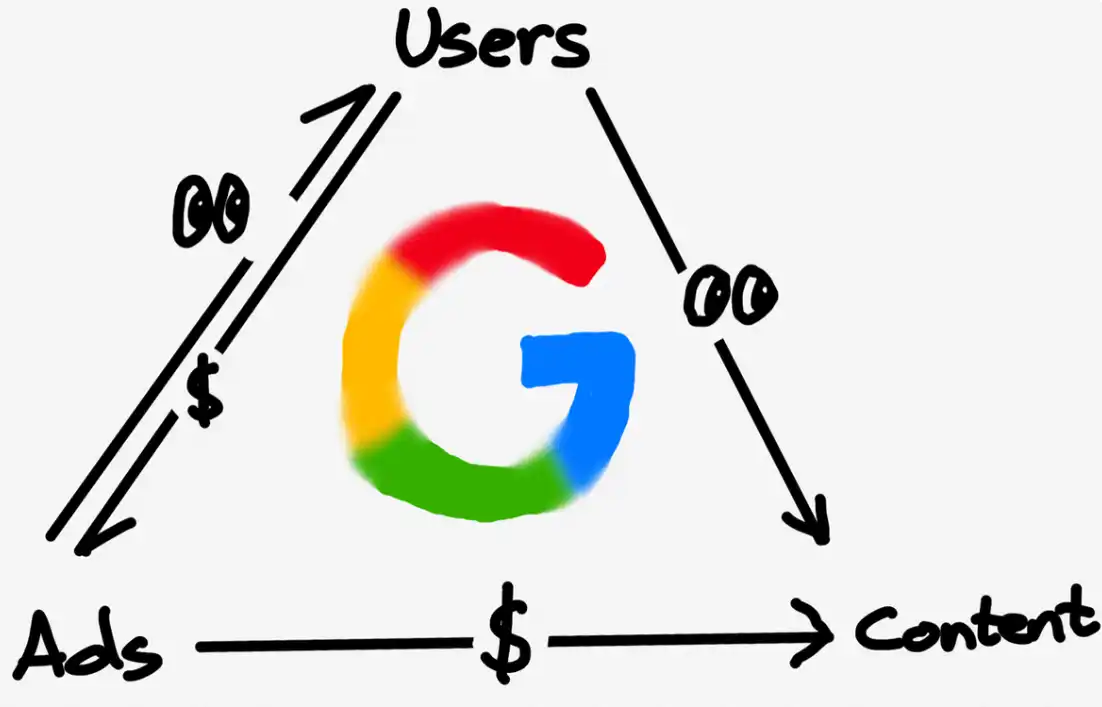
In the internet world, this single business model has supported a market that is now worth tens of trillions of dollars.
In fact, financial mechanisms have existed since the birth of the internet: partnering with payment providers; setting up paywalls on websites; or displaying ads.
But microtransactions (less than $1) have always been economically infeasible—because Visa/Mastercard charge about 2% + $0.10 per transaction.
Therefore, advertising became the only viable model: users can access a large amount of content for free; advertisers can precisely target potential customers; content publishers can earn revenue. It was a balance that benefited all parties.
The Smart Agent Era
Agents are gradually becoming the main consumers of content, rather than humans themselves. They serve as "middleware," replacing humans in information retrieval and interaction.
The result is that advertisers can no longer directly target "humans"; the advertising ecosystem will collapse as a result.
In the future, agents will either "steal" (crawl) content or "purchase" content. APIs (Application Programming Interfaces) will replace traditional browsers and become the default communication method of the internet.
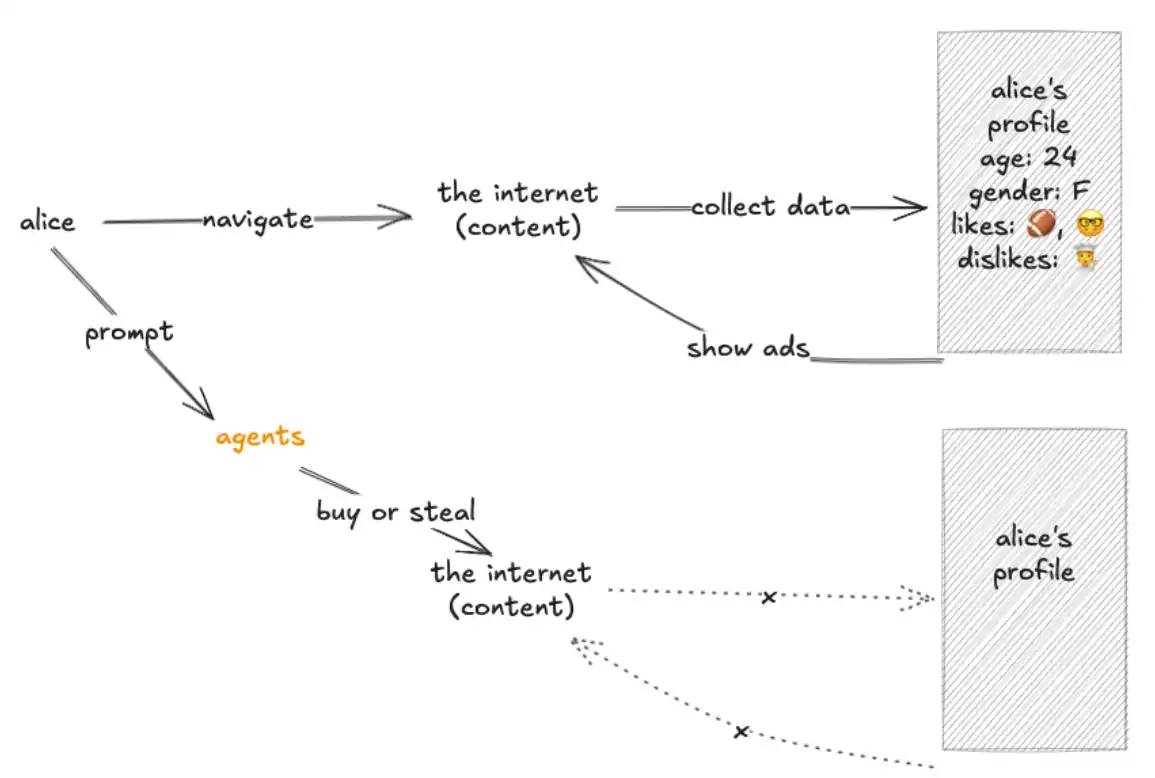
User Journey
However, scraping content is not economically viable, so content creators will transition to charging micro payments for content access, requiring proxies to have a viable payment method.
For decades, micro payments have been unattainable—until the emergence of blockchain.
Blockchains like @solana have made large-scale, low-cost micro payments possible without "exploiting users."
The Emergence of x402
x402 is a standard built on the concept of the HTTP 402 status code ("Payment Required"), which:
Allows consumers to pay for content,
Enables content creators to charge fees,
Provides a unified interface without the need for intermediaries (such as Visa/Mastercard), making "proxied micro payments" a reality.
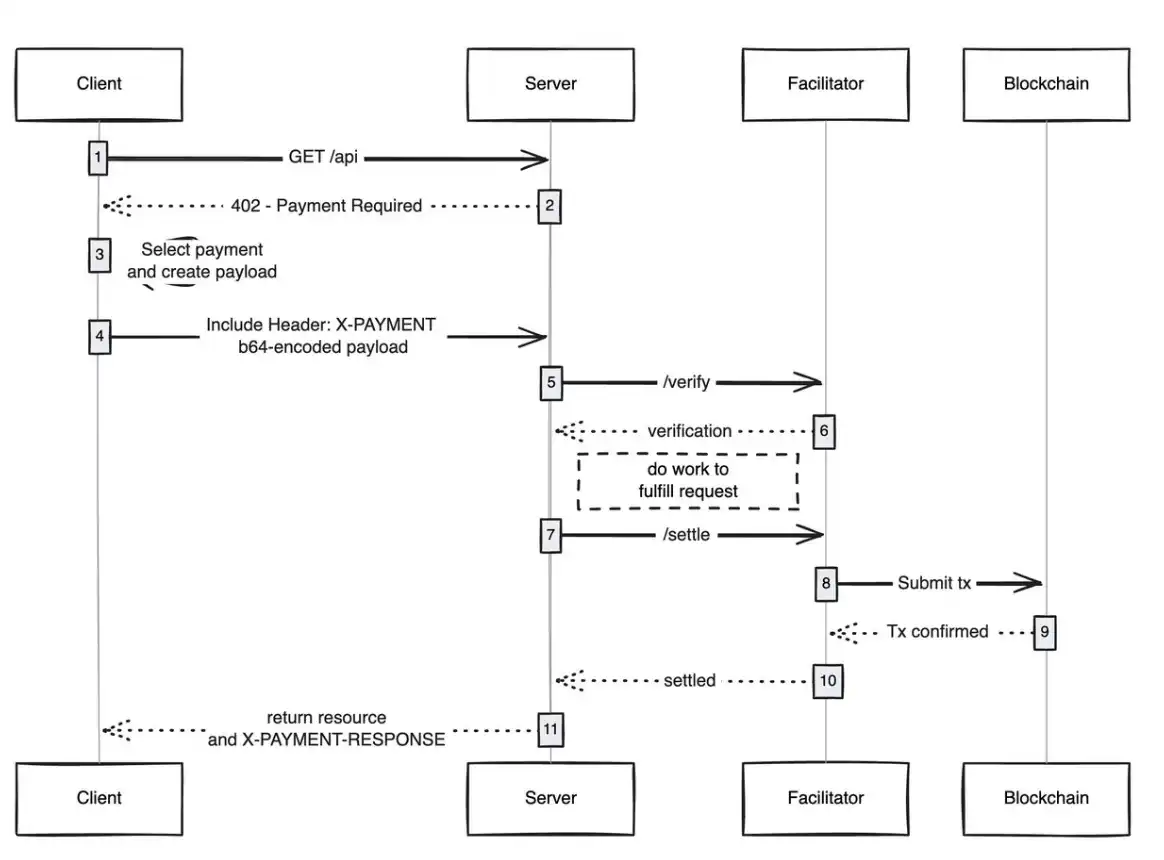
Source: payai.network
Any client (whether a proxy or a browser) sends a content access request, and the content host returns a "payment request," allowing the client to unlock the content upon payment completion.
This opens up a whole new economic model for the "Proxy Web."
Potential Use Cases
1. Gasless User Experience (Gasless UX)
x402 enables users to conduct gasless transactions on any network, simply by holding assets in their wallets.
2. x402 Browser
Someone should develop a native x402 browser based on a Chromium fork.
@brave is best positioned for this: it has a good reputation in the crypto community, includes a built-in wallet, and natively supports IPFS.
3. Onchain Bazaars
The discovery mechanism of traditional markets has barriers.
@CoinbaseDev partially addressed this issue through the "Bazaar" but these bazaars are still off-chain maintained.
An on-chain directory can be built to allow anyone to list their content for sale (APIs, newsletters, e-books, etc.),
and embed a rating system in the directory, similar to OpenRouter's way of sorting models.
4. Skip Ads Payment
Before x402 becomes widespread, an option to introduce "Paid Skip Ads" can serve as a transition.
Users set a daily spending limit, and when entering YouTube, the x402 browser automatically skips ads for you and pays the fee to the advertiser.
Whenever I see a simple technology that can give rise to a new economic system, I am amazed.
x402 is one such technology.
If you are building products in this field, whether as a seller or buyer, contact me — we are creating something new for you.
You may also like

Mastercard Launches Agent Pay for AI, Plans to Record AI Agent Payment Authorizations on Polygon
Mastercard launched Agent Pay for AI, a new payment protocol designed to help AI agents make small payments such as pay-per-use access to data and APIs. The system plans to record human-granted AI agent permissions on Polygon, focusing on verifiable authorization, identity, and payment controls.

Curve Deploys Llamalend v2 on Optimism With 250,000 OP Incentives
Curve launched Llamalend v2 on Optimism with 250,000 OP incentives from the Optimism Foundation. The upgrade expands Llamalend beyond its earlier crvUSD-focused model, adding broader collateral support, LlamaRisk market reviews, and the ability to use Curve LP tokens as collateral.

Raydium Old Liquidity Pool Reportedly Exploited, With $1.34 Million Moved to Ethereum and Tornado Cash
An old Raydium liquidity pool was reportedly exploited for around $1.34 million in USDC, RAY, and wSOL, with the stolen funds bridged to Ethereum and deposited into Tornado Cash. The incident highlights the tail risks of legacy DeFi pools, old contracts, and cross-chain fund laundering paths.

Kalshi Executive Challenges “SBF Backed AI Unicorns” Narrative, Says Leopold Aschenbrenner Was Key Figure
Kalshi executive John Wang questioned the “SBF backed AI unicorns” narrative, saying Leopold Aschenbrenner was the key figure behind major AI investment decisions.

Pantera Capital Partner: How Tokenization is Restructuring the Private Equity and Early Investment Ecosystem?

New York Proposes Stricter Stablecoin Issuer Rules Aligned With Federal GENIUS Act
NYDFS proposed stricter stablecoin issuer rules aligned with the GENIUS Act, covering reserves, custody, redemption timelines, audits, and capital buffers.
Every exchange is a "Universal Exchange."

The counterattack of traditional finance: Alliance chains are quietly reviving

CryptoQuant Says Bitcoin Profitable Supply Is Near 45% Pressure Zone as On-Chain Data Points to Market Repricing
CryptoQuant said Bitcoin’s profitable supply is nearing the 45% pressure zone, signaling rising market stress, unrealized losses, and a possible on-chain repricing phase.

Bitcoin Falls Below 200-Week Moving Average as On-Chain Data Shows Over Half of Supply in Loss
Bitcoin dropped below its 200-week moving average as on-chain data showed over 50% of circulating supply is now in loss, signaling rising market stress.

CFTC Reportedly Plans New Prediction Market Rules Focused on Manipulation Risk and Public Interest Review
The CFTC is reportedly preparing new prediction market rules focused on manipulation risk, public interest review, and retail trader protections.

Meet the new WEEX trial fund—your gateway to greater profits

WEEX Labs Lands at Dutch Blockchain Week: A Disruptive Crypto × AI Conversation Sets Sail in Amsterdam
SK Hynix Reportedly Plans U.S. ADR Listing as Early as August, With SEC Approval Possible in Late June
SK Hynix may pursue a U.S. ADR listing as early as August, with SEC approval reportedly possible in late June amid strong AI chip supply chain demand.

SpaceX vs Tesla vs xAI: Which Elon Musk Trade Has the Biggest Upside in 2026?
OpenAI Reveals It Has Confidentially Submitted an S-1 to the SEC, Keeping the Door Open for a Future IPO
On June 9, according to an OpenAI announcement, the company recently confidentially submitted a draft S-1 registration statement to the U.S. Securities and Exchange Commission (SEC), beginning the preliminary compliance process for a potential initial public offering. OpenAI said it chose to disclose this proactively because it expected the news might leak; however, the company has not yet set a specific listing timeline, and related arrangements may still take some time.
Latest research from 13 top universities including Cornell University: The current state, challenges, and misconceptions of the fusion of Crypto and AI
Deconstructing Anthropic: The Best AI Company, Possibly Also a Type of Organizational Invention
Mastercard Launches Agent Pay for AI, Plans to Record AI Agent Payment Authorizations on Polygon
Mastercard launched Agent Pay for AI, a new payment protocol designed to help AI agents make small payments such as pay-per-use access to data and APIs. The system plans to record human-granted AI agent permissions on Polygon, focusing on verifiable authorization, identity, and payment controls.
Curve Deploys Llamalend v2 on Optimism With 250,000 OP Incentives
Curve launched Llamalend v2 on Optimism with 250,000 OP incentives from the Optimism Foundation. The upgrade expands Llamalend beyond its earlier crvUSD-focused model, adding broader collateral support, LlamaRisk market reviews, and the ability to use Curve LP tokens as collateral.
Raydium Old Liquidity Pool Reportedly Exploited, With $1.34 Million Moved to Ethereum and Tornado Cash
An old Raydium liquidity pool was reportedly exploited for around $1.34 million in USDC, RAY, and wSOL, with the stolen funds bridged to Ethereum and deposited into Tornado Cash. The incident highlights the tail risks of legacy DeFi pools, old contracts, and cross-chain fund laundering paths.
Kalshi Executive Challenges “SBF Backed AI Unicorns” Narrative, Says Leopold Aschenbrenner Was Key Figure
Kalshi executive John Wang questioned the “SBF backed AI unicorns” narrative, saying Leopold Aschenbrenner was the key figure behind major AI investment decisions.
Pantera Capital Partner: How Tokenization is Restructuring the Private Equity and Early Investment Ecosystem?
New York Proposes Stricter Stablecoin Issuer Rules Aligned With Federal GENIUS Act
NYDFS proposed stricter stablecoin issuer rules aligned with the GENIUS Act, covering reserves, custody, redemption timelines, audits, and capital buffers.


