
Week 52 On-chain Data: Selling Pressure Decreasing, Q1 Market Set to Rebound




Original Article Title: "Holiday Liquidity Contraction, Is the Market Bottoming Out? | WTR 12.30"
Original Source: WTR Research Institute
Weekly Review
During this week from December 23rd to December 30th, the price of Sugar Orange reached a high near $99,963 and a low close to $92,520, with a fluctuation range of about 8%.
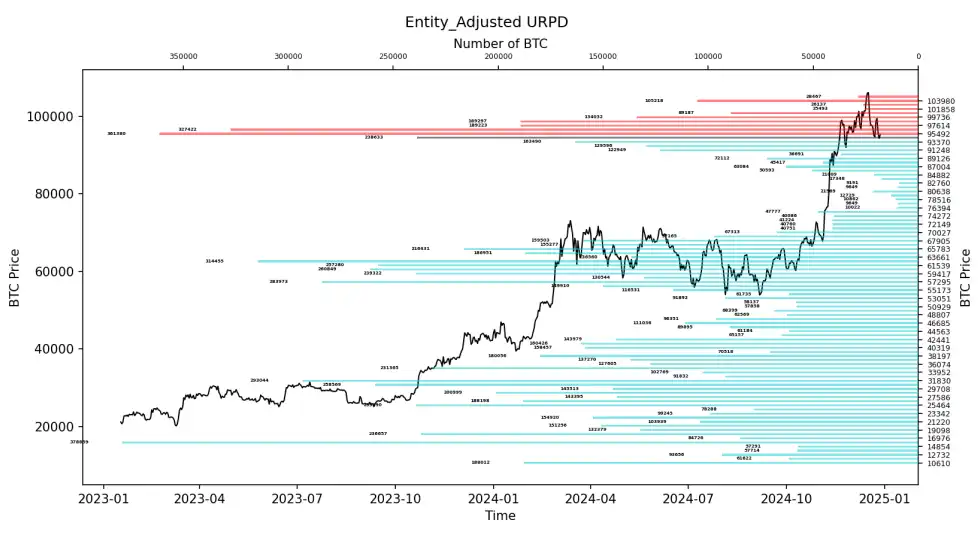
Observing the chip distribution chart, a large number of chips were transacted around 95,000, providing some support or resistance.
• Analysis:
1. 60000-68000 approximately 1.76 million coins;
2. 90000-100000 approximately 1.97 million coins;
• The probability that it will not fall below 87,000 to 91,000 in the short term is 80%;
• The probability that it will not rise above 100,000 to 105,000 in the short term is 70%.
Important News Aspects
Economic News Aspect
1. Data from Vanda Research shows that NVIDIA has attracted $29.8 billion in investments this year, surpassing Tesla to become this year's largest net inflow of retail investors.
2. Economist Gregory Daco stated: When the Federal Reserve reconsiders its interest rate forecast next spring, it may present a more dovish view.
3. In the U.S., initial jobless claims for the week ending December 21st were 219,000, continuing claims rose to 1.91 million, and repeated claims show a gradual upward trend. The labor market is cooling off, but it has not reached a level of concern for the Federal Reserve.
4. OpenAI CEO Altman hopes to transform this non-profit-managed AI development company into a for-profit entity. His biggest obstacle is Microsoft, as the company wields significant influence in this process, having committed to invest over $13 billion in OpenAI.
5. If OpenAI fails to complete the transformation within the next two years, recent investors in the financing round can withdraw their funds along with a 9% interest, totaling approximately $7.2 billion.
Cryptocurrency Ecosystem News Aspect
1. Strive Asset Management has applied to U.S. regulators for approval to list an exchange-traded fund (ETF) investing in MicroStrategy and other companies' issued convertible bonds, aiming to offer exposure to "BTC bonds," described as "convertible bonds issued by MicroStrategy or other companies."
2. Santiment indicates that according to CEX Dashboard data, after a general market decline post-Christmas, whales have been transferring stablecoins to exchanges. Although this does not guarantee that whales will immediately use these stablecoins, it can be seen as a signal as we approach the end of 2024.
3. Santiment indicates that historically, we usually see a $110,000 BTC price when the public least expects it.
4. Morehead states: BTC's price trend consistently follows a four-year halving cycle, where the halving leads to a supply reduction, resulting in significant price increases for BTC. Based on historical trends, BTC is predicted to reach the peak of this cycle in August 2025, with a promising outlook.
5. Citigroup analysts predict that cryptocurrency will experience growth in 2025, driven by factors such as Trump's policies, increased ETF inflows, and stablecoin innovations. Trump's nominated SEC members and supportive stance on crypto are shaping a more crypto-friendly market, while ETFs are opening doors for more U.S. institutional investors.
6. Starting from December 31, 2024, various banks and investment firms will begin offering these new Bitcoin funds to their clients.
Long-term Insights: Used to observe our long-term situation; Bull Market/Bear Market/Structural Changes/Neutral State
Medium-term Exploration: Used to analyze which stage we are currently in, how long this stage will last, and what circumstances we will face
Short-term Observations: Used to analyze short-term market conditions; along with potential directions and events under certain conditions
Long-term Insights
• On-chain creation and destruction of chips
• On-chain large net transfers
• Spot total selling pressure
• Loss panic sentiment
(Image below: On-chain creation and destruction of chips)
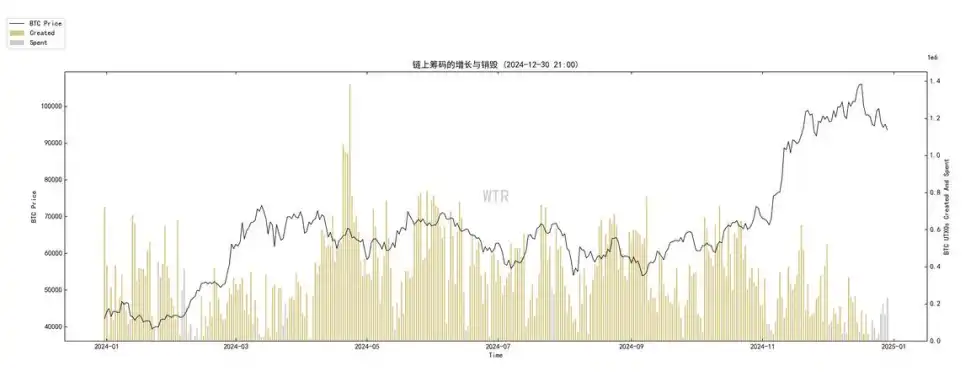
During this period, the on-chain ecosystem is relatively weak, with not many new chips being added. Fresh capital may be somewhat lacking here.
(Image below: On-chain large net transfers)
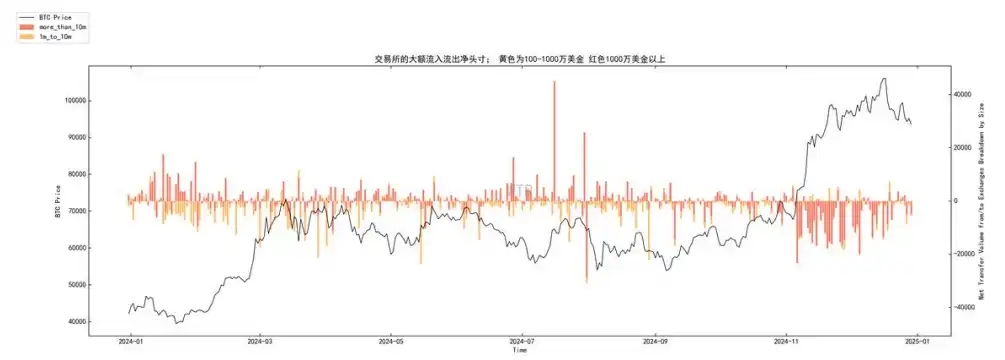
Large transfer transactions show a gradual transition from inflows to outflows.
After a period of adjustment and settling in the market, investors finally show some willingness to buy.
(Spot Price Pressure Chart)
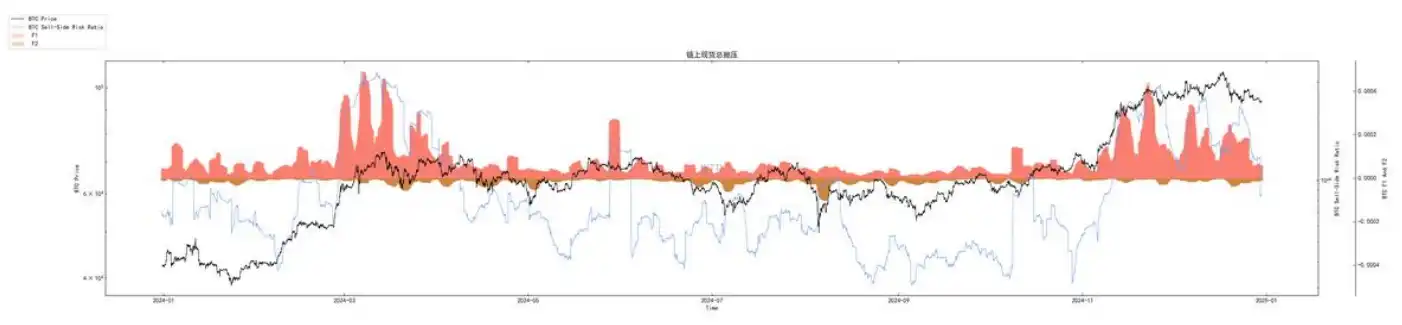
The spot price pressure chart shows that the current on-chain selling pressure has halved.
Although it is far from the previous low point, the overall pressure has started to decrease, and there has not been sustained pressure afterwards.
(Liquidation Panic Sentiment Chart)
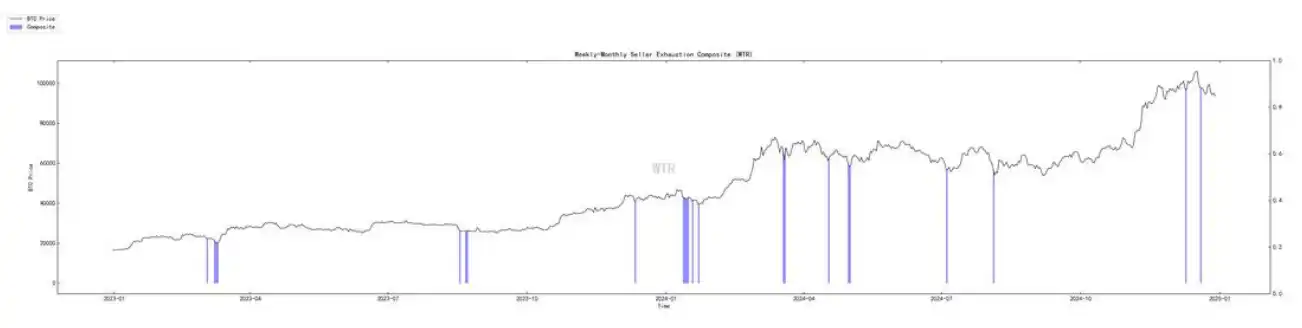
Liquidation panic sentiment has appeared twice at this recent high, and it is expected to appear one or two more times before this market can initially stabilize or, in other words, become stable.
It may still need time to wear off or emotional squeezing.
Mid-term Exploration
• Long-term and short-term participant position changes
• ETH exchange circulation ratio
• Incremental model
• Whale comprehensive score model
• Liquidity supply
(Long-term and Short-term Participant Position Changes Chart)
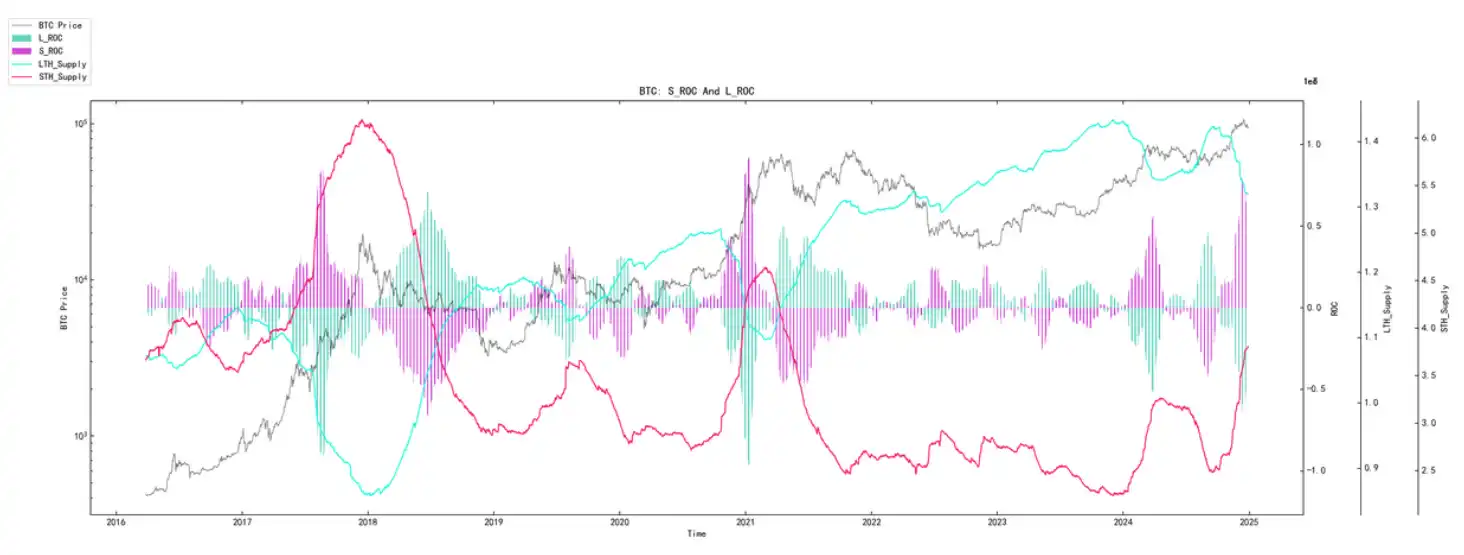
From this comprehensive data, long-term participants are slowly reducing their positions. There are signs of a slow increase in short-term participants' positions, but the current trend is slowing down. The conclusion that can be drawn at this point may be that short-term participants still have remaining buying power, but it is necessary to consider the pace of their slowing down and unwinding while increasing their positions.
(ETH Exchange Circulation Ratio Chart)
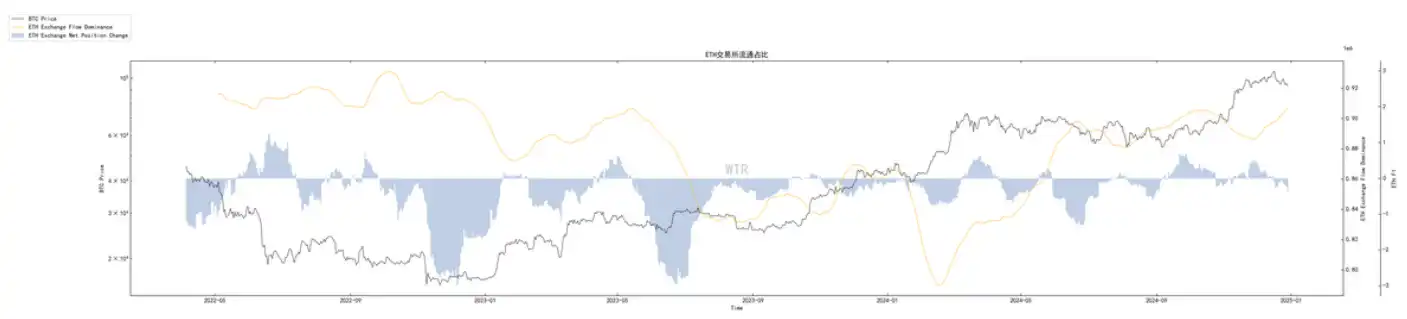
The ETH exchange circulation ratio is still rising, but the upward growth rate has slowed down. There may be a slow shift towards risk aversion in the market or a trend of reducing risk exposure.
(Incremental Model Chart)
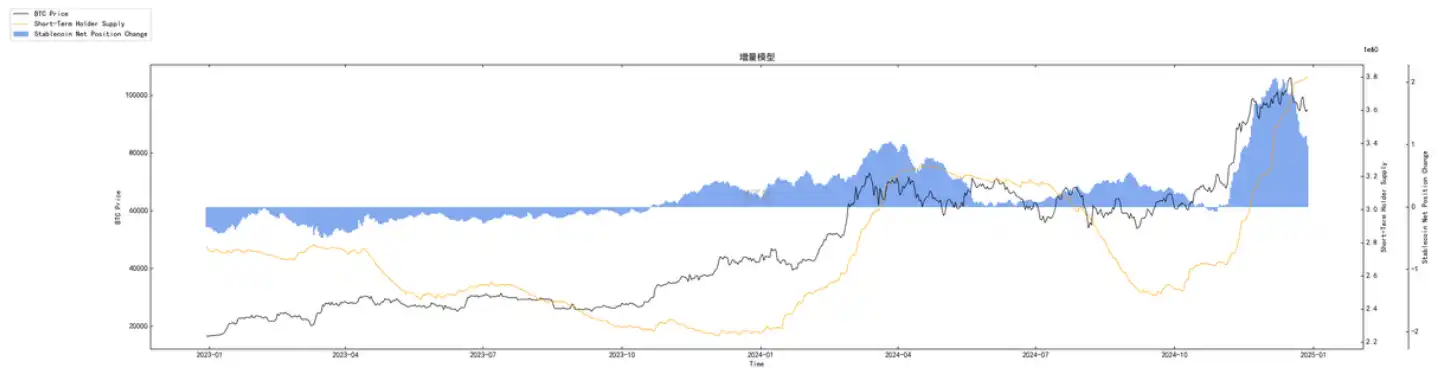
From the current situation, the market has returned to a state that is more biased towards stock rather than flow. It may be the case that stock will be the prevailing environment until increments start to rise again over time.
(Whale Comprehensive Score Model Chart)
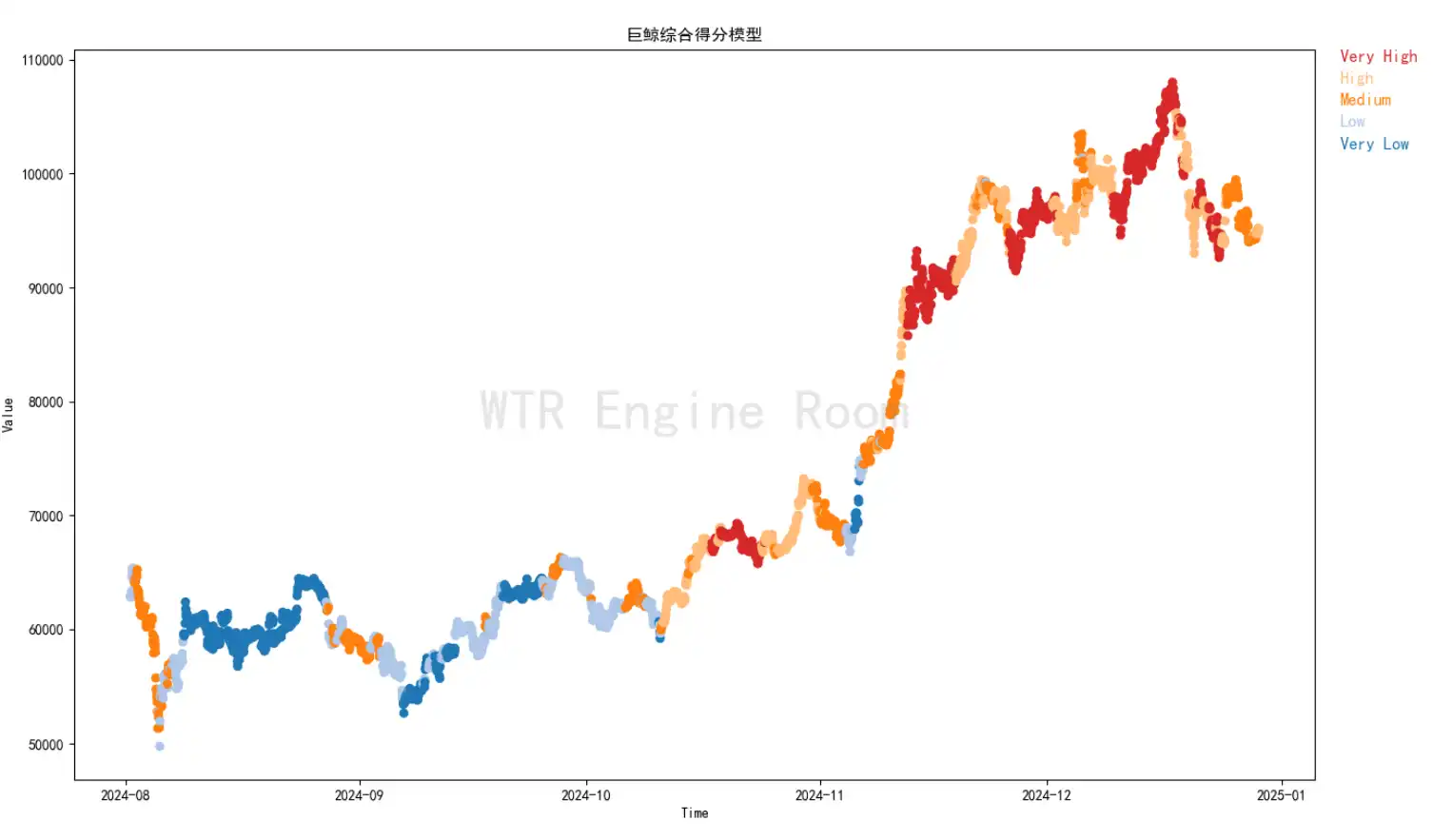
The whales' recent score is gradually decreasing, but it still remains at a level of "moderate" or higher. Compared to the previous "very high" grade score, it has declined.
(Liquidity Supply Chart)
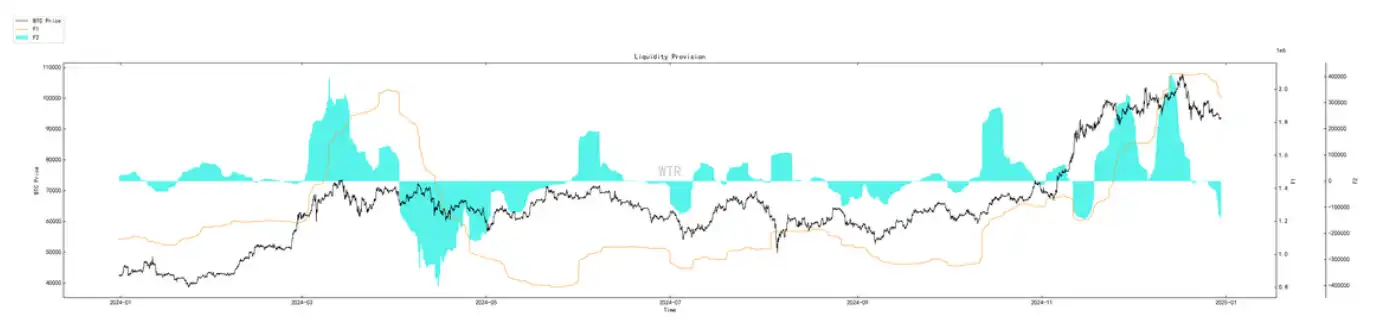
Liquidity is slowly decreasing, and the on-chain may be facing a liquidity contraction state. This may limit the magnitude of on-chain up and down fluctuations, leaning more towards a ranging market structure.
Short-Term Observations
• Derivative Risk Index
• Option Intent Exchange Ratio
• Derivative Trading Volume
• Option Implied Volatility
• Profit and Loss Transfer Amount
• New Addresses and Active Addresses
• Orange Exchange Net Short Position
• Sister Exchange Net Short Position
• Heavy Weight Selling Pressure
• Global Buying Power Status
• Stablecoin Exchange Net Short Position
• Off-chain Exchange Data
Derivative Rating: The Risk Index is in a neutral zone, indicating moderate derivative risk.
(See Derivative Risk Index chart below)
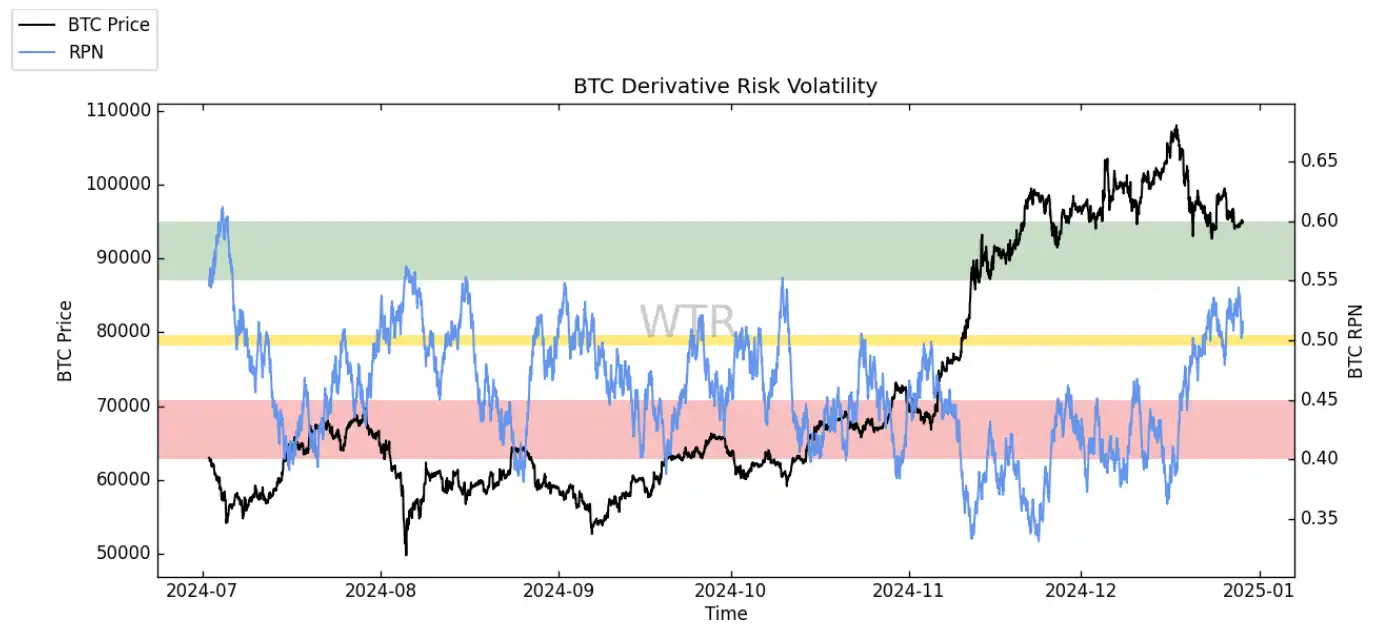
The Risk Index is still in a neutral zone, having approached the green zone briefly last week. Being in a neutral zone means that there is significant room left regardless of the direction in which the market moves.
(See Option Intent Exchange Ratio chart below)
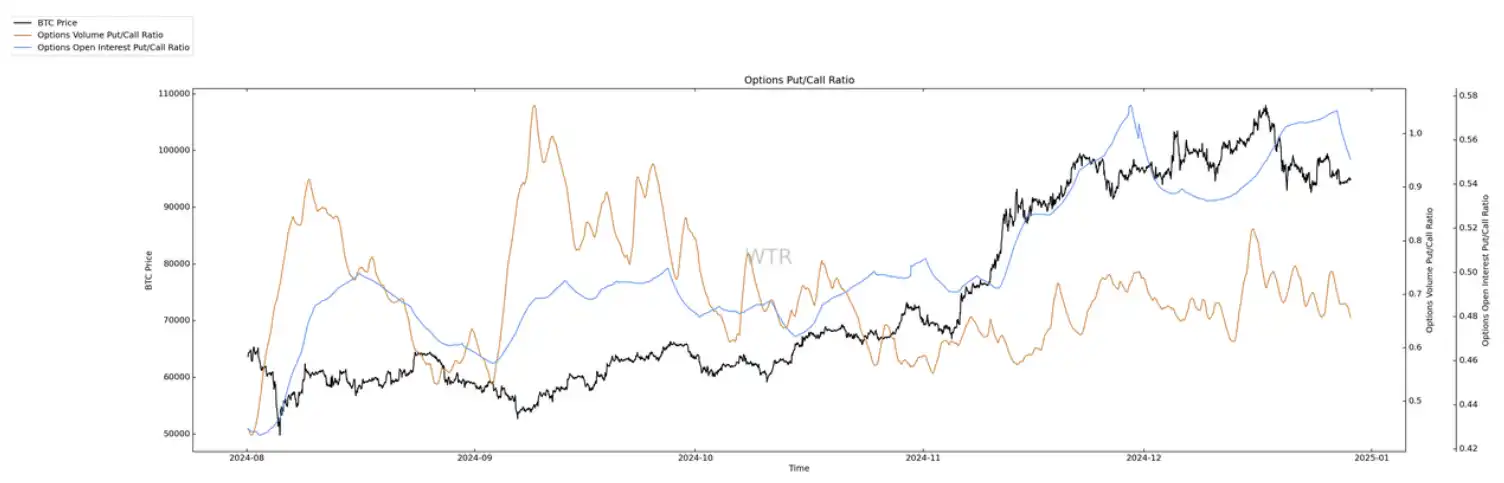
The put-to-call ratio is at a moderately high level, with trading volume at a median level.
(See Derivative Trading Volume chart below)
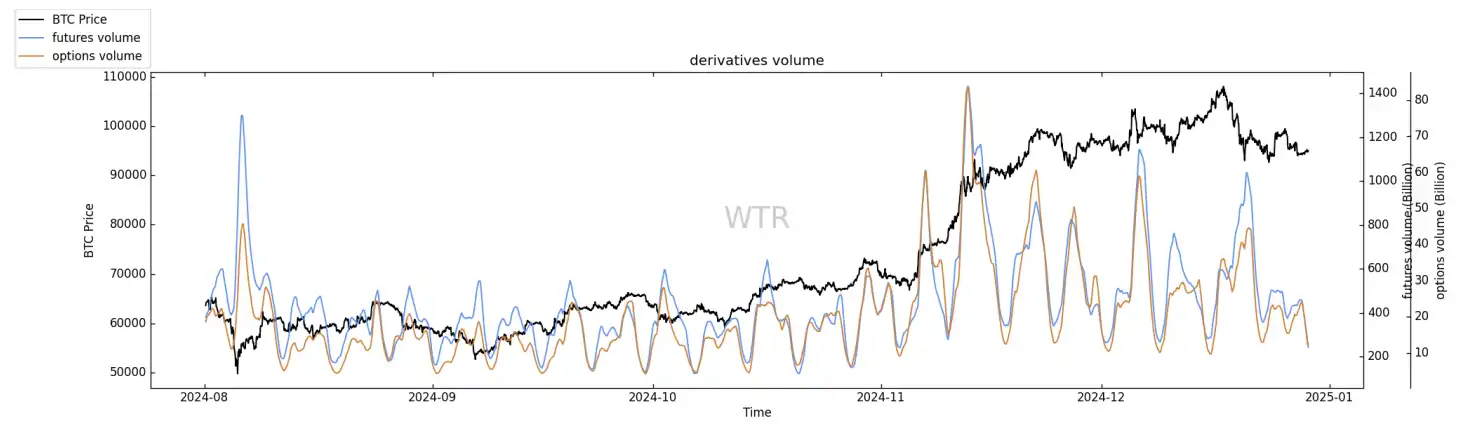
The derivative market is awaiting the next price swing.
(See Option Implied Volatility chart below)
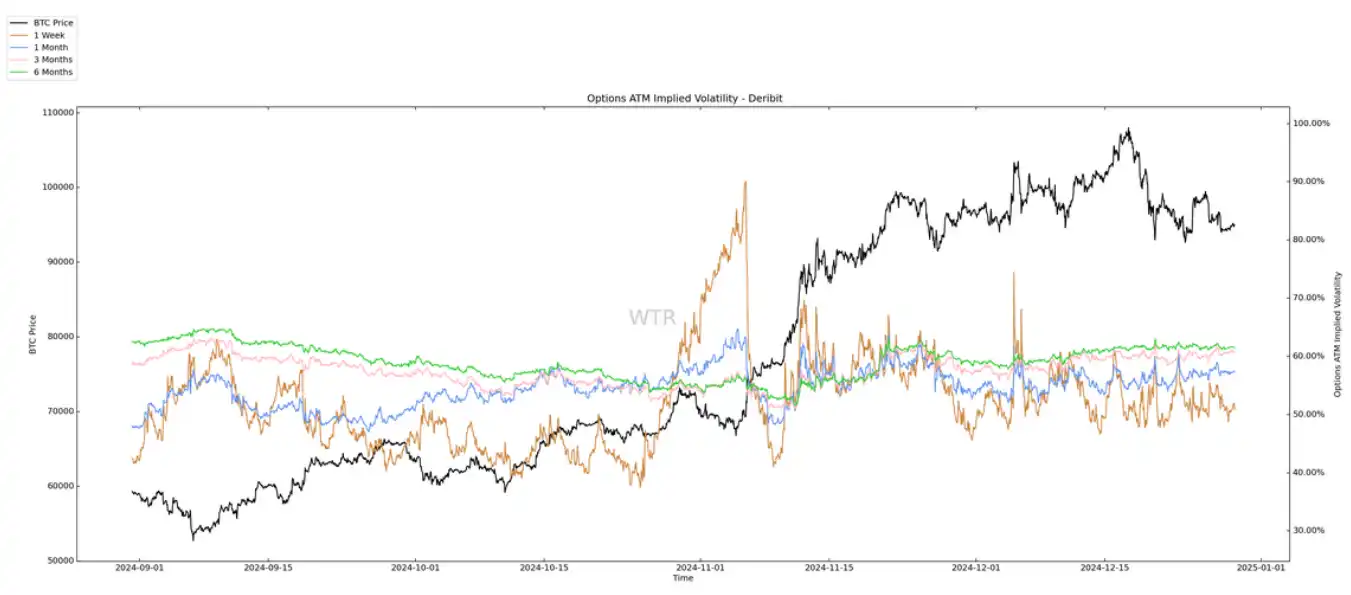
Option implied volatility has not changed significantly.
Sentiment Rating: Neutral
(See Profit and Loss Transfer Amount chart below)
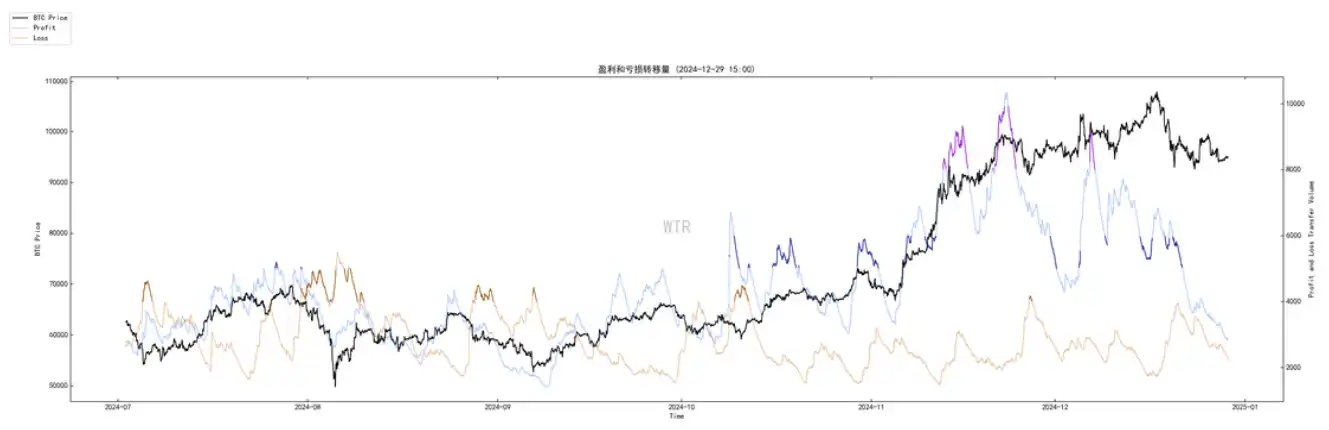
No panic selling was observed last week, and this week's focus is on whether panic selling behavior (orange line) will occur.
(See New Addresses and Active Addresses chart below)
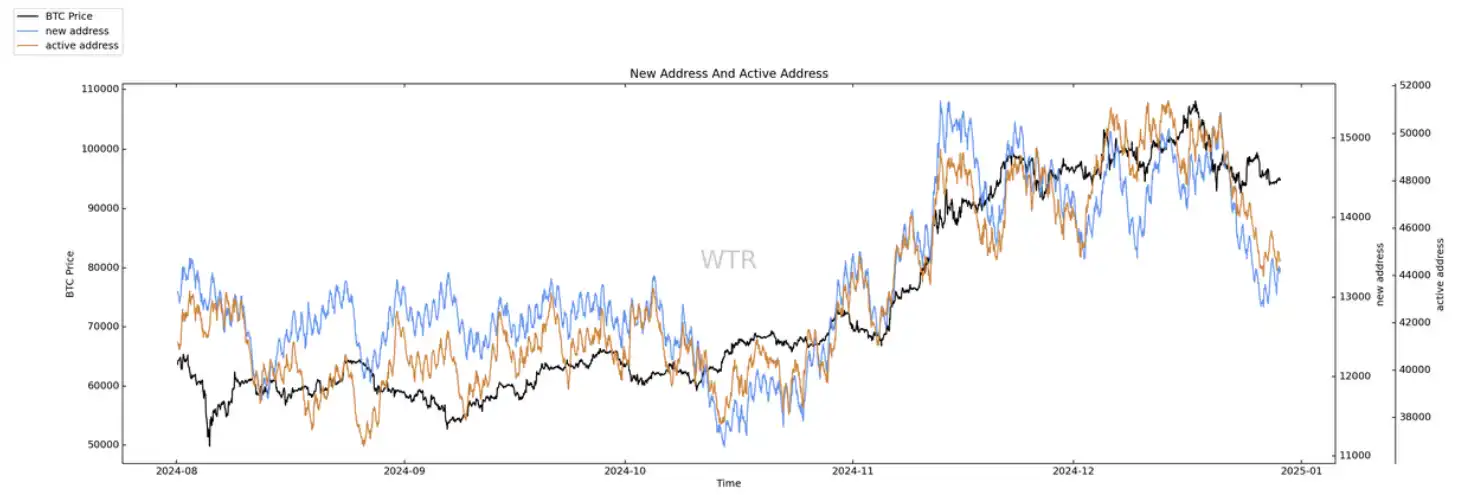
New and active addresses are at a median level.
Spot and Selling Pressure Structure Rating: BTC is in a state of significant outflow accumulation, while ETH has overall minimal outflow accumulation.
(See Orange Exchange Net Short Position chart below)
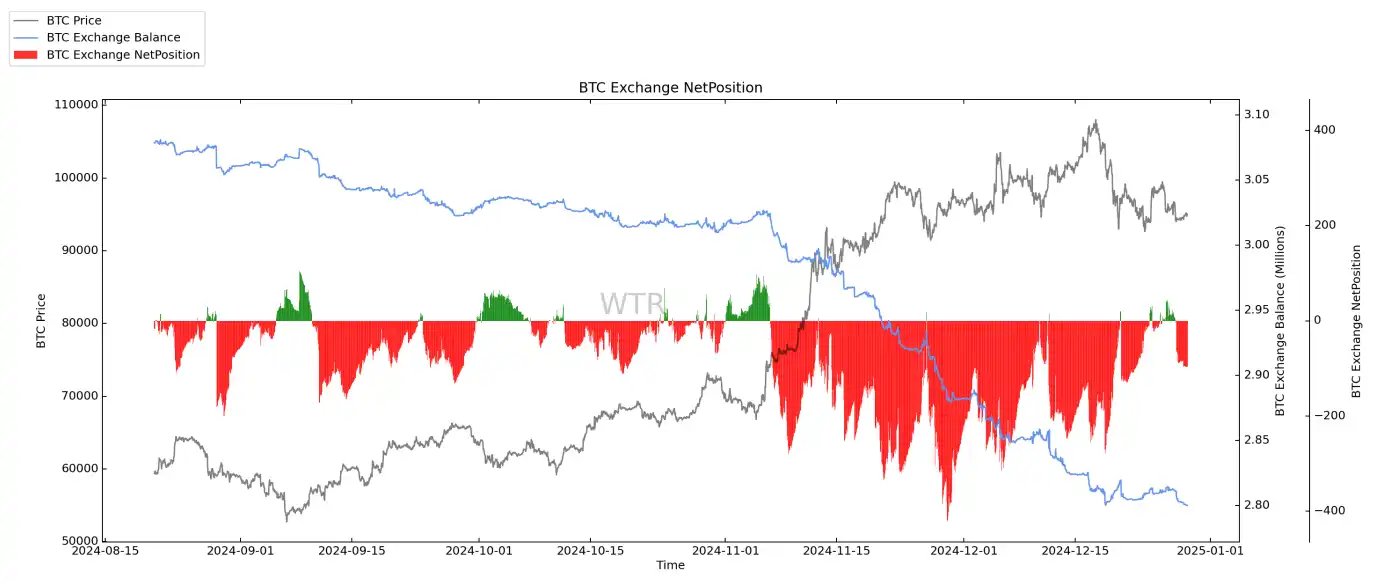
BTC Exchange Net Inflows Continue to Accumulate Significant Outflows.
(See below ETH Exchange Net Inflows)
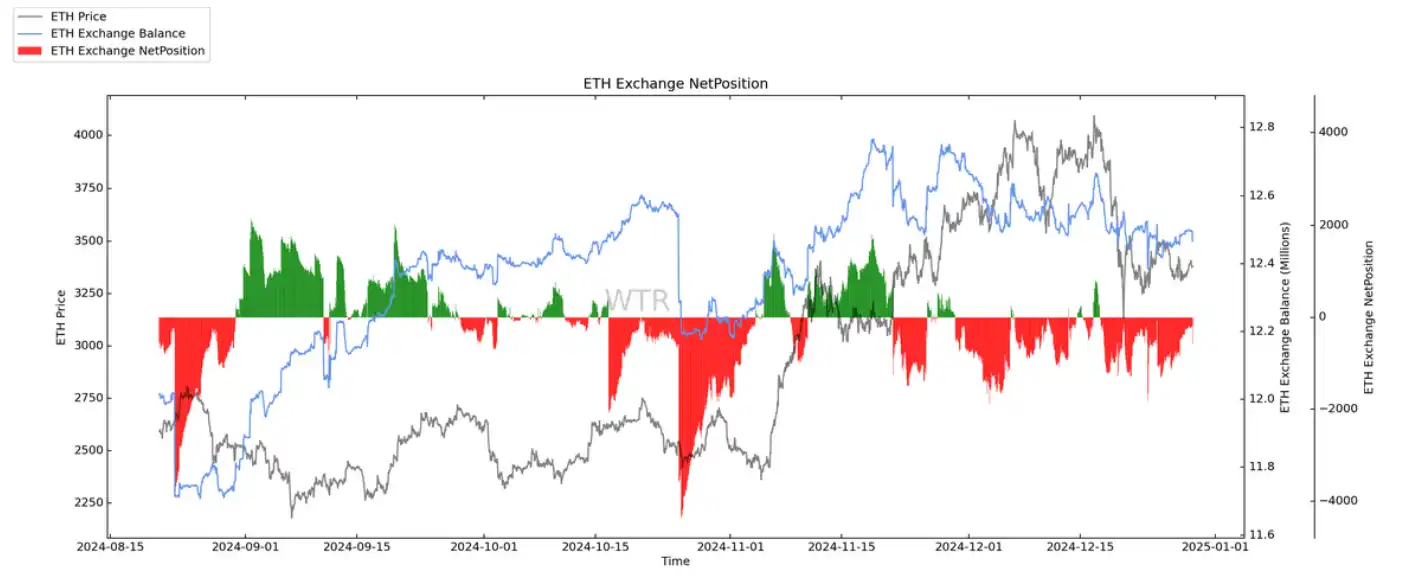
ETH Overall Small Outflows.
(See below High-Weighted Selling Pressure)
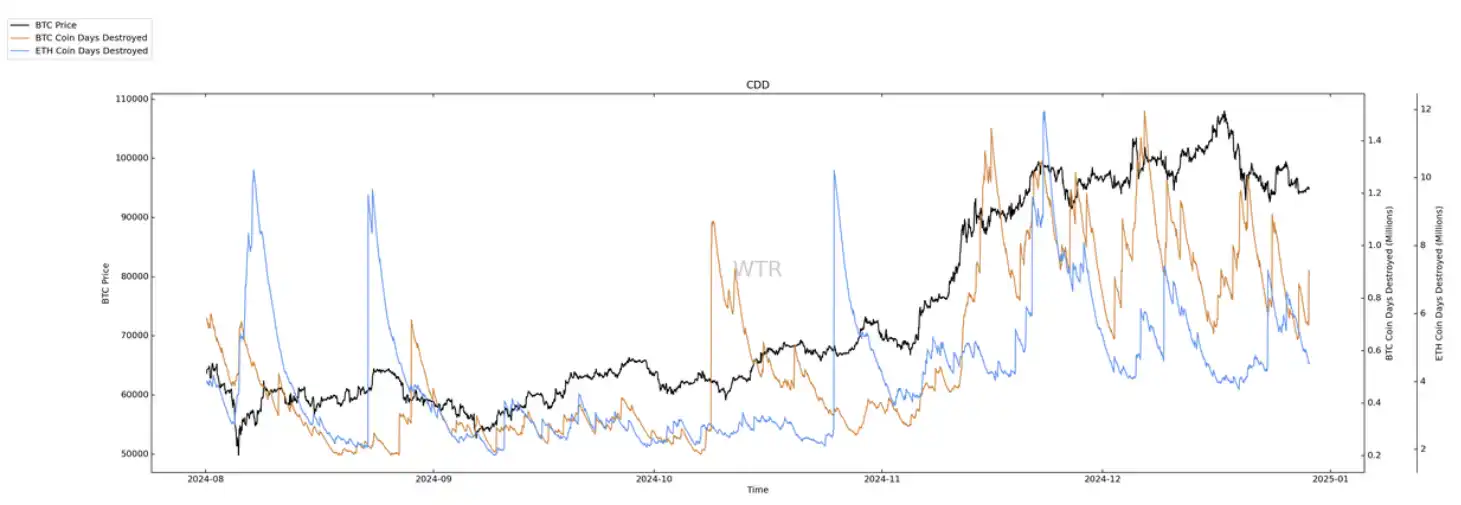
BTC Has a Small Amount of High-Weighted Selling Pressure.
Buyer Power Rating: Global buyer power is in a weakening state, stablecoin buyer power remains the same as last week.
(See below Global Buyer Power Status)
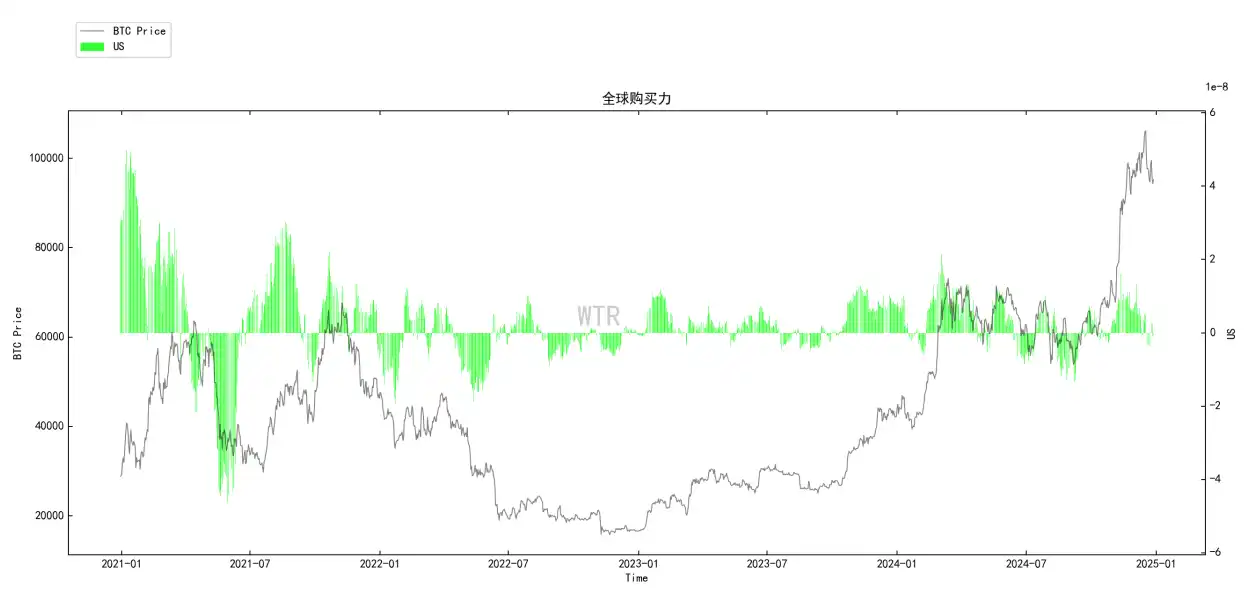
Global buyer power is in a weakening state.
(See below USDT Exchange Net Inflows)
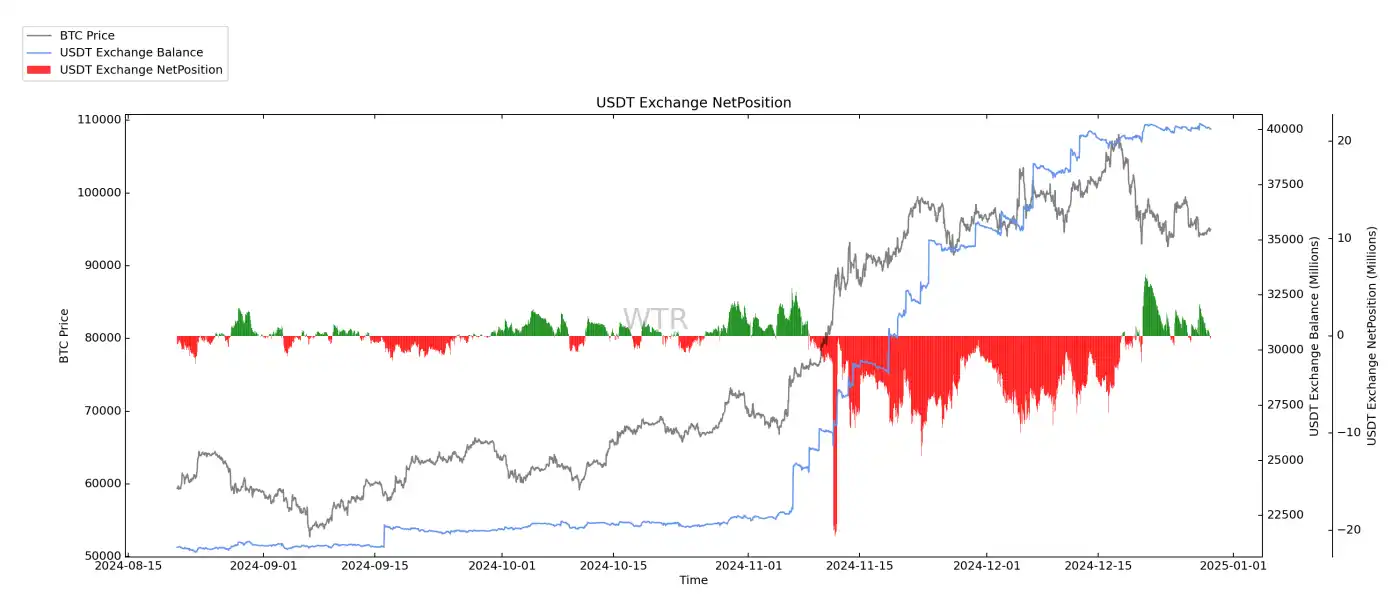
Stablecoin buyer power remains the same as last week.
Off-chain Transaction Data Rating: Willing to buy at 90000; Willing to sell at 100000.
(See below Coinbase Off-chain Data)
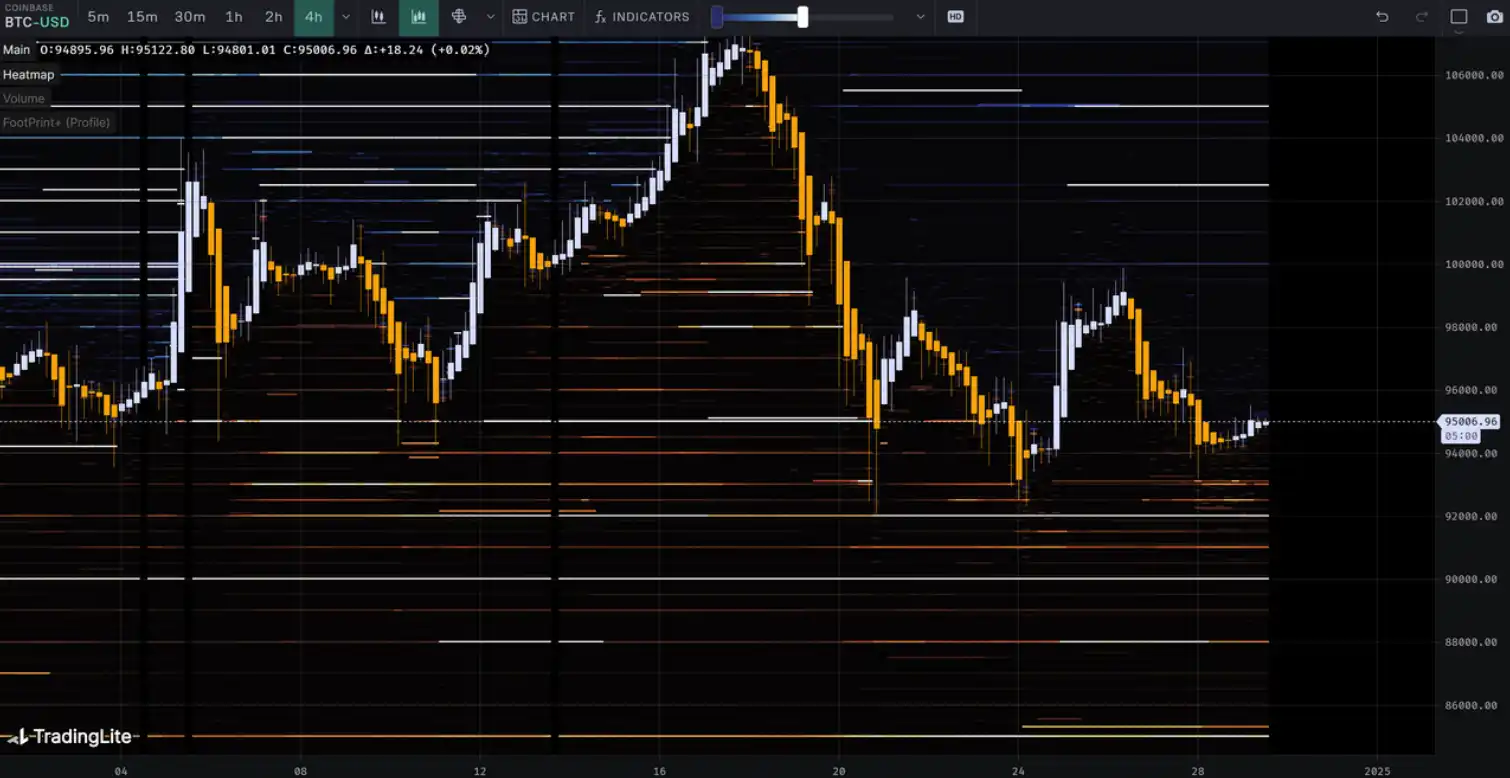
Willing to buy at the price range of 85000 to 90000;
Willing to sell at the price of 100000.
(See below Binance Off-chain Data)
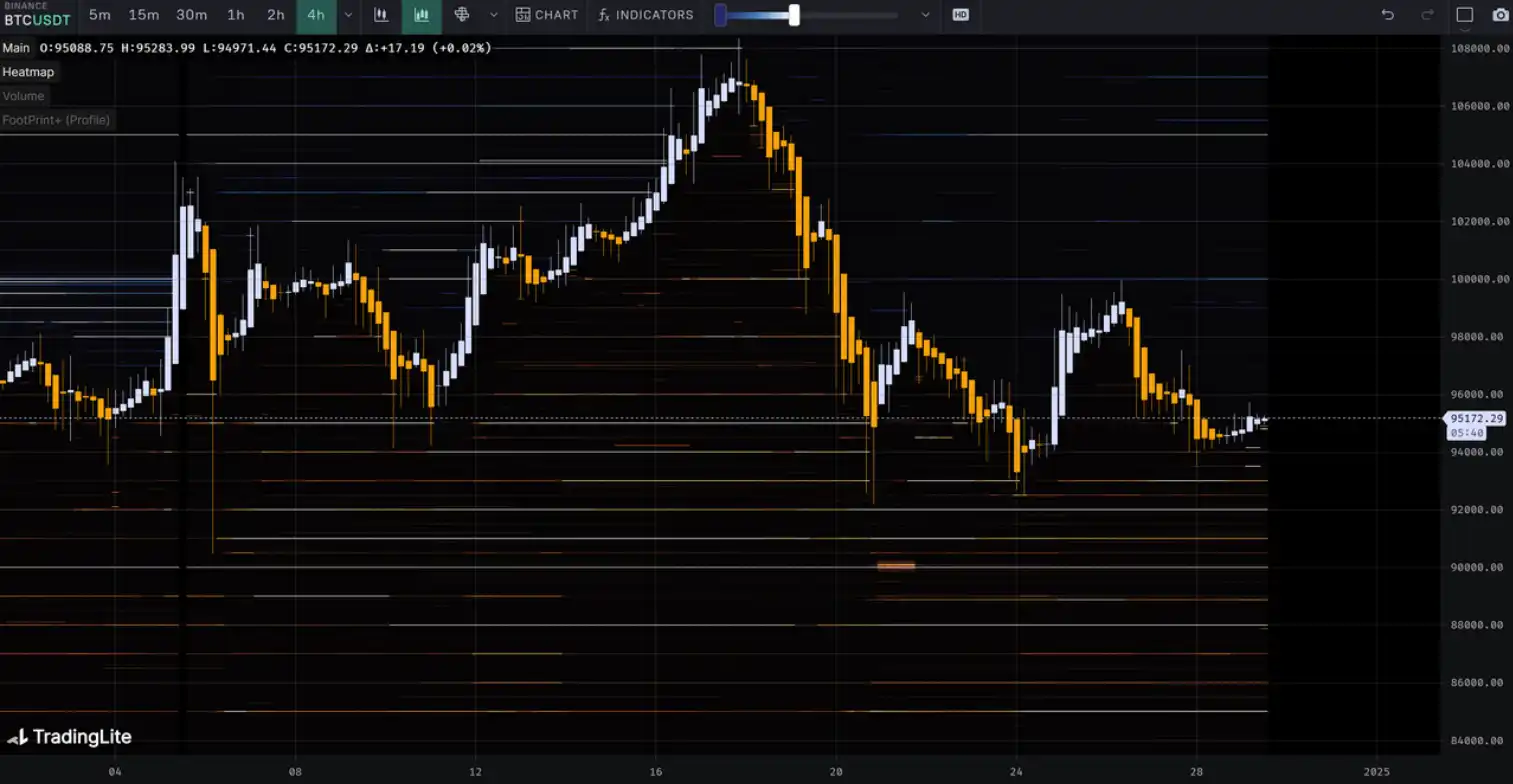
Willing to buy at the price range of 85000 to 95000;
Willing to sell at the price of 100000.
(See below Bitfinex Off-chain Data)
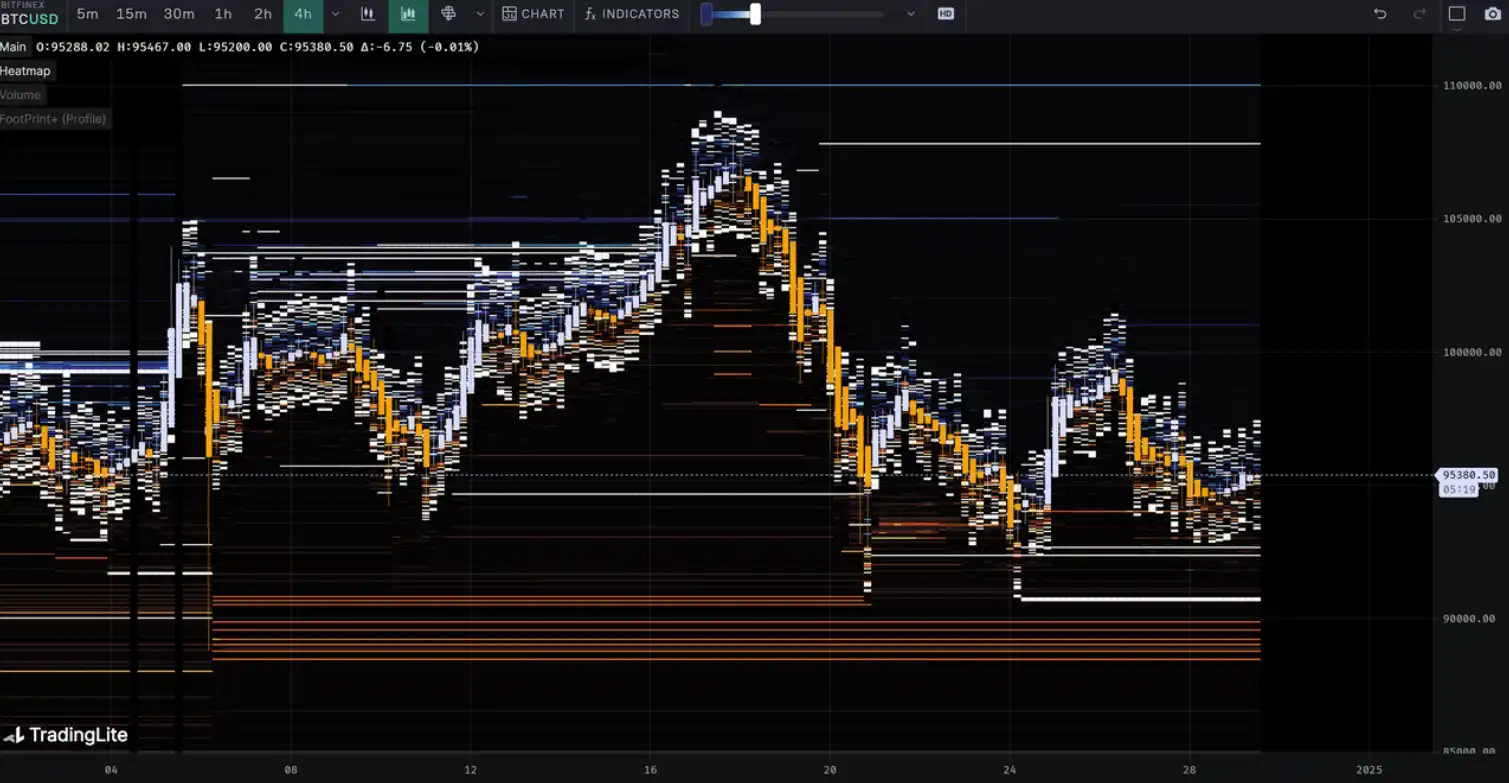
Willing to buy at the price range of 85000 to 90000;
Willing to sell at the price of 100000.
Weekly Summary:
Highlights:
Liquidity decreased during holidays, with relatively minor market changes, appearing quiet. In the first quarters of 2020, 2021, 2023, and 2024, the market has experienced strong rebounds. As we approach the first quarter of 2025, optimism is maintained for the future.
On-chain Long-term Insights:
1. New capital additions are relatively weak or limited;
2. Whales and large holders have transitioned from selling to initial buying interest;
3. Spot sell pressure has not continued to rise, showing a slight decrease compared to before;
4. The market may still require temporal erosion or several emotional panic squeezes.
• Market Sentiment Adjustment:
Adjustment and Correction.
On-chain Mid-term Exploration:
1. Long-term holders are slowly reducing their positions, while short-term holders are increasing their positions at a slower pace;
2. ETH on-exchange circulation is slowly leaning towards a risk-off trend; (may increase the narrative difficulty of small coins)
3. If the incremental speed continues to slow down, on-chain activities may return to a stock rhythm;
4. Whale score has decreased but still holds a rating of "medium" or above;
5. Liquidity is contracting, meaning the range of on-chain movements may be limited, leaning more towards oscillation rather than trend.
• Market Sentiment Adjustment:
Stock, Slowdown
From the current situation, on-chain liquidity has contracted, possibly reverting to a stock and slowing down rhythm.
On-chain Short-term Observation:
1. Risk coefficient is in a neutral zone, with moderate risk.
2. The number of new active addresses is at the median.
3. Market sentiment status rating: Neutral.
4. Exchange net headroom: Overall BTC is in a state of large outflows, while ETH is in a state of small outflows.
5. Global buying power is in a weakening state, stablecoin buying power is on par with last week.
6. Off-chain transaction data shows buying interest at 90,000; selling interest at 100,000.
7. The probability of short-term price not breaking below 87,000-91,000 is 80%; with a 70% probability that the short-term price won't break above 100,000-105,000.
• Market Sentiment Adjustment:
Looking at the chip chart, there are many "diamond hands" in the market.
The short-term market status and expectations are consistent with last week. In the absence of panic selling, the current price may oscillate, while in the presence of panic selling, attention should be paid to the short-term holder's cost line near 86K. If the position is relatively low, this period presents a relatively good opportunity for upward movement.
Risk Reminder: The above is all market discussion and exploration, and does not provide directional views for investment; please handle with caution and guard against black swan risks in the market.
This article is a contributed submission and does not represent the views of BlockBeats.
You may also like

SpaceX vs Tesla vs xAI: Which Elon Musk Trade Has the Biggest Upside in 2026?

OpenAI Reveals It Has Confidentially Submitted an S-1 to the SEC, Keeping the Door Open for a Future IPO
On June 9, according to an OpenAI announcement, the company recently confidentially submitted a draft S-1 registration statement to the U.S. Securities and Exchange Commission (SEC), beginning the preliminary compliance process for a potential initial public offering. OpenAI said it chose to disclose this proactively because it expected the news might leak; however, the company has not yet set a specific listing timeline, and related arrangements may still take some time.

Latest research from 13 top universities including Cornell University: The current state, challenges, and misconceptions of the fusion of Crypto and AI
Deconstructing Anthropic: The Best AI Company, Possibly Also a Type of Organizational Invention
Apollo and Blackstone Reportedly Back $35 Billion Anthropic Chip Financing as Deal Details Remain Unclear
On June 9, according to currently available news alerts, Apollo and Blackstone Group participated in a $35 billion financing for an Anthropic “chip project.” Based on the original wording of the report, the funding has already been raised, but public information remains limited. The financing structure, use of proceeds, project entity, and whether Apollo and Blackstone participated through equity, debt, or project financing have not yet been disclosed.

Humanity Protocol Security Incident Escalates: More Than $31 Million Stolen From Related Addresses as Attacker Continues Selling H for ETH
On June 9, according to monitoring by Onchain Lens, more than $31 million has been stolen from addresses linked to Humanity Protocol, and the attack is still ongoing, with the hacker continuously swapping H tokens for ETH. Project founder Terence Kwok later confirmed the security incident on X, saying the issue involved a private key leak.

Bloomberg: As Bitcoin Weakens, Stablecoins and RWA Continue to Drive Expansion in Crypto Businesses
In June, Bloomberg reported that despite Bitcoin falling below $60,000 last week, wiping out about $235 billion in market value within seven days, and dropping close to 50% from last year’s peak, some core businesses in the crypto industry are still expanding, mainly in stablecoins, real-world asset tokenization (RWA), payments, and infrastructure. The report also noted that overall altcoin activity has contracted significantly: altcoin market capitalization has fallen from a peak of about $431 billion in November 2021 to around $170 billion, and among the tens of millions of tokens issued in recent years, fewer than 1,700 still maintain meaningful trading activity.

Galaxy Deep Research Report: How Hyperliquid's HIP-4 Upgrade Changes the Landscape of Prediction Markets?
Binance Research: RWA Market Expected to Expand Nearly 6x from Early 2025, with Public Equities and Onchain Payments Heating Up Together
In June, Binance Research said in its monthly market report that the real-world asset (RWA) market is expected to grow by about 589% from the beginning of 2025. Bond- and money market fund-related RWA expanded by about $6.5 billion, up 83% year over year, while publicly traded equity RWAs grew by about 422%. The report also noted that monthly crypto debit card transaction volume exceeded $747 million in May, up 48.6% year to date.

Japan to Assess a Framework for Yen Stablecoins and Crypto ETFs as Asia’s Compliant Payments Narrative Heats Up
Recently, according to the original report, Japan is considering the launch of yen stablecoins and cryptocurrency ETFs. Public information remains limited at this stage, and there is still no complete policy text, regulatory draft, or clear implementation timeline, so this is better characterized as a “policy discussion” rather than formal implementation. The original wording also noted that advancing stablecoin regulation in Asia is driving XRP usage and supporting growth in the XRPL ecosystem. However, based on currently available public information, there is not enough evidence to directly establish a clear causal relationship between this round of discussion in Japan and XRP or XRPL.

ZachXBT: Humanity private key leak and abnormal surge in H token should be viewed separately
On June 9, according to related disclosures, on-chain investigator ZachXBT posted an update on Humanity’s roughly $31 million security incident, saying that after further analyzing fund flows, he currently tends to believe the project team was not involved in an “inside job” or a self-staged attack. According to him, the official explanation about the private key leak was broadly accurate, but before the token unlock, the price of H had been artificially pushed higher, and the hacker later took advantage of that market environment; therefore, the private key leak and the earlier abnormal price pumping should be regarded as two separate and independent events. This reframing has shifted the market’s understanding of the nature of the incident. Earlier discussion around Humanity had focused on whether the team directly participated in the attack or used the security incident to cover up internal operations. ZachXBT’s latest remarks shift the focus from “whether it was self-theft” to “whether there were pre-unlock market structure issues.” He also questioned whether the team may have.

Morning Report | OpenAI has submitted an S-1 registration statement draft to the U.S. SEC; Morpho completes $175 million financing

Morning Report | BitMine increased its holdings by 126,971 ETH last week; trader Eugene announced his exit from the crypto market

Wang Chuan: How can one not feel anxious after the neighbor Old Wang made thirty times profit by investing in storage stocks? (Seven) - A quarter-century cycle
Cryptocurrency CEXs are flocking to sell US stocks, and traditional brokerages are facing an "uninvited guest."
$75 billion in foreign capital has fled, and South Korean retail investors have absorbed it all using leverage

Japan’s Three Megabanks Plan Joint Stablecoin Issuance in Fiscal 2026
MUFG, SMBC, and Mizuho reportedly plan to jointly issue fiat-pegged stablecoins in fiscal 2026, signaling Japan’s growing push into bank-led digital payment infrastructure.

Humanity Discloses H Token Dual-Chain Attack Details, With Losses on Ethereum and BSC Exceeding $36 Million
Humanity said the H token attack across Ethereum and BSC caused more than $36 million in losses after leaked ProxyAdmin keys enabled malicious contract upgrades and token minting.
SpaceX vs Tesla vs xAI: Which Elon Musk Trade Has the Biggest Upside in 2026?
OpenAI Reveals It Has Confidentially Submitted an S-1 to the SEC, Keeping the Door Open for a Future IPO
On June 9, according to an OpenAI announcement, the company recently confidentially submitted a draft S-1 registration statement to the U.S. Securities and Exchange Commission (SEC), beginning the preliminary compliance process for a potential initial public offering. OpenAI said it chose to disclose this proactively because it expected the news might leak; however, the company has not yet set a specific listing timeline, and related arrangements may still take some time.
Latest research from 13 top universities including Cornell University: The current state, challenges, and misconceptions of the fusion of Crypto and AI
Deconstructing Anthropic: The Best AI Company, Possibly Also a Type of Organizational Invention
Apollo and Blackstone Reportedly Back $35 Billion Anthropic Chip Financing as Deal Details Remain Unclear
On June 9, according to currently available news alerts, Apollo and Blackstone Group participated in a $35 billion financing for an Anthropic “chip project.” Based on the original wording of the report, the funding has already been raised, but public information remains limited. The financing structure, use of proceeds, project entity, and whether Apollo and Blackstone participated through equity, debt, or project financing have not yet been disclosed.
Humanity Protocol Security Incident Escalates: More Than $31 Million Stolen From Related Addresses as Attacker Continues Selling H for ETH
On June 9, according to monitoring by Onchain Lens, more than $31 million has been stolen from addresses linked to Humanity Protocol, and the attack is still ongoing, with the hacker continuously swapping H tokens for ETH. Project founder Terence Kwok later confirmed the security incident on X, saying the issue involved a private key leak.


