
Trump Crypto Mentor Places $653 Million Bitcoin Bet, Why Isn't Wall Street Buying It?

Original Title: Trump's Crypto Adviser's Quixotic Quest To Build A Leading Bitcoin Bank
Original Author: Nina Bambysheva, Forbes
Original Translation: Luffy, Foresight News
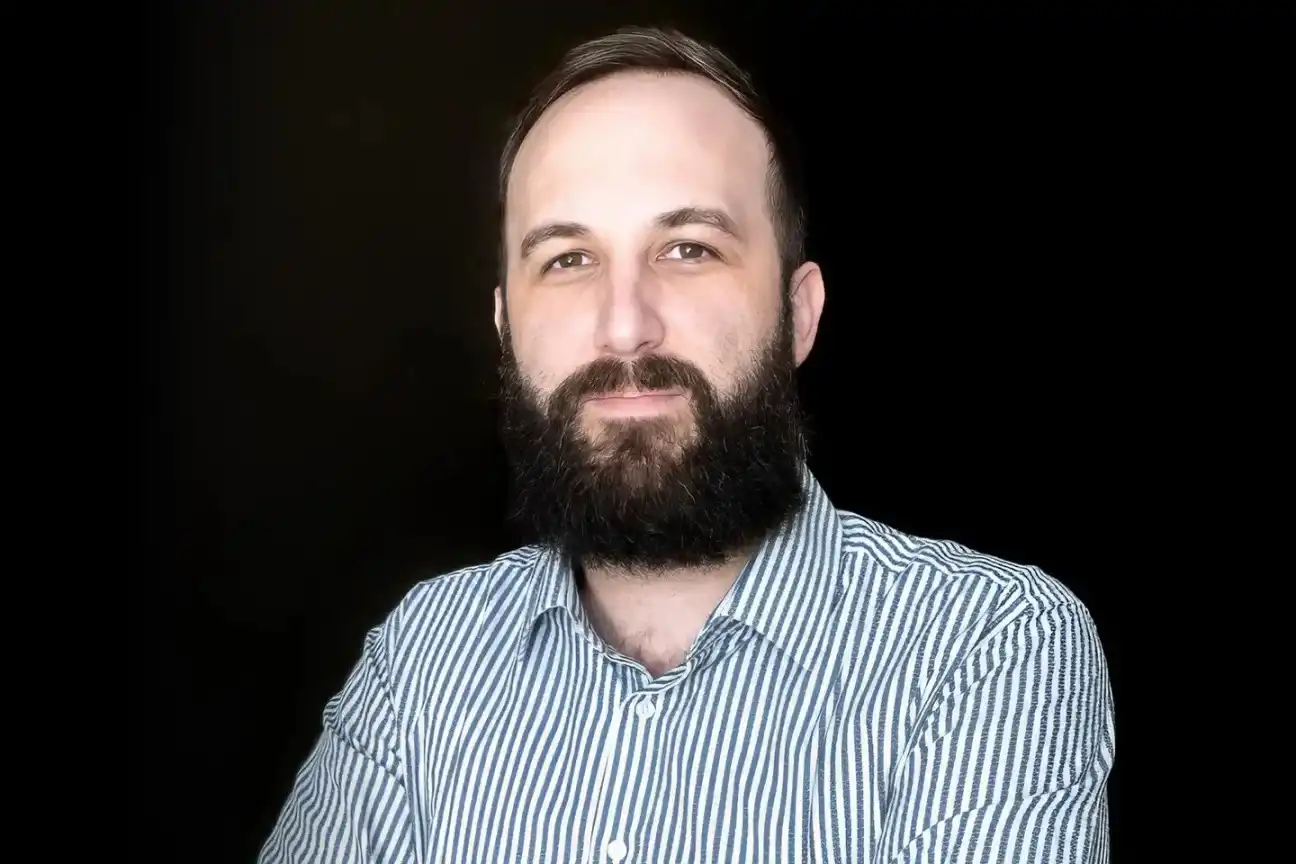
In the words of David Bailey, the past six months could be described as a "Saving Private Ryan-style brutal battle." The 35-year-old CEO of Nakamoto Holdings—his digital treasury company created to manage corporate Bitcoin reserves—has witnessed his boldest move yet: a merger with KindlyMD, a small publicly traded healthcare company in Utah, turning from initial success to the current ordeal.
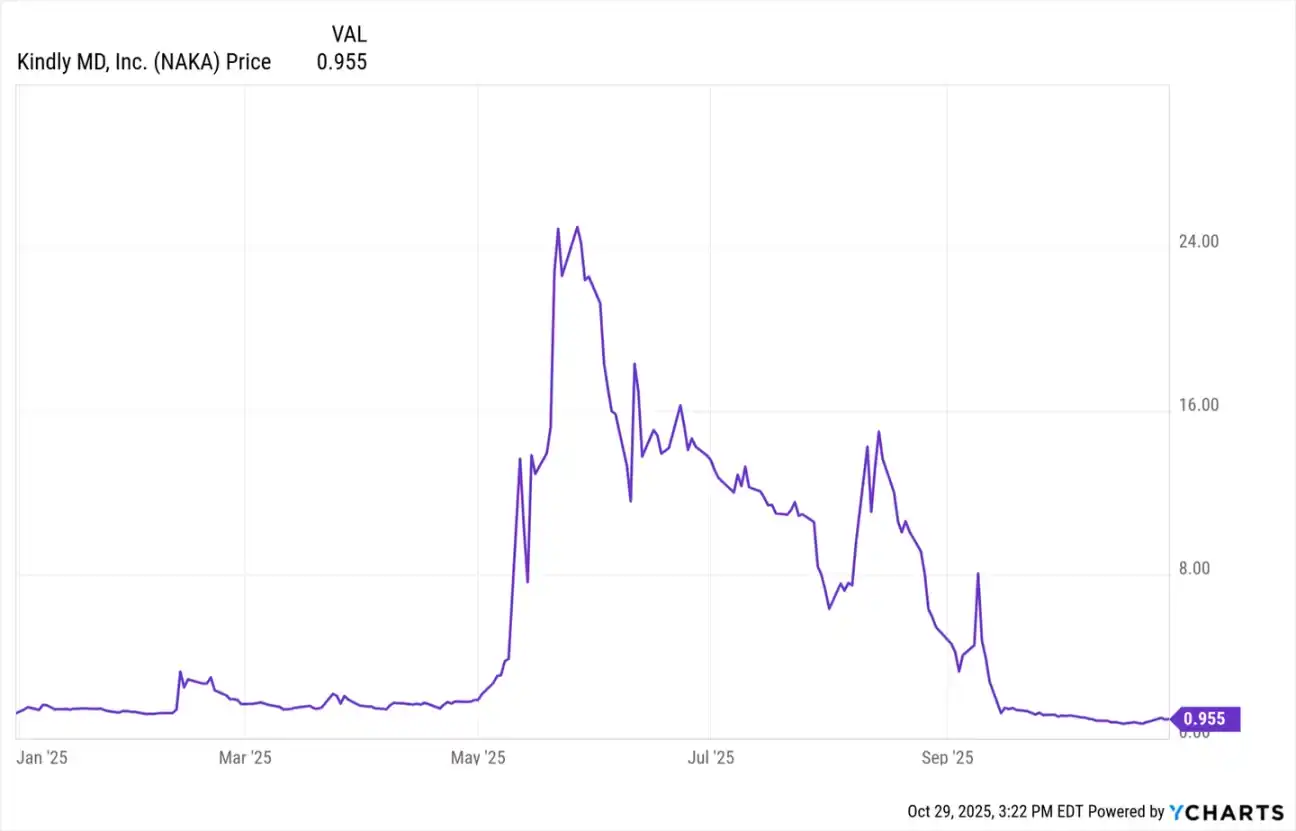
"I've been getting beaten up in the stock market," he said. The company's stock price has plummeted from $25 to 92 cents in six months.
Bailey is not your typical Nasdaq-listed company executive. His more widely known identity is the CEO of "Bitcoin Magazine," the organizer of the world's largest Bitcoin conference, and also a key figure in Donald Trump's shift in attitude towards cryptocurrency. "Our goal," he said, "is to become the world's number one Bitcoin company."
In May of this year, KindlyMD of Utah—a publicly traded healthcare clinic operator with $2.7 million in annual revenue offering traditional and alternative therapies—announced a reverse merger with Bailey's Nakamoto Holdings, aiming to transform into a Bitcoin holding company. The merged company is listed on Nasdaq with the ticker symbol NAKA and currently holds approximately $653 million worth of Bitcoin.
Wall Street is skeptical of Bailey's plan. After reaching a peak of nearly $35 in May, the company's stock price has spent most of October below $1, trading at a discount of 98% from the net asset value corresponding to its 5,765 Bitcoins on the balance sheet.
It turns out Nakamoto Holdings is a victim of its own financing strategy. To raise funds to purchase cryptocurrency, the company conducted a series of private investment in public equity (PIPE) transactions totaling around $563 million. These transactions issued billions of new shares to private investors at a substantial discount, significantly diluting existing shareholders' equity. In September, a large number of PIPE shares were unlocked for trading, and investors rushed to cash in on profits, triggering a stock price collapse. Bailey's letter to shareholders urging short-term speculators to exit the stock only added fuel to the fire.
“For us, those investors who only come for trading are actually a very high-cost source of funds,” Bailey said. “I know some people don't agree with this view, but what we need is long-term partners with aligned interests. This is a high-stakes gamble for us.”
In fact, Bailey indicated that he will soon merge his other businesses — including Bitcoin Magazine, the parent company of the Bitcoin conference and consultancy BTC Inc., as well as his holdings in the hedge fund 210k Capital and the venture capital firm 2140 — into KindlyMD. Forbes estimates that these entities could add up to $200 million in value to this Bitcoin treasury company while increasing Bailey's stake (currently at 3%).
Bailey did not comment on Forbes' data but mentioned that the cash flow from these profitable businesses will help KindlyMD acquire more Bitcoin. According to sources, the assets under management of 210k Capital alone quietly surged from about $100 million in January of this year to $400 million, achieving a quadruple increase.
This rising star in finance has a simple rationale: Michael Saylor holds over 600,000 bitcoins and has little to no need for operational businesses. Other players must have a differentiated strategy to prove their value.
“We need to do things that create value,” Bailey said. “Operating entity businesses are one way to do that.”
Although KindlyMD is headquartered in Salt Lake City, Utah, Bailey primarily works from his home in Guaynabo, Puerto Rico. During video calls, he is often seen in front of a large painting depicting a bank being engulfed in flames. This piece is by the crypto artist Cypherpunk Now and is one of Bailey's hundreds of collectibles, titled “Burning Bank.”
“Every time I have a meeting with a banker, I make sure this painting is in the background,” he said with a smile. For someone aiming to build his own bank, the scene couldn't be more fitting.
Bailey grew up on a farm in Fayetteville, Tennessee, about an hour's drive south of Nashville. He had a strong interest in money and markets from a young age. In 2009, he entered the University of Alabama to study economics, finance, and mathematics, with aspirations of becoming an investment banker.
“I used to be a huge fan of Warren Buffett, and in college, I would attend every Berkshire Hathaway shareholder meeting. I never imagined I would buy Bitcoin; it was so unlike the person I was back then,” he recalled.
In 2012, a friend sent him an article about Bitcoin, and everything began to change. Initially skeptical, Bailey couldn't disprove Bitcoin's concept. In the same year, in November, when Bitcoin's price was fluctuating between $10 and $12, he made his first investment.
In 2014, a year after graduating, Bailey joined Bitcoin Magazine, an early publication focused on the emerging cryptocurrency, co-founded by Vitalik Buterin, who later created Ethereum. Shortly after, Bailey and his college friend Taylor Evans acquired the magazine through their jointly founded BTC Inc.
To expand their brand's influence, the two launched the Bitcoin Conference in 2019. This festival-like event has now become the "Coachella of Crypto" and has made Bailey one of the most influential Bitcoin evangelists. The conference held in Nashville last year attracted 35,000 believers, investors, and politicians, with then-presidential candidate Donald Trump in attendance.
Bailey revealed that his interaction with Trump began during a conversation in Puerto Rico in 2024 on how to get the president interested in Bitcoin. "Paul Manafort was the initial gatekeeper who helped us get into his circle," he said. Soon, Bailey's team was granted a presentation at Trump Tower. The core message was simple: Bitcoin voters would play a crucial role in the presidential election. Trump, known for making deals, agreed to meet, believing that if Bailey and his friends could bring votes and enthusiastic support, the cryptocurrency industry would have a voice.
"Trump would turn everything into a season of The Apprentice; you're always auditioning," he added. "'Okay, you want to be a Bitcoin advisor? I'm going to bring in three more people to compete for this position.'" Bailey eventually prevailed, rallying industry leaders to raise over $1 billion for Trump's campaign, with $21 million raised just at the Nashville conference. At that event, Trump's famous commitment to make the U.S. the global cryptocurrency capital became well known.
"He was very unsure at first, but the cheers of the live audience changed his attitude. As he left, he said, 'These Bitcoin enthusiasts like me; they are my people,'" Bailey recalled. He now serves as an informal advisor to the president. He believes that Trump simply realized that cryptocurrency was being treated differently from all other asset classes (post-election, Trump has profited hundreds of millions from the cryptocurrency realm). Bailey's view is that the current goal is to create a level playing field, with the grander vision of making the U.S. the most Bitcoin-friendly country for global business.
Bailey claims that in his 13-year career, he has invested in over 100 Bitcoin-related companies, with top performers like Metaplanet and Smarter Web turning hundreds of millions of dollars in investments into hundredfold returns. He says the return is not just financial, as good ideas are replicated. "If thousands of Bitcoin companies thrive, we all win."
This Buffett-inspired long-term vision is now driving KindlyMD's development. Bailey envisions building it into a large holding company with profitable and independently operated subsidiaries. For him, this is not just an investment strategy, but a reenactment of monetary history. His concept of "Bitcoin Standard" echoes the evolution of gold: the gold-silver exchange evolved into gold-silver banks, further developing into central banks and investment banks. He believes that today's Bitcoin treasury companies are the digital-age gold-silver exchanges, moving toward a new type of bank.
KindlyMD is driving this transformation. The company has already invested in other Bitcoin holding companies, namely Japan's Metaplanet and the Netherlands' Treasury B.V. "Imagine nurturing an ETF," Bailey explains, "What we are doing is exactly that—nurturing these actively managed ETFs on a global scale in the form of corporate stock." Of course, like other newly established crypto treasury companies, Bailey's approach to entering the public market bypasses the U.S. Securities and Exchange Commission's (SEC) scrutiny of ETFs and IPOs.
Despite KindlyMD's lackluster "Wall Street debut," Bailey is not too concerned. "The best thing about Bitcoin is it's very forgiving; you can make mistakes in your career and start over," Bailey says.
You may also like

Bloomberg: As Bitcoin Weakens, Stablecoins and RWA Continue to Drive Expansion in Crypto Businesses
In June, Bloomberg reported that despite Bitcoin falling below $60,000 last week, wiping out about $235 billion in market value within seven days, and dropping close to 50% from last year’s peak, some core businesses in the crypto industry are still expanding, mainly in stablecoins, real-world asset tokenization (RWA), payments, and infrastructure. The report also noted that overall altcoin activity has contracted significantly: altcoin market capitalization has fallen from a peak of about $431 billion in November 2021 to around $170 billion, and among the tens of millions of tokens issued in recent years, fewer than 1,700 still maintain meaningful trading activity.

Galaxy Deep Research Report: How Hyperliquid's HIP-4 Upgrade Changes the Landscape of Prediction Markets?

Binance Research: RWA Market Expected to Expand Nearly 6x from Early 2025, with Public Equities and Onchain Payments Heating Up Together
In June, Binance Research said in its monthly market report that the real-world asset (RWA) market is expected to grow by about 589% from the beginning of 2025. Bond- and money market fund-related RWA expanded by about $6.5 billion, up 83% year over year, while publicly traded equity RWAs grew by about 422%. The report also noted that monthly crypto debit card transaction volume exceeded $747 million in May, up 48.6% year to date.

Japan to Assess a Framework for Yen Stablecoins and Crypto ETFs as Asia’s Compliant Payments Narrative Heats Up
Recently, according to the original report, Japan is considering the launch of yen stablecoins and cryptocurrency ETFs. Public information remains limited at this stage, and there is still no complete policy text, regulatory draft, or clear implementation timeline, so this is better characterized as a “policy discussion” rather than formal implementation. The original wording also noted that advancing stablecoin regulation in Asia is driving XRP usage and supporting growth in the XRPL ecosystem. However, based on currently available public information, there is not enough evidence to directly establish a clear causal relationship between this round of discussion in Japan and XRP or XRPL.

ZachXBT: Humanity private key leak and abnormal surge in H token should be viewed separately
On June 9, according to related disclosures, on-chain investigator ZachXBT posted an update on Humanity’s roughly $31 million security incident, saying that after further analyzing fund flows, he currently tends to believe the project team was not involved in an “inside job” or a self-staged attack. According to him, the official explanation about the private key leak was broadly accurate, but before the token unlock, the price of H had been artificially pushed higher, and the hacker later took advantage of that market environment; therefore, the private key leak and the earlier abnormal price pumping should be regarded as two separate and independent events. This reframing has shifted the market’s understanding of the nature of the incident. Earlier discussion around Humanity had focused on whether the team directly participated in the attack or used the security incident to cover up internal operations. ZachXBT’s latest remarks shift the focus from “whether it was self-theft” to “whether there were pre-unlock market structure issues.” He also questioned whether the team may have.

Morning Report | OpenAI has submitted an S-1 registration statement draft to the U.S. SEC; Morpho completes $175 million financing

Morning Report | BitMine increased its holdings by 126,971 ETH last week; trader Eugene announced his exit from the crypto market

Wang Chuan: How can one not feel anxious after the neighbor Old Wang made thirty times profit by investing in storage stocks? (Seven) - A quarter-century cycle

Cryptocurrency CEXs are flocking to sell US stocks, and traditional brokerages are facing an "uninvited guest."
$75 billion in foreign capital has fled, and South Korean retail investors have absorbed it all using leverage

Japan’s Three Megabanks Plan Joint Stablecoin Issuance in Fiscal 2026
MUFG, SMBC, and Mizuho reportedly plan to jointly issue fiat-pegged stablecoins in fiscal 2026, signaling Japan’s growing push into bank-led digital payment infrastructure.

Humanity Discloses H Token Dual-Chain Attack Details, With Losses on Ethereum and BSC Exceeding $36 Million
Humanity said the H token attack across Ethereum and BSC caused more than $36 million in losses after leaked ProxyAdmin keys enabled malicious contract upgrades and token minting.
White House Discusses CLARITY Act With Law Enforcement Ahead of Senate Vote
The White House discussed the CLARITY Act with law enforcement ahead of a Senate vote, focusing on illicit finance risks and developer protections.

Bitcoin Trading Guide 2026: Strategies for Experienced Traders

What Is XAUT and PAXG? Why Tokenized Gold Is Booming in 2026

Will the SpaceX IPO Hurt Bitcoin? Here's What Traders Are Watching

Foreign selling in the South Korean stock market accelerates, with cumulative net sales reportedly reaching $75 billion this year
On June 9, The Kobeissi Letter, citing Goldman Sachs data, reported that global investors are selling South Korean stocks at an unusually rapid pace. In the latest trading session, foreign investors sold about $801 million worth of Kospi constituent stocks again; total foreign outflows last week reached about $10 billion, and the market has been in net foreign selling on nearly every trading day over the past month. According to the data cited in the report, foreign investors have sold about $75 billion worth of South Korean stocks so far this year. Meanwhile, South Korean retail and institutional investors together recorded roughly $69 billion in net buying over the same period, suggesting that the market’s main buying support has come from domestic capital rather than returning overseas funds. The information currently disclosed still mainly comes from The Kobeissi Letter’s retelling and Goldman Sachs data summaries, while public details on the statistical period and the specific definition of “selling” remain relatively limited.

Fortune Warns of Strategy’s Financing Structure Risks as Bitcoin Premium Narrows
Fortune warned that Strategy’s Bitcoin treasury model faces growing financing risks as MSTR’s net asset premium narrows and preferred stock dividend pressure increases.
Bloomberg: As Bitcoin Weakens, Stablecoins and RWA Continue to Drive Expansion in Crypto Businesses
In June, Bloomberg reported that despite Bitcoin falling below $60,000 last week, wiping out about $235 billion in market value within seven days, and dropping close to 50% from last year’s peak, some core businesses in the crypto industry are still expanding, mainly in stablecoins, real-world asset tokenization (RWA), payments, and infrastructure. The report also noted that overall altcoin activity has contracted significantly: altcoin market capitalization has fallen from a peak of about $431 billion in November 2021 to around $170 billion, and among the tens of millions of tokens issued in recent years, fewer than 1,700 still maintain meaningful trading activity.
Galaxy Deep Research Report: How Hyperliquid's HIP-4 Upgrade Changes the Landscape of Prediction Markets?
Binance Research: RWA Market Expected to Expand Nearly 6x from Early 2025, with Public Equities and Onchain Payments Heating Up Together
In June, Binance Research said in its monthly market report that the real-world asset (RWA) market is expected to grow by about 589% from the beginning of 2025. Bond- and money market fund-related RWA expanded by about $6.5 billion, up 83% year over year, while publicly traded equity RWAs grew by about 422%. The report also noted that monthly crypto debit card transaction volume exceeded $747 million in May, up 48.6% year to date.
Japan to Assess a Framework for Yen Stablecoins and Crypto ETFs as Asia’s Compliant Payments Narrative Heats Up
Recently, according to the original report, Japan is considering the launch of yen stablecoins and cryptocurrency ETFs. Public information remains limited at this stage, and there is still no complete policy text, regulatory draft, or clear implementation timeline, so this is better characterized as a “policy discussion” rather than formal implementation. The original wording also noted that advancing stablecoin regulation in Asia is driving XRP usage and supporting growth in the XRPL ecosystem. However, based on currently available public information, there is not enough evidence to directly establish a clear causal relationship between this round of discussion in Japan and XRP or XRPL.
ZachXBT: Humanity private key leak and abnormal surge in H token should be viewed separately
On June 9, according to related disclosures, on-chain investigator ZachXBT posted an update on Humanity’s roughly $31 million security incident, saying that after further analyzing fund flows, he currently tends to believe the project team was not involved in an “inside job” or a self-staged attack. According to him, the official explanation about the private key leak was broadly accurate, but before the token unlock, the price of H had been artificially pushed higher, and the hacker later took advantage of that market environment; therefore, the private key leak and the earlier abnormal price pumping should be regarded as two separate and independent events. This reframing has shifted the market’s understanding of the nature of the incident. Earlier discussion around Humanity had focused on whether the team directly participated in the attack or used the security incident to cover up internal operations. ZachXBT’s latest remarks shift the focus from “whether it was self-theft” to “whether there were pre-unlock market structure issues.” He also questioned whether the team may have.
Morning Report | OpenAI has submitted an S-1 registration statement draft to the U.S. SEC; Morpho completes $175 million financing

Popular coins
Latest Crypto News


