
- Buy Crypto
- Markets
- Futures
- Spot
- Copy Trade
 Earn
Earn- More
The Evolution of Crypto Infrastructure: Aligning Reality with Ideals

Key Takeaways:
- The growing popularity of decentralized cloud projects highlights their potential to reduce reliance on centralized providers such as Amazon Web Services (AWS).
- Centralized cloud services face risks of outages and capacity limits, prompting a shift toward distributed networks for greater resilience.
- Blockchain networks, despite their design for decentralization, often rely on centralized cloud infrastructures, posing a contradiction to their foundational principles.
- The future appears to lie in hybrid models, combining centralized and decentralized frameworks to enhance system reliability and performance.
- New initiatives are emerging that harness untapped computing power and connectivity from smaller, regional centers and individual users.
In the sprawling digital landscape where cryptocurrencies and blockchain technologies thrive, the infrastructure supporting these innovations often struggles to live up to its decentralized ideals. With centralized providers like Amazon Web Services (AWS) dominating, the push for a more decentralized infrastructure emerges as a critical evolution in enhancing resilience and efficiency.
The Rise of Decentralized Cloud Alternatives
The concentration of power in the hands of AWS, Microsoft Azure, and Google Cloud, which together dominated 68% of the global cloud infrastructure market (as of 2024), presents risks of service interruptions that can have widespread impacts across industries heavily reliant on computing power. Distributed cloud projects are gaining momentum as they aim to mitigate these risks by decentralizing workloads. Advocates suggest that spreading tasks across smaller nodes not only reduces concentration risks but also caters to sectors like AI, gaming, and finance, where reliability is paramount.
Carlos Lei, CEO and co-founder of a decentralized peer-to-peer network marketplace, argues that as decentralized infrastructures evolve to match or surpass the capabilities of traditional cloud services, the dependency on single providers will naturally ease. Blockchain stands as a testament to decentralization, intended to distribute trust and eliminate single points of failure by spreading data and verification.
The Centralized Cloud Conundrum
Despite blockchain’s promise, its underlying infrastructure heavily leans on centralized cloud platforms, paradoxically undermining its decentralization goals. For instance, AWS holds a prominent position among Ethereum validators. A study highlighted AWS as the largest hosting provider for these crucial network nodes, accounting for about one-fifth of them. This reliance underscores a significant vulnerability, as demonstrated by outages that disrupt services ranging from financial transactions on Coinbase to gaming communities on platforms like Roblox and Fortnite.
While centralized platforms offer predictability and reliability, they also bind blockchain networks to a single point of potential failure. During an AWS outage on Oct. 20, services like Coinbase experienced issues that hindered users from logging in, trading, or accessing funds. This incident sheds light on the imperfections of such concentrated dependencies.
Embracing Hybrid Cloud Models
The strain on traditional cloud systems is stimulating a shift towards hybrid models, which combine centralized efficiency with decentralized innovation. These models aim to gather capacity from varied sources, like consumer hardware and smaller data centers. Notably, companies like Gaimin utilize GPU power from gaming PCs, balancing it with regional data centers to prevent any one area from becoming a chokepoint.
Similarly, new entrant Uplink applies a decentralized concept to bandwidth, offering a marketplace for selling excess connectivity to those requiring more robust coverage. These initiatives exemplify a move toward creating flexible systems where regions compensate for each other’s failures, bolstering overall network resilience.
Building a Resilient Future for Blockchain
In an increasingly computing-driven world, making these systems more fault-tolerant is not about detaching from giants like AWS but about crafting an architecture where diverse, smaller-scale infrastructure can step in when major hubs falter. This multifaceted approach offers a pathway to reinforce blockchain’s foundational mission of decentralization.
As the sector evolves, so do thoughts around stabilization and expansion. Hybrid cloud models not only cater to immediate needs but also provide a scalable means to facilitate the ever-growing demand for computational resources. As these capabilities mature, they promise to bridge the gap between blockchain’s decentralized aspirations and the current centralized infrastructures, ensuring reliability and fostering innovation.
Frequently Asked Questions
What challenges do centralized cloud services pose to blockchain?
Centralized cloud services, while offering reliable performance, create single points of failure. Outages or capacity issues can ripple across industries, compromising the very decentralization blockchain aims to achieve.
How are decentralized cloud solutions advancing?
Decentralized cloud solutions are spreading workloads across multiple nodes, reducing reliance on singular providers. This model is gaining traction in sectors with high reliability demands, such as finance and gaming.
Why is the shift towards hybrid cloud models significant?
Hybrid cloud models blend the benefits of centralized and decentralized systems, enhancing resilience by allowing traffic rerouting and reducing the dependency on major providers during failures.
What role does consumer hardware play in decentralized infrastructures?
Consumer hardware, like gaming PCs, is being leveraged to provide computing power through decentralized networks. This approach distributes resources more evenly and prevents regional chokepoints.
How does Uplink contribute to decentralized infrastructure?
Uplink creates a bandwidth marketplace where individuals can sell excess connectivity. This decentralized approach reduces dependency on large carriers, enhancing coverage and reliability for blockchain applications.
You may also like

Trump Reignites Tariff Storm, Cryptocurrency Market Faces Another 'Black Monday'

First Zero, First Revival: A Real Story from the WEEX Global AI Trading Hackathon Preliminary Round
WEEX Labs, the innovation arm of the global crypto exchange WEEX, launched the preliminary round of its flagship AI trading hackathon, AI Wars: WEEX Alpha Awakens, on January 12, 2026. Backed by world-class sponsors including AWS, the prize pool has reached $1.88 million, with a Bentley Bentayga S awaiting the champion in Dubai. Already, 788 elite teams worldwide are battling for a spot in the finals. This is more than a hackathon — it is a real-market stress test for AI trading. Registration remains open until January 18. If you want your AI to face real volatility, this is your moment.
AI Wars: WEEX Alpha Awakens – Insights, Top Strategies, and Real-Market Execution Takeaways
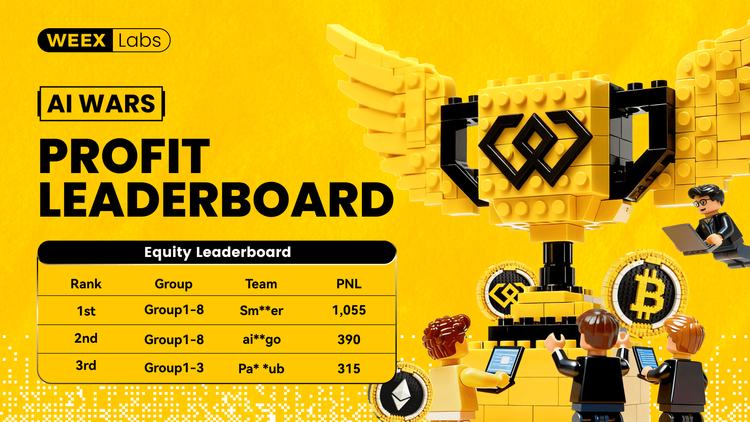
WEEX Labs has officially launched the preliminary round of its global AI trading hackathon, AI Wars: WEEX Alpha Awakens, bringing together hundreds of elite teams to compete in real-market conditions. With a record-breaking $1.88 million prize pool and backing from top-tier sponsors like AWS, the event has quickly become a global proving ground for AI-powered trading strategies. As competition intensifies and standout teams emerge on the leaderboard, the hackathon not only showcases cutting-edge AI execution and risk management, but also offers valuable insights and inspiration for traders looking to build or refine their own AI-driven systems.

Sentient Reveals Tokenomics, How Will the Market Price It?

AI in the Crypto Market: How Artificial Intelligence is Changing Trading Strategies
This article explores how AI contributes to these movements and share practical strategies to help you navigate an AI-powered crypto market.

Cross-chain Collaboration: Tom Lee Invests $200 Million, Joins Forces with Global Top Streamer Mr. Beast

Interactive Brokers Integrates USDC, US Bank Questions Stablecoin, What's the Overseas Buzz?
The Genius Stopping Law: Why Did Coinbase Backpedal at the Eleventh Hour?

Fact Check: How Much Money Did the University of Chicago Lose in its Crypto Investment?

VanEck Q1 Market Outlook: Long-Term Bullish on Cryptocurrency, Strong Gold Demand

ThunderChain Resumes Legal Battle as Former CEO Chen Lei Accused of Embezzlement for Cryptocurrency Speculation - What Happened Back Then?

Key Market Intelligence for January 15th, how much did you miss out on?

$200K Annual Salary Hiring, Predicting Market Will See Wall Street Players

Senate Committee Delays Crypto Bill Due to Coinbase’s Objections
Key Takeaways The Senate Banking Committee has postponed its planned markup of a major crypto market structure bill…

XRP Price Action: Crypto Bill Could Grant XRP the Same Legal Designation as Bitcoin
Key Takeaways A new legislative draft in the United States might classify XRP alongside Bitcoin (BTC) and Ethereum…
Coinbase CEO Raises Red Flags Regarding US Crypto Bill
Key Takeaways Coinbase CEO Brian Armstrong voices opposition to the proposed Senate crypto bill, citing significant concerns. The…
Ethereum Price Prediction: SharpLink Activates Multi-Billion ETH Strategy – How Soon Might ETH Achieve a New All-Time High?
Key Takeaways SharpLink has strategically deployed $170 million in Ethereum on the Linea network, showcasing a productive use…
Transforming the Cryptocurrency Landscape: A 2026 Outlook
Key Takeaways Cryptocurrency systems have seen expansive growth and technological innovation. The introduction of new regulations has reshaped…
Trump Reignites Tariff Storm, Cryptocurrency Market Faces Another 'Black Monday'
First Zero, First Revival: A Real Story from the WEEX Global AI Trading Hackathon Preliminary Round
WEEX Labs, the innovation arm of the global crypto exchange WEEX, launched the preliminary round of its flagship AI trading hackathon, AI Wars: WEEX Alpha Awakens, on January 12, 2026. Backed by world-class sponsors including AWS, the prize pool has reached $1.88 million, with a Bentley Bentayga S awaiting the champion in Dubai. Already, 788 elite teams worldwide are battling for a spot in the finals. This is more than a hackathon — it is a real-market stress test for AI trading. Registration remains open until January 18. If you want your AI to face real volatility, this is your moment.
AI Wars: WEEX Alpha Awakens – Insights, Top Strategies, and Real-Market Execution Takeaways
WEEX Labs has officially launched the preliminary round of its global AI trading hackathon, AI Wars: WEEX Alpha Awakens, bringing together hundreds of elite teams to compete in real-market conditions. With a record-breaking $1.88 million prize pool and backing from top-tier sponsors like AWS, the event has quickly become a global proving ground for AI-powered trading strategies. As competition intensifies and standout teams emerge on the leaderboard, the hackathon not only showcases cutting-edge AI execution and risk management, but also offers valuable insights and inspiration for traders looking to build or refine their own AI-driven systems.
Sentient Reveals Tokenomics, How Will the Market Price It?
AI in the Crypto Market: How Artificial Intelligence is Changing Trading Strategies
This article explores how AI contributes to these movements and share practical strategies to help you navigate an AI-powered crypto market.


 App
App