
 Buy Crypto
- Markets
 Futures
- Spot
- Copy Trade
- Earn
- More
Stealthy Financial War? Iran Collects Strait Transit Fees in Stablecoin


Original Title: "Covert Financial Warfare? Iran Collects Hormuz Toll in Stablecoin"
Original Author: Mahe, Foresight News
On April 2, Iran's Deputy Foreign Minister Abadi confirmed during a routine press conference in Tehran that all supertankers passing through the Strait of Hormuz must pay a toll to the Islamic Revolutionary Guard Corps (IRGC) and explicitly ruled out USD settlement. This statement formalized rumors circulating in the shipping world, revealing that Iran is no longer content with traditional tools of geopolitical maneuvering but has instead transformed control of the strait into a financial experiment targeting US dollar hegemony.
The implementation speed of the toll mechanism exceeded market expectations.
Bloomberg cited internal documents from the IRGC Navy, indicating that the system had completed technical deployment by the end of March. Iran has only provided two options for receiving the toll: RMB wire transfer or settlement in USD stablecoins via a decentralized network.
Iran's customs department has established a dedicated cryptocurrency exchange window on Qeshm Island to ensure funds are quickly converted to rials or transferred to overseas accounts upon receipt.
This arrangement has been carefully designed.
Traditional international shipping settlements rely on the SWIFT network and correspondent banking system, where any transactions involving Iran trigger secondary sanctions from the US Treasury Department. In contrast, the combination of the RMB cross-border payment system and a public blockchain network has created a parallel channel that bypasses USD monitoring.
According to London-based shipbroker Braemar, at least two oil tankers flying under unspecified flags completed RMB payments by the end of March and safely navigated through the strait. The Iranian Parliament's National Security Committee endorsed this mechanism at the domestic legal level with the "Strait of Hormuz Transit Management Act," passed on March 30.
It is worth noting that Iran has differentiated fees for vessels based on their geopolitical affiliations.
Bloomberg cited insider information on the oil toll rates in the Strait of Hormuz, starting at $0.5 per barrel, segmented into 5 tiers based on the country's relationship.
The first tier offers a discounted rate to allies, such as China and Russia, priced between $0.5-$0.7 per barrel, with a dedicated fast-track lane for easy passage with regular reporting.
The second tier is Friendly Partners, such as India, Pakistan, and other countries, at $0.8-0.9 per barrel.
The third tier is Neutral Countries, including African countries, Southeast Asia, and Latin America, at $1 per barrel. They need to declare, undergo inspection to ensure no hostile assets, and then they are allowed to pass.
The fourth tier is High-Risk Countries, closely allied with the US but not engaged in hostile activities against Iran, such as Japan, South Korea, and many EU countries, at $1.2-1.5 per barrel. Iran needs to be monitored throughout the journey, and the inspection queue will be longer.
The fifth tier is the US, Israel, and allies, who are not allowed passage.
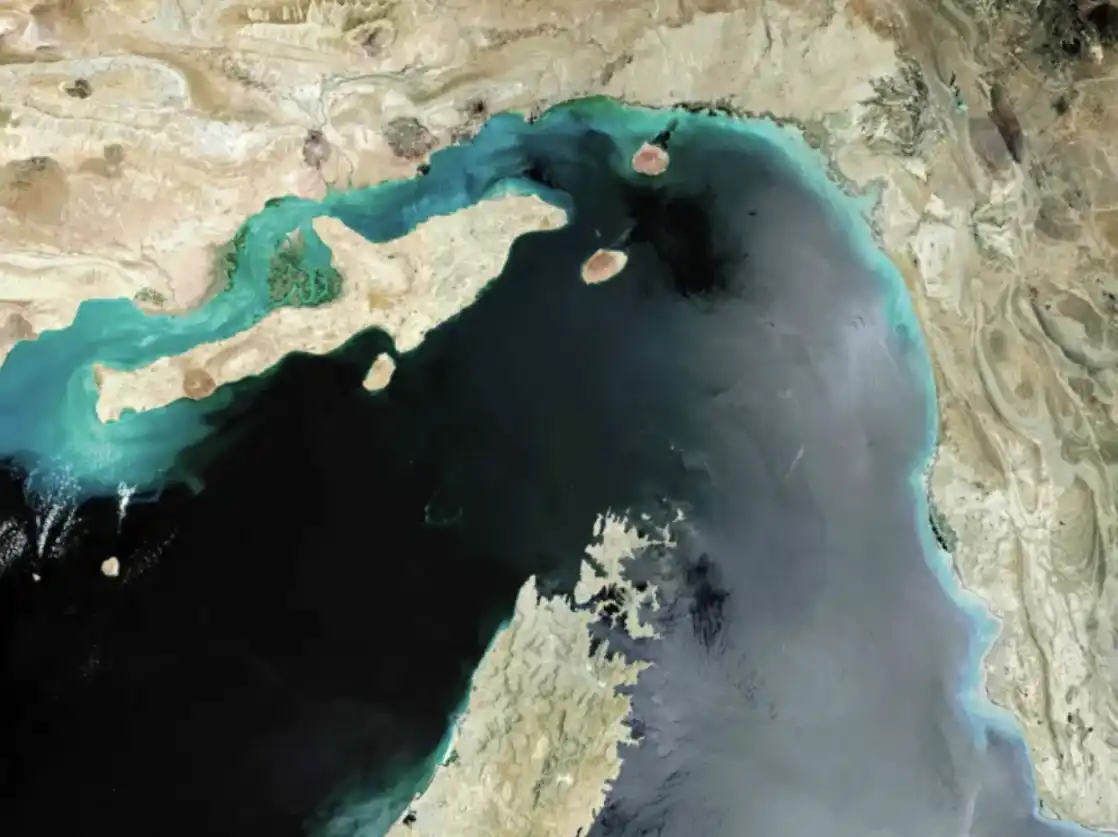
Once a Very Large Crude Carrier pays the toll, the Islamic Revolutionary Guard Corps of Iran issues a permit code and route instructions. The vessel must fly the flag of a negotiating passage agreement country, and in some cases, the vessel's formal registration must be changed to that country. As the vessel approaches the Strait of Hormuz, it needs to broadcast its passage password via VHF radio, after which a patrol boat will approach and escort it through the strait, hugging the coastline and passing between a set of islands known in the industry as the "Iranian tollbooth."
This is the first time a sovereign nation has included a stablecoin in its strategic payment infrastructure.
Unlike El Salvador's symbolic move to make btc-42">Bitcoin legal tender, Iran's choice is a mandatory commercial scale. The strait handles 21% of global crude oil shipping volume, with dozens of ships passing through daily.
If this mechanism continues to operate, it is estimated that over $20 billion in stablecoins will flow through Iran-controlled digital wallets annually, creating a gray liquidity pool protected by sovereign power.
The deeper impact lies in the cascading effects on shipping insurance and trade finance. The International Group (IG) of P&I Clubs has issued an internal warning, stating that paying fees to the IRGC may trigger EU and UK sanctions compliance risks, leading to policy invalidation. This forces shipowners to make a harsh choice between maritime economics and legal risks: bypassing the Cape of Good Hope adds 15 days of travel time and tens of thousands of dollars in fuel costs, while paying the cryptocurrency passage fee entails the risk of account freezing. Some bulk commodity traders are starting to try rerouting through Pakistani intermediaries, as Islamabad recently announced allowing 20 international tankers to fly the Pakistani flag, essentially providing an offshore outsourcing channel to the Iranian system.
Iran is not the only country doing this. Russia had previously announced a similar fee policy for the Northern Sea Route and openly considered accepting cryptocurrency settlements. This digital financial logic of 'node-izing' key geographical hubs is reshaping the payment infrastructure of global energy trade.
When a commercial vessel settles in the Gesundrian Anchorage using an on-chain protocol for USDT, what is completed is not just a toll payment, but also a systemic unloading of the residual architecture of the Bretton Woods system.
The fragility of this experiment is equally evident. As USDT/USDC is fundamentally still pegged to the dollar and subject to OFAC tracking, the shadow public of the Islamic Revolutionary Guard Corps exchanging at scale in a "decentralized" fashion to real-world assets or fiat (rial) poses a risk. However, as long as Iran maintains its geographical monopoly over the Strait of Hormuz, this crypto-mediated financial warfare will continue to rewrite the rulebook of global trade.
You may also like

What Is an XRP Wallet? The Best Wallets to Store XRP (2026 Updated)
An XRP wallet lets you safely store, send, and receive XRP on the XRP Ledger. Learn what wallets support XRP and discover the best XRP wallets for beginners and long-term holders in 2026.

What are the Top AI Crypto Coins? Render vs. Akash: 5 Gems Solving the 2026 GPU Crisis
What are the best AI crypto coins for the 2026 cycle? Beyond the hype, we analyze top tokens like RNDR, AKT, and FET that provide real-world solutions to the global GPU shortage and the rise of autonomous agents.

What Is a Token in AI? What Is an AI Token + 3 Gems You Can't Miss in 2026
The era of AI hype has transitioned into an era of utility. As we move through Q2 2026, the market is no longer rewarding "narrative-only" projects. At WEEX Research, we are seeing a massive capital rotation into Decentralized Compute (DePIN) and Autonomous Agent coordination layers. This guide analyzes which AI tokens are capturing institutional liquidity and how to spot high-conviction setups in a maturing market.

Consumer-grade Crypto Global Survey: Users, Revenue, and Track Distribution

Prediction Markets Under Bias

Stolen: $290 million, Three Parties Refusing to Acknowledge, Who Should Foot the Bill for the KelpDAO Incident Resolution?

ASTEROID Pumped 10,000x in Three Days, Is Meme Season Back on Ethereum?

ChainCatcher Hong Kong Themed Forum Highlights: Decoding the Growth Engine Under the Integration of Crypto Assets and Smart Economy

Why can this institution still grow by 150% when the scale of leading crypto VCs has shrunk significantly?

Anthropic's $1 trillion, compared to DeepSeek's $100 billion

Geopolitical Risk Persists, Is Bitcoin Becoming a Key Barometer?

Annualized 11.5%, Wall Street Buzzing: Is MicroStrategy's STRC Bitcoin's Savior or Destroyer?
An Obscure Open Source AI Tool Alerted on Kelp DAO's $292 million Bug 12 Days Ago

Mixin has launched USTD-margined perpetual contracts, bringing derivative trading into the chat scene.
The privacy-focused crypto wallet Mixin announced today the launch of its U-based perpetual contract (a derivative priced in USDT). Unlike traditional exchanges, Mixin has taken a new approach by "liberating" derivative trading from isolated matching engines and embedding it into the instant messaging environment.
Users can directly open positions within the app with leverage of up to 200x, while sharing positions, discussing strategies, and copy trading within private communities. Trading, social interaction, and asset management are integrated into the same interface.
Based on its non-custodial architecture, Mixin has eliminated friction from the traditional onboarding process, allowing users to participate in perpetual contract trading without identity verification.
The trading process has been streamlined into five steps:
· Choose the trading asset
· Select long or short
· Input position size and leverage
· Confirm order details
· Confirm and open the position
The interface provides real-time visualization of price, position, and profit and loss (PnL), allowing users to complete trades without switching between multiple modules.
Mixin has directly integrated social features into the derivative trading environment. Users can create private trading communities and interact around real-time positions:
· End-to-end encrypted private groups supporting up to 1024 members
· End-to-end encrypted voice communication
· One-click position sharing
· One-click trade copying
On the execution side, Mixin aggregates liquidity from multiple sources and accesses decentralized protocol and external market liquidity through a unified trading interface.
By combining social interaction with trade execution, Mixin enables users to collaborate, share, and execute trading strategies instantly within the same environment.
Mixin has also introduced a referral incentive system based on trading behavior:
· Users can join with an invite code
· Up to 60% of trading fees as referral rewards
· Incentive mechanism designed for long-term, sustainable earnings
This model aims to drive user-driven network expansion and organic growth.
Mixin's derivative transactions are built on top of its existing self-custody wallet infrastructure, with core features including:
· Separation of transaction account and asset storage
· User full control over assets
· Platform does not custody user funds
· Built-in privacy mechanisms to reduce data exposure
The system aims to strike a balance between transaction efficiency, asset security, and privacy protection.
Against the background of perpetual contracts becoming a mainstream trading tool, Mixin is exploring a different development direction by lowering barriers, enhancing social and privacy attributes.
The platform does not only view transactions as execution actions but positions them as a networked activity: transactions have social attributes, strategies can be shared, and relationships between individuals also become part of the financial system.
Mixin's design is based on a user-initiated, user-controlled model. The platform neither custodies assets nor executes transactions on behalf of users.
This model aligns with a statement issued by the U.S. Securities and Exchange Commission (SEC) on April 13, 2026, titled "Staff Statement on Whether Partial User Interface Used in Preparing Cryptocurrency Securities Transactions May Require Broker-Dealer Registration."
The statement indicates that, under the premise where transactions are entirely initiated and controlled by users, non-custodial service providers that offer neutral interfaces may not need to register as broker-dealers or exchanges.
Mixin is a decentralized, self-custodial privacy wallet designed to provide secure and efficient digital asset management services.
Its core capabilities include:
· Aggregation: integrating multi-chain assets and routing between different transaction paths to simplify user operations
· High liquidity access: connecting to various liquidity sources, including decentralized protocols and external markets
· Decentralization: achieving full user control over assets without relying on custodial intermediaries
· Privacy protection: safeguarding assets and data through MPC, CryptoNote, and end-to-end encrypted communication
Mixin has been in operation for over 8 years, supporting over 40 blockchains and more than 10,000 assets, with a global user base exceeding 10 million and an on-chain self-custodied asset scale of over $1 billion.

$600 million stolen in 20 days, ushering in the era of AI hackers in the crypto world
Vitalik's 2026 Hong Kong Web3 Summit Speech: Ethereum's Ultimate Vision as the "World Computer" and Future Roadmap
On the same day Aave introduced rsETH, why did Spark decide to exit?
Full Post-Mortem of the KelpDAO Incident: Why Did Aave, Which Was Not Compromised, End Up in Crisis Situation?
What Is an XRP Wallet? The Best Wallets to Store XRP (2026 Updated)
An XRP wallet lets you safely store, send, and receive XRP on the XRP Ledger. Learn what wallets support XRP and discover the best XRP wallets for beginners and long-term holders in 2026.
What are the Top AI Crypto Coins? Render vs. Akash: 5 Gems Solving the 2026 GPU Crisis
What are the best AI crypto coins for the 2026 cycle? Beyond the hype, we analyze top tokens like RNDR, AKT, and FET that provide real-world solutions to the global GPU shortage and the rise of autonomous agents.
What Is a Token in AI? What Is an AI Token + 3 Gems You Can't Miss in 2026
The era of AI hype has transitioned into an era of utility. As we move through Q2 2026, the market is no longer rewarding "narrative-only" projects. At WEEX Research, we are seeing a massive capital rotation into Decentralized Compute (DePIN) and Autonomous Agent coordination layers. This guide analyzes which AI tokens are capturing institutional liquidity and how to spot high-conviction setups in a maturing market.



 App
App