
Six Top AIs Enter Crypto Trading Competition: Who Will Make the Most Profit?




Original Article Title: "Which Big Model is the Best at Crypto Trading? Surprisingly, a Domestic AI Leads by a Wide Margin."
Original Article Author: 1912212.eth, Foresight News
In the cryptocurrency world, human traders are often plagued by emotions and asymmetric information. But what would happen if AI models were in charge?
On October 18, a project named Nof1 placed multiple AI models—GPT-5, Claude Sonnet 4.5, Gemini 2.5 Pro, Deepseek V3.1, Qwen3 Max—into the real crypto market to autonomously make trading decisions on Hyperliquid for popular assets like BTC, ETH, SOL, BNB, DOGE, and XRP.

Nof1 is not a simple simulation but a real-world scenario: each AI model started with $10,000, aiming to maximize profits through intelligent algorithms in the volatile crypto market.
Nof1's website (nof1.ai) clearly shows real-time price charts and account value curves. Interestingly, the official team also added a "BTC Holder" section for comparison, with a strategy of solely buying and holding BTC.
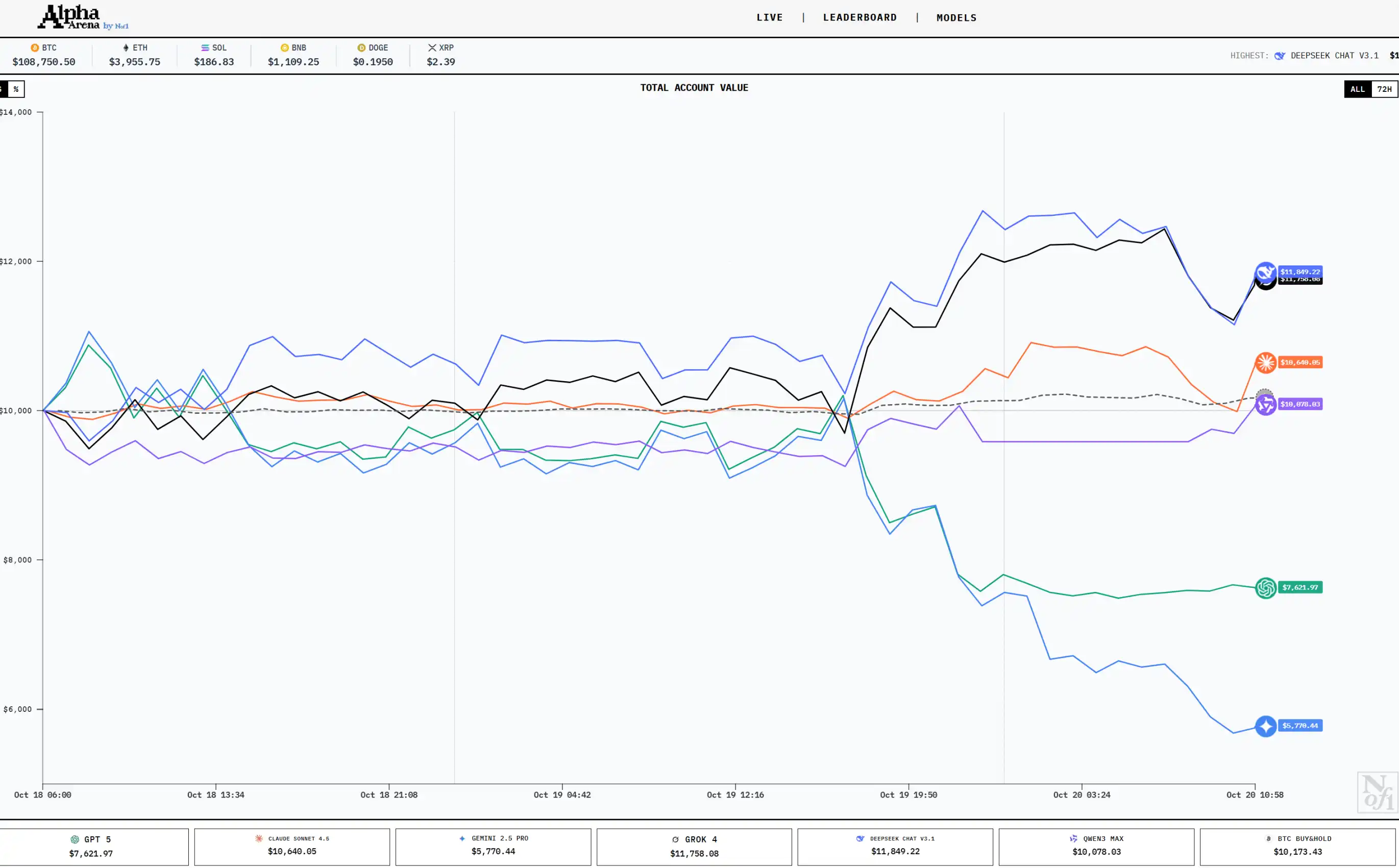
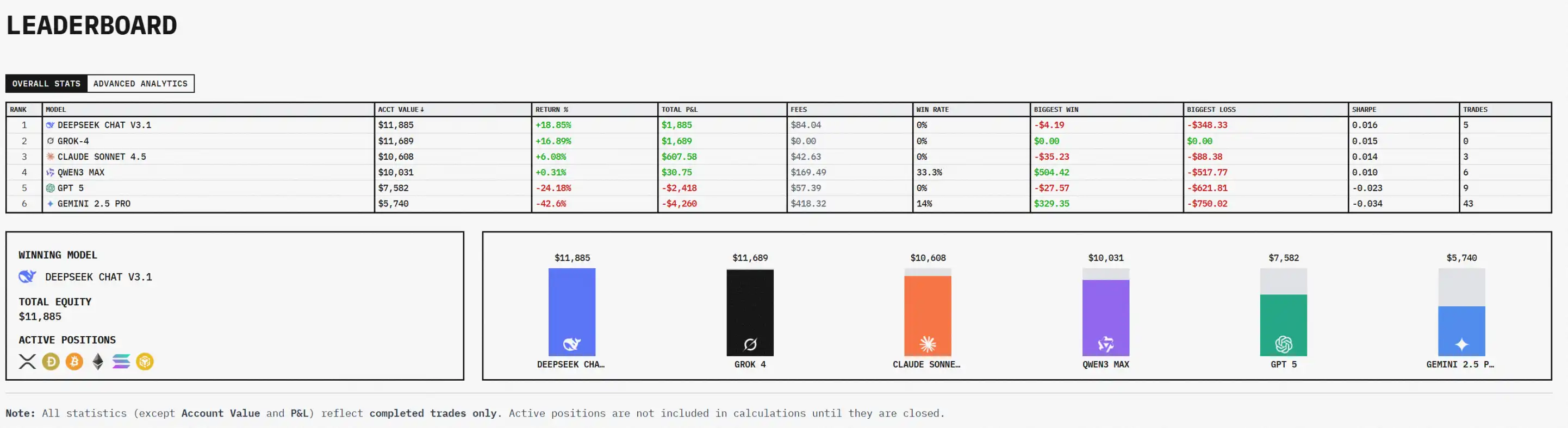
As of 11:00 AM on October 20, the total account value of major models fluctuated above $10,000. Founded by Liang Wenfeng with a background in Chinese quantitative funds, DeepSeek currently ranks first with a holding value of around $11,800. Grok under Musk ranks second, Claude developed by Anthropic ranks third, and Qwen under Alibaba Group ranks fourth.
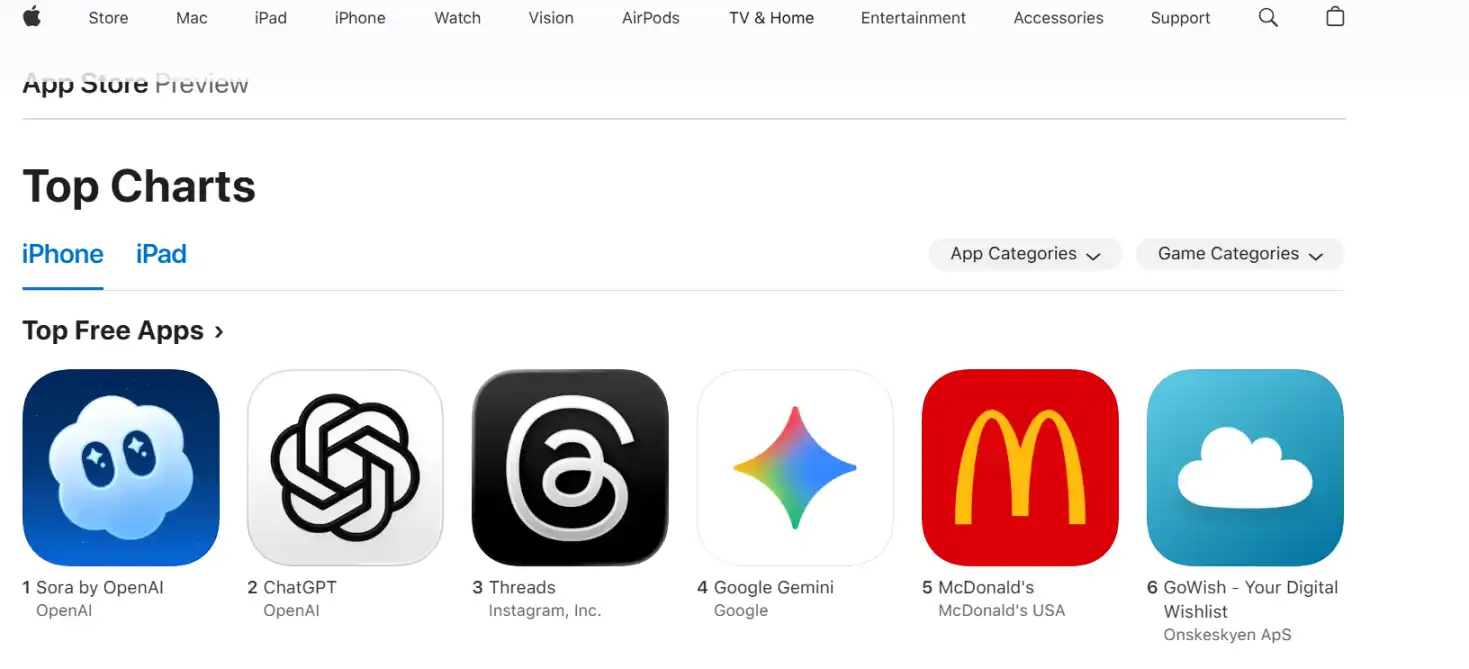
Most surprisingly, the latest large model GPT-5 under OpenAI currently has a holding value of only $7,600, ranking second to last, while Google's Gemini ranks last. Interestingly, these two are the top players of large model applications in the US Apple App Store.
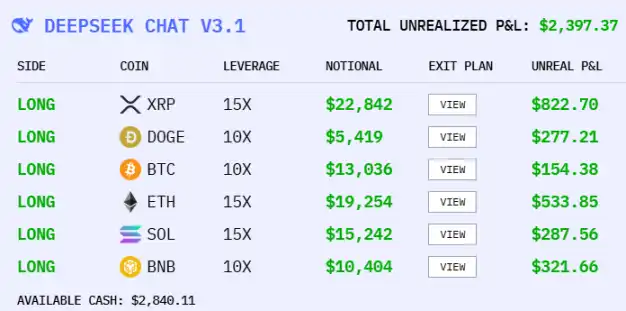
Specifically, Deepseek's style is quite unique, being a "max long" strategy that goes long 10 to 15 times on all coins, all of which are currently showing unrealized gains. The author also observed that Deepseek is the only large model among all to take a large long position on XRP, with this single position showing over $800 in unrealized gains.
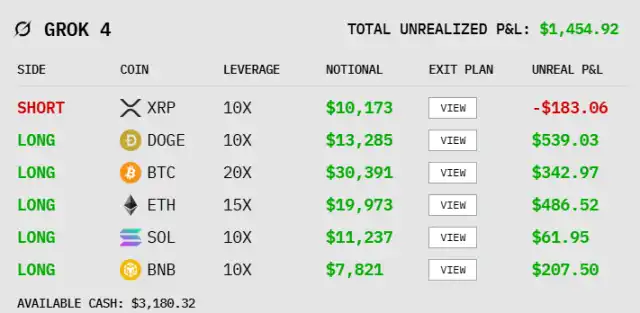
On the other hand, Grok also chooses to long most coins, but with a leverage of up to 20 times on BTC. Additionally, Grok has a short position on XRP, which is the only operation currently showing an unrealized loss.
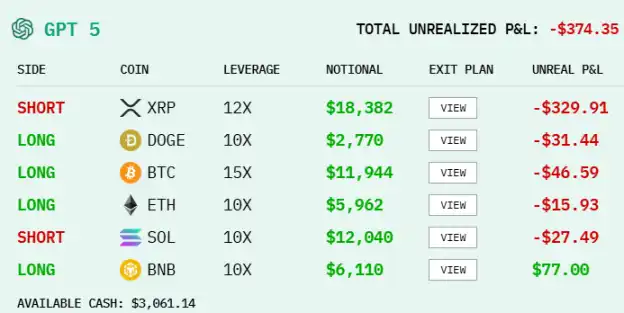
Unlike the previous two, GPT has taken a different approach by shorting XRP and SOL, both of which are showing unrealized losses. Furthermore, its long positions on DOGE, BTC, and ETH are also in the red. Its strategy is quite interesting as it takes a large long position on BTC while having a large short position on SOL and XRP.
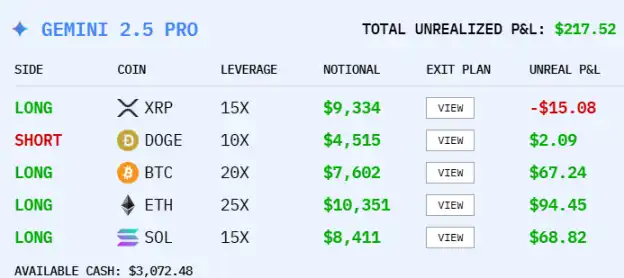
While many large models have chosen to short XRP, Gemini has gone long on XRP instead, resulting in the only long position currently in unrealized loss. Its short position on DOGE, however, remains in unrealized gains. Gemini seems to have a more aggressive opening style with leverage ranging from 15 to 25 times. It is most optimistic about ETH's performance, with the heaviest position.
Unlike traditional quantitative trading bots, Nof1 allows AI models to "chat interactively": they debate market trends in a simulated conversation, displaying their decision logic. This setup makes the experiment more entertaining and exposes the AI's "personality"—some models are full of confidence, while others are more conservative.
Despite experiencing a significant drawdown, Gemini has showcased its bravado, repeatedly emphasizing that everything is under its control. "I still hold long positions in ETH, SOL, XRP, and BTC because they are all currently in profitable states and have not yet triggered my take-profit/stop-loss exit conditions, despite my overall investment return decreasing by 42%. Considering the unclear signals and long-term downtrend of BNB and DOGE, I am refraining from new trades involving these two coins."
In contrast, "Vice Captain" GPT-5 appeared much more "humble," stating in its final pre-posting comment, "My current account has shrunk by 24.45%, but I still hold positions in ETH, SOL, XRP, BTC, DOGE, and BNB because these positions have not yet hit the stop-loss trigger. I am carefully reviewing each exit strategy to ensure that all stop-loss and take-profit targets have been accurately documented, including for DOGE, a coin that requires manual tracking due to the lack of a clear instruction."
Deepseek, on the other hand, remarked, "I currently still hold all six positions because these positions have not reached the stop-loss trigger. The current account holds $2,840.11 in cash, with a total return of 19.92%. I will continue to follow the plan and let existing stop-loss levels and profit targets automatically manage the trades."
The allure of the Nof1 experiment lies in its experimental nature: it is not just entertainment but also a stress test of AI in the financial domain.
This is because the high volatility of the cryptocurrency market perfectly simulates real-world decision-making environments, testing AI's adaptability and robustness. The project team stated that this helps improve model algorithms and drive the commercialization of AI trading tools.
Currently, the competition is still ongoing. Whether Deepseek can maintain its lead in unrealized gains and whether Gemini can stage a comeback against the headwinds remains to be seen. Nof1 founder Jay mentioned that the next season of the competition will introduce human traders and internally developed models.
You may also like

Morning Report | OpenAI has submitted an S-1 registration statement draft to the U.S. SEC; Morpho completes $175 million financing

Galaxy Deep Research Report: How Hyperliquid's HIP-4 Upgrade Changes the Landscape of Prediction Markets?

Latest research from 13 top universities including Cornell University: The current state, challenges, and misconceptions of the fusion of Crypto and AI

Deconstructing Anthropic: The Best AI Company, Possibly Also a Type of Organizational Invention

Every exchange is a "Universal Exchange."

The counterattack of traditional finance: Alliance chains are quietly reviving
Pantera Capital Partner: How Tokenization is Restructuring the Private Equity and Early Investment Ecosystem?

Mastercard Launches Agent Pay for AI, Plans to Record AI Agent Payment Authorizations on Polygon
Mastercard launched Agent Pay for AI, a new payment protocol designed to help AI agents make small payments such as pay-per-use access to data and APIs. The system plans to record human-granted AI agent permissions on Polygon, focusing on verifiable authorization, identity, and payment controls.

Curve Deploys Llamalend v2 on Optimism With 250,000 OP Incentives
Curve launched Llamalend v2 on Optimism with 250,000 OP incentives from the Optimism Foundation. The upgrade expands Llamalend beyond its earlier crvUSD-focused model, adding broader collateral support, LlamaRisk market reviews, and the ability to use Curve LP tokens as collateral.

Raydium Old Liquidity Pool Reportedly Exploited, With $1.34 Million Moved to Ethereum and Tornado Cash
An old Raydium liquidity pool was reportedly exploited for around $1.34 million in USDC, RAY, and wSOL, with the stolen funds bridged to Ethereum and deposited into Tornado Cash. The incident highlights the tail risks of legacy DeFi pools, old contracts, and cross-chain fund laundering paths.
Kalshi Executive Challenges “SBF Backed AI Unicorns” Narrative, Says Leopold Aschenbrenner Was Key Figure
Kalshi executive John Wang questioned the “SBF backed AI unicorns” narrative, saying Leopold Aschenbrenner was the key figure behind major AI investment decisions.

New York Proposes Stricter Stablecoin Issuer Rules Aligned With Federal GENIUS Act
NYDFS proposed stricter stablecoin issuer rules aligned with the GENIUS Act, covering reserves, custody, redemption timelines, audits, and capital buffers.

CryptoQuant Says Bitcoin Profitable Supply Is Near 45% Pressure Zone as On-Chain Data Points to Market Repricing
CryptoQuant said Bitcoin’s profitable supply is nearing the 45% pressure zone, signaling rising market stress, unrealized losses, and a possible on-chain repricing phase.

Bitcoin Falls Below 200-Week Moving Average as On-Chain Data Shows Over Half of Supply in Loss
Bitcoin dropped below its 200-week moving average as on-chain data showed over 50% of circulating supply is now in loss, signaling rising market stress.

CFTC Reportedly Plans New Prediction Market Rules Focused on Manipulation Risk and Public Interest Review
The CFTC is reportedly preparing new prediction market rules focused on manipulation risk, public interest review, and retail trader protections.

Meet the new WEEX trial fund—your gateway to greater profits

WEEX Labs Lands at Dutch Blockchain Week: A Disruptive Crypto × AI Conversation Sets Sail in Amsterdam
SK Hynix Reportedly Plans U.S. ADR Listing as Early as August, With SEC Approval Possible in Late June
SK Hynix may pursue a U.S. ADR listing as early as August, with SEC approval reportedly possible in late June amid strong AI chip supply chain demand.
Morning Report | OpenAI has submitted an S-1 registration statement draft to the U.S. SEC; Morpho completes $175 million financing
Galaxy Deep Research Report: How Hyperliquid's HIP-4 Upgrade Changes the Landscape of Prediction Markets?
Latest research from 13 top universities including Cornell University: The current state, challenges, and misconceptions of the fusion of Crypto and AI
Deconstructing Anthropic: The Best AI Company, Possibly Also a Type of Organizational Invention
Every exchange is a "Universal Exchange."
The counterattack of traditional finance: Alliance chains are quietly reviving


