
Real Cryptocurrency has been dead for a long time

Original Article Title: the real crypto died long ago
Original Article Author: hitesh.eth
Original Article Translator: DeepFlow Tech
Since the birth of cryptocurrency, it has always been based on altruism. Early adopters of any cryptocurrency-based products were not motivated by pursuit of wealth. In fact, they were willing to contribute resources to early encrypted networks like BitTorrent to help a large community.
Back in those days, when OTT (over-the-top media services) were not yet popular, watching a high-quality movie online was a challenging task, almost a global issue. We had to wait for several months until it aired on television to see those movies that weren't feasible to watch at the theater every weekend.
The film culture has been continuously growing and expanding, which I believe is the only culture that consistently attracts more and more people. Those drawn to the film culture often stay in it for a long time, and cryptocurrency played a catalytic role in this process. It made the global community more inclusive through the internet, transforming the film culture into a more diverse and welcoming space.
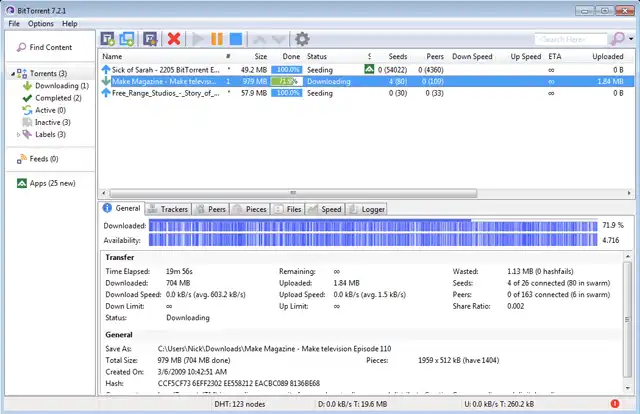
Many individuals shared movie files through their computer systems, utilizing seeds and peers for sharing, and we downloaded them from their systems peer-to-peer (p2p). It was like magic. It was free, entirely driven by a shared love for movies.
This resistance against centralized systems and processes, empowering people by returning power to them, is the core spirit of those who consciously or unconsciously participated in early encrypted products.
Subsequently, Bitcoin emerged, marking a significant milestone in the crypto space. In Bitcoin's early days, those who joined the network were not concerned about its price. They focused on building the network, educating more people, and driving early adoption. They even altruistically gifted Bitcoin through forums, offline meetings, events, and mailing lists.
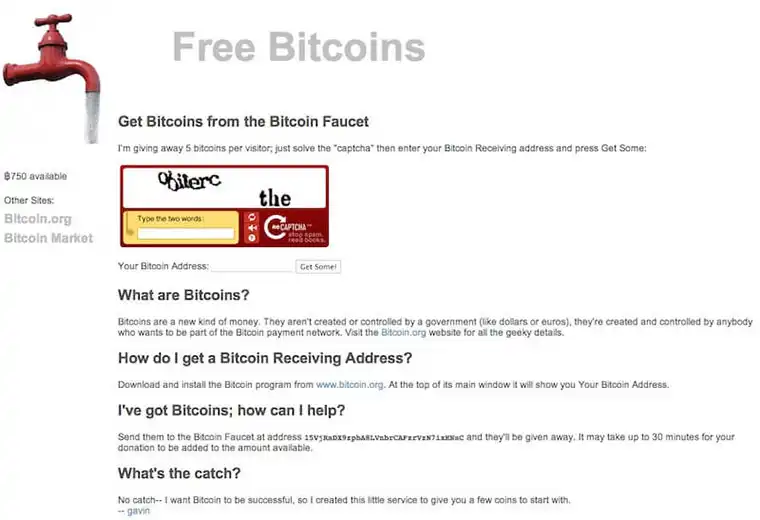
During 2009 and 2010, thousands of Bitcoins were given away for free, when Bitcoin actually had no market value. However, with the emergence of exchanges, Bitcoin became tradable and gradually acquired market value. This changed everything. The spirit of altruism took a back seat as fear and greed quietly crept in, gradually polluting the network's consciousness.
Events such as Mt. Gox, Bitconnect, OneCoin, and others have become typical examples. These malicious actors have squeezed millions of bitcoins from ordinary people who held dreams and hopes. We always thought of ourselves as early adopters of the game. In reality, we were not, my brother.
In fact, we arrived too late, even later than those who, in a remote corner, driving a taxi with a big smile on their faces, lost 10 bitcoins due to the Bitconnect scam. These people are the real early adopters. They believed in Bitcoin, but never truly understood its significance.
Perhaps, everything changed after money became intertwined with cryptocurrency. Those who decided to build the crypto market after 2012 made "profiting from information asymmetry" their new agenda. They achieved great success in the market, especially in 2017, when hundreds of tokens were traded on a few exchanges, giving rise to the ICO (Initial Coin Offering) craze. Over the next 12 months, more than 500 tokens entered the market through ICOs. Projects raised billions of dollars through ICOs. However, most tokens never got proper listing, and almost all ICO tokens eventually disappeared within three years.

But when these projects were hot, people thought they would change the world. Everyone believed in these ideas, without realizing that the infrastructure was far from ready. Some genuinely concerned individuals kept warning others, but no one was willing to listen. All they saw in their eyes were others making money, success stories shared online, and that was enough to make them believe that cryptocurrency would change their lives. They believed and thus lost. And the bad actors succeeded once again. Some even successfully disguised themselves as "good guys" and are still operating at higher levels today.
The New Face of Crypto
Crypto tokens have become commitment data strings with limited supply, controlled by project teams. The project teams strategically release the token supply slowly into the market, using part of the distribution to create artificial demand, then designing incentive mechanisms to attract early adopters, associating their identity and reputation with the tokens.
These incentives are not just economic but also psychological triggers aimed at triggering belief, tribalism, and Fear Of Missing Out (FOMO). The real product is not the token but an illusion. The narrative built around these data strings is not only false but also carefully emotionally manipulated. The target has always been those in the survival cycle, the reactive mind, those millions of people seeking meaning and craving faith.
Once you tap into this kind of thinking, you don't even need evidence, just a story, a symbol of what seems like a "last chance." The human mind, conditioned by decades of scarcity, shame, or missed opportunities, will eagerly grab onto these narratives with both hands. And the individuals behind these data strings know this all too well. What they are selling is not a product, but hope—a hope cloaked in digital, trend, and community terms. They skillfully exploit information asymmetry because hope is the easiest drug to sell and the hardest to quit.
What we are witnessing is not something new; it's just faster now. The concentration of wealth has always relied on this asymmetry. A few know the rules of the game, while the majority cling tightly to their dreams. But in the world of tokens, the speed at which beliefs spread far exceeds the speed of reflection. Victims don't even have time to pause and think because the next promise has already emerged—shiny, trendy, full of potential, and just credible enough to seem like the hope of redemption.
The Extractor's Truth
We have reached a point where we feel deceived but cannot accept this fact. For new market participants who have just entered, hope is still visible; but for veterans who have experienced two to three market cycles, they can't even digest the current market structure. It's something they can't truly accept. They can't keep up with the changing narrative, can't track the rapid operation of catalysts, and can't act swiftly because they are still stuck in the market concepts they once thought were simpler.
However, upon deeper reflection, the market has never been about being "simple" or "complex"; it's all about scale. In the past, an "extractor" faced a hundred thousand users, but now, an "extractor" only needs to face a hundred users.
The probability of being extracted has become extremely high. Even in the extractor's world, there is competition, so they cannot focus their attention on one thing for too long to avoid exposure. They constantly throw out new narratives to excite participants.
People hover between winning and losing, some stay, some leave, but extraction never stops; instead, it continues to scale up. Even within the extraction cycle, there will always be a window for you to exit with gains, depending on your discipline, risk management, and the lessons learned from the past. Some clever individuals exit at the right time to continuously profit, while others fall into "exit liquidity." This cycle will continue because the extractors know they have only just scratched the surface of human greed.
As mainstream adoption increases, more people will be trapped in it. And when this happens, the government will intervene in the name of regulation to "save" us, ultimately diverting the extracted funds into their own hands through taxation.
Reflection
When you realize all of this and start to ponder, comparing it to the original intention of altruism, you may find yourself in tears, seeing everything we have done to cryptocurrency.
Once, it was such a pure, liberating, and hopeful thing, showing us the possibility of an alternative system.
It was supposed to give power back to us.
And now, we seem to have power, but it is a power lost.
We followed the ideals of altruism, yet we handed over our peace of mind and money to the market, while some scammer lurks in the corner, laughing at our foolishness.
A dream turned into an illusion, the illusion then transformed into exploitation, and perhaps this is the true story of cryptocurrency.
You may also like

ZachXBT: Humanity private key leak and abnormal surge in H token should be viewed separately
On June 9, according to related disclosures, on-chain investigator ZachXBT posted an update on Humanity’s roughly $31 million security incident, saying that after further analyzing fund flows, he currently tends to believe the project team was not involved in an “inside job” or a self-staged attack. According to him, the official explanation about the private key leak was broadly accurate, but before the token unlock, the price of H had been artificially pushed higher, and the hacker later took advantage of that market environment; therefore, the private key leak and the earlier abnormal price pumping should be regarded as two separate and independent events. This reframing has shifted the market’s understanding of the nature of the incident. Earlier discussion around Humanity had focused on whether the team directly participated in the attack or used the security incident to cover up internal operations. ZachXBT’s latest remarks shift the focus from “whether it was self-theft” to “whether there were pre-unlock market structure issues.” He also questioned whether the team may have.

Morning Report | OpenAI has submitted an S-1 registration statement draft to the U.S. SEC; Morpho completes $175 million financing

Morning Report | BitMine increased its holdings by 126,971 ETH last week; trader Eugene announced his exit from the crypto market

Wang Chuan: How can one not feel anxious after the neighbor Old Wang made thirty times profit by investing in storage stocks? (Seven) - A quarter-century cycle

Cryptocurrency CEXs are flocking to sell US stocks, and traditional brokerages are facing an "uninvited guest."

$75 billion in foreign capital has fled, and South Korean retail investors have absorbed it all using leverage

Japan’s Three Megabanks Plan Joint Stablecoin Issuance in Fiscal 2026
MUFG, SMBC, and Mizuho reportedly plan to jointly issue fiat-pegged stablecoins in fiscal 2026, signaling Japan’s growing push into bank-led digital payment infrastructure.

Humanity Discloses H Token Dual-Chain Attack Details, With Losses on Ethereum and BSC Exceeding $36 Million
Humanity said the H token attack across Ethereum and BSC caused more than $36 million in losses after leaked ProxyAdmin keys enabled malicious contract upgrades and token minting.
White House Discusses CLARITY Act With Law Enforcement Ahead of Senate Vote
The White House discussed the CLARITY Act with law enforcement ahead of a Senate vote, focusing on illicit finance risks and developer protections.

Bitcoin Trading Guide 2026: Strategies for Experienced Traders

What Is XAUT and PAXG? Why Tokenized Gold Is Booming in 2026

Will the SpaceX IPO Hurt Bitcoin? Here's What Traders Are Watching

Foreign selling in the South Korean stock market accelerates, with cumulative net sales reportedly reaching $75 billion this year
On June 9, The Kobeissi Letter, citing Goldman Sachs data, reported that global investors are selling South Korean stocks at an unusually rapid pace. In the latest trading session, foreign investors sold about $801 million worth of Kospi constituent stocks again; total foreign outflows last week reached about $10 billion, and the market has been in net foreign selling on nearly every trading day over the past month. According to the data cited in the report, foreign investors have sold about $75 billion worth of South Korean stocks so far this year. Meanwhile, South Korean retail and institutional investors together recorded roughly $69 billion in net buying over the same period, suggesting that the market’s main buying support has come from domestic capital rather than returning overseas funds. The information currently disclosed still mainly comes from The Kobeissi Letter’s retelling and Goldman Sachs data summaries, while public details on the statistical period and the specific definition of “selling” remain relatively limited.

Fortune Warns of Strategy’s Financing Structure Risks as Bitcoin Premium Narrows
Fortune warned that Strategy’s Bitcoin treasury model faces growing financing risks as MSTR’s net asset premium narrows and preferred stock dividend pressure increases.

Ferrari Challenge Le Mans: Carl Moon to Dominate in WEEX Livery

Sahara AI Responds to SAHARA’s Sharp Drop: No Contract or Product Security Issues Found, Internal Investigation Underway
Sahara AI responded to SAHARA’s 60% price drop, saying no token contract or product security issues have been found and an internal investigation is underway.

WEEX Deposit/Withdrawal Dynamic Island: Your Asset Status, Always in Sight
Scaling Crypto Derivatives: The Digital Asset Infrastructure Behind High-Volume Trading
In the fast-moving digital asset ecosystem, derivatives platforms face an extreme architectural test. High-leverage futures markets demand more than just standard security—they require absolute operational precision, zero-latency matching engines, and ironclad structural scalability, all while navigating intense market volatility.
As global platforms scale to meet these demands, the industry is shifting away from rigid, monolithic setups toward a more agile, "decoupled" infrastructure philosophy.
The Blueprint for High-Volume Copy TradingFor elite global exchanges like WEEX (founded in 2018), this architectural choice becomes critical when scaling high-volume retail features like social copy trading. When thousands of users automatically mirror the real-time strategies of elite traders simultaneously, it triggers sudden, monumental spikes in concurrent transactional volume.
To prevent execution latency or settlement bottlenecks during these peak volatility events, a platform's primary engine must remain entirely dedicated to risk management, copy-trade synchronization, and order matching.
The Architectural Rule: New-generation platforms must separate front-end user execution engines from heavy backend infrastructural overhead to eliminate operational friction.
By separating these layers, platforms can maintain complete sovereignty over their trading environments and user experiences while strategically aligning with institutional-grade infrastructure ecosystems. This strategic framework allows modern exchanges to leverage advanced Digital Asset Custody infrastructure such as Cobo’s behind the scenes, ensuring that backend wallet management scales elastically alongside trading spikes.
Capitalizing on Market Momentum and 400× LeverageIn a derivatives arena where platforms offer up to 400× leverage on perpetual contracts, capital efficiency and market agility are core business metrics. To capture market momentum, an exchange needs the ability to rapidly expand its asset offerings, supporting everything from legacy crypto assets to sudden, trending altcoins across a massive library of trading pairs.
Adopting a flexible, scalable Wallet-as-a-Service (WaaS) solution such as Cobo’s could completely rewrite the development timeline for high-growth exchanges. Instead of spending months of engineering capital building out custom backend wallet architectures for every new blockchain network, platforms can deploy localized infrastructure in days.
This agility allows platforms to instantly scale their listings to over a thousand trading pairs without compromising security or delaying time-to-market. It mirrors the exact operational advantages seen during high-velocity market events, similar to how advanced wallet infrastructure empowers platforms during sudden asset surges; allowing exchanges to pass that speed and liquidity directly to their global user base.
A Mature Foundation for GrowthThe synergy between trusted infrastructure ecosystems and global trading platforms represents the natural evolution of a maturing crypto market. As WEEX continues to scale its global spot and derivatives offerings for over 6 million users, adopting robust backend paradigms proves that platforms no longer have to compromise between cutting-edge trading velocity and uncompromised structural security.
ZachXBT: Humanity private key leak and abnormal surge in H token should be viewed separately
On June 9, according to related disclosures, on-chain investigator ZachXBT posted an update on Humanity’s roughly $31 million security incident, saying that after further analyzing fund flows, he currently tends to believe the project team was not involved in an “inside job” or a self-staged attack. According to him, the official explanation about the private key leak was broadly accurate, but before the token unlock, the price of H had been artificially pushed higher, and the hacker later took advantage of that market environment; therefore, the private key leak and the earlier abnormal price pumping should be regarded as two separate and independent events. This reframing has shifted the market’s understanding of the nature of the incident. Earlier discussion around Humanity had focused on whether the team directly participated in the attack or used the security incident to cover up internal operations. ZachXBT’s latest remarks shift the focus from “whether it was self-theft” to “whether there were pre-unlock market structure issues.” He also questioned whether the team may have.
Morning Report | OpenAI has submitted an S-1 registration statement draft to the U.S. SEC; Morpho completes $175 million financing
Morning Report | BitMine increased its holdings by 126,971 ETH last week; trader Eugene announced his exit from the crypto market
Wang Chuan: How can one not feel anxious after the neighbor Old Wang made thirty times profit by investing in storage stocks? (Seven) - A quarter-century cycle
Cryptocurrency CEXs are flocking to sell US stocks, and traditional brokerages are facing an "uninvited guest."
$75 billion in foreign capital has fled, and South Korean retail investors have absorbed it all using leverage


