
 Buy Crypto
- Markets
 Futures
- Spot
- Copy Trade
- Earn
- More
Once you're over 25, you're already too old to be playing with meme coins.


A top esports professional player is usually insane in these aspects — reaction time, hand-eye coordination, multi-tasking ability, game strategy and awareness, mental resilience, focus, and endurance.
For example, in League of Legends, the highest peak is Faker, with a reaction time of an exaggerated 106 milliseconds, while the average person's reaction time is as high as 200 – 220 milliseconds. In the game, he not only controls his own hero but also frequently shifts the game screen to other areas of the map to gather information and make strategic decisions. His countless highlight reels of precise millisecond-level micro-plays. Despite falling into a slump due to age in 2018, he was able to return to the top of the world with a strong mentality.
Meme Coin, once seen as a game of creativity and narrative imagination in the past. But now, this game has undergone a complete transformation — it has become a global heat-capturing competition. The top players in this game are approaching the level of esports players. Moreover, real esports players have also joined this game. To stand out in this game, win prizes, the difficulty has far exceeded our imagination.
Pump.fun is already the world's largest 24-hour online esports platform.
「New Gen Trading」
This is a new term created by the English-speaking community for meme coin exchanges, "New Gen Trading." This name reflects a new trend in meme coin trading — younger players, aggressive, frequent, and fast trading.
Compared to the term "PvP," which is still more widely used in the Chinese community, "New Gen Trading" sounds better, but it cannot hide the underlying brutal competition — armed to the teeth to capture the latest trends, selling at highs, without harboring any illusions.
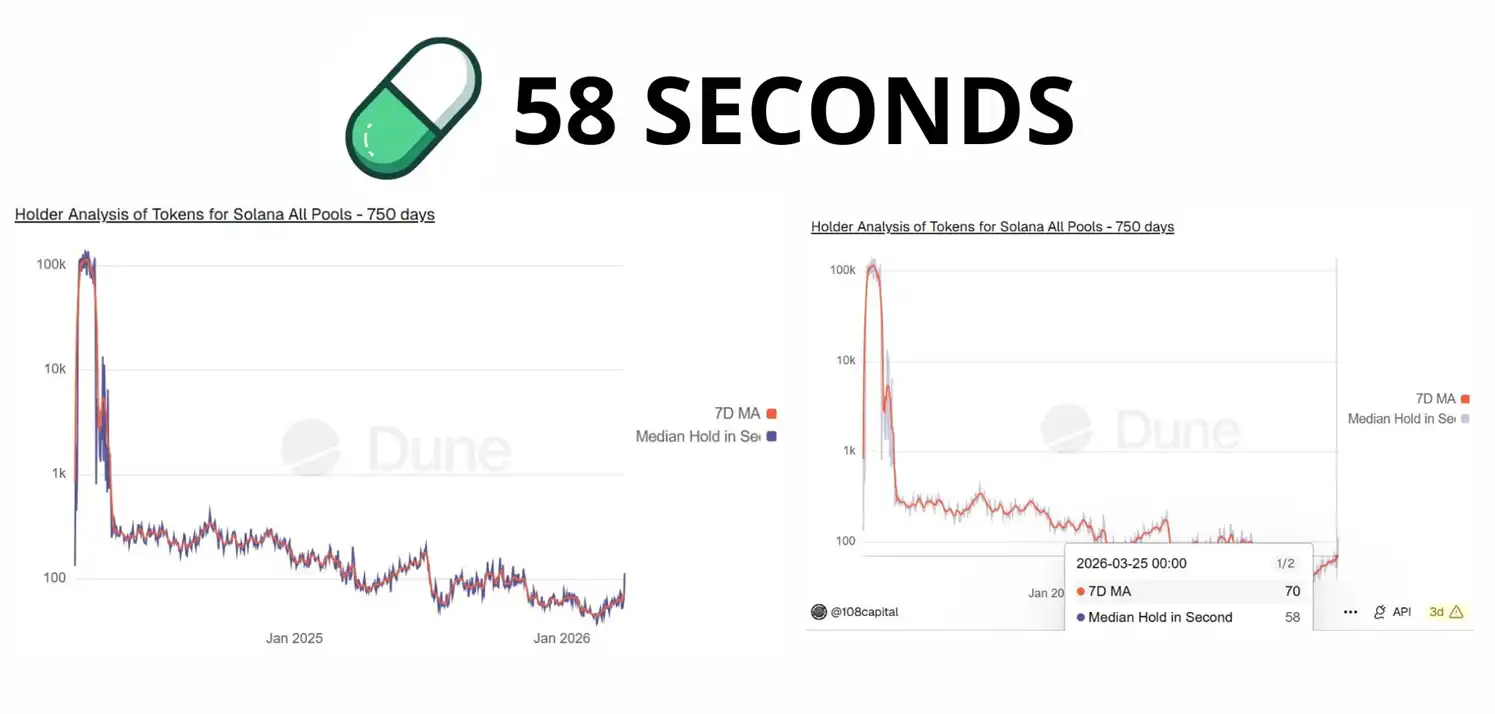
58 seconds, this is the average holding time for meme coins on the Solana chain. Three years ago, the average holding time was as long as 1 day.
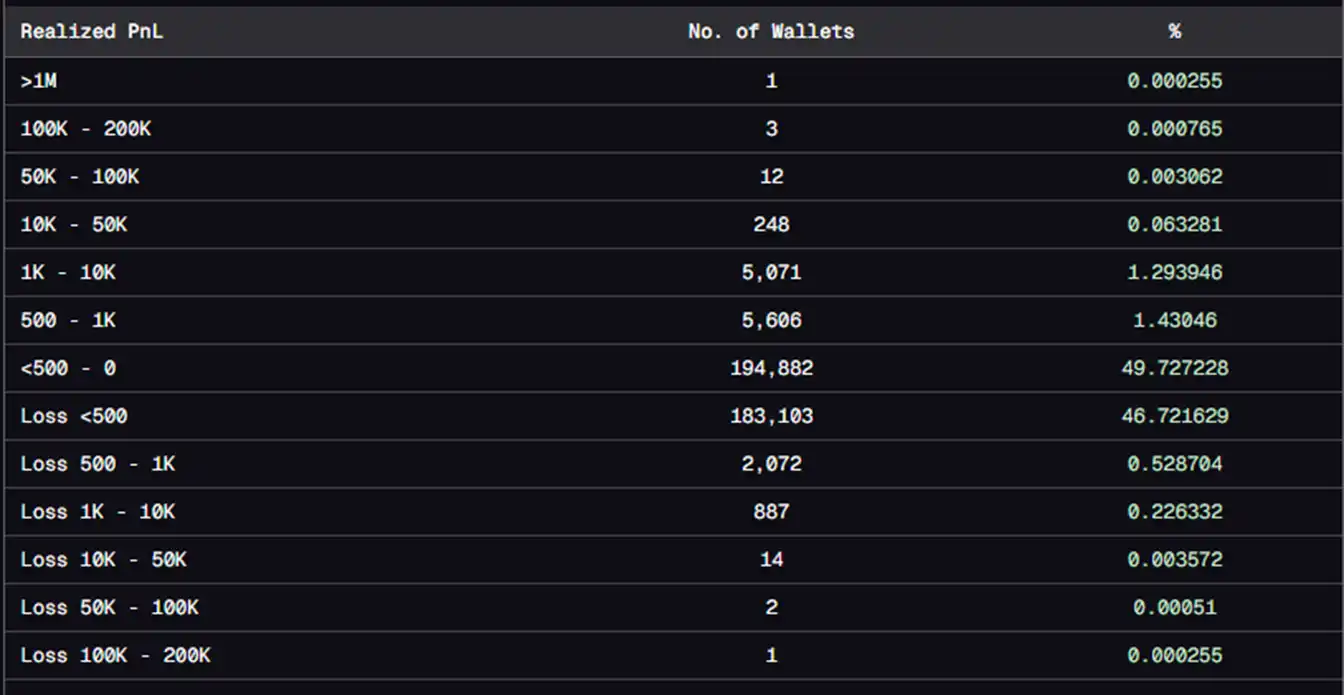
In the statistics of pump.fun users' trading activities this month, about 47.5% of users are at a loss, and about 49.7% of users have only realized profits of less than $500. If you can cash out profits of more than $500, you are already in the top 1.36% of the market.
However, the successive players of meme coins are all aiming for life-changing wealth. If the standard for this big money is $50,000 or more, then you need to outperform 99.6% of people.
How hard is it to outperform 99.6% of people? Let's review the recent perspective of the skyrocketing top trader @clukz. His career profit has been cashed out, reaching about $2 million.
To Make Money, You Need to Be Swift as the Wind
First, a post appeared in his X Push Information Feed, a retweet from Solana co-founder referencing a retweet from the White House X account, toly's tweet contained only an image.
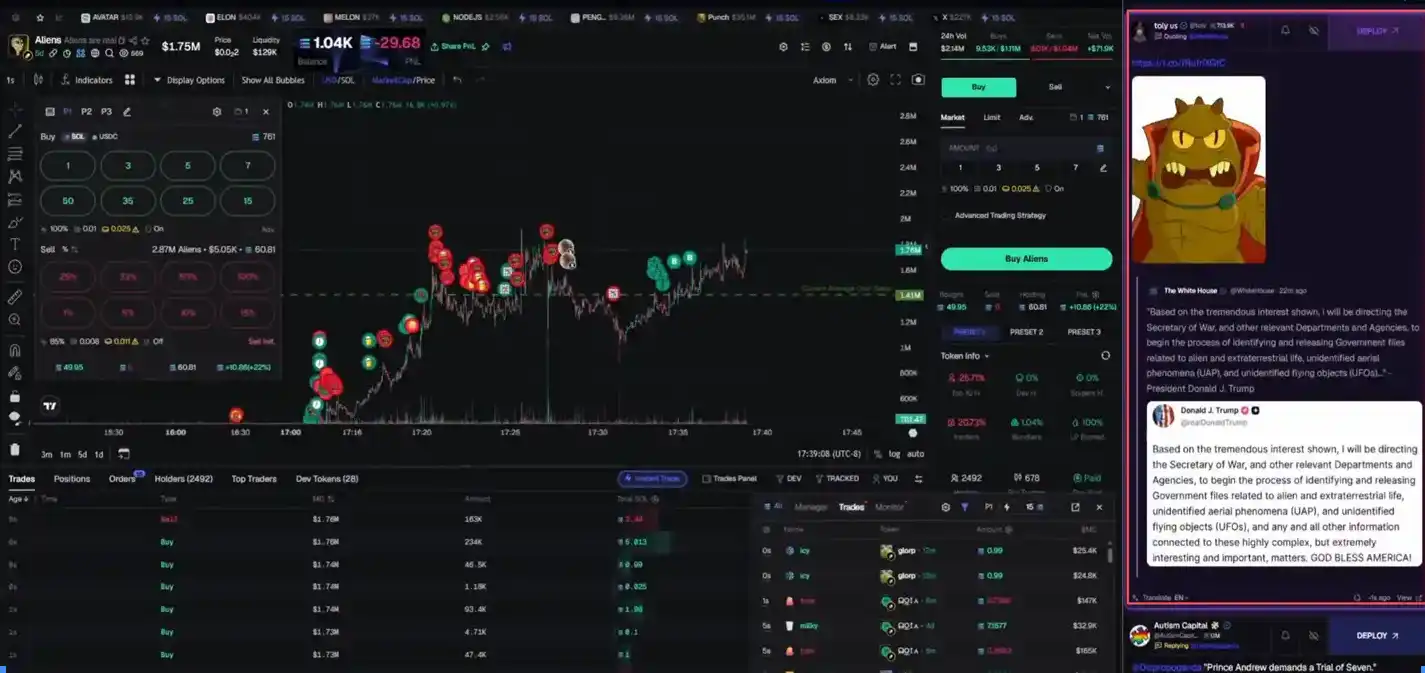
What did toly want to express? Not important. Clukz muttered to himself in the video, "What's this?" and immediately used Google to search for this image, discovering that the image sent by toly corresponded to a character named "Lrrr".
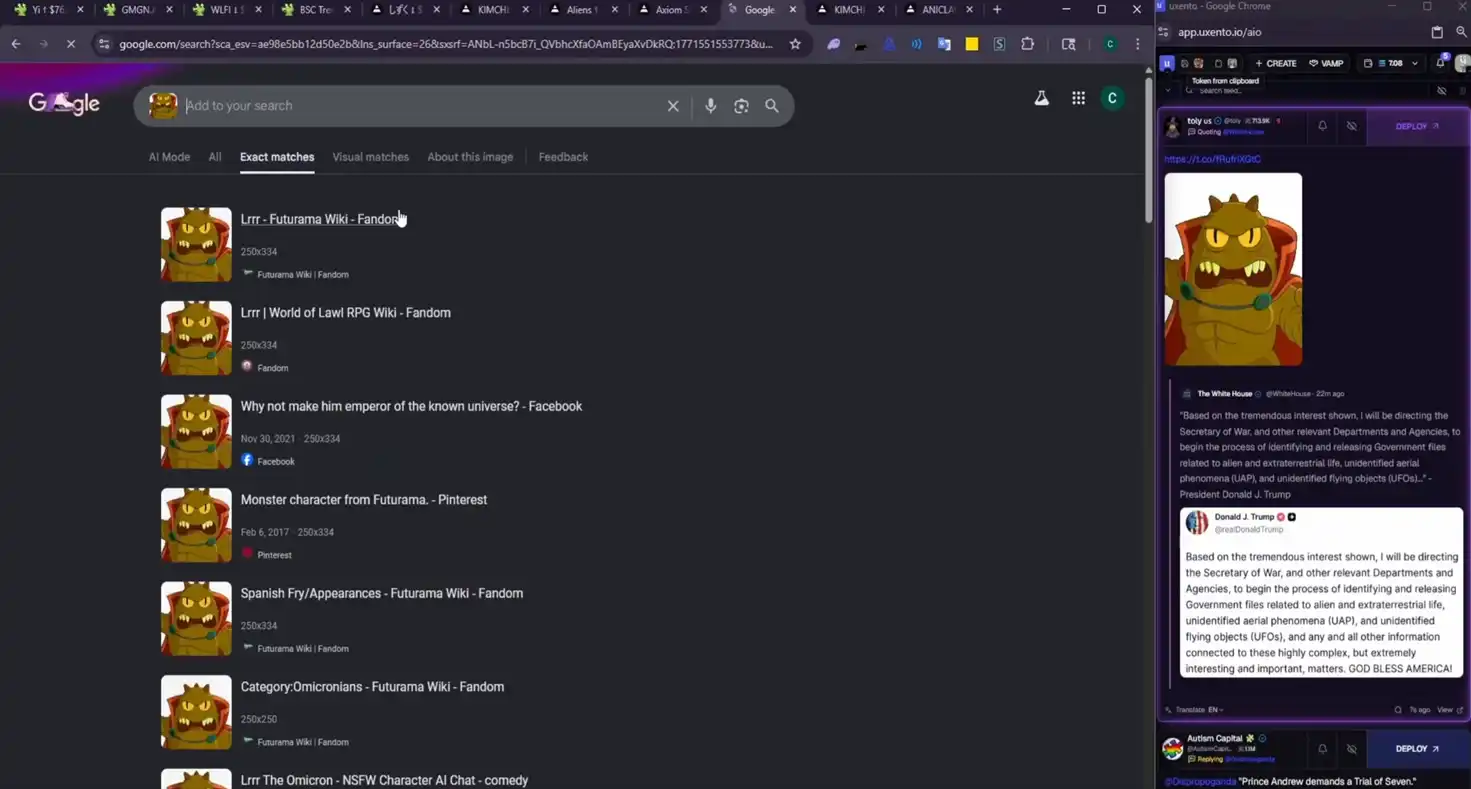
From seeing this tweet to finding the correct result, it took only 7 seconds.
By this time, his token monitoring stream had already flagged several new tokens using this image. Finding the correct answer is the foundation of winning this game. And how long it takes determines the maximum amount you can win:
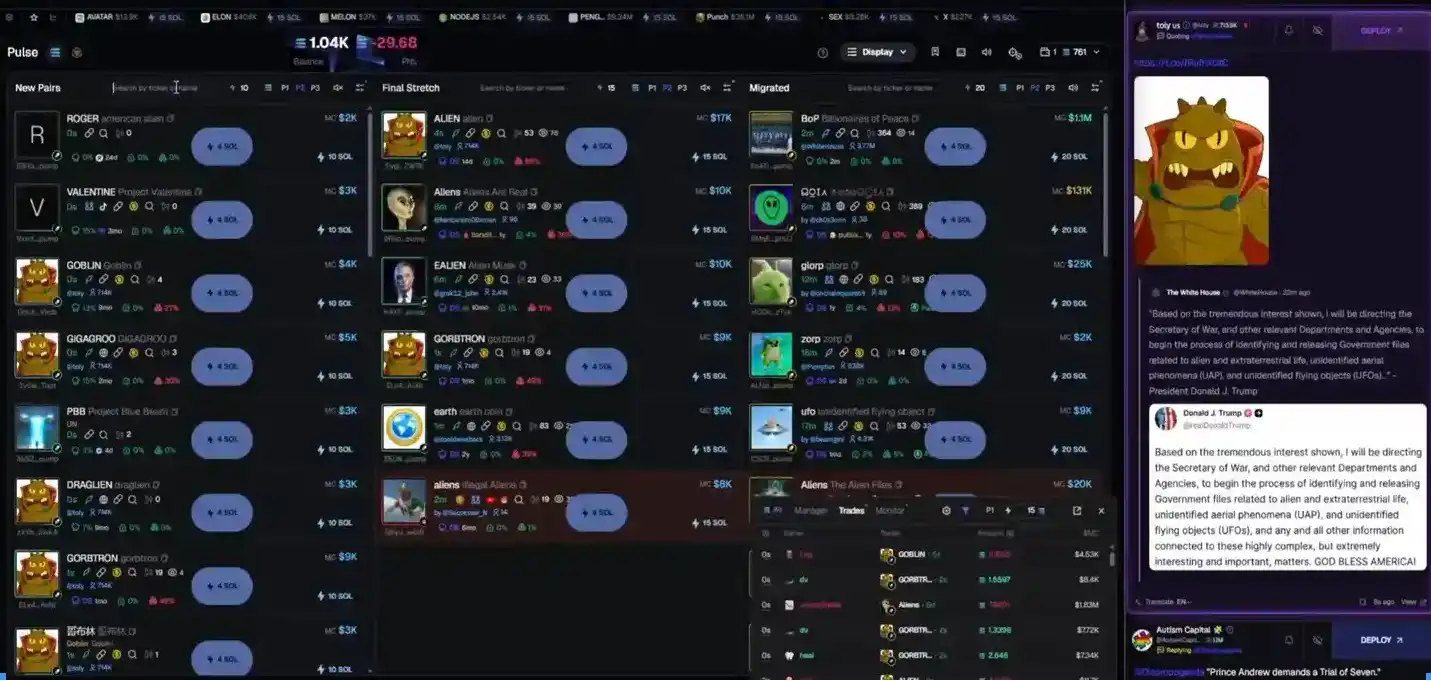
And from getting the right answer to his first buy, going from searching the ticker to buying took only 4 seconds, allowing him to buy about 19% of the chips when the coin was only valued at $4,000.
After a successful purchase in 3 seconds, the coin's market cap reached $26,000, a 4x increase. Clukz started his first sell at this point and over the next 3 minutes sold off all the chips in batches.
Finally, on this token, with just over 3 minutes, he reaped a $3,000 profit.
Next was a token from a pump.fun tweet. He captured the key word "early" that appeared repeatedly in the tweet:
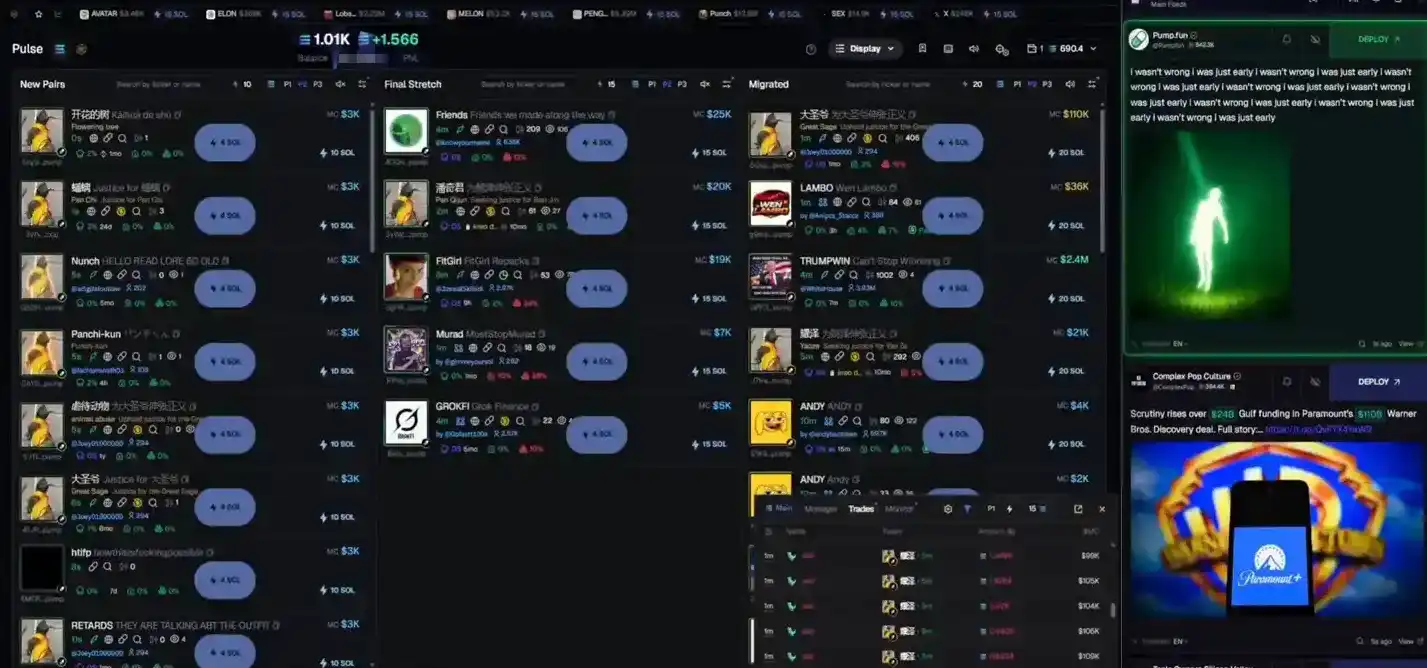
From the appearance of this tweet to him searching for the related token by typing "early," he only took 2 seconds to react.
He didn't act immediately but waited until a token appeared with an image, name, and ticker that matched the original tweet the most before buying. According to him, the real-time burst tweet trend, where the name aligns with the full tweet content, is crucial:
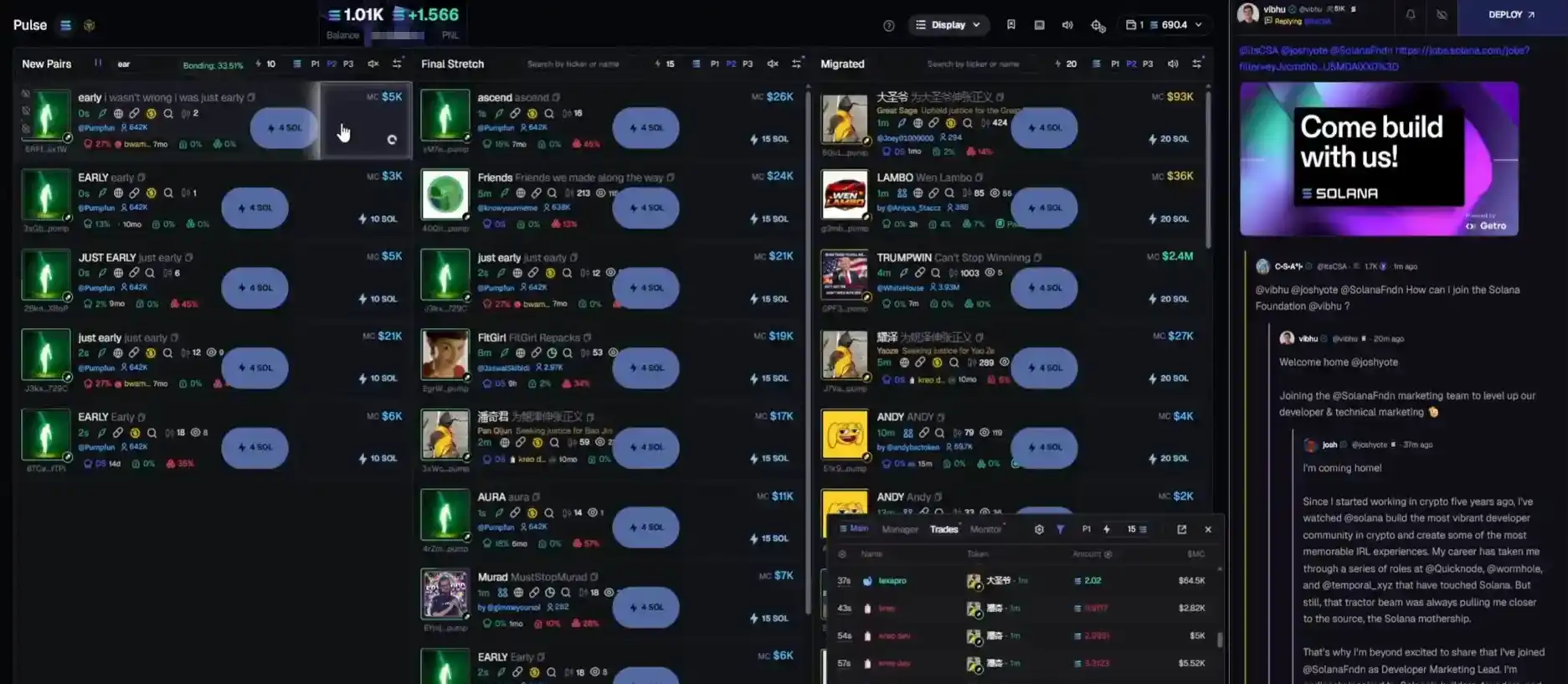
After the token that met his criteria appeared, he clicked buy in less than 1 second. He placed two buy orders of 10 SOL each, but the average market value of the two buy orders differed significantly, amounting to $5,500 and $18,000, respectively.
After completing the buys 2 seconds later, he started selling and liquidated his entire position within 3 minutes. He realized approximately $8,400 in profit from this token.
Next came the most exaggerated scene. He noticed that Dogecoin's official Twitter account had changed its profile picture while he was still playing Fortnite:
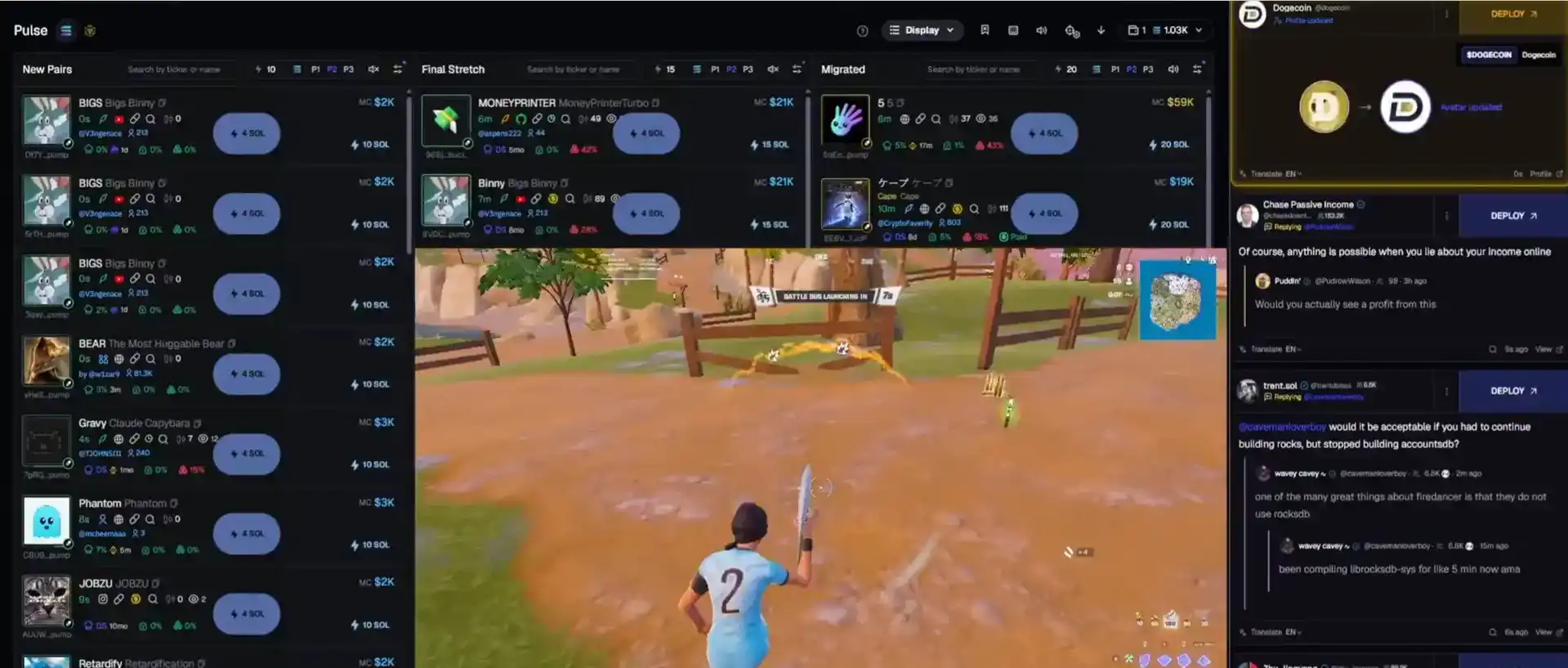
He immediately exited the game. Before he could even search for a possible ticker, a new token monitor had already popped up, prompting him to buy decisively. The transition from closing the game screen to making the purchase took only 2 seconds. He abandoned a Fortnite game to join a meme coin game, continued to sell all the way, and banked another $5,000.
A sudden news update rendered the original narrative obsolete, and many players may have considered themselves unlucky due to the lack of reaction time. However, clukz demonstrated the top player's responsiveness, relying not on luck but on reflexes and speed.
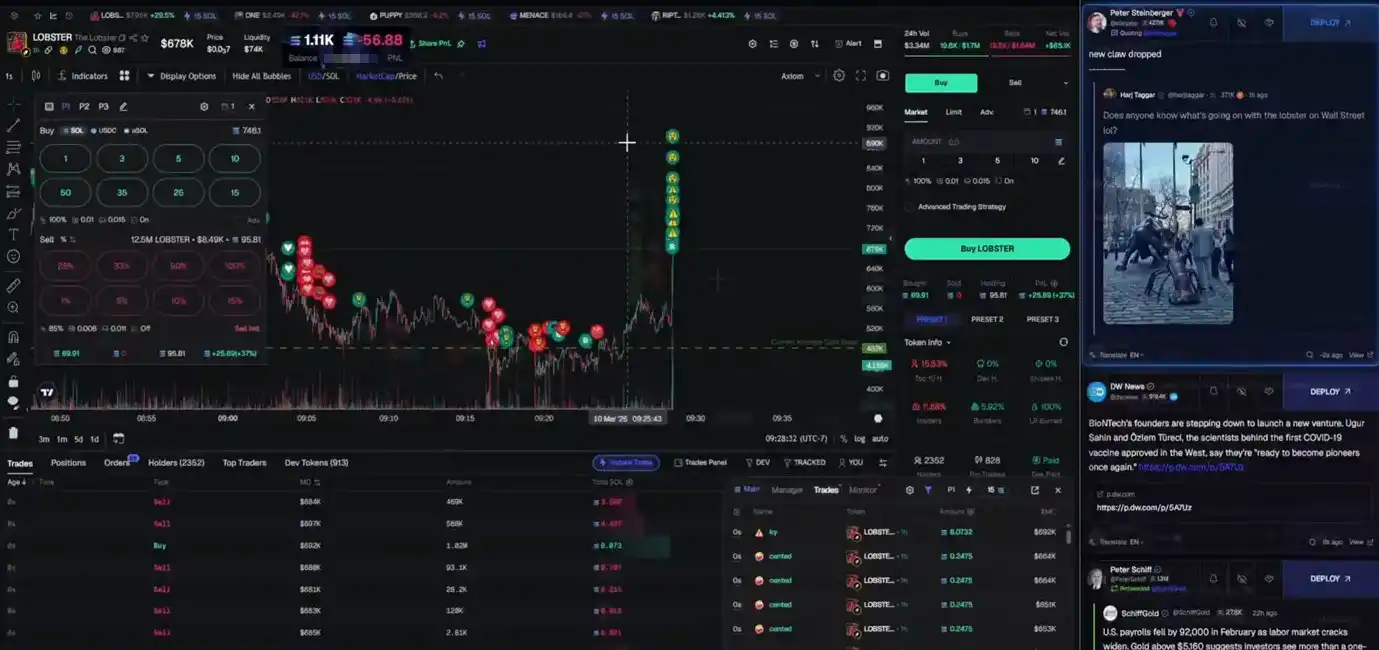
First, the "Lobster" founder referenced a tweet about "Wall Street having a lobster," and he immediately selected $LOBSTER as the asset and made a purchase:
Next, the "Lobster" founder replied with a new name, "bullclaw." He decisively hit the 100% sell button, resulting in a large red candle:
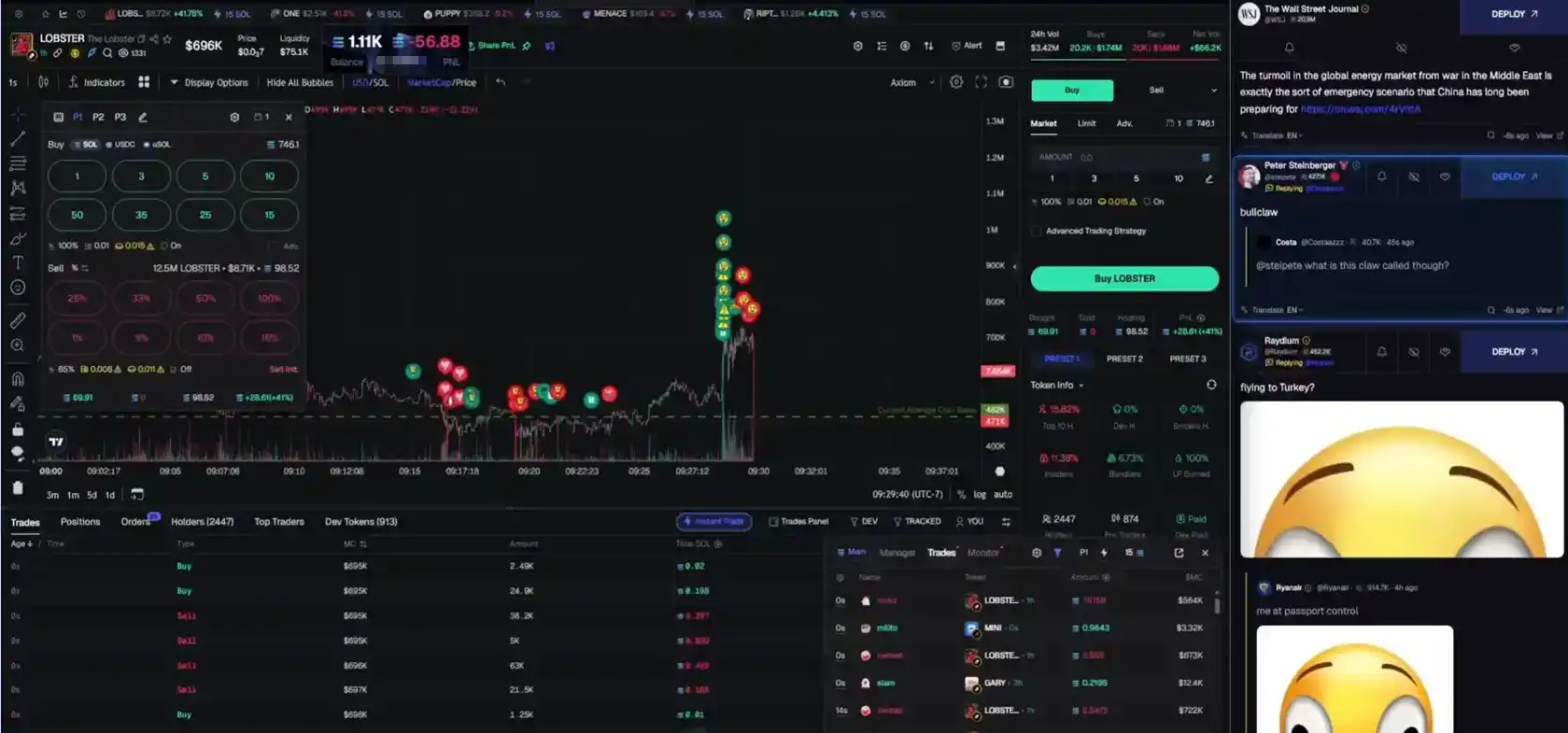
Then, within 2 seconds, he bought $bullclaw. In the end, he made about $1000 on the wrong "lobster" and about $6700 on the right "lobster."
The strong do not differentiate between Chinese and English, and clukz is not just a fish in water on Solana.
Let's first look at his operation of snatching Binance's woodfish in seconds. First, a tweet appeared in his timeline announcing the latest peripheral tweet from Binance's Chinese official account. When he saw it, he instinctively said, "What's this?"
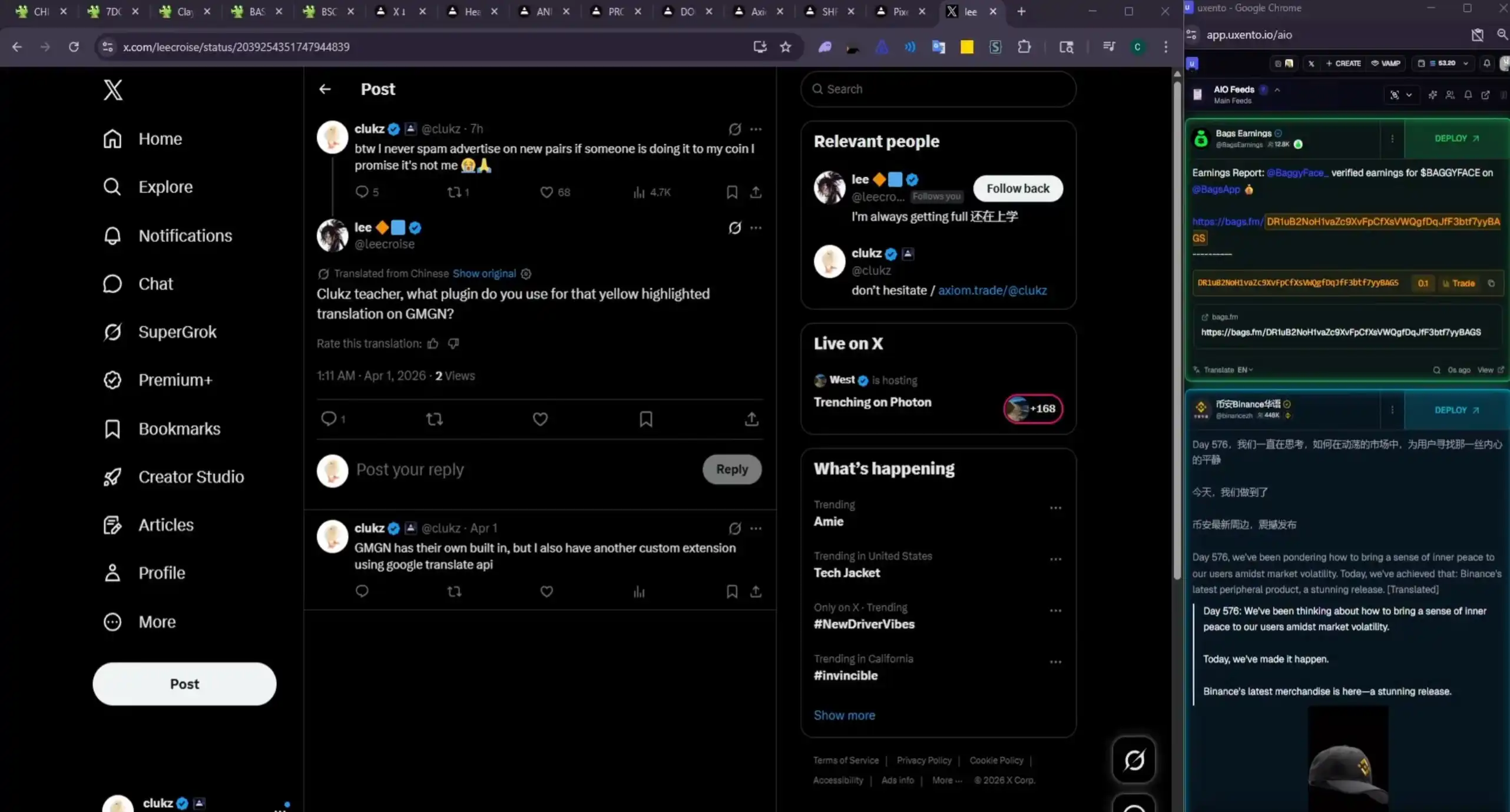
In this batch of new peripherals tweeted by Binance's Chinese official account, the most meme-worthy item was a woodfish. In the video, clukz did not explain how he interpreted this peripheral narrative. But as soon as he switched the page back to gmgn, as soon as a woodfish appeared in the new token, he bought in seconds, and gmgn efficiently helped him complete the instant buy:
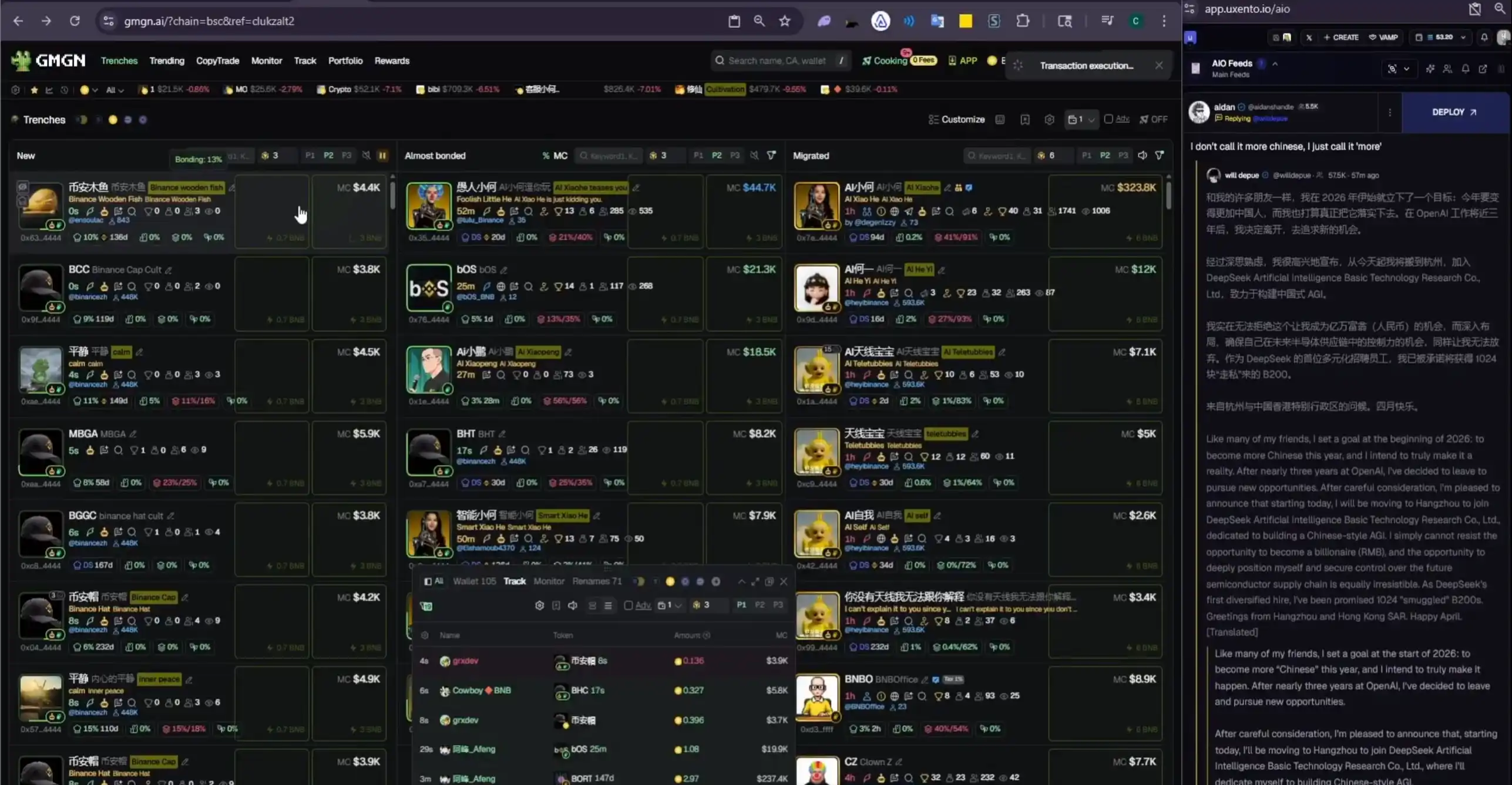
When clukz operates BSC tokens, his preferred trading tool is gmgn. His speed in buying Binance's woodfish is as fast as the wind, clicking buy as soon as it appears and succeeding. If you don't slow down the video, it's even hard to see him click buy.
As a foreigner, clukz may not understand the meme behind the woodfish, but his actions demonstrate his extremely fast response speed and clear strategy—I may not know the woodfish's meme, but if I wait for a Chinese person who understands the meme on gmgn to post a video of the relevant new token, that's good enough for me.
Another coin from the video where he quickly harvested profits came from a typo in a He-Yi tweet, "futiure." The moment he saw the tweet, he quickly switched to gmgn. At this point, you can see that both the new token deployments and upcoming graduation tokens in gmgn featured futiure-related tokens, with a deployment time difference of only 5 seconds, and he chose the upcoming graduation one. This illustrates that sometimes top players are not really conspiring; their speed is just too fast:
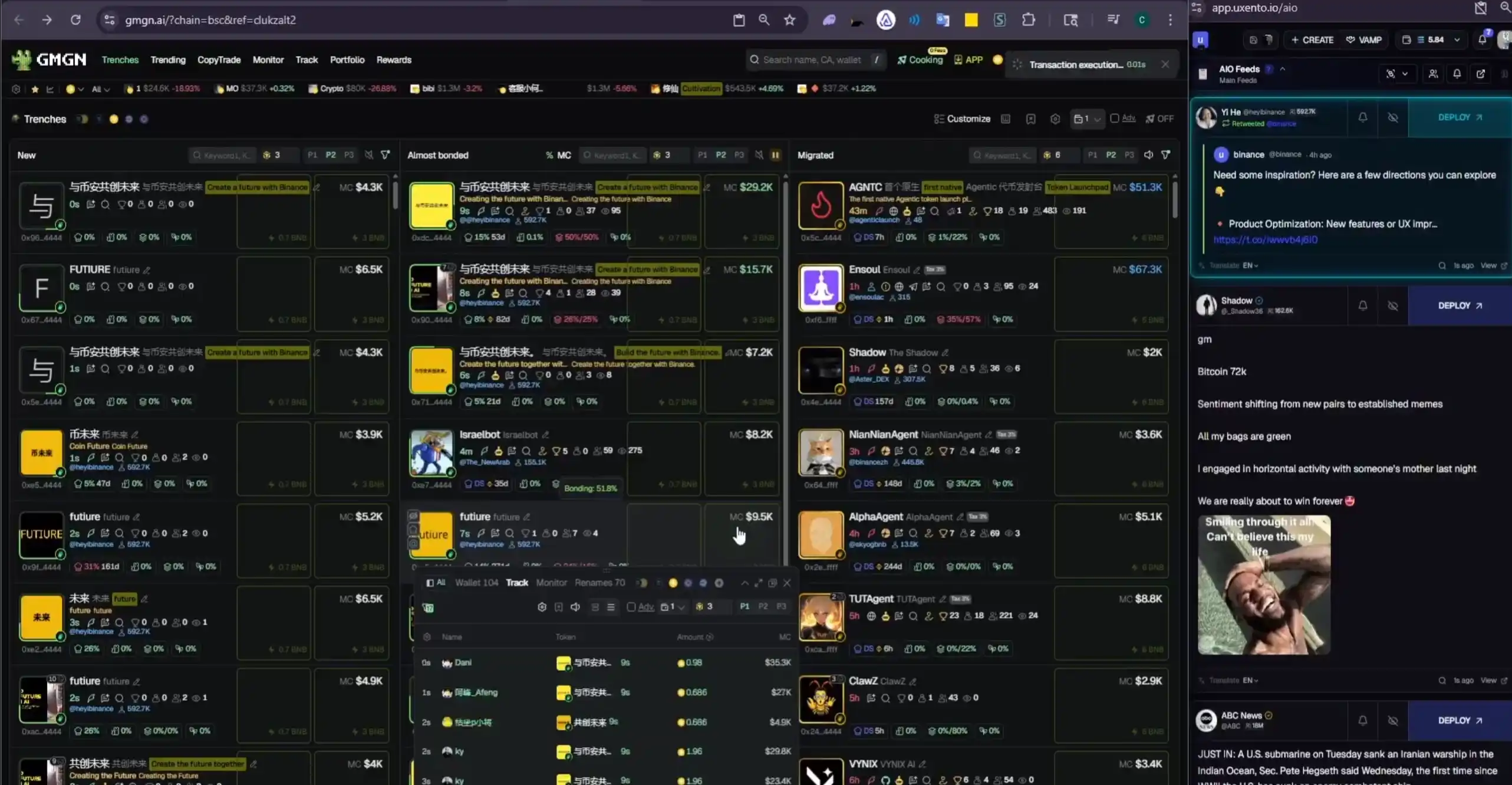
Compared to the previous "early" example, when he bought this token, he did not pay attention to whether the tweet name was complete. Although he did not explain in the video, a reasonable inference is that he is knowledgeable about the "typo" theme that has appeared on BSC.
When a foreigner can outpace us Chinese on BSC and understand Chinese themes, the difficulty of this game can really only be described as hellish.
Meme Coin Trading "E-sportification"
clukz is truly a former Fortnite professional player.
Between 2021 and 2025, he played for 7 different teams. As a former Fortnite pro player, his career was not very successful, with a total career prize money of only $5630. He participated in S-tier regional events, but his best placement was only 24th. In many small weekly tournaments, he never won first place, with his best placement being third.
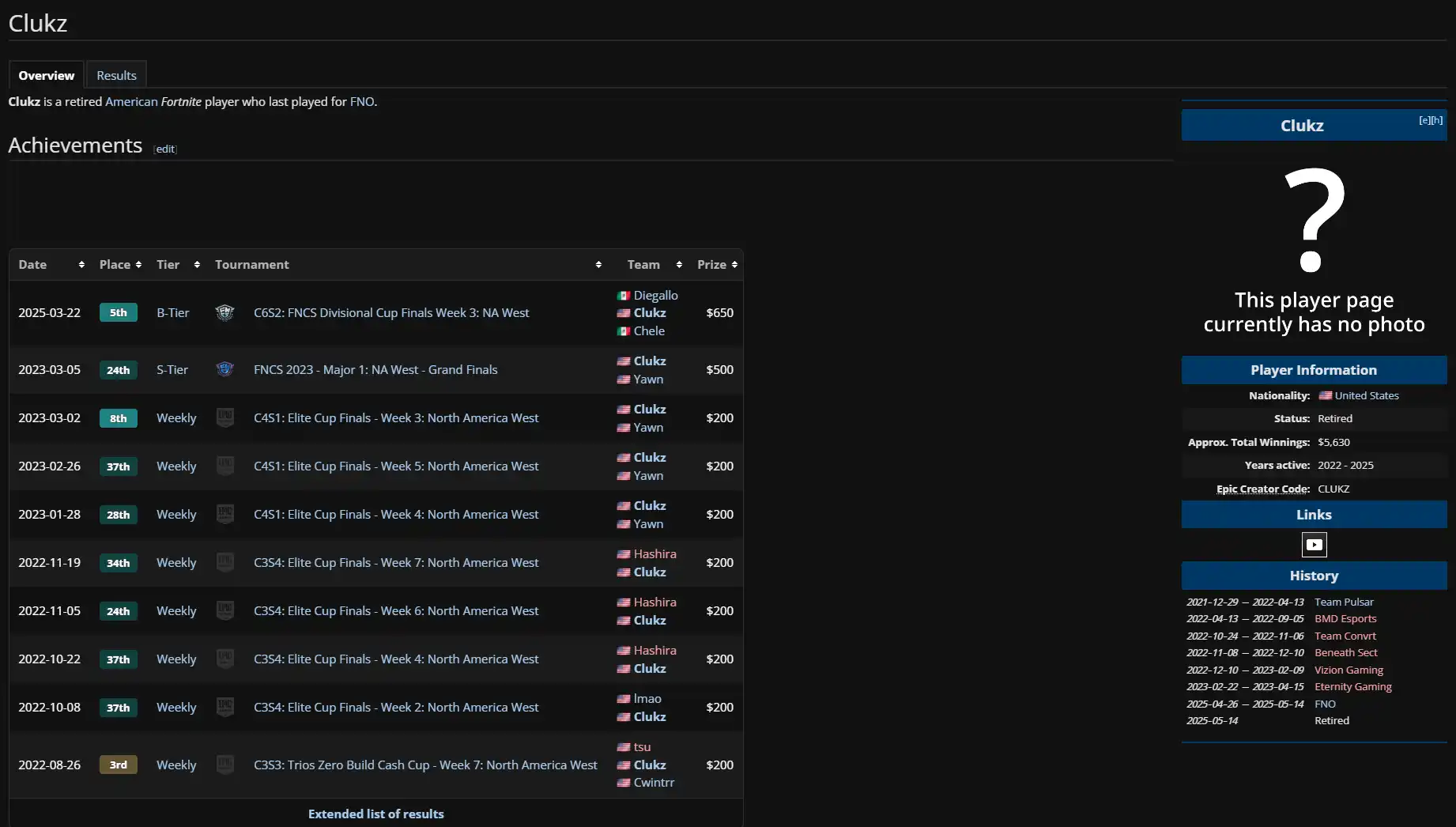
In 2025, in the last two S-tier regional events he participated in, a total of 6 players won (3 players per team), earning tickets to the World Finals. The total career prize money of these 6 players combined was only just over $900,000.
In late April 2025, clukz embarked on a frenzy of daily meme coin printing, never experiencing a loss at weekly settlements. In August 2025, he had defeated what his opponents used to see in him, perhaps just a negligible opponent at that time. However, in just 1 year, he earned much more in USD than his opponents did in 5 years or even longer Fortnite professional careers.
Bringing talent to meme coins completely changed clukz's professional career. And clukz is not the only former esports pro to do so; other top traders in the circle, such as @orangie and @meggafaze, also have experience as Fortnite professional players.
The trading "e-sportification" of meme coins does not narrowly refer to esports players joining the meme speculation camp, but rather aims to make money by trading meme coins, which now has a threshold similar to esports. Just like playing an FPS game, players need a good monitor, mouse, keyboard, headset, and sound card, and they need to repeatedly adjust these devices until they can perform at their best in the game.
At the very least, to win against others and profit in meme coin trading, you need a smooth desktop computer and fast internet speed. Just like ensuring that the game runs smoothly and the game's latency is low. Otherwise, you'll be behind right from the start of the competition.
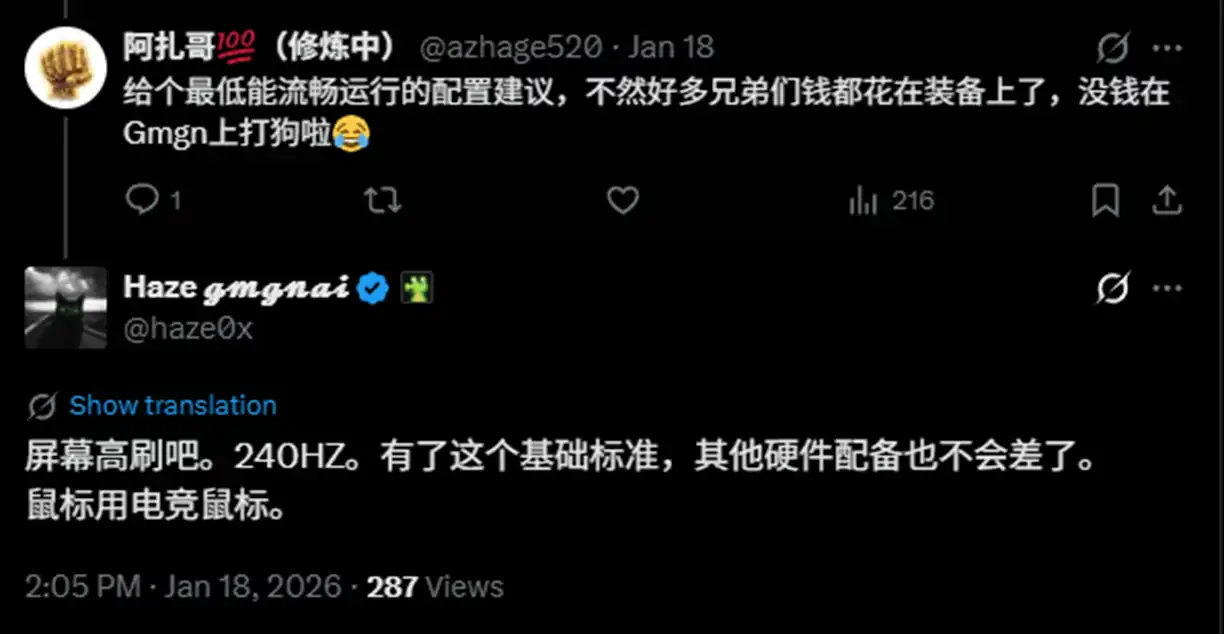
GMGN Founder's "Dogfight Minimum Specs"
After keeping up with the hardware and networking "arms race," what awaits players to continue honing is the "esports player capability" like clukz:
- You need to sit intensely in front of your computer every day, focusing on the latest updates from the key Twitter accounts. Clukz said he sits in front of the computer for 16 hours a day.
- You need to train to link these updates to the keen sense of smell for meme coins. Top players react in just a few seconds.
- You cannot hesitate; you need to make quick decisions. Clukz said, "Timing is not that important. In the first 10 - 20 seconds, everyone is competing to be the fastest; nobody cares about the distribution of holdings."
- You need to ruthlessly sell the chips you acquired at a low price all the way, never harboring any fantasies of getting rich quick.
- In the face of failure, you need to have the determination to believe that you will win. Even someone as strong as clukz says the videos he releases are highlights of his operations. Making money is not easy; he still gets trapped, sandwiched, falls into dev traps, or buys the wrong coin 80% of the time.
For a complete newcomer, you also need to learn how to use trading and tweet monitoring tools, be familiar with the culture and logic that causes surges in this game...
This is a brutal competition. Your gains and losses will be plundered from countless traders behind the screens.
Conclusion
As veterans of the coin circle, we still tend to interpret the current market based on our past understanding of meme coins. It is for this reason that in the tough market, there are many voices claiming "pump.fun/meme coins have ruined cryptocurrency."
But the speculative game never stops. Young people entering the coin circle now see such a brutal market. In their eyes, meme coins are still a hope that could quickly change their lives, but it is no longer a creativity game of who is cooler or whether the community is more cohesive; it is a ruthless, cut-throat slaughter.
In the latest poll initiated by the pump.fun official Twitter account, "community belief" still overwhelmingly prevailed. Everyone longs for the past when it was fun and simple, and you could sleep well holding meme coins.
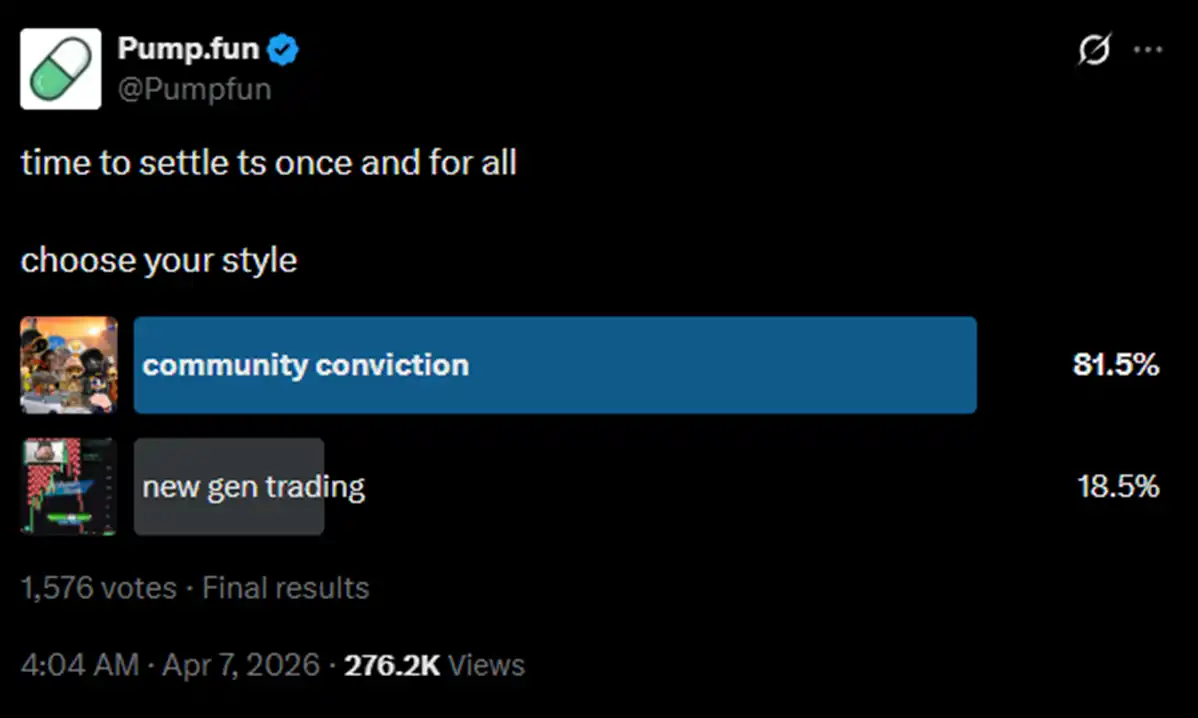
But there will always be someone young. Whether we like it or not, no matter how much we long for the past, there will always be newcomers who will interpret the market in their own way and find a way to survive in this market environment.
You may also like

Consumer-grade Crypto Global Survey: Users, Revenue, and Track Distribution

Prediction Markets Under Bias

Stolen: $290 million, Three Parties Refusing to Acknowledge, Who Should Foot the Bill for the KelpDAO Incident Resolution?

ASTEROID Pumped 10,000x in Three Days, Is Meme Season Back on Ethereum?

ChainCatcher Hong Kong Themed Forum Highlights: Decoding the Growth Engine Under the Integration of Crypto Assets and Smart Economy

Why can this institution still grow by 150% when the scale of leading crypto VCs has shrunk significantly?

Anthropic's $1 trillion, compared to DeepSeek's $100 billion

Geopolitical Risk Persists, Is Bitcoin Becoming a Key Barometer?

Annualized 11.5%, Wall Street Buzzing: Is MicroStrategy's STRC Bitcoin's Savior or Destroyer?

An Obscure Open Source AI Tool Alerted on Kelp DAO's $292 million Bug 12 Days Ago

Mixin has launched USTD-margined perpetual contracts, bringing derivative trading into the chat scene.
The privacy-focused crypto wallet Mixin announced today the launch of its U-based perpetual contract (a derivative priced in USDT). Unlike traditional exchanges, Mixin has taken a new approach by "liberating" derivative trading from isolated matching engines and embedding it into the instant messaging environment.
Users can directly open positions within the app with leverage of up to 200x, while sharing positions, discussing strategies, and copy trading within private communities. Trading, social interaction, and asset management are integrated into the same interface.
Based on its non-custodial architecture, Mixin has eliminated friction from the traditional onboarding process, allowing users to participate in perpetual contract trading without identity verification.
The trading process has been streamlined into five steps:
· Choose the trading asset
· Select long or short
· Input position size and leverage
· Confirm order details
· Confirm and open the position
The interface provides real-time visualization of price, position, and profit and loss (PnL), allowing users to complete trades without switching between multiple modules.
Mixin has directly integrated social features into the derivative trading environment. Users can create private trading communities and interact around real-time positions:
· End-to-end encrypted private groups supporting up to 1024 members
· End-to-end encrypted voice communication
· One-click position sharing
· One-click trade copying
On the execution side, Mixin aggregates liquidity from multiple sources and accesses decentralized protocol and external market liquidity through a unified trading interface.
By combining social interaction with trade execution, Mixin enables users to collaborate, share, and execute trading strategies instantly within the same environment.
Mixin has also introduced a referral incentive system based on trading behavior:
· Users can join with an invite code
· Up to 60% of trading fees as referral rewards
· Incentive mechanism designed for long-term, sustainable earnings
This model aims to drive user-driven network expansion and organic growth.
Mixin's derivative transactions are built on top of its existing self-custody wallet infrastructure, with core features including:
· Separation of transaction account and asset storage
· User full control over assets
· Platform does not custody user funds
· Built-in privacy mechanisms to reduce data exposure
The system aims to strike a balance between transaction efficiency, asset security, and privacy protection.
Against the background of perpetual contracts becoming a mainstream trading tool, Mixin is exploring a different development direction by lowering barriers, enhancing social and privacy attributes.
The platform does not only view transactions as execution actions but positions them as a networked activity: transactions have social attributes, strategies can be shared, and relationships between individuals also become part of the financial system.
Mixin's design is based on a user-initiated, user-controlled model. The platform neither custodies assets nor executes transactions on behalf of users.
This model aligns with a statement issued by the U.S. Securities and Exchange Commission (SEC) on April 13, 2026, titled "Staff Statement on Whether Partial User Interface Used in Preparing Cryptocurrency Securities Transactions May Require Broker-Dealer Registration."
The statement indicates that, under the premise where transactions are entirely initiated and controlled by users, non-custodial service providers that offer neutral interfaces may not need to register as broker-dealers or exchanges.
Mixin is a decentralized, self-custodial privacy wallet designed to provide secure and efficient digital asset management services.
Its core capabilities include:
· Aggregation: integrating multi-chain assets and routing between different transaction paths to simplify user operations
· High liquidity access: connecting to various liquidity sources, including decentralized protocols and external markets
· Decentralization: achieving full user control over assets without relying on custodial intermediaries
· Privacy protection: safeguarding assets and data through MPC, CryptoNote, and end-to-end encrypted communication
Mixin has been in operation for over 8 years, supporting over 40 blockchains and more than 10,000 assets, with a global user base exceeding 10 million and an on-chain self-custodied asset scale of over $1 billion.

$600 million stolen in 20 days, ushering in the era of AI hackers in the crypto world
Vitalik's 2026 Hong Kong Web3 Summit Speech: Ethereum's Ultimate Vision as the "World Computer" and Future Roadmap
On the same day Aave introduced rsETH, why did Spark decide to exit?
Full Post-Mortem of the KelpDAO Incident: Why Did Aave, Which Was Not Compromised, End Up in Crisis Situation?

After a $290 million DeFi liquidation, is the security promise still there?
ZachXBT's post ignites RAVE nearing zero, what is the truth behind the insider control?




 App
App