
Interview with Tako Head of Growth: How Vitalik's Mandarin AMA Platform Combines Crypto and Social | Base Builder Talk


The growth of social products has always been a challenging topic, even for platforms that have already established themselves, as they may face new challenges and unexpected situations at any time. Last month, Xiaohongshu (Little Red Book) saw an influx of "TikTok refugees," briefly staging a cross-cultural migration trend. However, such short-term user flows cannot truly solidify into long-term value for social products. For any social platform looking to achieve long-term development, building a strong social network, improving user retention, and staying competitive in the wave of new technologies have always been challenging tasks.
In this issue of Base Builder Talk, BlockBeats delved deep into a discussion with Julie, the User Growth Lead at Tako, exploring her professional background, thoughts on social product development, and how to build a sustainably growing social network in the Web3 era. From Farcaster and Lens to Nostr, Tako has chosen a unique technical path and adopted a user growth model different from most Web3 projects. Through precise user invites and high-quality social relationship virality, a solid user base has been gradually established.
During the interview, Julie also shared how she expanded user groups using social networks, how she selected the most suitable core users from a list of 4,000 people, and how she improved conversion rates through one-on-one deep communication. Her growth strategy focuses more on quality rather than just increasing the number of users. Additionally, she is continuously exploring the potential of AI in social networks, envisioning the role of an AI Agent in the future social ecosystem.
On a side note, Mable Jiang, Chief Revenue Officer at FSL, announced on her social platform that between February 19th at 12pm UTC and February 20th at 12pm UTC, she will invite Vitalik for a flash text interview on Tako. The specific format will involve Mable Jiang creating a new AMA circle "Flash Interview Circle" within the Tako App before the AMA, where questions submitted by everyone will be collected. Each of Mable Jiang's questions will be a separate post in that circle, and Vitalik will reply within that circle by quoting my question post. Audiences can comment under each of his answers.
BlockBeats: First, please have Julie introduce her background and how she entered the Crypto industry.
Julie: I participated in a startup competition in college, where I met core members of blockchain associations from Tsinghua University, Beijing Institute of Technology, Zhejiang University, and other universities. They introduced me to the crypto industry. However, in Hong Kong, mainstream career choices mainly focus on finance, medicine, and law, with relatively low attention to emerging technologies. At that time, the blockchain industry in China was already booming, and the startup ecosystem was very active.
After the startup competition, I maintained good contact with these early blockchain association members. Inspired by them, I co-founded the HKU Blockchain Club at the University of Hong Kong with an Indian classmate. The main purpose was to organize and promote blockchain-related learning and dissemination, such as leading everyone to read whitepapers, inviting industry leaders to speak at the school, to promote industry knowledge, and enhance industry awareness.
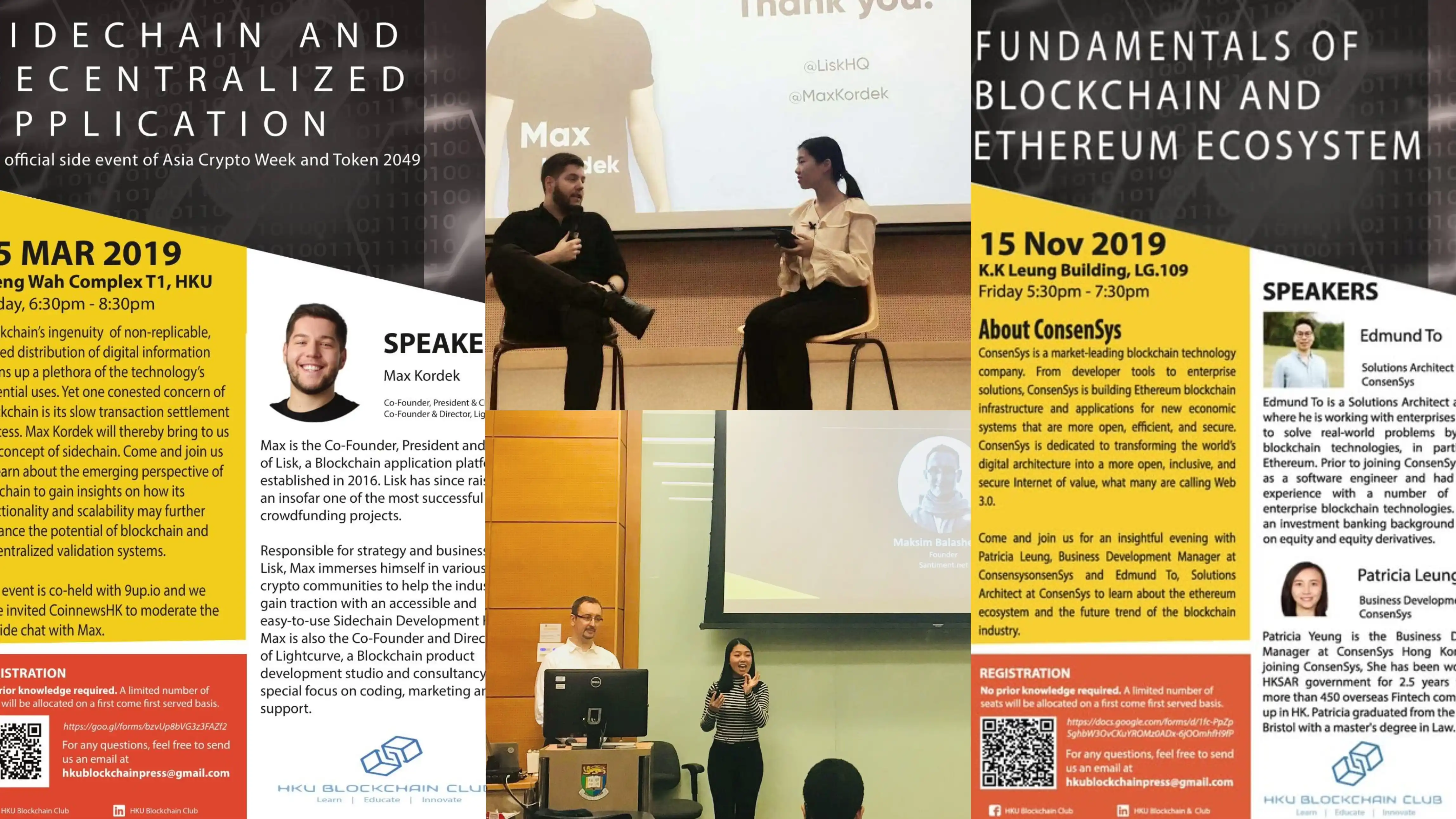
Unfortunately, at that time, blockchain was just a hobby for me, and the blockchain association was just one of my extracurricular clubs. In addition, my academic and internship experiences in finance had been relatively smooth. Therefore, I did not immediately enter the crypto industry but chose the traditional finance sector, joining a hedge fund as an investment analyst.
As an investment analyst, my work often required me to communicate with entrepreneurs of publicly traded companies, evaluate the company's strategic direction, management capabilities, and make investment decisions. However, I always felt that it was very unreasonable for a newly graduated student with no business management or industry experience to judge a company's strengths and weaknesses and decide whether it is worth investing in.
I preferred to make things happen firsthand rather than make judgments and conclusions from an external perspective. At the same time, I was inspired by these entrepreneurs and increasingly felt that I should start my entrepreneurial journey early. Therefore, at the end of 2022, I officially joined the crypto industry, embarking on this brand-new entrepreneurial journey.
BlockBeats: What you are doing now is user growth, right? Social products are difficult to create, aren't they?
Julie: Yes, user growth. Difficult, but we have seen two certainties. One is that social interaction is a fundamental human need, and the second is that the underlying framework and technological roadmap beneath social products will certainly evolve with overall technological progress. The technology we use in social products today has undergone significant changes compared to the technology on which social products relied decades ago. It is foreseeable that in the coming decades, it will also undergo profound changes.
Based on these two certainties, our goal is not to build a Super App because it is not something that can be achieved simply by a team investing a significant amount of resources. Its creation often requires perfect timing, favorable conditions, a talented team, as well as many innovations and unexpected inspirations. We choose to focus on the core elements of these two certainties—the underlying technology and the social network.
BlockBeats: This is very similar to the concept of Farcaster
Julie: Yes, before starting this project, we spent over a year deeply researching the entire social industry and various products integrating with Web3 social. We found that the ones truly outlining the future of social were mainly Farcaster, Lens, and Nostr. Among them, Farcaster's technical roadmap was considered the optimal solution at that time (and even now) by us. Therefore, we drew inspiration from their technical framework in our architectural design and also learned from their growth strategies.
Our development sequence also began by building infrastructure from the ground up. However, having just the infrastructure is not enough, so we also launched a core application as a user entry point to first build a sufficiently large user base. In the future, this user base will support other developers within the ecosystem, enabling them to freely build social products based on our network.
Currently, our social network's foundation is built on Farcaster V1. We are also developing our own framework that is more scalable and composable than Farcaster, further enhancing the flexibility of the entire network.
How to Achieve User Growth for Social Products in the Crypto Field?
BlockBeats: How did you go about starting and expanding from zero to one in this process?
Julie: The most direct way of growth is, of course, starting with friends around you. So we rallied the entire team, including the founders, to invite their friends. Our idea was simple: if even those most familiar with us are not willing to use this product, it will be even harder to convince broader second or third-degree contacts.
When starting from zero, the only thing to rely on is sincerity, vision, and unique industry insights. Impress users with sincere communication, deep thoughts on social matters, a clear vision, and the ability to deliver actual products. A 15-20 minute phone call often converts a core user. Once the initial 10, 20, 50, 100 people who believe in our vision join, they also start inviting more users, achieving natural virality.
This growth strategy was somewhat inspired by Farcaster's early development model—founder Dan personally calling friends to join. I did the same in the early days, starting in May or June last year, making almost ten or twenty calls a day to invite creators and entrepreneurs in line with our cultural atmosphere to the platform. At that time, I compiled a list of 4000 Mandarin-speaking CT users, ranked by their activity level and content quality, and prioritized inviting the top 1000. In the end, I successfully converted hundreds of high-quality users.
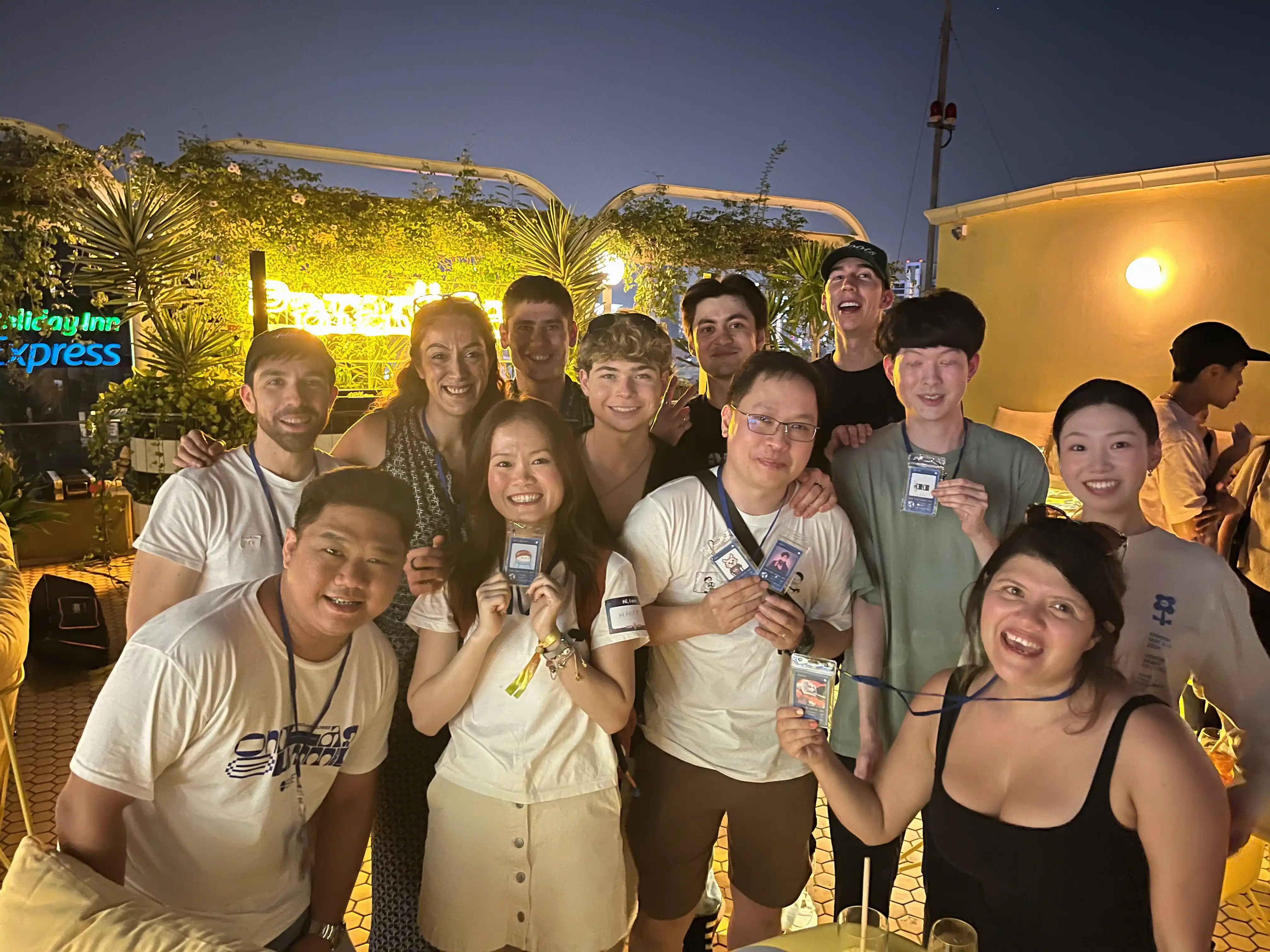
The benefit of starting from friends, high-quality users, sincerity, and vision is that now our social network is very solid. Many of them are friends of the founders, and many are OG-level users who are already semi-retired. Their focus is not only on assets or wealth effects but tends to think about more cutting-edge, long-term, and sustainable topics, such as the form of the next-generation social product, neurotechnology, longevity, sovereign individuals, and more. The social circle I invited mainly consists of my post-2000s friends, who are curious about new things, such as Burning Man, music festivals, and other fun activities. Therefore, the discussions on the platform revolve not only around making money but also involve interesting and long-term valuable content, which has given the entire ecosystem a more enduring vitality.
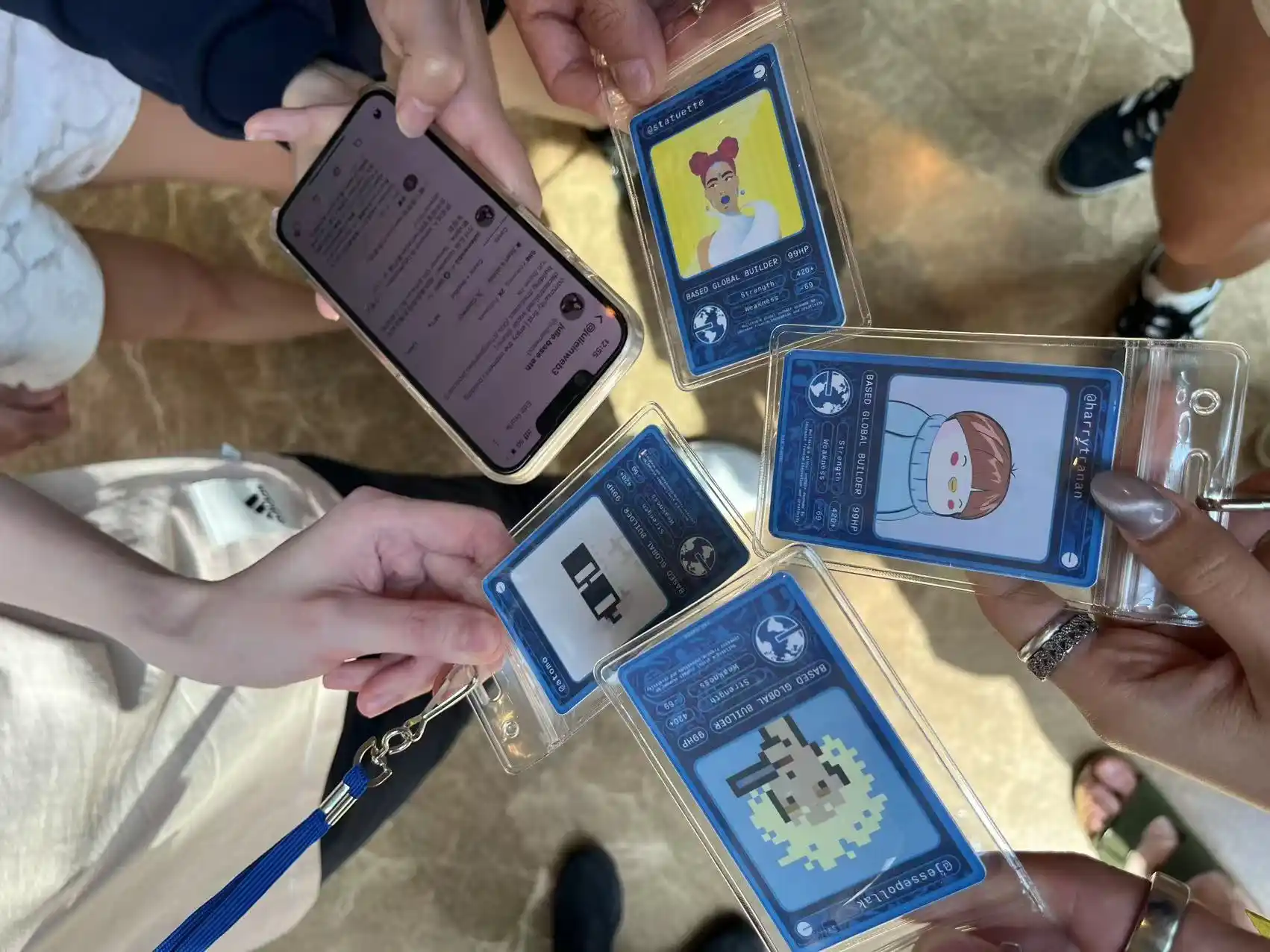
One thing to highlight is that we were pleasantly surprised to find that our platform has a very high percentage of female users, which has filled our platform with gentleness, warmth, and care. I think this is a very good thing.
So far, we still adhere to an invitation system. Although we have built a group of highly compatible users, the overall atmosphere of the platform has not yet fully matured, so it is not the best time for large-scale growth. We expect to maintain the invitation system from Q1 to the beginning of Q2 this year to ensure the tonality of the platform and the quality of users. We are not eager to pursue rapid user growth but hope to lay a solid foundation at a steady pace to build a social network that truly has long-term value.
BlockBeats: So, in this process, have you built some metrics or something more structured for yourself?
Julie: Definitely. I am a very results-oriented person. And the guiding philosophy of our team's work is 'focus,' striving to do every little thing and every step to the best. Therefore, in growth, we did not choose to expand into multiple markets simultaneously but focused on different markets in different stages. The goal of the first stage of our growth is to 'break through the Chinese market.'
The first step in growth is to find users who fit our tonality, create a good target list, which is also the first metric. However, creating a list is not easy; it requires a deep understanding of each person to judge if they fit into our cultural atmosphere. In the end, I compiled a list of 4,000 people.
Next, I prioritized these 4,000 people. Because it is not possible to contact everyone at once, the priority of invitations must be considered. The main dilemma is whether to start with influential users or easy-to-reach users. I chose the former, even though it would be more challenging, but once converted, it can help attract more people to join.
The second core metric is the engagement and conversion rate. I gradually reach out to users on the list – it could be directly messaging them or through a friend's introduction. The interaction after reaching out includes text exchanges, phone calls, etc. Some people can understand and join with a simple text introduction, while others need further phone calls to convert.
Overall, since the early target users were very precise, the conversion rate was high. However, during the DM outreach phase, due to a lack of trust, the response rate was relatively low. But once a connection was established, the subsequent conversion rate basically reached 80%-90%. This process lasted for about three to four months, where I kept making phone calls and communicating every day, eventually successfully onboarding hundreds of people, establishing a stable early user group.
Initially, the growth phase was almost solely handled by me, and all users were directly invited by me through communication. But as the user base grew, I found it challenging to maintain user relationships or guide them to be active on the product. At the same time, the product was gradually improving, requiring deeper user engagement. Therefore, we began to establish an operational system, including content operation and user operation, to enhance user retention and activity. Three months later, as the core user group stabilized, our team expanded as well. We started planning operational activities to encourage users to participate more deeply on the platform.

The metrics also became more refined. Initially, we focused on user registration conversion rates, then expanded to account activity, including content quality, posting frequency, etc. Now we have developed a complete growth system, with dedicated personnel for each key metric.
Tako's underlying protocol has also made significant progress, and the API has been opened. We hope to attract more developers to join the ecosystem. Therefore, my current focus has shifted to ecosystem growth, and in the future, we will also incorporate developer growth metrics into the overall system.
BlockBeats: As social networks become more open, these product insights into social products need to change.
Julie: Exactly.
BlockBeats: So, in this fast-paced year, which of your customer acquisition channels do you find valuable, and which do you think might have been a bit of a waste of effort?
Julie: Once again, our guiding principle is "focus." We are in the early stages and have not yet reached the stage of scaling growth, so we have not expanded too many growth channels. Since our target is very clear, we aim to build a solid social relationship network, so the growth primarily relies on the natural expansion of the core user social network.
If a user has no social connections and only comes in through external channels, then this social product is likely to lack a sense of belonging, leading to a decrease in retention. Therefore, at this stage, we still insist on onboarding users in a social networking manner rather than through traditional channel deployment. It can be said that our growth path is essentially a viral model based on social relationships.
When interacting with many VCs or other industry professionals, the most common question asked is "What is your DAU?" However, I believe that the starting point of this question is not completely applicable to our model and stage. After all, we are trying a new way of growth, and the entire industry is still exploring sustainable growth paths. Perhaps in the future, the way to measure early growth of social products will change, and people will no longer simply focus on DAU. Instead, they will ask how many calls you made in the early days? What is the user conversion rate? How many core social user nodes are currently in the community? How efficient is the spread of these nodes? These are the core indicators that more accurately reflect the true growth quality of a social network.
BlockBeats: What drives you to make phone calls to screen users, contact VCs, and handle various growth-related tasks? Is it based on data or more on your past experience? Moreover, the volatility of the Crypto market has a significant impact on the product lifecycle. How do you balance these factors when formulating growth strategies?
Julie: First of all, the cycle of social interaction is not in sync with the asset cycle. The asset market is volatile, but social networks have their own development pace. After team discussions, we believe we are currently at the beginning of a new social cycle, a trend that may last for five years or even longer. We do not blindly follow market sentiment but always have a clear idea of what we want to do, focusing on building and shipping and trying to shield ourselves from external noise.
The outside world may think our growth is too slow, with only a few thousand users after half a year. But we are very satisfied with the current state because these few thousand people are highly stable core users. As long as we introduce new gameplay and mechanisms in a timely manner, we can quickly go viral. However, this type of growth should not be used too early or too much but should be rhythmically driven at key points to ensure long-term sustainability.
The Broad Prospects of AI+Social
BlockBeats: How do you view the impact of AI on social networks?
Julie: I have a core belief that AI's role in social networks will become increasingly important, to the extent that in the future, the number of AI participants may far exceed human users. During an offline event, I heard from a thought leader that within the next five years, over 95% of on-chain participants could be AI Agents. I believe a similar scenario will also unfold in social networks. We need to carefully consider how AI and humans can coexist.
Based on this belief, we are exploring the various roles and application methods of AI in social networks. On Tako, we are conducting numerous social experiments and always exploring at the industry forefront.
Currently, the industry's focus on AI Agents has cooled down, entering a period of version iteration. The AI hype of the recent past has subsided, and people are now genuinely contemplating the practical value of AI in the industry. Is AI merely a chatbot or a simple reply guy? I don't think so. If AI can be combined with on-chain data and on-chain identity to achieve free on-chain economic circulation, this will open up greater possibilities.
BlockBeats: What about content?
Julie: Recently, I have also been thinking about whether the content distribution mechanism of social networks will see a new AI-empowered model. Currently, the world's most advanced recommendation system is undoubtedly TikTok, but that does not mean it will be the ultimate form of social distribution. In the future, there may well be AI Agent-driven recommendation mechanisms, allowing AI to provide more intelligent content distribution and interaction based on individual behavior patterns, on-chain data, and social network relationships.
To elaborate further, we browse content on centralized platforms, where the platform analyzes our preferences through algorithms and continuously recommends information that aligns with our interests, thereby creating an information cocoon while stimulating dopamine release in our brains to keep us immersed.
Another approach is for everyone to have their own AI Agent, similar to your personal social proxy. This AI fully understands your interests, needs, and your future direction, not merely catering to your short-term preferences but adjusting the way information is accessed based on your pace and needs. For example, do you prefer continuous stimulation or do you prefer to periodically explore new things? Your AI can autonomously gather, filter, and deliver content suitable for you.
In this model, AI serves as your personalized hub, rather than relying on centralized platforms to maximize ad revenue. It is no longer a passive tool for receiving information but actively filters and recommends truly valuable content for you, shifting the content distribution mechanism from platform-driven to user-driven, achieving a more autonomous and personalized information retrieval experience.
BlockBeats: Besides Tako, which growth strategy in the past year has left a deep impression on you?
Julie: Of course, I have to mention Infini. First of all, their product itself is very solid and meets user needs. From a product perspective, their competitiveness is already very strong.
Furthermore, in terms of growth, several of their growth strategies have been very rapid and effective. For example, Infini has collaborated with various communities, KOLs, and projects through customizable card designs. I understand that they have already partnered with nearly a hundred communities, each with dozens or even hundreds of participating users, all of whom are real trading users, not just for data growth.
There is also event marketing; during the New Year period, Infini conducted a highly influential promotion through the "Core User Red Envelope Group," which successfully promoted the adoption of the new red envelope feature. The team sent out red envelopes, and key opinion leader group members grabbed the red envelopes, creating a continuous interactive cycle. In addition to the team sending red envelopes, many project partners in the group also participated in the "red envelope chain," and I myself sent out many red envelopes. The atmosphere of the red envelope event was extremely amazing! It can be said that this marketing wave was not only precise, with a very substantial ROI, but also fun.
You may also like

Citibank releases "2030 Asset Tokenization Market Outlook": 6 major trends may create a $8.2 trillion market

The trillion-dollar valuation test: Are the three major super IPOs a celebration for tech stocks or a nightmare for the crypto market?

Morning Report | Digital Asset completes $355 million financing led by a16z Crypto; Meta completes operational separation from Manus

a16z Crypto Partner: Cash flow is the moat

Cryptocurrency market makers collectively seek change as it becomes increasingly difficult to make money

How TradeXYZ, xStocks, and Alpaca break down the SpaceX IPO into three different strategies

$75 billion in risk asset redistribution: How will SpaceX's IPO affect U.S. stocks and Bitcoin?

Why Is BlackRock Investing $5 Billion in the SpaceX IPO?
Morning News | CME Group launches Nasdaq Cryptocurrency Index futures; Asset management giant Janus Henderson strategically invests in Ethena

Bitcoin Layer 2 Network Botanix: Why Did We Choose to Dissolve?

Why did Oracle deliver the strongest financial report in history, yet its stock price fell?
When the P2P illicit funds from ten years ago turned into 60,000 bitcoins
Dialogue with OmenX Founder: Why does the prediction market need an evolution from "spot" to "derivatives"?
Galaxy in-depth report: Is Solana still worth paying attention to?
Young people in South Korea make a "final effort" in the epic bull market
The pricing controversy of Trade.xyz exposes the fatal weakness of Pre-IPO perpetual contracts

How much longer can Ethereum's last big buyer hold on?

World Cup 2026 Coming – WEEX Celebrates with $1M Prize Pool & Michael Owen Live
Citibank releases "2030 Asset Tokenization Market Outlook": 6 major trends may create a $8.2 trillion market
The trillion-dollar valuation test: Are the three major super IPOs a celebration for tech stocks or a nightmare for the crypto market?
Morning Report | Digital Asset completes $355 million financing led by a16z Crypto; Meta completes operational separation from Manus
a16z Crypto Partner: Cash flow is the moat
Cryptocurrency market makers collectively seek change as it becomes increasingly difficult to make money
How TradeXYZ, xStocks, and Alpaca break down the SpaceX IPO into three different strategies


