
- Buy Crypto
- Markets
- Futures
- Spot
- Copy Trade
 Earn
Earn- More
Interpreting ERC-8021 Proposal: Will Ethereum Replicate Hyperliquid's Developer Get-Rich-Quick Myth?

Original Author: Jarrod Watts
Original Translation: Deep Tide TechFlow
App developers are quietly earning millions in revenue through building on platforms like Hyperliquid and Polymarket, utilizing a new income attribution system called "builder codes."
This is a Roblox-like model in the crypto space: platforms serve as the foundation, enabling thousands of apps to build and monetize through unique code attribution activities and revenue sharing.
In this article, I will explain in detail what builder codes are, how apps are earning millions through them, and how ERC-8021 proposes to natively introduce this system to Ethereum.
What are Builder Codes?
Builder codes are essentially recommended code designed for app developers—apps can leverage them to create transaction volume for another platform (e.g., Hyperliquid) and earn revenue.
This forms an on-chain attribution system, enabling third-party apps (such as trading bots, AI agents, and wallet interfaces) to earn fees for the activity they generate on other platforms.
This system is mutually beneficial for all parties involved:
· Platforms gain more transaction volume;
· App developers earn revenue for the volume they generate;
· Users have a more convenient way to interact with the platform.
Let's better understand this through an example—Phantom.
Phantom's Perpetual Contract Revenue "Cash Cow"
In July of this year, Phantom added support for perpetual contract trading through Hyperliquid's builder codes, a decision that currently brings them around $100,000 in daily revenue.
The way it works is by allowing users to transfer funds into a separate perpetual contract account and directly engage in long and short trades within the mobile app.
For each order, Phantom attaches their builder code, charging users a 0.05% fee—these fees are recorded through the on-chain attribution system and can be claimed in USDC.
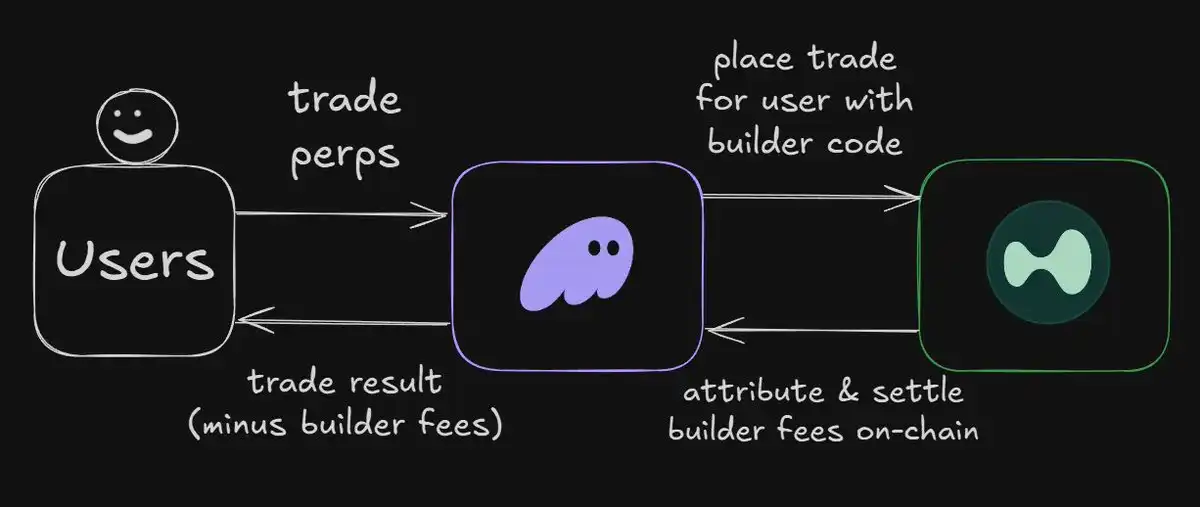
Image: Phantom earns these fees by "tagging" user orders from the Phantom wallet app via builder code
It's worth noting that all of this relies on an external API provided by Hyperliquid, making the building process extremely easy and far less costly than developing similar complex functionality in-house.
Phantom's perpetual contract business has already shown an astonishing return on investment (ROI) — since its launch in July, Phantom's perpetual contract trading volume has approached $20 billion, earning nearly $10 million in revenue in less than 6 months.
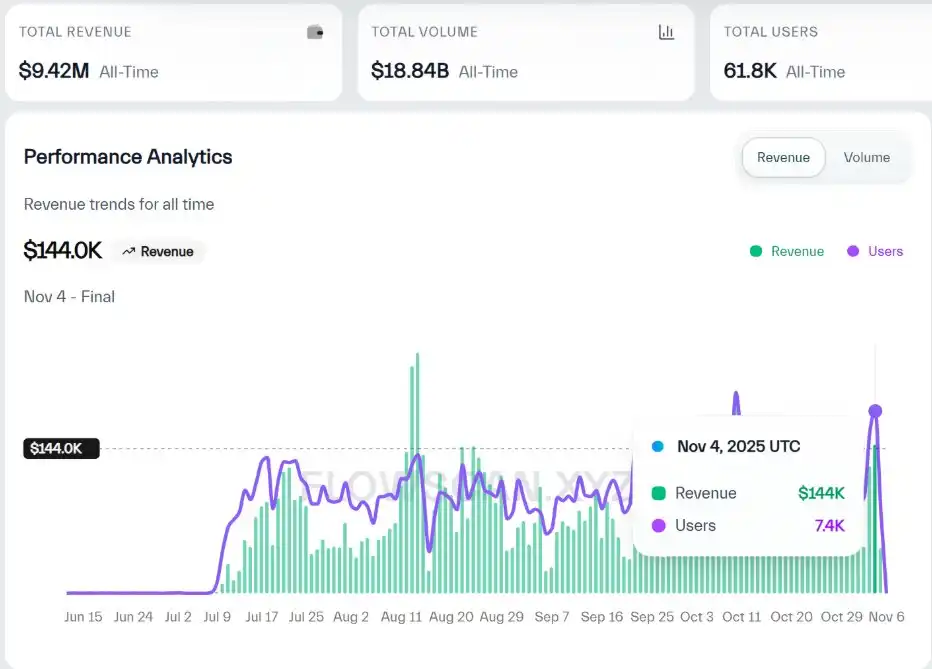
Image: Just yesterday, Phantom earned nearly $150,000 through its perpetual contract business
Interestingly, Phantom's top perpetual contract user has performed extremely poorly:
· Lost 99% of their approximately $2 million perpetual contract investment portfolio;
· PNL is -$1.8 million;
· Paid around $191,000 in fees to Phantom through builder code. Currently, the user's only position is a 25x leveraged ETH long (how to interpret this information is up to you).
Unless everyone loses their funds like this user, Hyperliquid will continue to generate massive profits for developers like Phantom who bring trading volume to their platform.
As of now, Hyperliquid's builder code has achieved:
· Earning nearly $40 million in revenue for app developers;
· Providing a more user-friendly interface for perpetual contract trading;
· Generating over $1 trillion in perpetual contract trading volume for Hyperliquid.
The success of this model has been quickly validated, attracting many outstanding application developers to build high-quality applications on Hyperliquid.
Polymarket Following Suit
This week, Polymarket announced a similar design with a Builders Program aimed at rewarding application developers for bringing volume to its prediction markets.
To drive integration of builder codes, Polymarket has launched a weekly USDC reward plan based on integrated volume.
While the current volume from third-party Polymarket applications is much lower than Hyperliquid, their builder codes have already attracted some teams to develop user interfaces, providing users with a unique way to engage in predictions.
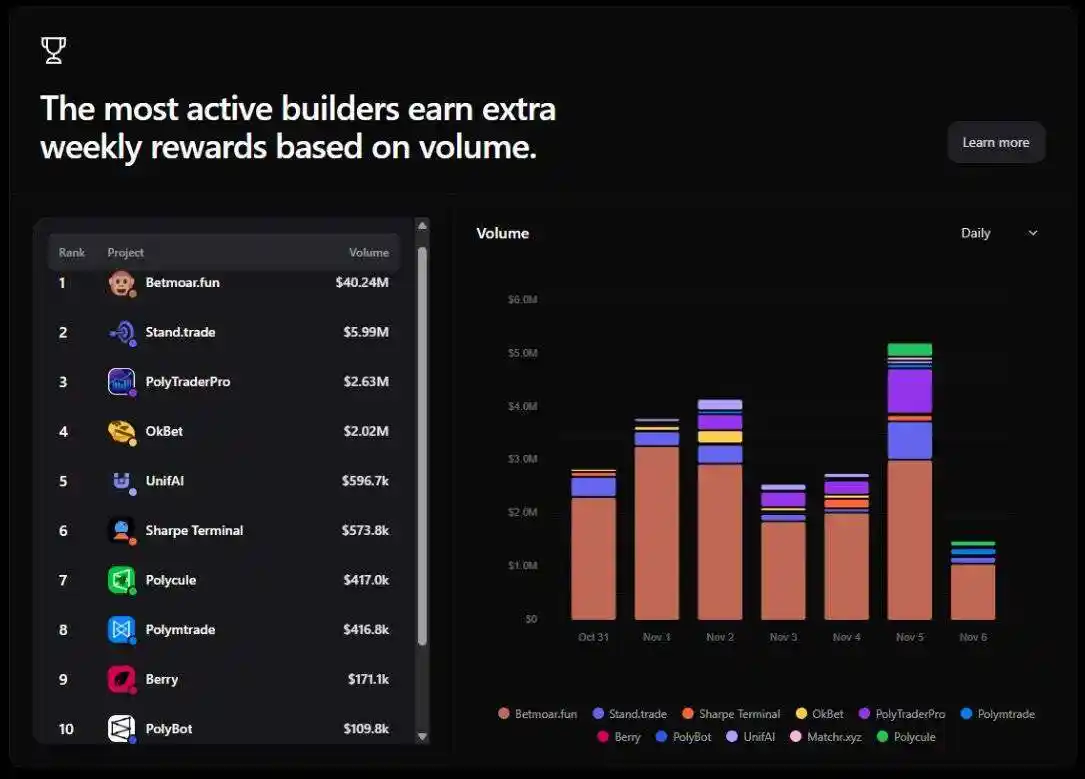
Image: Over $50 million in bets processed through third-party Polymarket apps
Polymarket seems to be helping expand the scope of builder applications, from trading terminals to AI assistants, and has also created a dashboard similar to Hyperliquid to showcase top builders and their rewards.
It is expected that other prediction markets will also launch similar programs to participate in the competition, and there may be a more widespread application ecosystem emulating this successful model of a referral system.
However, Ethereum has the opportunity to elevate this model to new heights by encouraging high-quality application developers to create innovative user interfaces on the mature and reliable Ethereum platform.
ERC-8021 and Ethereum's Opportunity
Ethereum now has the opportunity to natively integrate builder codes into the L2 and L1 layers, and a recent proposal has put forward an interesting implementation.
ERC-8021 proposes to embed builder codes directly into transactions, combined with a registry where developers can provide a wallet address to receive rewards.
Implementing this proposal would provide a standardized way to add builder codes to any transaction, defining a universal mechanism for platforms to reward application developers for the volume they generate.
ERC-8021 contains two core components:
1. New Transaction Suffix: Developers can append small data to the end of a transaction to include their builder code, such as "phantom," "my-app," or "jarrod."
2. Code Registry: A smart contract where developers can map their builder code to a wallet address to receive platform fee distributions.
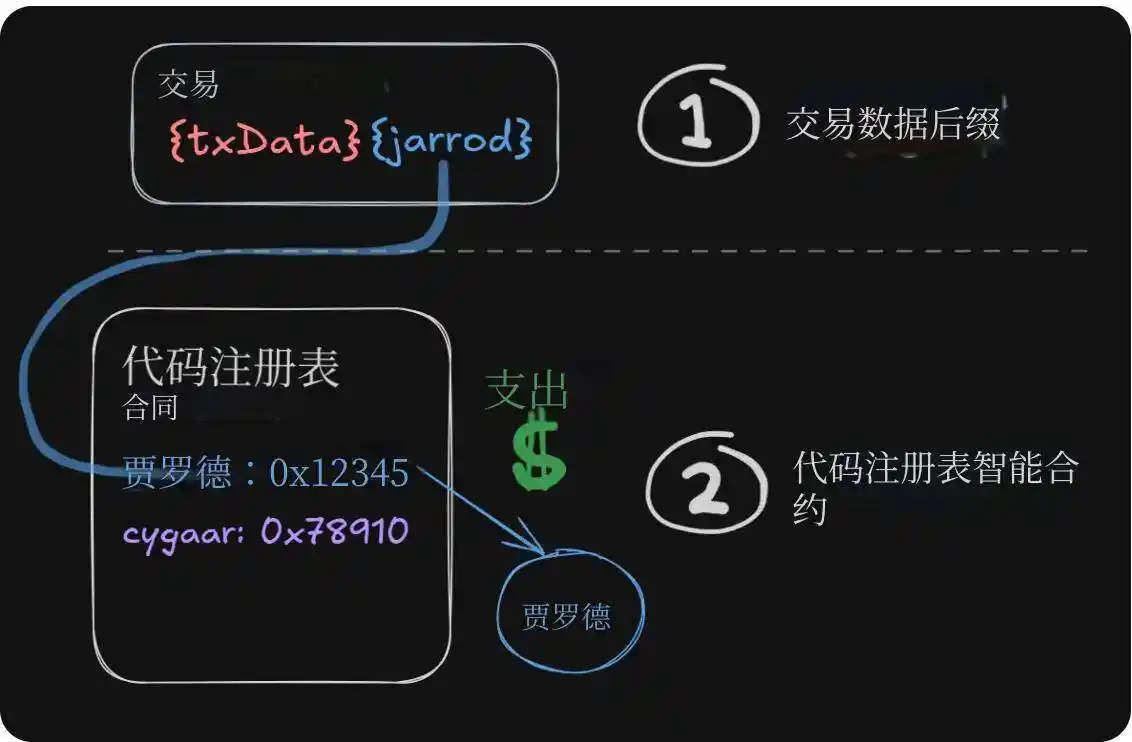
Builder codes can be added to the end of transaction data and optionally mapped to a wallet address to receive fees.
This will enable any platform to attribute on-chain activity to the originating app and efficiently distribute revenue to these developers in a transparent and programmable manner.
Conclusion
While Hyperliquid users may already be familiar with builder codes, a deeper dive reveals the astonishingly widespread adoption in a short period.
The reason for its success is clear: builders are rewarded for creating high-quality consumer apps based on powerful primitives in the crypto space.
Ethereum has a large existing pool of high-quality platforms that can be integrated into a standardized builder code system to drive a new wave of consumer-facing apps.
Builder codes unlock new revenue streams for developers of high-quality apps, revenue streams that are not reliant on grants obtained at cocktail parties but are based on the value they provide to users.
You may also like

ETH Ecosystem Month: A $1.5 Million Trading Opportunity Focused on Ethereum Assets
Explore ETH trading opportunities on WEEX with ETH Ecosystem Month. A $1.5M campaign covering ETH spot trading, ETH futures rewards, leaderboards, and referral incentives across the Ethereum ecosystem.

Trade Finance: Unleashing Blockchain’s Most Potent Opportunity
Key Takeaways Blockchain technology has the potential to revolutionize the $9.7-trillion global trade finance market by addressing its…

Revolut Pursues Banking Expansion in Peru Amid Latin America Remittance Strategies
Key Takeaways Revolut seeks a banking license in Peru as part of its strategic expansion across Latin America,…

Bitcoin Pursues $90K: Trump to Fast-Track Crypto Legislation
Key Takeaways Bitcoin is gaining momentum as President Trump indicates imminent crypto-friendly legislation. Trump’s World Economic Forum speech…

Crypto’s Next Challenge: Privacy and the Chicken-Egg Dilemma
Key Takeaways Privacy is becoming a central issue as cryptocurrencies move into traditional banking and state-backed systems. Regulatory…

Trump Takes on the Fed, Italy Warns Financial Influencers: A Global Overview
Key Takeaways President Trump initiates criminal charges against the Fed Chairman, potentially impacting U.S. monetary policy. Coinbase halts…
What Happened in Crypto Today: Key Updates and Insights
Key Takeaways A crucial crypto bill’s progress is delayed as the Senate pivots its focus to broader affordability…

Crypto’s Decentralization Dream Falters at Interoperability
Key Takeaways The promise of decentralization in the crypto industry is hindered by centralized intermediaries managing interoperability between…

Ethereum Price Prediction – ETH Price Estimated to Reach $ 3,660.02 By Jan 23, 2026
Key Takeaways Ethereum’s price is currently at $3,203.60 with a predicted increase to $3,660.02, marking a potential rise…

AI News Today: Can AI Make Blockchain Systems More Reliable in Live Crypto Markets?
Learn how AI is used in blockchain systems to detect risks, improve reliability, and support secure crypto trading in live crypto market environments.

ETHGas Airdrop Eligibility Scrubbing, WLFI Proposal Sparks Controversy, What's Today's Overseas Crypto Community Buzzing About?

Tokenomics' Year of Reckoning

CLARITY Act Stalls: Why Has the Interest-Bearing Stablecoin Become a Bank’s “Thorn in the Side”?
Key Takeaways The debate surrounding the CLARITY Act is primarily focused on interest-bearing stablecoins and their implications for…

Paradex Rollback Roasted, HIP-3 Competition Heats Up, What’s New in the Mainstream Ecosystem?
Key Takeaways The NYSE’s move towards an on-chain securities trading platform signals a transformative intersection of blockchain and…

Wintermute: The Four-Year Cycle is Dead, Crypto Breakthrough 2026, Where to Next?
Key Takeaways The traditional four-year crypto cycle, once deemed a fundamental market principle, is becoming obsolete as market…

ETHGas Foundation Coin Issuance, Believe Emotional Transaction Mechanism “Train Wreck”, What Key Points are Overseas Watching?
Key Takeaways Zama is preparing for a token sale using a Dutch auction on CoinList, drawing polarized reactions…

Trump Targets Fed Chair, Crypto Challenges, and MiCA Regulations
Key Takeaways President Trump has initiated criminal charges against the current Federal Reserve Chairman, alleging financial mismanagement in…

How AI Trading Systems Perform in Live Markets: Inside the WEEX AI Hackathon Beta Test
WEEX launched a Beta Test to provide participants with a proving ground that closely mirrors real trading conditions, allowing strategy stability, execution capability, and risk control to be tested by the market in advance, while refining an AI trading infrastructure that can truly be deployed in live markets.
ETH Ecosystem Month: A $1.5 Million Trading Opportunity Focused on Ethereum Assets
Explore ETH trading opportunities on WEEX with ETH Ecosystem Month. A $1.5M campaign covering ETH spot trading, ETH futures rewards, leaderboards, and referral incentives across the Ethereum ecosystem.
Trade Finance: Unleashing Blockchain’s Most Potent Opportunity
Key Takeaways Blockchain technology has the potential to revolutionize the $9.7-trillion global trade finance market by addressing its…
Revolut Pursues Banking Expansion in Peru Amid Latin America Remittance Strategies
Key Takeaways Revolut seeks a banking license in Peru as part of its strategic expansion across Latin America,…
Bitcoin Pursues $90K: Trump to Fast-Track Crypto Legislation
Key Takeaways Bitcoin is gaining momentum as President Trump indicates imminent crypto-friendly legislation. Trump’s World Economic Forum speech…
Crypto’s Next Challenge: Privacy and the Chicken-Egg Dilemma
Key Takeaways Privacy is becoming a central issue as cryptocurrencies move into traditional banking and state-backed systems. Regulatory…
Trump Takes on the Fed, Italy Warns Financial Influencers: A Global Overview
Key Takeaways President Trump initiates criminal charges against the Fed Chairman, potentially impacting U.S. monetary policy. Coinbase halts…


 App
App