Glassnode: How Has the Landscape of Cryptocurrency Investors Shifted?

By: blockbeats|2025/02/07 08:00:03
0
Share
copy
Original Title: A New Mindset
Original Source: Glassnode
Original Translation: Baishui, Golden Finance

Abstract

· Bitcoin has evolved into a global asset with high liquidity, available around the clock. This creates conditions for investors to speculate, trade, and express macroeconomic views when traditional markets are closed.

· Bitcoin continues to prove itself as an emerging store of value asset, with cumulative net inflows exceeding $850 billion. It also serves as a medium of exchange asset, processing nearly $9 billion in transactions daily.

· Several indicators of new demand remain high, but they are far below the peaks of previous cycles.

· The composition of digital asset investors is also changing, with a significant increase in more mature institutional investors in the Bitcoin space. This has led to a general decrease in drawdown magnitudes, with volatility compressing over time.

Test Ground

Since its inception in 2009, Bitcoin has evolved into a highly liquid global asset, remaining active for trading 24/7. Given that global events often occur outside traditional market trading hours, Bitcoin has become one of the few assets where investors can express views during weekends and similar times.

Over the weekend, Bitcoin experienced a sharp decline as market participants reacted to the Trump administration's tariffs on Mexico, Canada, and China. With other markets closed, Bitcoin and other digital assets saw a steep drop followed by a recovery:

· BTC's trading price fell from $104,000 to $93,000 (-10.5%) and then rebounded to $102,000.

· ETH's trading price fell from $34,000 to $25,000 (-26.5%) and then rebounded to $28,000.

· SOL's trading price fell from $236 to $184 (-22.0%) and then rebounded to $217.

Bitcoin is now playing an increasingly important role on the world stage, with nation-states like Bhutan engaging in large-scale mining operations, El Salvador pushing for Bitcoin as legal tender, and the U.S. government considering the potential of Bitcoin as a strategic reserve asset.

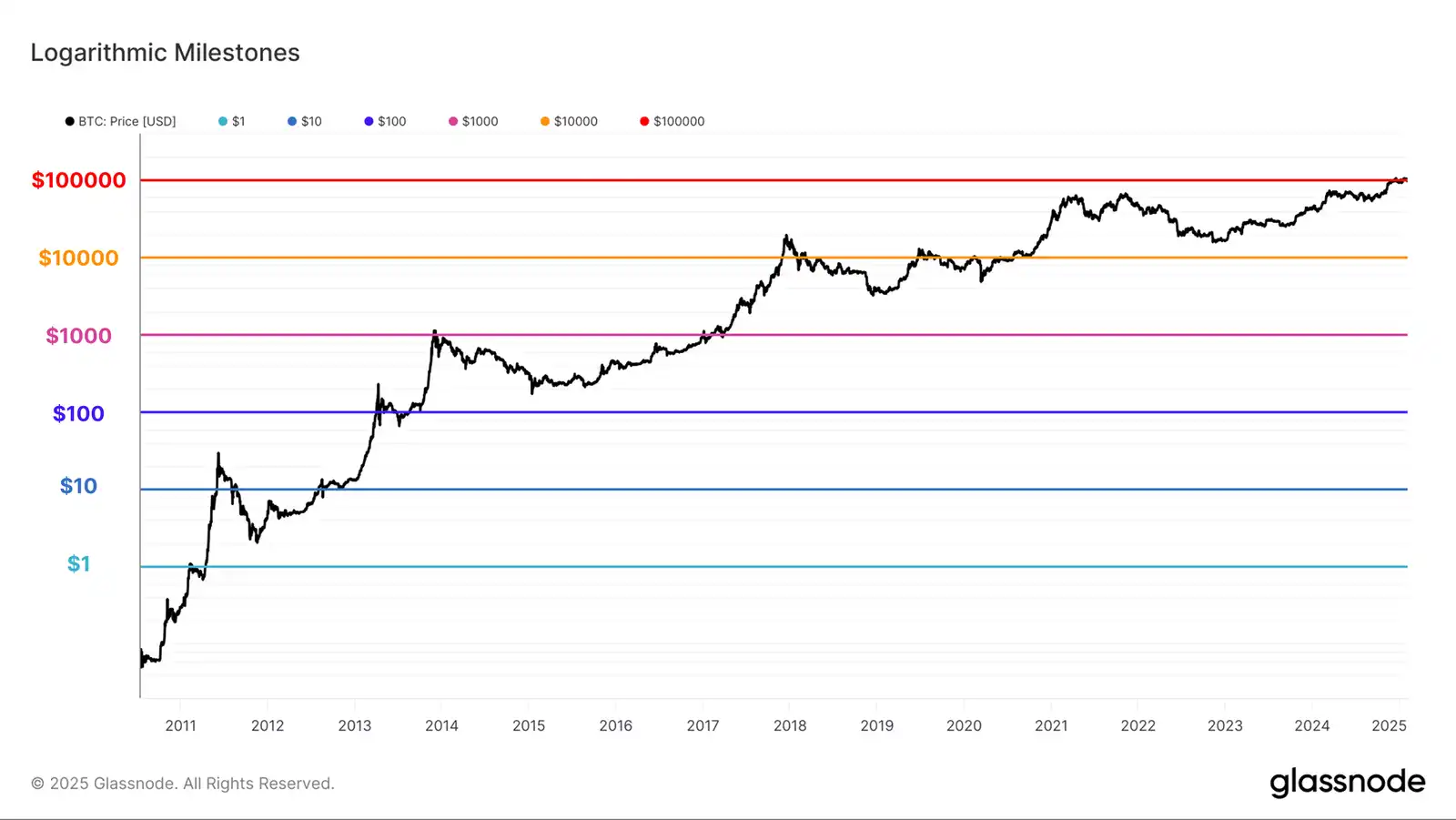
Bitcoin has recently surpassed the important psychological barrier of $100,000 for several weeks in a row, a feat many critics deemed impossible.

Glassnode: How Has the Landscape of Cryptocurrency Investors Shifted?

Despite traditional investors' increasing acceptance of Bitcoin, for many, Bitcoin remains a controversial and polarizing topic, often based on dubious claims of lacking intrinsic value or utility.

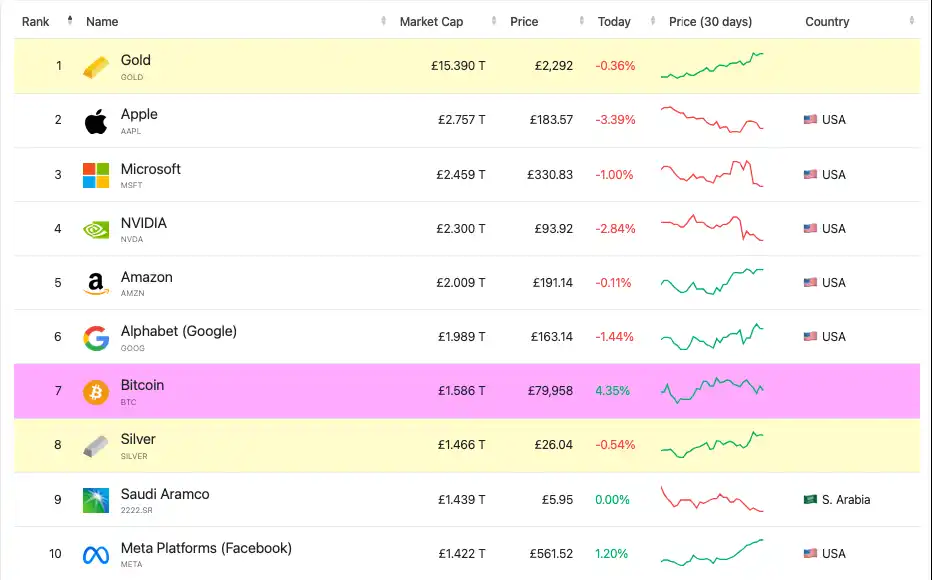
Nevertheless, Bitcoin has solidified its position as one of the world's largest assets, with a market capitalization of $2 trillion, ranking as the seventh-largest asset globally. It is worth noting that this places Bitcoin above silver ($1.8 trillion), Saudi Aramco ($1.8 trillion), and Meta ($1.7 trillion), making it increasingly hard to ignore.
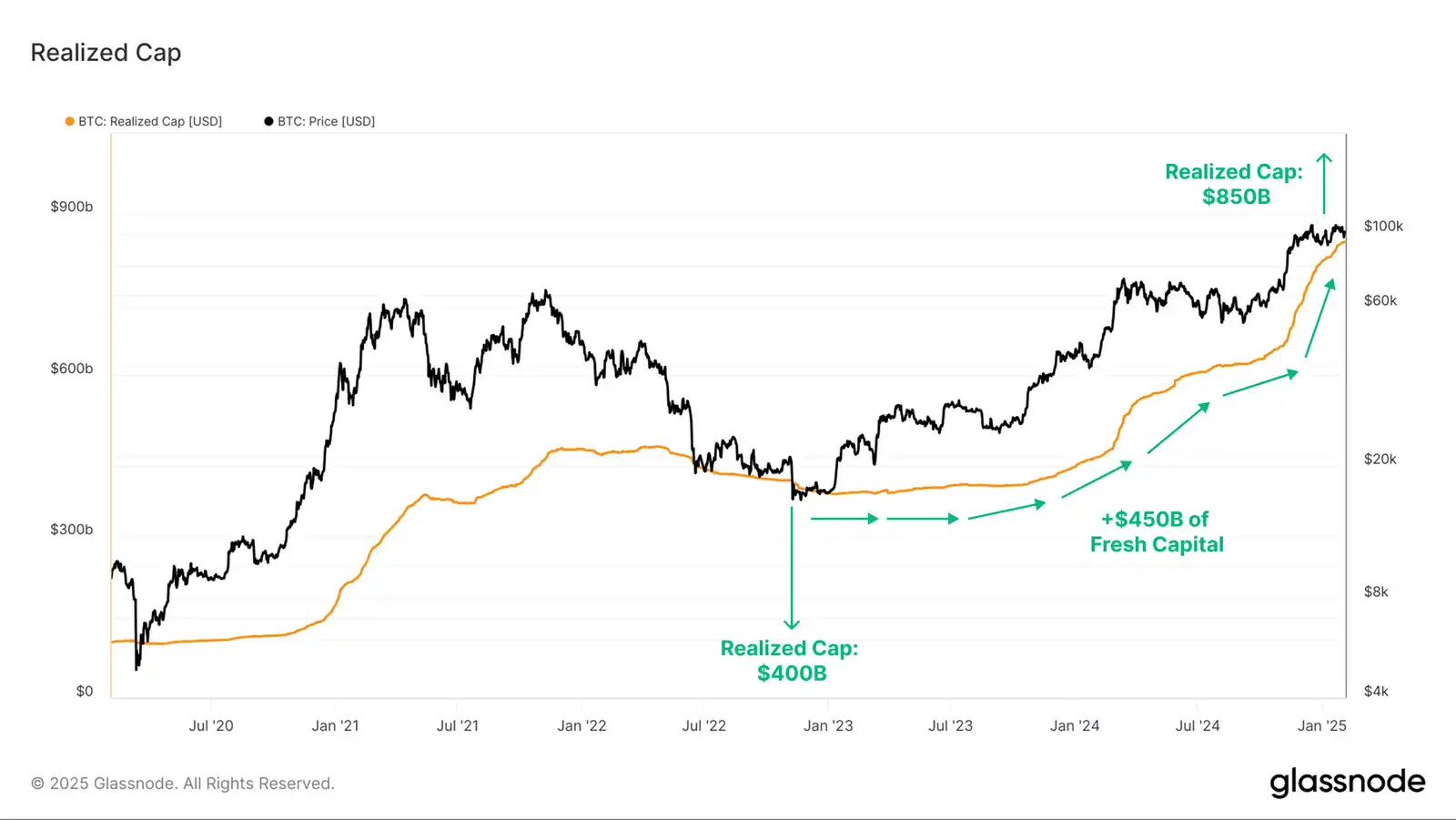
As the asset's valuation and weight reach such a significant scale, its inertia also increases. As a result, Bitcoin now requires a significant influx of new capital to sustain its market capitalization growth. To explore this idea, we can utilize the realized cap metric, which measures the cumulative net inflow of capital into a digital asset.

If we take the cycle low point set in November 2022 as a reference, when the realized cap was $400 billion, Bitcoin has since absorbed approximately +$450 billion of additional capital inflows, more than doubling its realized cap.

This reflects that the total value stored in Bitcoin is about $850 billion, with each token's pricing based on its last on-chain transaction price.
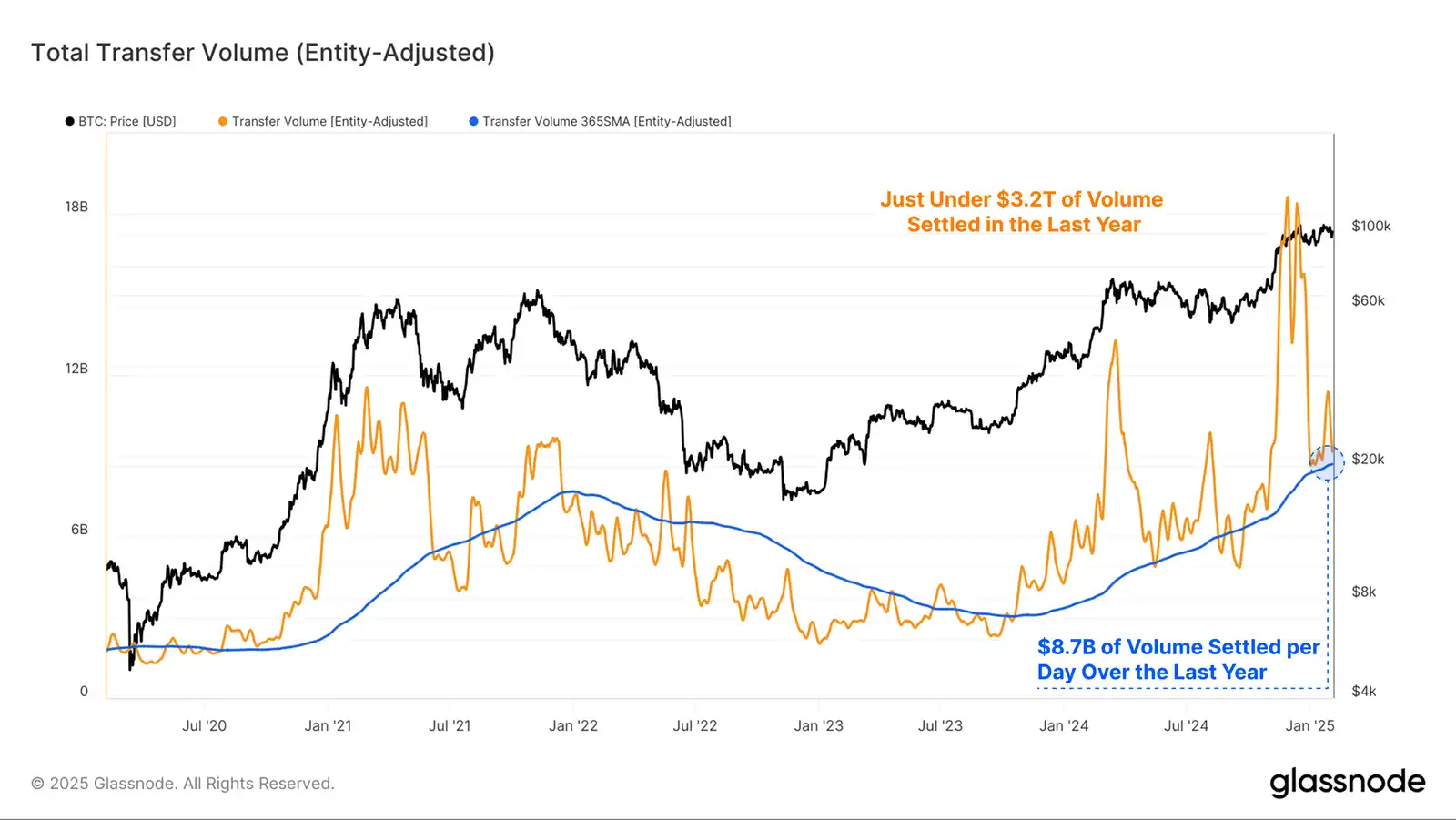
While BTC is commonly seen as an emerging store of value asset, the Bitcoin network also serves as a decentralized rail for BTC as a medium of exchange. The combination of nodes and miners allows for cross-border settlement payments by any individual or entity without the need for interaction with a third-party intermediary.

When utilizing Glassnode's entity-adjusted heuristic approach to filter transactions, over the past 365 days, the Bitcoin network has processed an average of $8.7 billion per day, with a total value transferred in the past year reaching $3.2 trillion.

The actual settlement value and economic activity of the Bitcoin network provide empirical evidence that Bitcoin possesses both "value" and "utility," challenging critics' assumption that Bitcoin lacks both value and utility.
Relative Dominance

After determining the growing importance of Bitcoin as a macro asset, we can shift our focus internally and analyze its relative dominance within the broader digital asset ecosystem.

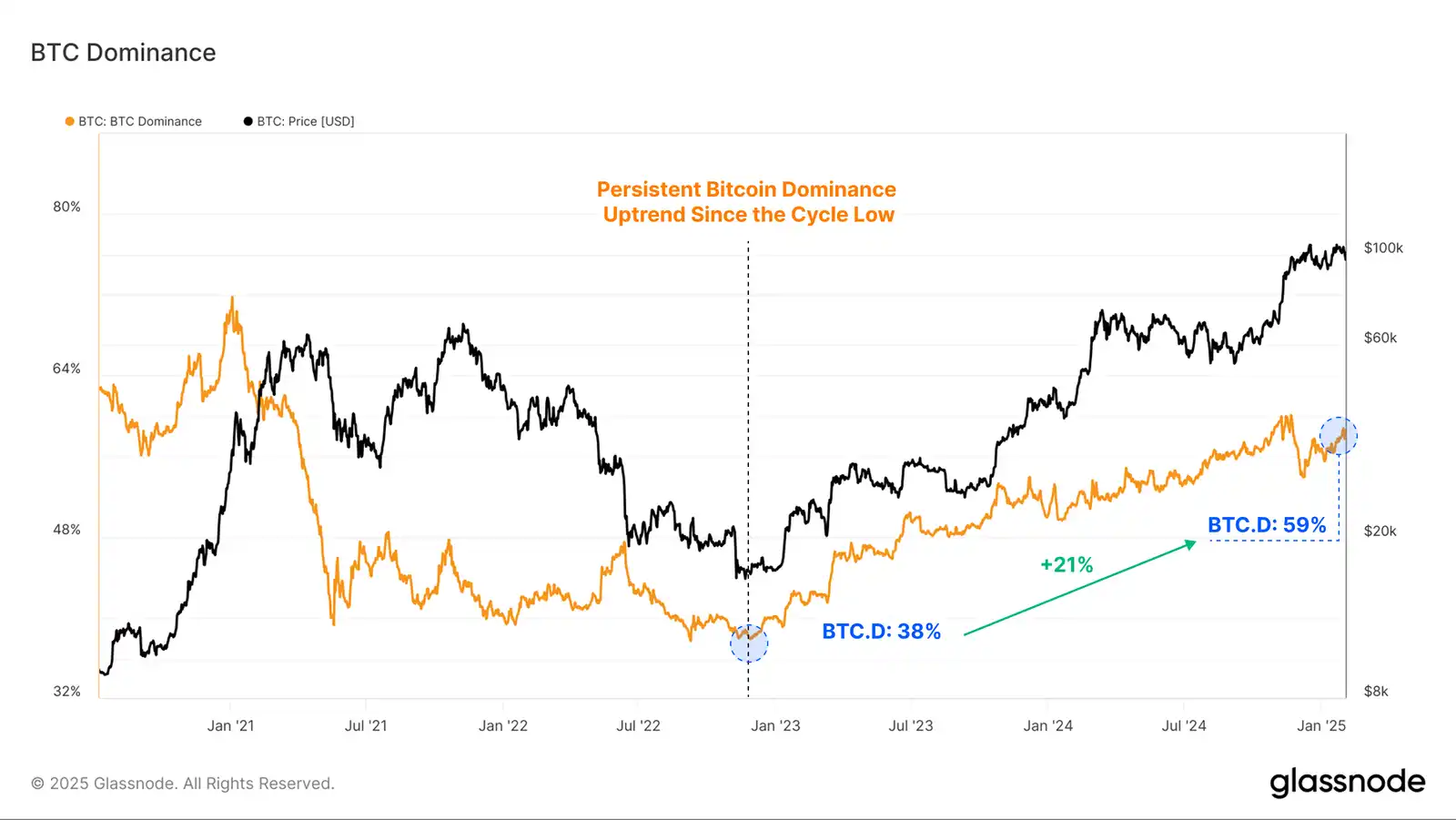
Since the FTX collapse in November 2022, Bitcoin's dominance has been on a continuous upward trend, rising from 38% to 59%. This indicates that in the digital asset space, Bitcoin's net rotation and value accumulation take precedence over other assets.

This may partly be attributed to the broader access provided by the U.S. spot ETF for institutional capital. As a scarce asset, Bitcoin's core narrative is also clearer, with many holding Bitcoin as a hedge against global fiat currency devaluation.
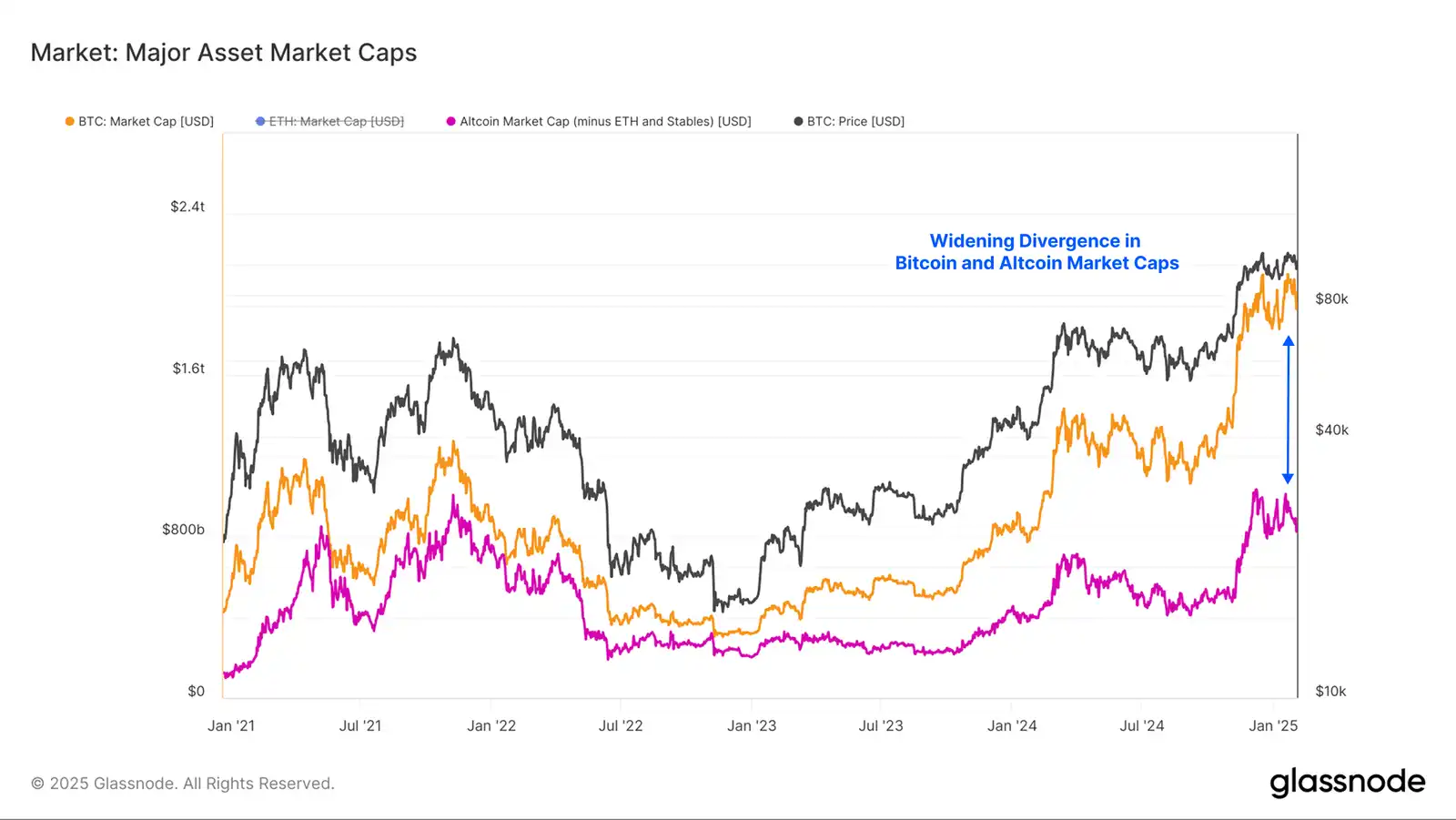
When comparing the market capitalizations of Bitcoin and various altcoins (excluding Ethereum and stablecoins), we can see that the valuation gap is continuously widening. Anchoring ourselves back to the low point of 2022, we can compare the growth in market capitalization.

· Bitcoin Market Cap: $363.0 billion > $1.93 trillion (5.3x)

· Altcoin Market Cap: $190.0 billion > $892.0 billion (4.7x)
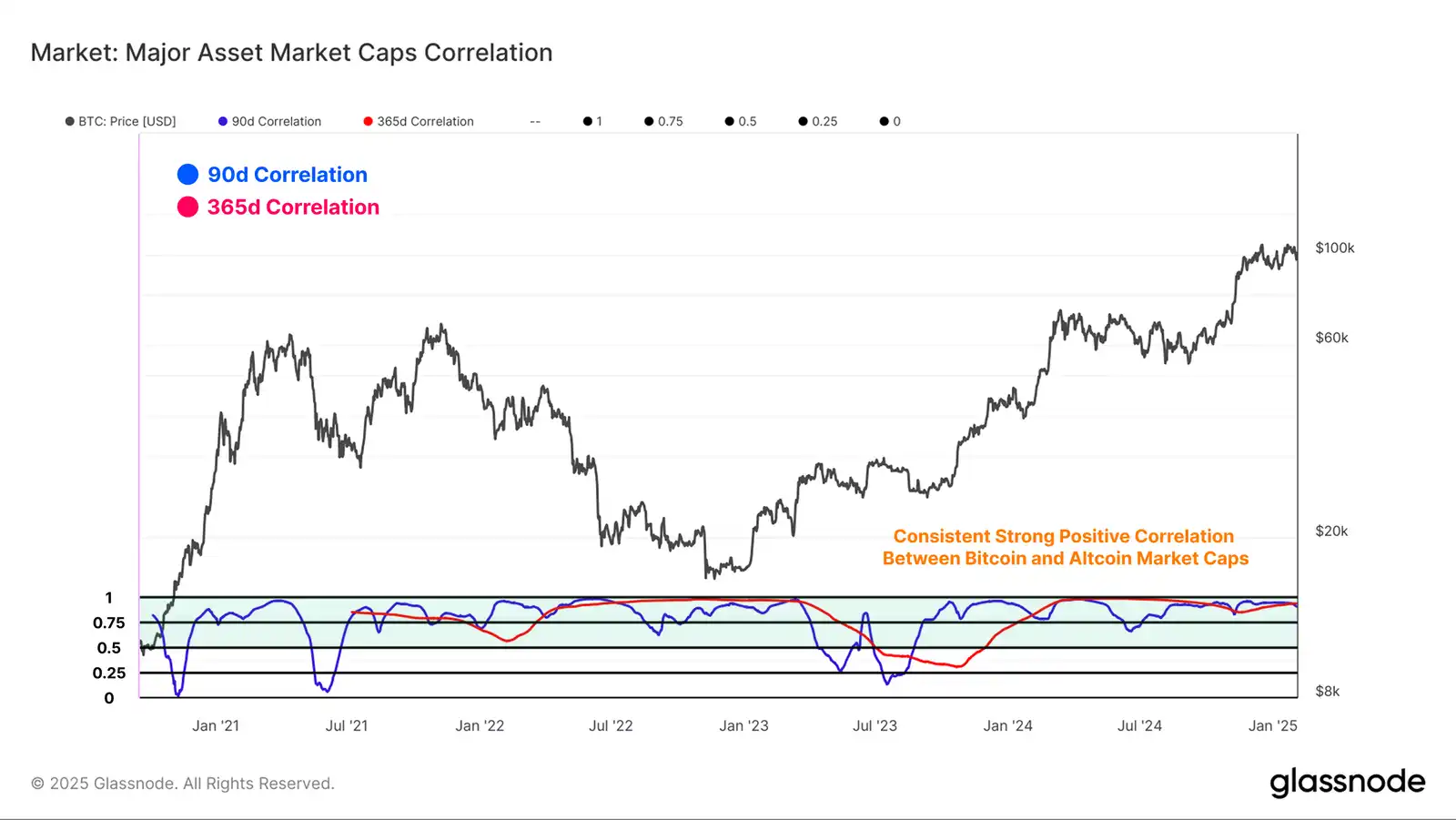
While there is a difference in the valuation scale between Bitcoin and altcoins, the correlation between the two remains strong. This suggests that the reason for this difference is not the growth rate between the two but rather the significant disparity in capital entering Bitcoin versus the altcoin space.

Although Bitcoin continues to receive the majority of capital from investors, it can be expected that Bitcoin's dominance will continue to rise (the reversal of this indicator is a signal of capital rotating in the other direction).
Where is the New Demand?

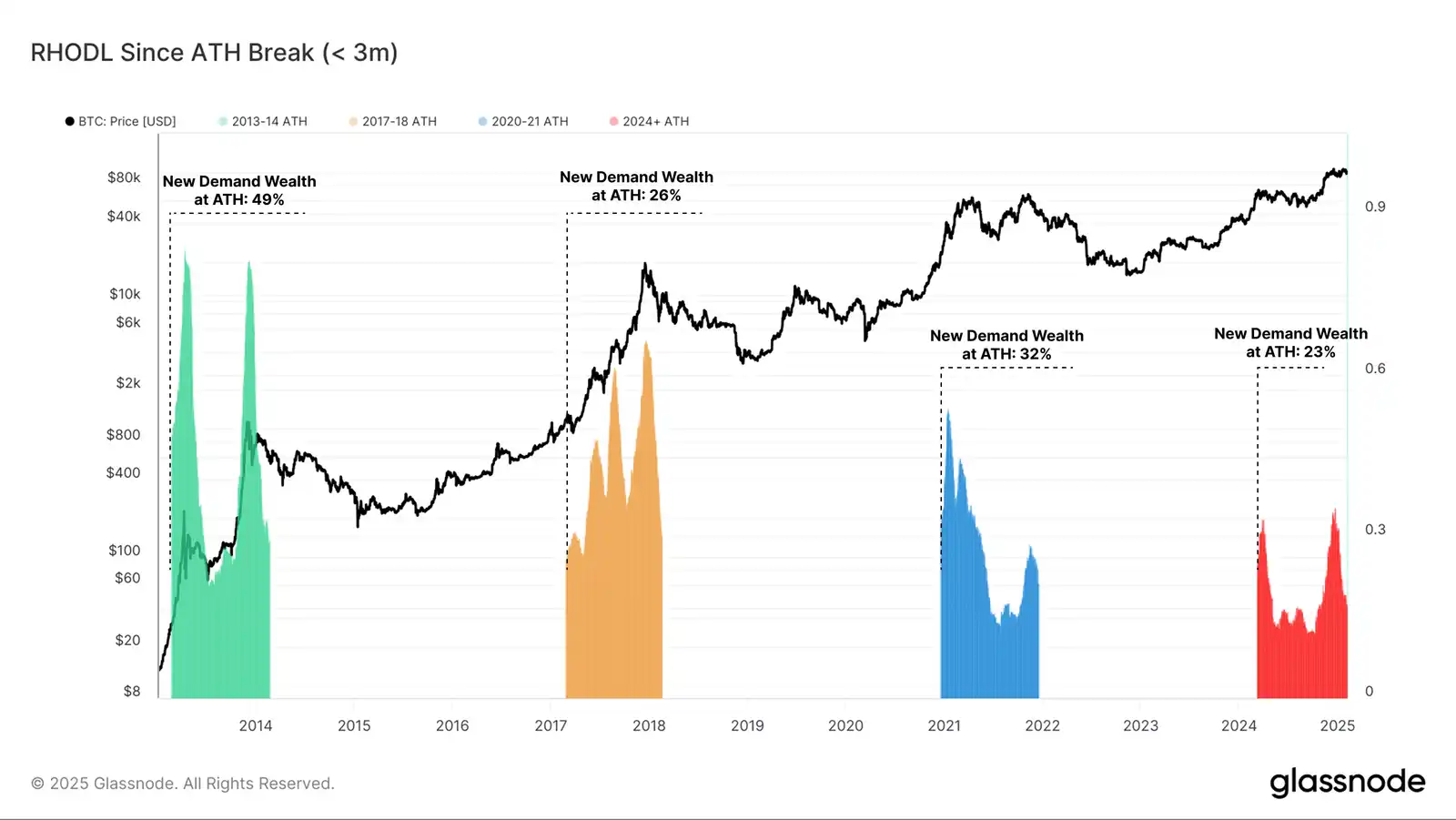
With BTC price breaking the $100,000 barrier, it is expected that Bitcoin's exposure will increase significantly. We can assess this by evaluating the percentage of network wealth held by tokens bought just under 3 months ago. The chart below shows the changes in this metric over the 12 months following a new cyclical ATH.

While the new demand in this cycle is significant, the wealth held by 3-month-old tokens is much lower compared to previous cycles. This indicates that the scale of new demand inflow is not the same, appearing to be more sporadic and peak-oriented rather than sustained.

Interestingly, all previous cycles have ended approximately a year after the first ATH breakout, highlighting the atypical nature of our current cycle, which saw its first new ATH in March 2024.
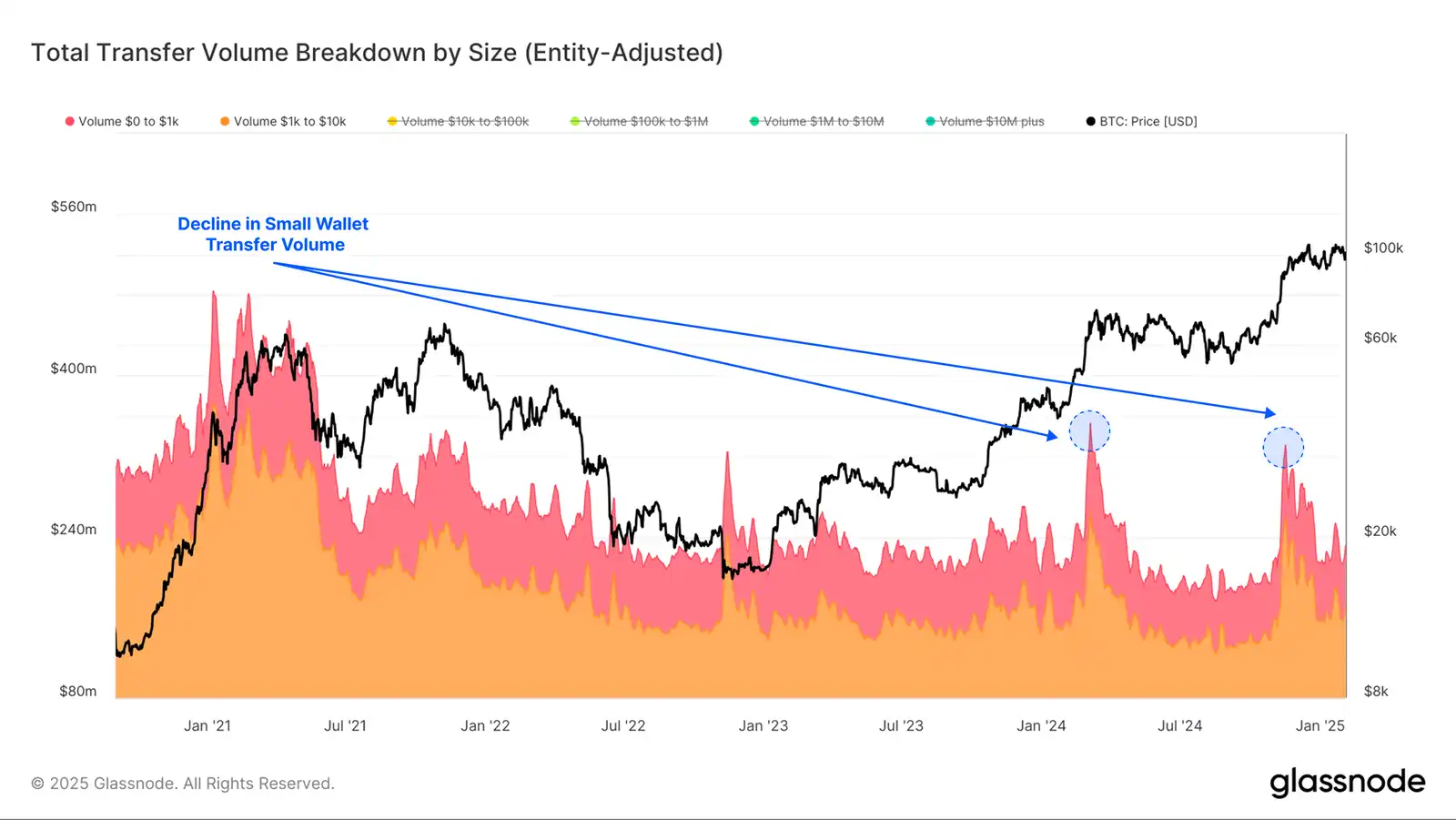
If we separate out the transfer volume of small wallets (less than $10,000) and compare it to the peak levels in 2021, we can see a significant decline. Despite a substantial increase in overall settlement volume this cycle and a significant rise in Bitcoin's price, this trend persists.

This suggests that the new demand for BTC is primarily driven by large entities rather than small retail entities.
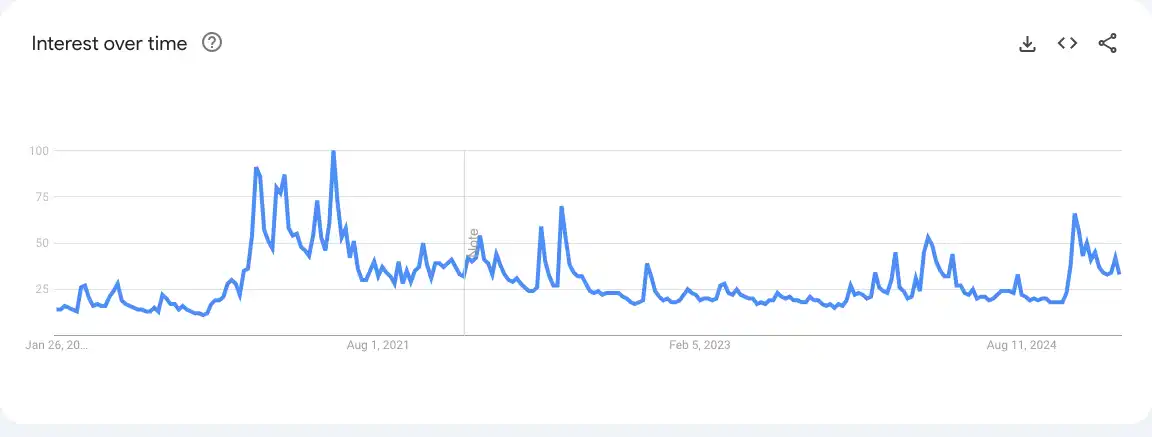
We can also utilize other datasets to support our argument. Despite many bullish factors surrounding the asset, search intensity has not reached the frenzied levels seen during the 2021 bull market.
Evolution of the Investor Base

While the structure of the Bitcoin protocol and consensus code is fundamentally fixed, the market's response to it is an evolving and dynamic process. The regulatory environment continues to change, and new financial instruments such as derivatives and ETF products continue to develop around it. As the Bitcoin ecosystem evolves, the composition of Bitcoin investors also continues to change, most notably in this cycle.

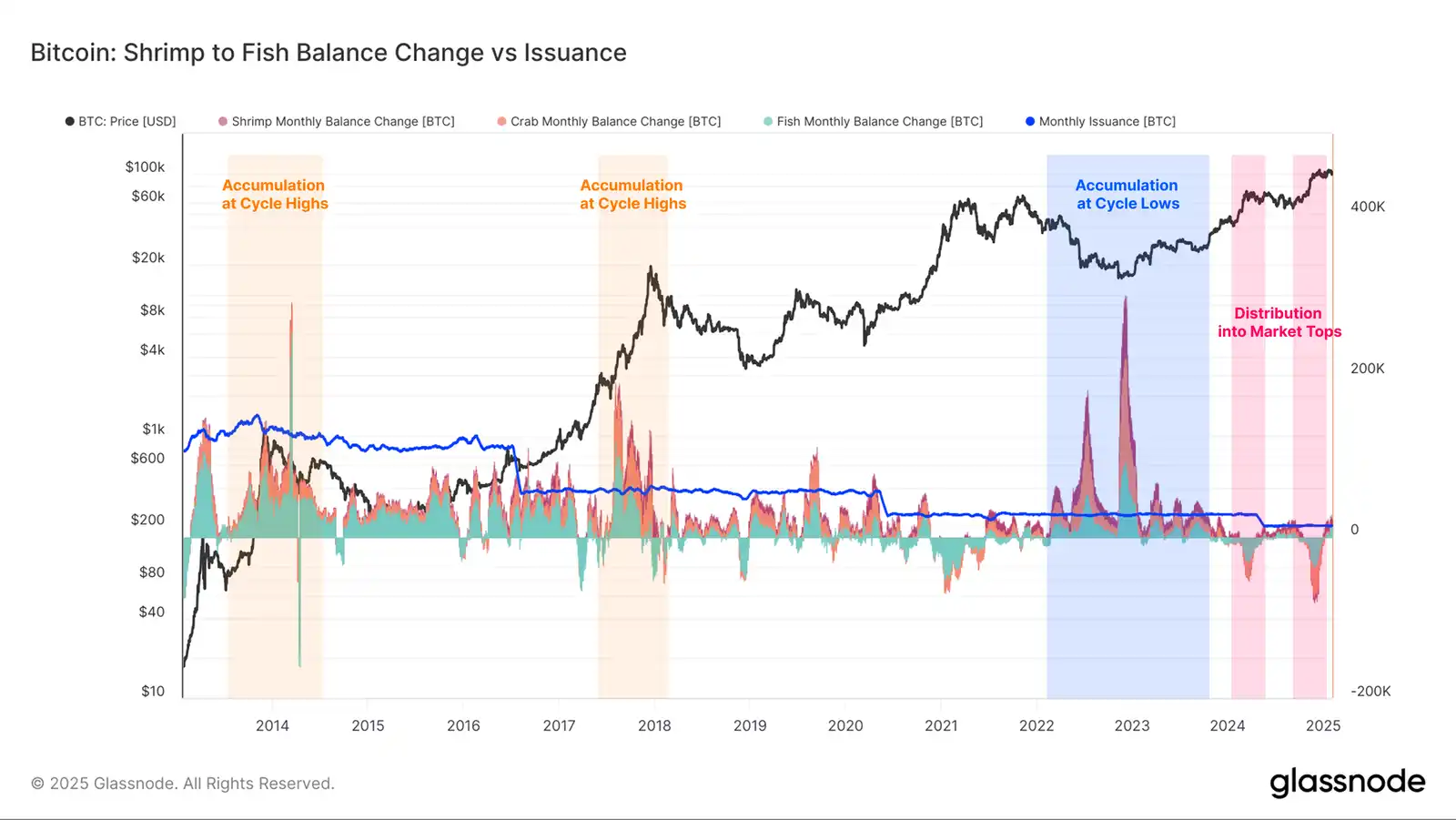
When comparing the balance changes of smaller entities (holding <10 BTC), we observe a noticeable shift in behavior patterns in recent years.

During the bull markets of 2013 and 2017, we could identify periods of significant token accumulation from these groups, often synonymous with "exuberant top buying." This pattern seems to have broken in this cycle, with smaller entities engaging in more intense accumulation during corrections and pullbacks, then transitioning to distribution as the market rebounds to new highs.

This suggests that even within those typically seen as retail investor groups, there exists a more mature and well-educated cohort of investors.
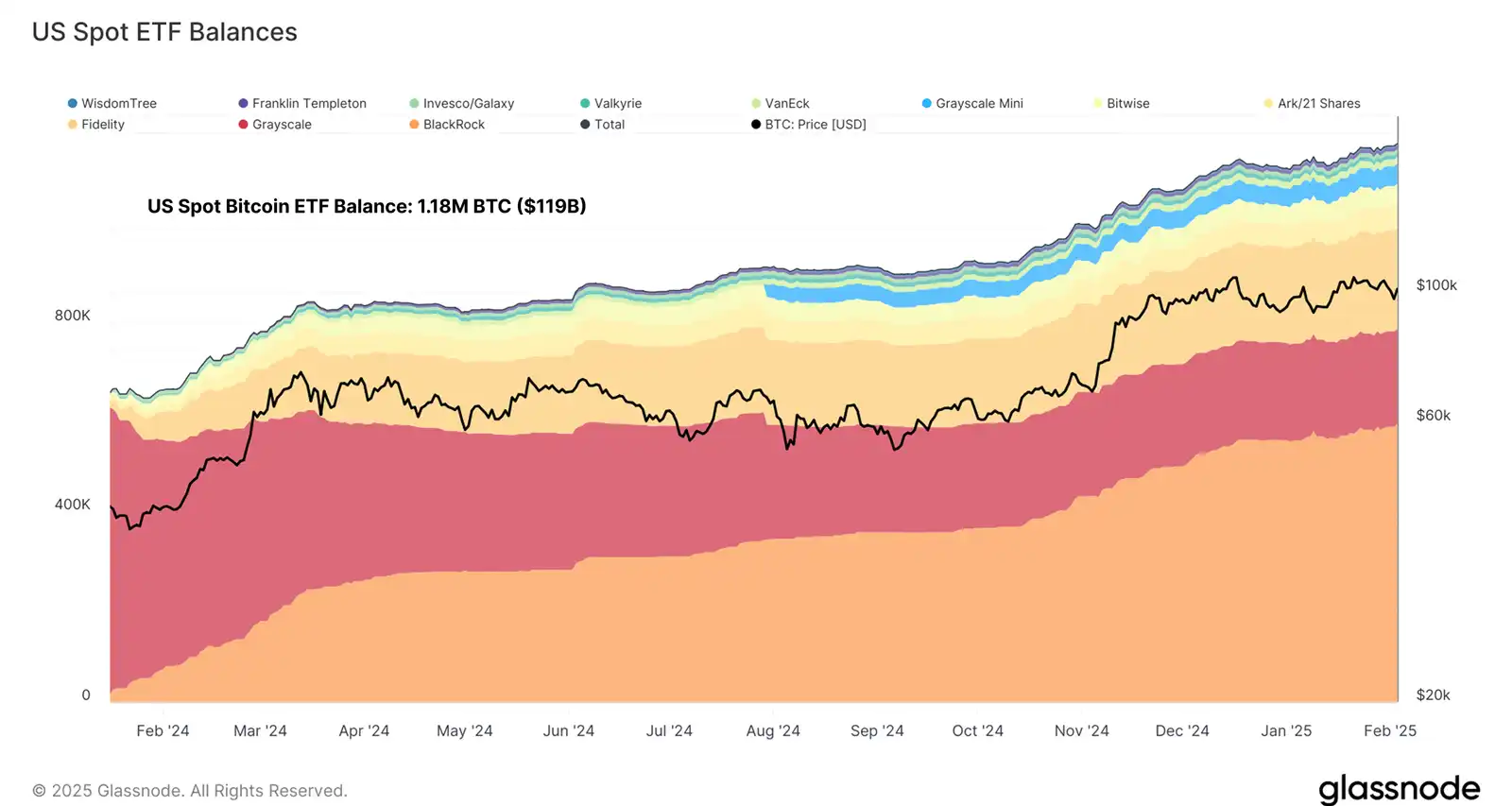
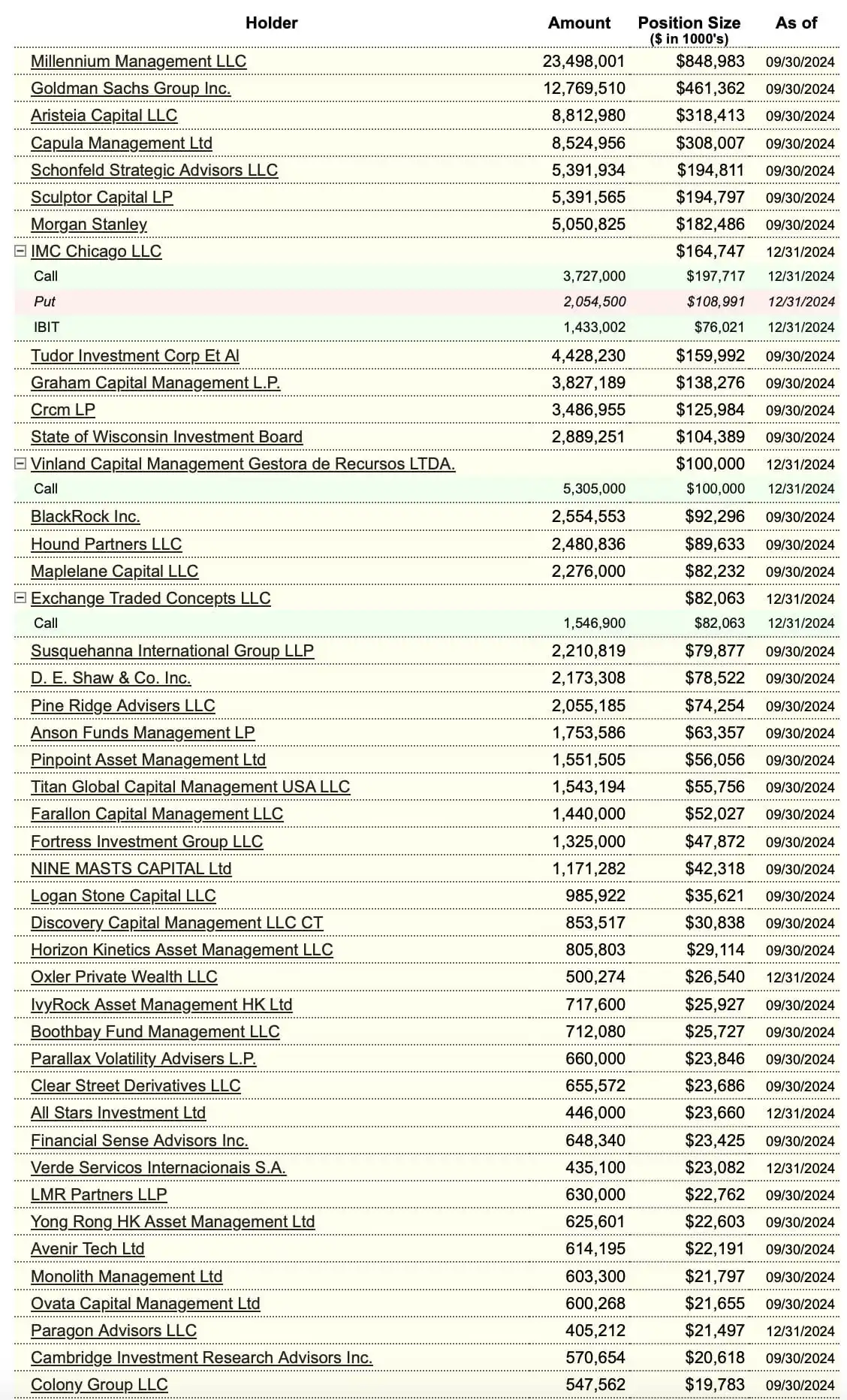
The launch of a US Spot Bitcoin ETF has also provided institutional investors with a new investment channel, offering them a regulated Bitcoin investment opportunity. This has facilitated potential institutional capital inflows, with the ETF seeing net inflows of over $40 billion and a total AUM surpassing $120 billion in the 12 months since its launch.
By delving into the IBIT Investor Capital Table (as described by analyst TXMC), we can clearly see signs of increasing institutional investor demand. This further demonstrates that Bitcoin is attracting a more mature investor base.
Controlled Downtrend

One of the many advantages of on-chain data is that it can help us analyze investor behavior during periods of stress, such as pullbacks and downturns.

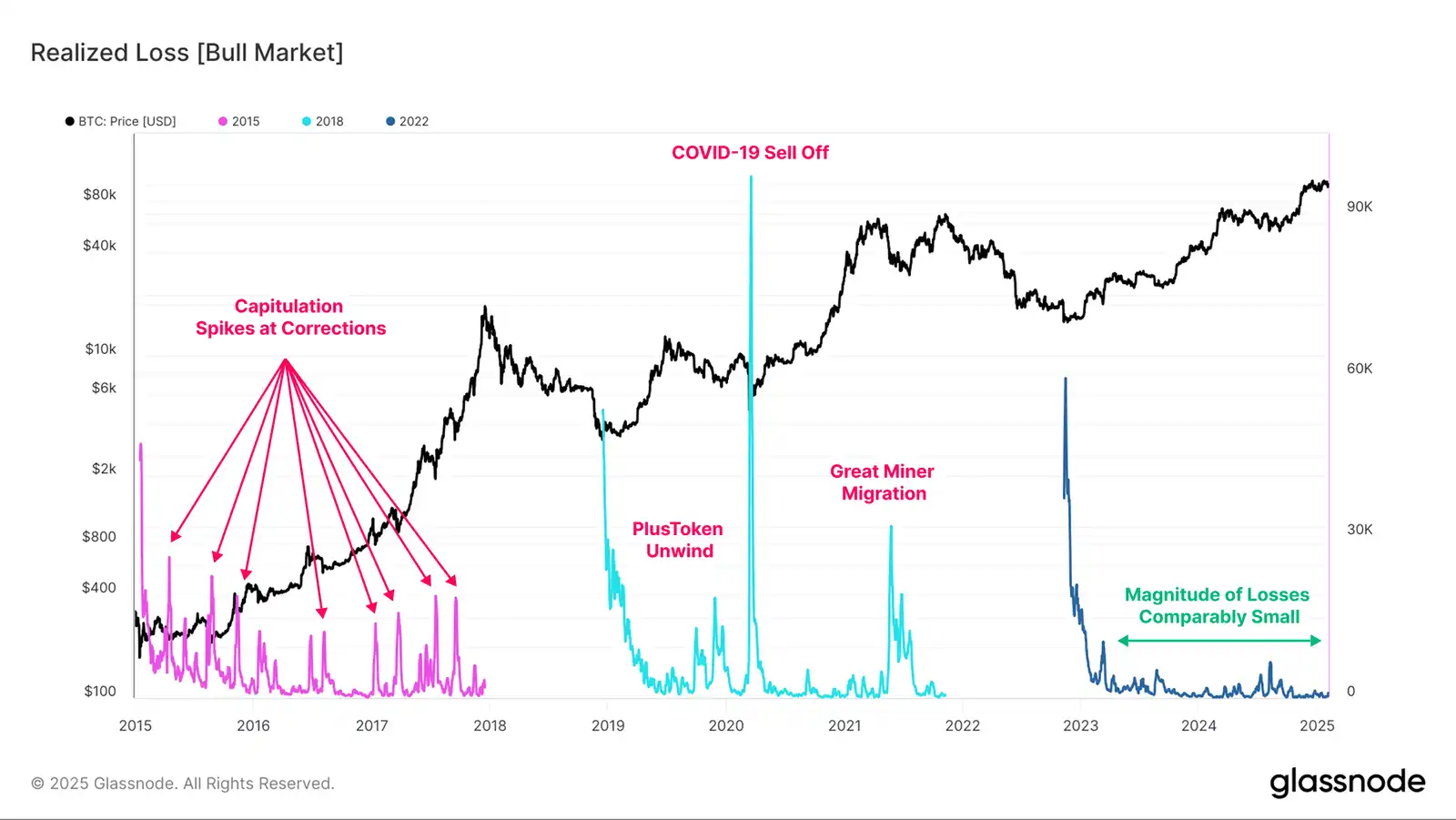
When evaluating the actual loss magnitude locked in during a bull market, our current cycle remains the most conservative. The only significant event where Bitcoin holders suffered substantial losses was the yen carry trade unwinding on August 5th. Apart from this, the loss magnitude remains relatively small, indicating that the investor base is more patient, resilient, and less price-sensitive.

This is in stark contrast to the previous cycle structure, where the 2015-2018 period featured multiple minor sell-off periods. The 2019-2022 period has been more turbulent, experiencing several deep and severe sell-off events, such as the mid-2019 PlusToken unwinding, the March 2020 COVID-19 sell-off, and the mid-2021 large-scale miner migration.
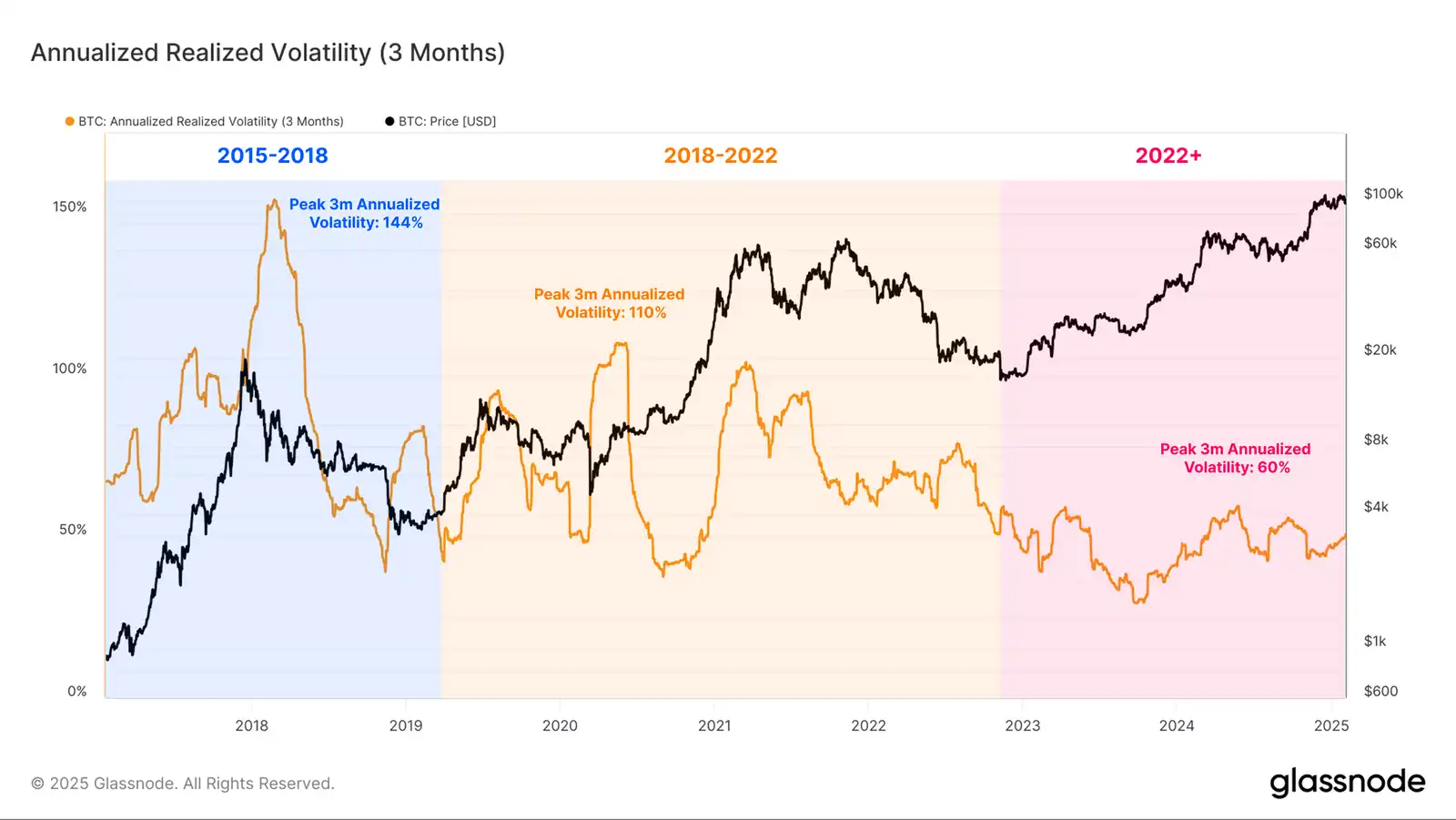
Bitcoin's volatility regime is also in a state of flux, with the actual volatility at historic lows during the bull market. The actual volatility over a three-month rolling window in this cycle is typically below 50%, whereas in the previous two bull markets, the actual volatility often exceeded 80% to 100%.
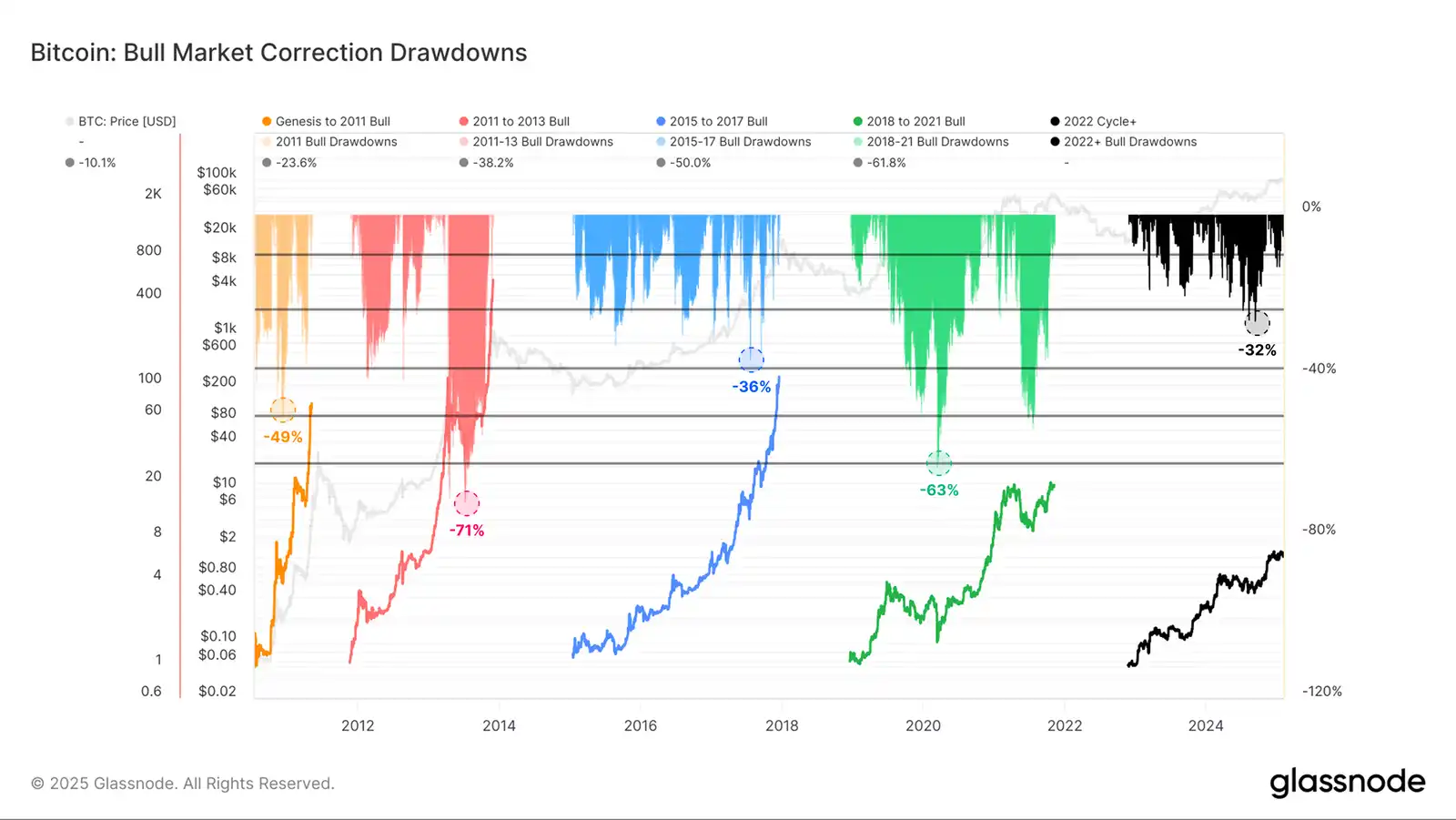
This reduction in volatility, coupled with a relatively composed investor base, manifests in a more stable price structure. So far, the 2023-2025 cycle has been essentially a series of staircase-like price movements (rises followed by consolidation periods).

We have also seen more controlled retracement scenarios, with the current cycle experiencing the shallowest average retracement from local highs of all cycles to date.
Summary

Bitcoin continues to solidify its position as a global macro asset. It remains available for trading, allowing investors to express their market views at any time of the day, while its deep liquidity enables investors to execute large-scale transactions.

Addressing criticisms regarding Bitcoin's role as a store of value and medium of exchange, the network has attracted over $850 billion in net capital inflows and processes nearly $9 billion in transaction volume daily. These figures largely dispel doubts about these claims.

Recent regulatory changes in the digital asset ecosystem have prompted a shift in investor composition, leading to an increasing presence of mature institutional investors in the Bitcoin market. This cohort of investors, characterized by greater patience, resilience, and less price sensitivity, helps reduce drawdowns and lower volatility.

Original Article Link

You may also like

$COIN Joins S&P 500, but Coinbase Isn't Celebrating

On May 13, S&P Dow Jones Indices announced that Coinbase would officially replace Discover Financial Services in the S&P 500 on May 19. While other companies like Block and MicroStrategy, closely tied to Bitcoin, were already part of the S&P 500, Coinbase became the first cryptocurrency exchange whose primary business is in the index. This also signifies that cryptocurrency is gradually moving from the fringes to the mainstream in the U.S.


On the day of the announcement, Coinbase's stock price surged by 23%, surpassing the $250 mark. However, just 3 days later, Coinbase was hit by two consecutive events: a hack where employees were bribed to steal customer data and a demand for a $20 million ransom, and an investigation by the U.S. Securities and Exchange Commission (SEC) into the authenticity of its claim of having over 100 million "verified users" in its securities filings and marketing materials. These two events acted as mini-bombs, and at the time of writing, Coinbase's stock had already dropped by over 7.3%.


Coincidentally, Discover Financial Services, being replaced by Coinbase, can also be considered the "Coinbase" of the previous payment era. Discover is a U.S.-based digital banking and payment services company headquartered in Illinois, founded in 1960. Its payment network, Discover Network, is the fourth largest payment network apart from Visa, Mastercard, and American Express.


In April, after the approval of the acquisition of Discover by the sixth-largest U.S. bank, Capital One, this well-established digital banking company of over 60 years smoothly handed over its S&P 500 "seat" to this emerging cryptocurrency "bank." This unexpected coincidence also portrayed the handover between the new and old eras in Coinbase's entry into the S&P 500, resembling a relay race scene. However, this relay baton also brought Coinbase's accumulated "external troubles and internal strife" to a tipping point.


Side Effects of ETFs


Over the past decade, cryptocurrency exchanges have been the most stable "profit machines." They play a role in providing liquidity to the entire industry and rely on trading fees to sustain their operations. However, with the comprehensive rollout of ETF products in the U.S. market, this profit model is facing unprecedented challenges. As the leader in the "American stack," with over 80% of its business coming from the U.S., Coinbase is most affected by this.


Starting from the approval of Bitcoin and Ethereum spot ETFs, traditional financial capital has significantly onboarded users and funds that originally belonged to exchanges in a more cost-effective, compliant, and transparent manner. The transaction fee revenue of cryptocurrency exchanges has started to decline, and this trend may further intensify in the coming months.


According to Coinbase's 2024 Q4 financial report, the platform's total trading revenue was $417 million, a 45% year-on-year decrease. The contribution of BTC and ETH's trading revenue dropped from 65% in the same period last year to less than 50%.


This decline is not a result of a decrease in market enthusiasm. In fact, since the approval of the Bitcoin ETF in January 2024, the inflow of BTC into the U.S. market has continued to reach new highs, with asset management giants like BlackRock and Fidelity rapidly expanding their management scale. Data shows that BlackRock's iShares Bitcoin ETF (IBIT) alone has surpassed $17 billion in assets under management. As of mid-May 2025, the cumulative net inflow of 11 major institutional Bitcoin spot ETFs on the market has exceeded $41.5 billion, with a total net asset value of $1214.69 billion, accounting for approximately 5.91% of the total Bitcoin market capitalization.


Chart showing the trend of net outflows for Grayscale among the 11 institutions


Institutional investors and some retail investors are shifting towards ETF products, partly due to compliance and tax considerations. On one hand, ETFs have much lower trading costs compared to cryptocurrency exchanges. While Coinbase's spot trading fee rate varies annually in a tiered manner but averages around 1.49%, for example, the management fee for IBIT ETF is only 0.25%, and the majority of ETF institution fees fluctuate around 0.15% to 0.25%.


In other words, the more rational users are, the more likely they are to move from exchanges to ETF products, especially for investors aiming for long-term holdings.


According to multiple sources, several institutions, including VanEck and Grayscale, have submitted applications to the SEC for a Solana (SOL) ETF, with some institutions also planning to submit an XRP ETF proposal. Once approved, this may trigger a new round of fund migration. According to a report submitted by Coinbase to the SEC, as of April, the platform's trading revenue from XRP and Solana accounted for 18% and 10%, nearly one-third of the platform's fee revenue.


However, the Bitcoin and Ethereum ETFs passed in 2024 also reduced the fees for these two tokens on Coinbase from 30% and 15% to 26% and 10%, respectively. If the SOL and XRP ETFs are approved, it will further undermine the core fee revenue of exchanges like Coinbase.


The expansion of ETF products is gradually weakening the financial intermediary status of cryptocurrency exchanges. From their original roles as matchmakers and clearers to now gradually becoming mere "on-ramps and off-ramps" for funds, exchanges are seeing their marginal value squeezed by ETFs.


Robinhood Takes a Stand, Traditional Brokerages Join the Fray


On May 12, 2025, SEC Chairman Paul S. Atkins gave a keynote speech at the Tokenization and Cryptocurrency Working Group roundtable. The theme of his speech revolved around "It is a new day at the SEC," where he indicated that the SEC would not approach enforcement and regulation the same way as before but would instead pave the way for cryptocurrency assets in the U.S. market.


With signs of cryptocurrency compliance such as the SEC's "NEW DAY" declaration, an increasing number of traditional brokerages are attempting to enter the cryptocurrency industry. One of the most representative cases is the well-known U.S. brokerage Robinhood, which began expanding its crypto business in 2018. By the time of its IPO in 2021, Robinhood's crypto business revenue accounted for over 50% of the company, with a significant boost from the Dogecoin "moonshot" promoted by Musk.


In Q1 2025 earnings report, Robinhood showcased strong growth, especially in revenue from cryptocurrency and options trading. Fueled by Trump's Memecoin, cryptocurrency-related revenue reached $250 million, nearly doubling year-over-year. Consequently, Robinhood Gold subscription users reached 3.5 million, a 90% increase from the previous year, with the rapid growth of Robinhood Gold providing the company with a stable source of income.


Meanwhile, RobinHood is actively pursuing acquisitions in the cryptocurrency space. In 2024, it announced a $2 billion acquisition of the long-standing European cryptocurrency exchange Bitstamp. Additionally, Canada's largest cryptocurrency CEX, WonderFi, which recently went public on the Toronto Stock Exchange, also announced its integration with RobinHood Crypto. After obtaining virtual asset licenses in the UK, Canada, Singapore, and other markets, RobinHood has taken a proactive approach in the compliant cryptocurrency trading market.


Furthermore, an increasing number of brokerage firms are exploring the same path. Futu Securities, Tiger Brokers, and others are also dipping their toes into cryptocurrency trading, with some having applied for or obtained the VA license from the Hong Kong SFC. Although their user bases are currently small, traditional brokerages have a natural advantage in user trust, regulatory licenses, and low fee structures. This could pose a threat to native cryptocurrency platforms in the future.


User Data Breach: Is Coinbase Still Secure?


In April 2025, security researchers discovered that some Coinbase user data was leaked on the dark web. While the platform initially responded by attributing it to a "technical misinformation," it still raised concerns among users regarding its security and privacy protection. Just two days before Dow Jones Indexes announced Coinbase's addition to the S&P 500 Index, on May 11, 2025, Coinbase received an email from an unknown threat actor claiming to have obtained customer account information and internal documents, demanding a $20 million ransom to keep the data private. Subsequent investigations confirmed the data breach.


Cybercriminals obtained the data by bribing overseas customer service agents and support staff, mainly in "non-U.S. regions such as India." These agents abused their access to Coinbase's internal customer support system and stole customer data. As early as February this year, blockchain detective ZachXBT revealed on X platform that between December 2024 and January 2025, Coinbase users lost over $65 million to social engineering scams, with the actual amount potentially higher.


Among the victims was a well-known figure, 67-year-old Ed Suman, an established artist in the art world for nearly two decades, having been involved in the creation of artworks such as Jeff Koons' "Balloon Dog" sculpture. Earlier this year, he fell victim to an impersonation scam involving fake Coinbase customer support, resulting in a loss of over $2 million in cryptocurrency. ZachXBT critiqued Coinbase for its inadequate handling of such scams, noting that other major exchanges have not faced similar issues and recommending Coinbase to enhance its security measures.


Amidst a series of ongoing social engineering incidents, although there has not been any impact on user assets at the technical level so far, it has raised concerns among many retail and institutional investors. Especially institutions holding massive assets on Coinbase. Just considering the U.S. BTC ETF institutions, as of mid-May 2025, they collectively hold nearly 840,000 BTC, and 75% of these are custodied by Coinbase. If we price BTC at $100,000, this amount reaches a staggering $63 billion, which is equivalent to the nominal GDP of two Iceland in the year 2024.


Visualization: ChatGPT, Source: Farside


In addition, Coinbase Custody also serves over 300 institutional clients, including hedge funds, family offices, pension funds, and endowments. As of the Q1 2025 financial report, Coinbase's total assets under management (including institutional and retail clients) reached $404 billion. The specific amount of institutional custodied assets was not explicitly disclosed in the latest report, but it should still be over 50% based on the Q4 2024 report.


Visualization: ChatGPT


Once this security barrier is breached, not only could the rate of user attrition far exceed expectations, but more importantly, institutional trust in it would undermine the foundation of its business. Therefore, after a hacking event, Coinbase's stock price plummeted significantly.


CEXs are All in Self-Rescue Mode


Facing a decline in spot trading fee revenue, Coinbase is also accelerating its transformation, attempting to find growth opportunities in derivatives and emerging assets. Coinbase acquired a stake in the options platform Deribit at the end of 2024 and announced the official launch of perpetual contract products in 2025. This acquisition fills in Coinbase's gap in options trading and its relatively small global market share.


Deribit has a strong presence in non-U.S. markets, especially in Asia and Europe. The acquisition has enabled Coinbase to gain a dominant position in bitcoin and ethereum options trading on Deribit, accounting for approximately 80% of the global options trading volume, with daily trading volume remaining above $2 billion.


Meanwhile, 80-90% of Deribit's customer base consists of institutional investors, with their professionalism and liquidity in the Bitcoin and Ethereum options market highly favored by institutions. Coinbase's compliance advantage, coupled with its already robust institutional ecosystem, makes it even more suitable. By using institutions as an entry point, it can face the squeeze from giants like Binance and OKX in the derivatives market.


Facing a similar dilemma is Kraken, which is attempting to replicate Binance Futures' model in non-U.S. markets. Since the derivatives market relies more on professional users, fee rates are relatively higher and stickiness is stronger, making it a significant source of revenue for exchanges. In the first half of 2025, Kraken completed the acquisition of TradeStation Crypto and a futures exchange, aiming to build a complete derivatives trading ecosystem to hedge the risk of declining spot transaction fee income.


With the surge of Memecoin in 2024, Binance, OKX, and various CEX platforms began massively listing small-market-cap, highly volatile tokens to activate active trading users. Due to the wealth effect and trading activity of Memecoins, Coinbase was also forced to join the battle, successively listing popular tokens from the Solana ecosystem such as BOOK OF MEME and Dogwifhat. Although these coins are controversial, they are frequently traded, with fee rates several times higher than mainstream coins, serving as a "blood-boosting" method for spot trading.


However, due to its status as a publicly traded company, this practice is a riskier endeavor for Coinbase. Even in the current crypto-friendly environment, the SEC is still investigating whether tokens like SOL, ADA, and SAND constitute securities.


In addition to the forced transformation strategies carried out by the aforementioned CEXs, they are also starting to lay out RWAs and the most talked-about stablecoin payment fields, such as the PYUSD launched through a collaboration between Coinbase and Paypal, Coinbase's support for the Euro stablecoin EURC by Circle that complies with EU MiCA regulatory requirements, or the USD1 launched through a collaboration between Binance and WIFL. In the increasingly crowded trading field, many CEXs have shifted their focus from just the trading market to the application field.


The golden age of transaction fees has quietly ended, and the second half of the crypto exchange platform game has silently begun.


Arthur Hayes: Why I'm Betting on ETH While the Market Is Obsessed with SOL

"I personally have also allocated 20% to gold, expecting the price of gold to potentially rise to $10,000-20,000 by the end of this market cycle."

CryptoPunks Changes Hands Twice, Did the Originator of NFTs Finally Find Its "Forever Home" This Time?

The original NFT pioneer CryptoPunks has once again officially changed ownership after being sold to the Bored Ape Yacht Club (BAYC) developer Yuga Labs.

May 16 Key Market Information Gap, A Must-Read! | Alpha Morning Report

1. Top News: Coinbase Faces Double Blow with 'SEC Investigation' and 'User Data Breach,' Stock Price Drops by 7.2% 2. Token Unlocking: $ARB, $AVAX, $PRIME, $ASTR, $1INCH

Key Market Intelligence on May 14th, how much did you miss out on?

Featured News


1.Binance Alpha Launches HIPPO, BLUE, and Other Tokens

2.Believe Ecosystem Tokens See General Rise, LAUNCHCOIN Surges Over 250% in 24 Hours

3.Tiger Securities Introduces Cryptocurrency Deposit and Withdrawal Service, Supports Mainstream Cryptocurrencies such as BTC and ETH

4.Current Bitcoin Rally Possibly Driven by Institutions, Retail Traders Yet to Join

5.Binance Wallet's New TGE Privasea AI Participation Requires a 198 Point Threshold, with a Point Consumption of 15


Trending Topics


Source: Overheard on CT (tg: @overheardonct), Kaito


PUMP: Today's discussions about PUMP focus on its new creator revenue-sharing model: the platform will allocate 50% of PumpSwap revenue to token creators, sparking varied reactions from users. Some criticize the move as insufficient or even misleading, while others view it as a positive step the platform is taking to reward creators. Meanwhile, PUMP faces market pressure from emerging competitors like LetsBONKfun and Raydium, which are rapidly gaining market share. Users also express concerns about PUMP's sustainability and potential regulatory risks in the U.S., with discussions extending to the platform's impact on the entire memecoin ecosystem.


COINBASE: Today, Coinbase became the first crypto company to join the S&P 500 Index, replacing Discover Financial Services, sparking widespread industry attention. The entire crypto community views this milestone as a significant development, signaling that crypto assets are further integrating into the mainstream financial system. The news has sparked lively discussions on Twitter, with many users pointing out that this may attract more institutional investors to enter the Bitcoin and other cryptocurrency markets.


XRP: XRP became the focal point of today's crypto discussion, with its significant market movements and strategic advances drawing attention. XRP has surpassed USDT to become the third-largest cryptocurrency by market capitalization, sparking market excitement and discussions about its future potential. The surge in market capitalization and price is believed to be related to increasing institutional interest, deepening strategic partnerships, and its role in the crypto ecosystem. Additionally, XRP's integration into multiple financial systems and its potential as a macro asset class are also seen as key factors driving the current market sentiment.


DYDX: Today's discussions about DYDX mainly focused on the dYdX Yapper Leaderboard launched by KaitoAI. The leaderboard aims to identify the most active community participants, with a total of $150,000 in rewards to be distributed over the first three seasons. This initiative has sparked broad community participation, with many users discussing the potential rewards and the incentive effect on the DYDX ecosystem. Meanwhile, progress on the ethDYDX to dYdX native chain migration and historical airdrop events have also been topics of discussion.


Featured Articles


1. "What Is 'ICM'? Holding Up the $4 Billion Market Cap Solana's New Narrative"

Overnight, the hottest narrative in the crypto space has become "Internet Capital Markets," with a host of crypto projects and founders, led by the Solana ecosystem's new Launchpad platform Believe, releasing this phrase. Together with "Believe in something," it has become the new slogan heralding the onset of a bull market. What exactly is the so-called "Internet Capital Market," will it become a short-lived hype phrase like the Base ecosystem's previous Content Coin, and what related targets are available for selection?


2.《LaunchCoin Surges 20x in One Day, How Did Believe Create a $200M Market Cap Shiba Inu After Going to Zero?|100x Retrospective》

LAUNCHCOIN broke through a $200 million market cap today, with the long-lost liquidity and such a high market cap "Memecoin" almost bringing half of the on-chain crypto community CT into the fray. The community is crazily discussing this token, with half of it being FOMO and the other half being FUD. This token, originally issued by Believe founder Ben Pasternak under his personal identity, transformed into a new platform token after a renaming. From once going to zero to a $200 million market cap, what happened in between?


On-chain Data


May 14 On-chain Fund Flow


Deconstructing Binance Alpha2.0's New "Asia-Led Liquidity Mining" Model

Deep Dive into the Failure of Binance Alpha 1.0 and the Strategic Pivot of Alpha 2.0

Popular coins

Latest Crypto News

Read more