
- Buy Crypto
- Markets
- Futures
- Spot
- Copy Trade
 Earn
Earn- More
Fed Meeting Reveals Growing Dissent on December Rate Cut Possibility

Key Takeaways
- The Federal Reserve’s recent meeting uncovered significant disagreements among policymakers concerning the potential for a December rate cut.
- While the majority supports maintaining or further cutting rates, some members express concern over potential risks to inflation and financial stability.
- The cessation of balance sheet reduction (QT) received nearly unanimous support, with a focus on increasing short-term bond holdings.
- Concerns arise over high asset valuations in financial markets, particularly artificial intelligence-related stocks.
Divergent Views on December Rate Reduction
Recently, the Federal Reserve’s meeting minutes displayed a pronounced division among decision-makers regarding a prospective rate cut this December. At this meeting, while many members supported the idea of gradually shifting the monetary policy to a more neutral stance, the notion of further rate reduction was met with polarity.
This discrepancy highlights the ongoing dilemma within the Federal Reserve as it navigates managing inflation risks alongside ensuring financial stability. Fed officials expressed a broad consensus on maintaining flexibility in policy responses, ensuring these are adaptable to incoming data and evolving economic conditions.
Mixed Sentiments on Inflation and Market Turbulence
Key voices within the Federal Reserve illustrated diverse perspectives on the implications of a potential December reduction. While a considerable faction believed in maintaining rates, attributing it to steady inflation and labor market conditions, others indicated vigilance concerning the long-standing effects of high inflation.
The minutes underscored a cautious stance rooted in the possible misinterpretation of the Fed’s commitment to its inflation target. Worries were also aired regarding sudden market realignments, especially given the lofty valuations of assets linked to artificial intelligence technologies.
Balancing Financial Stability and Policy Decisions
The meeting notes distinctly highlighted how concerns over financial ecosystems were pivotal to decision-making considerations. A few officials raised alarms about soaring equity valuations, fearing abrupt corrections, especially around AI-augmented sectors. Emphasizing this point, the overall sentiment called for vigilant monitoring of financial stability in conjunction with inflation and employment.
Furthermore, the minutes brought forth discussions about corporate debt positions, stressing the significance of these variables in the broader economic assessment and policy calibration.
Decisive Support for Ending QT
Amid the mixed views on rate decisions, the conceptual end of the Quantitative Tightening (QT) program achieved consensus. The intent to cease the balance sheet reduction phase by December 1, 2025, was broadly endorsed, marking a strategic pivot to enhance elasticity in managing economic activities.
Aligned with this step, the Fed plans to steer freed-up resources towards bolstering short-term U.S. Treasury holdings. Doing so promises a mechanism to adeptly maneuver through fiscal pressures and preserve liquidity, ensuring ample reserve levels.
Communicating Policy Decisions Amid Emerging Concerns
The insights reflect burgeoning skepticism over a potential rate cut echoing through the Federal Reserve’s corridors. With a nuanced majority voicing caution, market watchers perceive this as indicative of the FOMC’s most profound internal debate in years.
Across these divergent positions, what emerges is an intricate balance between adjusting policy levers and safeguarding against the destabilizing tremors of inflated markets. Opinions among Fed members emphasize scrutiny, particularly around the implications of AI technological advancements on market valuations, amid broader economic dynamics.
FAQs
What is the main cause of disagreement within the Federal Reserve regarding rate cuts?
The disagreement primarily stems from varying opinions on inflation risks and financial stability. While many support a more neutral rate approach, some express concerns over exacerbating inflation and unsettling market dynamics.
Why is the cessation of Quantitative Tightening significant?
Ending QT signifies a shift in strategy to increase flexibility within monetary policy. By reallocating resources to short-term Treasury holdings, the Fed aims to better manage liquidity and prepare for changing economic needs.
How do market valuations around AI technologies affect financial stability concerns?
Rising valuations in AI-related stocks heighten worries about sudden market corrections. Some Fed members fear these elevated valuations might lead to unpredictable market dynamics that could destabilize financial systems.
What role does the labor market play in the rate decision debate?
The health of the labor market is a central factor in rate discussions. While the market shows stable indicators, concerns about inflation variance guide differing opinions on maintaining or altering the rate stance.
How has the Federal Reserve’s communication strategy evolved amid these debates?
The Fed prioritizes transparency and adaptability, emphasizing that policy is not static. Communicating diverse perspectives ensures stakeholders are aware of potential shifts and underlying economic judgments.
You may also like

First Zero, First Revival: A Real Story from the WEEX Global AI Trading Hackathon Preliminary Round
WEEX Labs, the innovation arm of the global crypto exchange WEEX, launched the preliminary round of its flagship AI trading hackathon, AI Wars: WEEX Alpha Awakens, on January 12, 2026. Backed by world-class sponsors including AWS, the prize pool has reached $1.88 million, with a Bentley Bentayga S awaiting the champion in Dubai. Already, 788 elite teams worldwide are battling for a spot in the finals. This is more than a hackathon — it is a real-market stress test for AI trading. Registration remains open until January 18. If you want your AI to face real volatility, this is your moment.
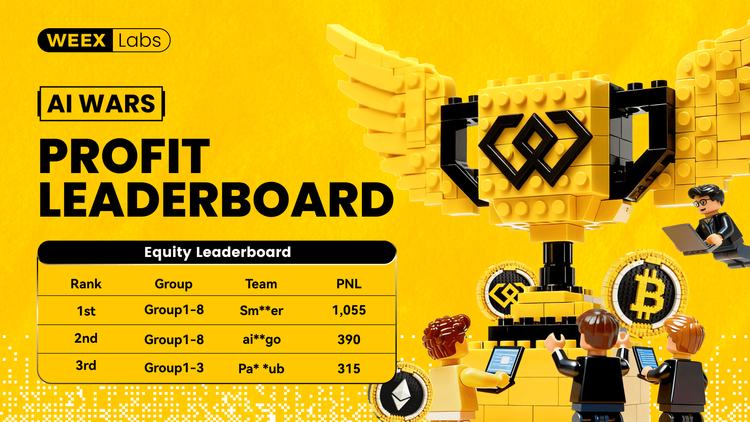
AI Wars: WEEX Alpha Awakens – Insights, Top Strategies, and Real-Market Execution Takeaways
WEEX Labs has officially launched the preliminary round of its global AI trading hackathon, AI Wars: WEEX Alpha Awakens, bringing together hundreds of elite teams to compete in real-market conditions. With a record-breaking $1.88 million prize pool and backing from top-tier sponsors like AWS, the event has quickly become a global proving ground for AI-powered trading strategies. As competition intensifies and standout teams emerge on the leaderboard, the hackathon not only showcases cutting-edge AI execution and risk management, but also offers valuable insights and inspiration for traders looking to build or refine their own AI-driven systems.

Sentient Reveals Tokenomics, How Will the Market Price It?

AI in the Crypto Market: How Artificial Intelligence is Changing Trading Strategies
This article explores how AI contributes to these movements and share practical strategies to help you navigate an AI-powered crypto market.

Fact Check: How Much Money Did the University of Chicago Lose in its Crypto Investment?

VanEck Q1 Market Outlook: Long-Term Bullish on Cryptocurrency, Strong Gold Demand

Matrixdock releases latest semi-annual physical gold audit report, strengthening physical gold transparency practices

Animoca Brands Acquires Somo to Advance Web3 Collectibles Strategy
Key Takeaways: Animoca Brands has acquired Somo, a gaming and collectibles studio, to fortify its position in the…

CLARITY Act Hearing Suddenly Postponed – Where Does the Disagreement Lie?

Bondex (BDXN) Sees Remarkable Price Surge Amid Market Optimism
Key Takeaways Bondex (BDXN) experienced a notable price increase of 31.38% in the last 24 hours, with prices…

Is Leveraged Bitcoin DCA More Profitable than Spot?

Key Market Information Discrepancy on January 15th - A Must-See! | Alpha Morning Report

AI Crypto Trading in 2026: How AI Agents Use Stablecoins for Capital Management and Settlement
Learn how AI agents use stablecoins for crypto trading in 2026 — managing capital, settling transactions, and operating across exchanges and DeFi protocols.

Tether Freezes $182 Million in Assets in a Day: Is USDT Still a Neutral Coin?
Key Takeaways Tether recently froze $182 million in USDT across five wallets on the Tron blockchain, raising questions…

Today’s Trump Tariff Decision and Economic Data Releases
Key Takeaways The U.S. Supreme Court is set to rule on a significant Trump tariff case that could…
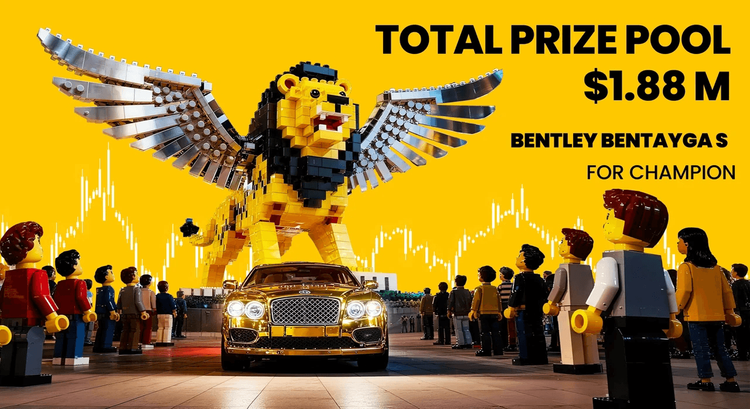
Is the WEEX AI Trading Hackathon Worth Joining? $1.88M Prize Pool and Rules Explained
An AI trading competition with a $1.88M prize pool — explore WEEX AI Trading Hackathon rules, OpenAPI trading, and AI-only participation requirements.

Wintermute's 28-Page Report Unveils the Inner Workings of Off-Chain Liquidity

traders anticipate Fed May Accelerate Rate Cuts
Key Takeaways Traders are speculating that the Federal Reserve could implement an interest rate cut before May due…
First Zero, First Revival: A Real Story from the WEEX Global AI Trading Hackathon Preliminary Round
WEEX Labs, the innovation arm of the global crypto exchange WEEX, launched the preliminary round of its flagship AI trading hackathon, AI Wars: WEEX Alpha Awakens, on January 12, 2026. Backed by world-class sponsors including AWS, the prize pool has reached $1.88 million, with a Bentley Bentayga S awaiting the champion in Dubai. Already, 788 elite teams worldwide are battling for a spot in the finals. This is more than a hackathon — it is a real-market stress test for AI trading. Registration remains open until January 18. If you want your AI to face real volatility, this is your moment.
AI Wars: WEEX Alpha Awakens – Insights, Top Strategies, and Real-Market Execution Takeaways
WEEX Labs has officially launched the preliminary round of its global AI trading hackathon, AI Wars: WEEX Alpha Awakens, bringing together hundreds of elite teams to compete in real-market conditions. With a record-breaking $1.88 million prize pool and backing from top-tier sponsors like AWS, the event has quickly become a global proving ground for AI-powered trading strategies. As competition intensifies and standout teams emerge on the leaderboard, the hackathon not only showcases cutting-edge AI execution and risk management, but also offers valuable insights and inspiration for traders looking to build or refine their own AI-driven systems.
Sentient Reveals Tokenomics, How Will the Market Price It?
AI in the Crypto Market: How Artificial Intelligence is Changing Trading Strategies
This article explores how AI contributes to these movements and share practical strategies to help you navigate an AI-powered crypto market.


 App
App