
Educational | How to Avoid Blindly Following the Crowd - A Beginner's Guide to Project Research

Original Title: How to do a good research?
Original Author: le.hl
Original Translation: Luffy, Foresight News
As an investor, the easiest way to lose money is to blindly follow the crowd, knowing nothing about the project, and simply enter the market based on others' advice. I have had such an experience, so I am sharing my project research experience here.
If you are a cryptocurrency newbie and need a reliable practical method, this article is prepared for you.
Define the Project Narrative
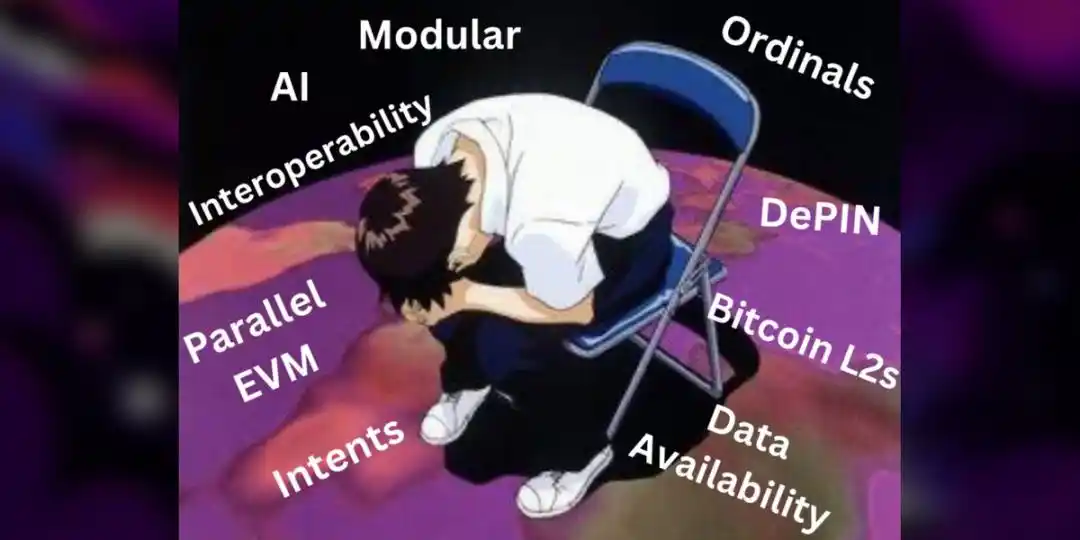
Narrative is one of the core elements of the cryptocurrency industry, and market trends often revolve around narratives. If you want to invest in a project, you must first understand the narrative logic behind it. If the project is still stuck in outdated narratives like the metaverse, GameFi, it is likely to have a hard time succeeding.
I usually look up the project narrative on CoinMarketCap and CoinGecko platforms.
Steps:
1. Visit the website: https://coinmarketcap.com/cryptocurrency-category/
2. Enter the project name;
3. Scroll down to the "Tags" section to view the project's narrative.
After understanding the narrative, the next step is to identify the leading project in that sector. Observe its recent trading volume changes, assess the dynamics; and evaluate if the project you are interested in has the ability to compete with the leader. Remember, investing in the leader's competitors often has a better opportunity than chasing an already skyrocketed leader.
Choosing a currently trending narrative (such as AI, prediction markets, InfoFi, etc.) is the best path to profitability.
Verify the Project's Investors
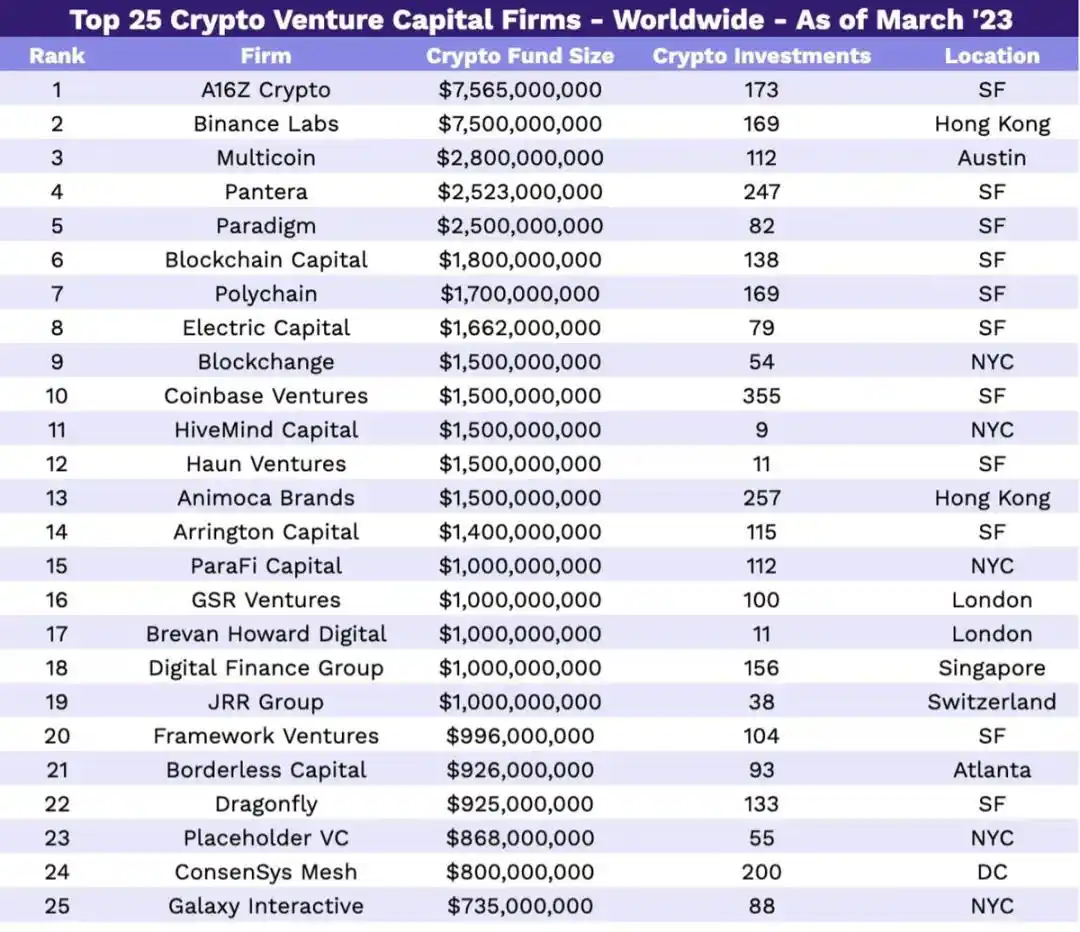
Today, many people are averse to the term 'venture capital' and prefer projects that self-fund. However, the fact is: If a project lacks excellent products, has a mediocre team, and is not the leader in any narrative, it needs reliable investors to drive its development.
My most frequently used platform to look up project investors is CryptoFundraising, which can display all key information about a project's investors, team, social accounts, official website, and more, all completely free of charge.
Operating steps:
1. Visit the website: https://crypto-fundraising.info/
2. Search for the target project;
3. Check the funding amount and venture capital level.
I have found that projects with lower funding amounts, supported by only 2-3 VCs, usually perform better than those with 20 or more VCs. It’s like a cake being divided among too many people; the team needs to get approval from all VCs when making decisions, which can be restrictive.
The VC level is also crucial. I personally prefer projects supported by VCs such as Coinbase VC, a16z, Polychain Capital, Paradigm, and GSR.
Examine Project Social Dynamics

This step is very crucial. If a project disables comments or frequently changes its social account nickname, it’s best to avoid it directly. If you want to look up a project’s previous nickname, you can use the Rick bot on Telegram:
1. Log in to Telegram;
2. Send a message to Rickburpbot;
3. Enter the command: /twit current nickname of the project to query the historical nickname.
The "number of well-known individuals who follow each other" is also worth considering: If there are over 20 industry celebrities following the project, it is usually a positive sign.
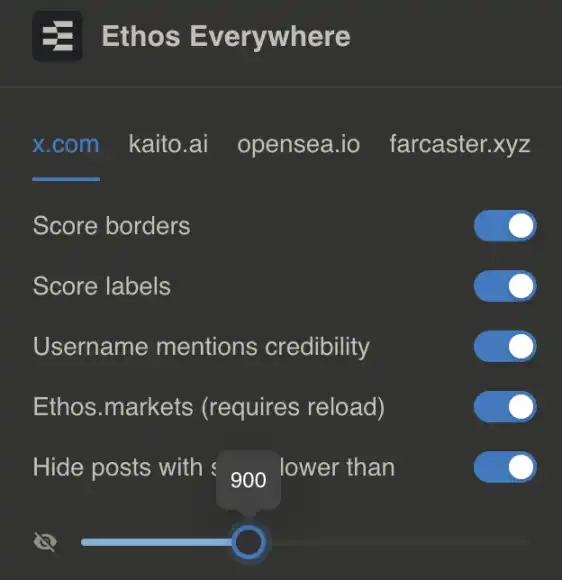
To verify the legitimacy of a project, you can also use Ethos Network:
1. Visit the website: https://app.ethos.network/
2. Install the Chrome browser extension;
3. Make the following settings: If a project has negative feedback, block it to avoid seeing related disruptive data on X.
No Ethos invitation code is needed, you can also use this plugin for free.
Deep Research Core Dimensions

Founder
I prefer to invest in projects where the founder is actively involved in the cryptocurrency community on a daily basis and engages with the community. Outstanding founders have a strong belief in their project and are willing to admit mistakes.
Avoid founders who claim that the community is everything but then behave arrogantly, are disconnected from users, or are anonymous.
The founder's actions often determine the project's direction after launch.
Product
Usability is the key metric I value the most. Only a simple, user-friendly product can attract real users and generate revenue.
Even the most amazing concept (like "Quantum Blockchain Solves Global Hunger") will not receive attention if it is complex to operate and challenging to use.
Tokenomics
For projects with issued tokens, be cautious if the following situation occurs: distributing tokens to groups not related to the project (e.g., distributing tokens to platforms like Binance Alpha for short-term hype without receiving any substantial support). This behavior often leads to a failed Token Generation Event (TGE) and a dismal price trend thereafter.
A tokenomics model does not need to allocate all tokens to the community, but it must establish a clear, transparent unlocking schedule for all stakeholders (including the team). Team transparency is always paramount.
To investigate a project's tokenomics and unlocking schedule, you can use Dropstab to search for the target project; examine the price trend after the project's last token unlock to assess the unlocking's impact on the price.
You may also like

Mastercard Launches Agent Pay for AI, Plans to Record AI Agent Payment Authorizations on Polygon
Mastercard launched Agent Pay for AI, a new payment protocol designed to help AI agents make small payments such as pay-per-use access to data and APIs. The system plans to record human-granted AI agent permissions on Polygon, focusing on verifiable authorization, identity, and payment controls.

Curve Deploys Llamalend v2 on Optimism With 250,000 OP Incentives
Curve launched Llamalend v2 on Optimism with 250,000 OP incentives from the Optimism Foundation. The upgrade expands Llamalend beyond its earlier crvUSD-focused model, adding broader collateral support, LlamaRisk market reviews, and the ability to use Curve LP tokens as collateral.

Raydium Old Liquidity Pool Reportedly Exploited, With $1.34 Million Moved to Ethereum and Tornado Cash
An old Raydium liquidity pool was reportedly exploited for around $1.34 million in USDC, RAY, and wSOL, with the stolen funds bridged to Ethereum and deposited into Tornado Cash. The incident highlights the tail risks of legacy DeFi pools, old contracts, and cross-chain fund laundering paths.

Kalshi Executive Challenges “SBF Backed AI Unicorns” Narrative, Says Leopold Aschenbrenner Was Key Figure
Kalshi executive John Wang questioned the “SBF backed AI unicorns” narrative, saying Leopold Aschenbrenner was the key figure behind major AI investment decisions.

Pantera Capital Partner: How Tokenization is Restructuring the Private Equity and Early Investment Ecosystem?

New York Proposes Stricter Stablecoin Issuer Rules Aligned With Federal GENIUS Act
NYDFS proposed stricter stablecoin issuer rules aligned with the GENIUS Act, covering reserves, custody, redemption timelines, audits, and capital buffers.
Every exchange is a "Universal Exchange."

The counterattack of traditional finance: Alliance chains are quietly reviving

CryptoQuant Says Bitcoin Profitable Supply Is Near 45% Pressure Zone as On-Chain Data Points to Market Repricing
CryptoQuant said Bitcoin’s profitable supply is nearing the 45% pressure zone, signaling rising market stress, unrealized losses, and a possible on-chain repricing phase.

Bitcoin Falls Below 200-Week Moving Average as On-Chain Data Shows Over Half of Supply in Loss
Bitcoin dropped below its 200-week moving average as on-chain data showed over 50% of circulating supply is now in loss, signaling rising market stress.

CFTC Reportedly Plans New Prediction Market Rules Focused on Manipulation Risk and Public Interest Review
The CFTC is reportedly preparing new prediction market rules focused on manipulation risk, public interest review, and retail trader protections.

Meet the new WEEX trial fund—your gateway to greater profits

WEEX Labs Lands at Dutch Blockchain Week: A Disruptive Crypto × AI Conversation Sets Sail in Amsterdam
SK Hynix Reportedly Plans U.S. ADR Listing as Early as August, With SEC Approval Possible in Late June
SK Hynix may pursue a U.S. ADR listing as early as August, with SEC approval reportedly possible in late June amid strong AI chip supply chain demand.

SpaceX vs Tesla vs xAI: Which Elon Musk Trade Has the Biggest Upside in 2026?
OpenAI Reveals It Has Confidentially Submitted an S-1 to the SEC, Keeping the Door Open for a Future IPO
On June 9, according to an OpenAI announcement, the company recently confidentially submitted a draft S-1 registration statement to the U.S. Securities and Exchange Commission (SEC), beginning the preliminary compliance process for a potential initial public offering. OpenAI said it chose to disclose this proactively because it expected the news might leak; however, the company has not yet set a specific listing timeline, and related arrangements may still take some time.
Latest research from 13 top universities including Cornell University: The current state, challenges, and misconceptions of the fusion of Crypto and AI
Deconstructing Anthropic: The Best AI Company, Possibly Also a Type of Organizational Invention
Mastercard Launches Agent Pay for AI, Plans to Record AI Agent Payment Authorizations on Polygon
Mastercard launched Agent Pay for AI, a new payment protocol designed to help AI agents make small payments such as pay-per-use access to data and APIs. The system plans to record human-granted AI agent permissions on Polygon, focusing on verifiable authorization, identity, and payment controls.
Curve Deploys Llamalend v2 on Optimism With 250,000 OP Incentives
Curve launched Llamalend v2 on Optimism with 250,000 OP incentives from the Optimism Foundation. The upgrade expands Llamalend beyond its earlier crvUSD-focused model, adding broader collateral support, LlamaRisk market reviews, and the ability to use Curve LP tokens as collateral.
Raydium Old Liquidity Pool Reportedly Exploited, With $1.34 Million Moved to Ethereum and Tornado Cash
An old Raydium liquidity pool was reportedly exploited for around $1.34 million in USDC, RAY, and wSOL, with the stolen funds bridged to Ethereum and deposited into Tornado Cash. The incident highlights the tail risks of legacy DeFi pools, old contracts, and cross-chain fund laundering paths.
Kalshi Executive Challenges “SBF Backed AI Unicorns” Narrative, Says Leopold Aschenbrenner Was Key Figure
Kalshi executive John Wang questioned the “SBF backed AI unicorns” narrative, saying Leopold Aschenbrenner was the key figure behind major AI investment decisions.
Pantera Capital Partner: How Tokenization is Restructuring the Private Equity and Early Investment Ecosystem?
New York Proposes Stricter Stablecoin Issuer Rules Aligned With Federal GENIUS Act
NYDFS proposed stricter stablecoin issuer rules aligned with the GENIUS Act, covering reserves, custody, redemption timelines, audits, and capital buffers.


