
DeFi Market Breathes a Sigh of Relief: Trump Administration Kicks Off Regulatory Loosening

Original Article Title: How Big Is Trump's IRS Rule Reversal Crypto Win?
Original Article Author: Token Dispatch, Prathik Desai
Original Article Translation: Block Unicorn
U.S. President Donald Trump signed a resolution last Thursday overturning the Internal Revenue Service's (IRS) controversial decentralized finance (DeFi) broker reporting rule, marking his first crypto victory. This also became the first crypto-related bill ever signed by a U.S. president. After years of regulatory uncertainty, the crypto industry finally has concrete evidence that Washington is listening.
The resolution passed with impressive bipartisan support, with the Senate voting 70-28 and the House voting 292-132, indicating that crypto may finally be transcending political divides.
This reversal is not just about undoing a problematic tax rule; it could be a precursor to determining how the decentralized finance ecosystem evolves in the world's largest economy.
In this article, we will take you through the origins of the DeFi broker rule, the significance of its repeal, and most importantly, how it will set the stage for a new crypto regulatory approach under the Trump 2.0 administration.
Biden's Parting "Gift"
On December 27, 2024, the Biden administration finalized a controversial IRS rule in the last few weeks, requiring "DeFi brokers" to collect and report user transaction information — this was the final strike against crypto innovation before the government transition.
The rule expanded the definition of "broker" from the 2021 Infrastructure Bill to include DeFi platforms, requiring them to issue 1099 forms to users and report transaction details to the IRS, with the rule originally set to take effect on January 1, 2027.
This sent shockwaves through the industry, prompting a backlash.
Why? Seven words: Technically impossible to comply with, a triggering factor.
The Biden administration specifically targeted "front-end service providers." Think of MetaMask or Uniswap interfaces, used by millions to swap tokens — these intuitive interfaces enable ordinary users to access decentralized protocols.
According to this rule, these front-end entities need to collect name, address, phone number, and transaction details — information that they cannot access in a truly decentralized ecosystem.
When faced with criticism of this contradiction, the tax authority responded with a perfunctory statement:
“Individuals with technical expertise engaging in financial services-related trades or businesses must adhere to the same rules as other financial services business operators.”
This exposes a profound misunderstanding of how decentralized systems operate. Industry leaders have described this as an “irreconcilable contradiction” — demanding that entities collect information they cannot even access.
This means platforms either have to redesign protocols to collect information that goes against user privacy and the core principles of decentralization, or completely exit the U.S. market.
The Biden Treasury Department’s last-minute extension of the rule to DeFi was seen as an unauthorized executive overreach.
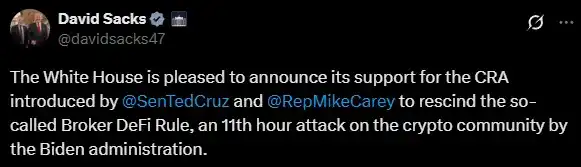
Former AI and Crypto Czar under Trump, David Sacks, bluntly referred to it as a “midnight regulation,” stating that it “will smother American innovation, raise privacy concerns, and impose unprecedented compliance burdens on American DeFi companies.”
Turning Point
The significance of repealing this rule goes far beyond minor tweaks to tax policy.
Under the Congressional Review Act that Congress used to repeal the rule, the IRS cannot issue a “substantially similar” rule without new congressional authorization. This not only halted the rule but created breathing room for developers and entrepreneurs who can now proceed with more certainty.
The resolution’s passage signifies that the crypto industry has finally achieved a long-sought goal: significant political capital in Washington.
Want more good news? This may just be the beginning. Treasury Secretary Scott Bessent stated at a recent White House summit on digital assets plans to “revoke and amend” related crypto tax rules.
Bipartisan and Industry Support
A key feature of this reversal is its bipartisan nature.
When Republicans and dozens of Democrats joined forces to overturn the rule of a Democratic administration, it revealed a shift in the political relevance of cryptocurrency and the notion that financial technology innovation deserves room to grow.
This marks a significant shift from the era of the Securities and Exchange Commission (SEC) under Gary Gensler's leadership, during which the Democratic Party leadership largely supported aggressive enforcement actions against crypto companies.
Even Senate Minority Leader Chuck Schumer broke ranks with the party leadership to support this measure, a political calculation that fully illustrates the increasing importance of cryptocurrency in elections.
Industry groups that were once hard to get recognition for have now become influential voices.
The Blockchain Association and DeFi Education Fund led proactive lobbying efforts, successfully reversing the Democratic Party's voting situation, ultimately garnering a majority of votes to overturn the veto. Their success demonstrates that cryptocurrency advocacy has rapidly matured, with their outreach to key legislators being very mature, focusing on specific policy issues rather than generic blockchain education.
When the Biden administration rolled out the rule, the Blockchain Association pledged to take "aggressive action." They did indeed deliver on that promise.
Now, four months after filing the lawsuit, the association is celebrating the repeal of the rule that threatened to end the US crypto industry.
Importantly, despite some influential Democrats opposing it, arguing that the resolution could lead to tax evasion, this victory has still been achieved.
Massachusetts Democratic Congressman Richard Neal had warned that this move could lead to the government losing $40 billion in tax revenue. This revenue estimate could be from unreported capital gains, and as crypto advocates push for further regulatory easing, this will remain a point of contention.
Global Positioning
The signing of this resolution has significantly altered the United States' position in the global competition for crypto dominance.
The contrast is stark. Just a few months ago, due to regulatory uncertainty, crypto companies were abandoning the US market.
Coinbase had prepared contingency plans to move overseas. Now, the Trump 2.0 government positioning the US as the "Crypto Capital of the World" campaign promise seems to be coming into effect.
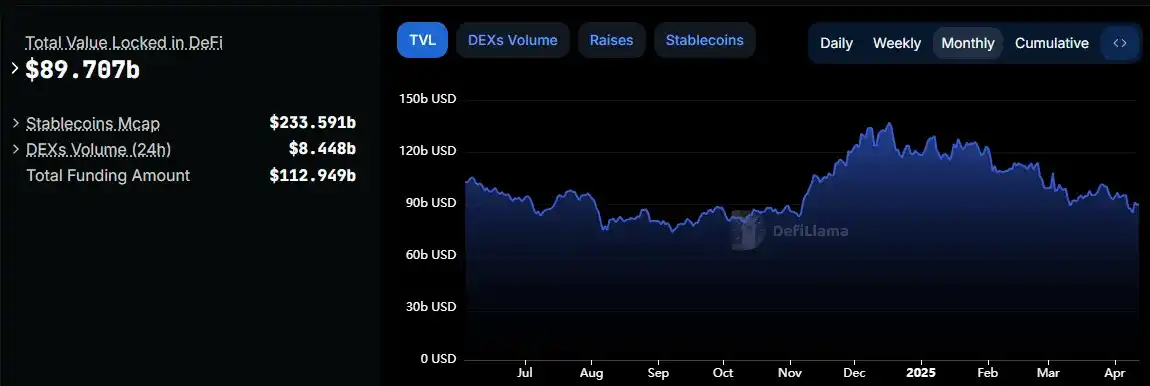
With the surge in global investment in DeFi—approximately $900 billion currently locked in protocols according to DeFiLlama—countries that create a friendly regulatory environment will reap significant economic benefits: high-skill job opportunities, legitimate tax revenue from operations, and technological leadership.
This resolution also sent a strong signal to regions and countries like Hong Kong, the UAE, and Japan positioning themselves as crypto-friendly alternatives.
For global crypto entrepreneurs and investors, Thursday's signing delivered a clear message: the U.S. is open for business.
The Middle Way
The resolution sparked a legitimate debate about the balance between innovation and tax compliance.
Critics, such as Texas Democratic Congressman Lloyd Doggett, argue that repealing the rule would create exploitable loopholes for wealthy investors.
This concern is not entirely unfounded.
The decentralized nature of DeFi protocols means that transactions occur without the record-keeping of traditional intermediaries. While the blockchain itself is transparent, associating wallet addresses with taxpayers is still challenging. Without some form of reporting mechanism, tax compliance heavily relies on voluntary disclosure.
Some policy experts have proposed a compromise – creating optional compliance frameworks that require certain disclosures in exchange for regulatory clarity. This "safe harbor" approach would allow DeFi protocols to operate legally while gradually introducing appropriate safeguards.
Our Take
Trump's signing of this resolution represents a breakthrough in addressing the core contradiction of crypto regulation, a contradiction that has plagued the industry from day one: the collision of an industrial-age regulatory framework with a digital-native financial system.
This victory demonstrates that Washington has finally recognized that forcing decentralized systems to fit within a centralized regulatory framework is a non-starter. Innovation needs appropriate guardrails, not retrofitted roadblocks.
This moment unveils a deeper layer of the U.S. regulatory philosophy. For decades, U.S. financial regulation has followed a pattern: innovation occurs, issues arise, regulation responds. The DeFi broker-dealer rules attempted pre-emptive regulation before fully understanding the natural evolution of the technology. Its failure shows that the U.S. is reverting to its traditional strength – allowing innovation to flourish while addressing specific issues as they arise.
Celebration should be tempered with pragmatism. The crypto industry faces a critical test of its credibility. Having now gained some regulatory breathing room, it must deliver real-world benefits beyond trader profits. Can DeFi significantly improve financial access? Will it lower transaction costs for everyday users? Can it create more efficient markets benefiting a broader economy?
The bipartisan nature of this victory is both an opportunity and a warning. While crypto has transcended partisan divides today, its support still hinges on demonstrating real-world utility. If the industry cannot move beyond speculation to solve actual problems, today's allies could become tomorrow's critics.
For global competitors who thought the U.S. had abandoned its leadership in digital asset innovation, this reversal is a wake-up call. The U.S. possesses unparalleled capital markets, technical talent, and regulatory flexibility—when these factors align, they create a powerful competitive advantage.
The road ahead remains challenging. The SEC's oversight of tokens, the CFTC's jurisdiction over derivatives, banks' concerns over stablecoins—these issues remain unresolved. However, this decision indicates that, in cases where broad ideological arguments often fall short, focused advocacy on specific technical issues can succeed with careful organization.
The window of innovation is now open. The industry must now collaborate with regulatory bodies to establish a framework that both protects consumers and drives genuine innovation. Thursday's signing indicates that both parties may be finally ready for such conversations.
You may also like

The impossible triangle is simply a pseudo problem

Stablecoins Finally Find Real Returns: On-Chain Reinsurance Re Explained | Interview with Re Founder Karan Saroya

The AI gamble of mining companies: Valuations enter a phase of differentiation, and it's hard to turn the tide

A letter from Alliance to entrepreneurs: Written on the occasion of Cursor selling for 60 billion dollars

Will MicroStrategy fall into a death spiral? What will the macro trend be in the second half of the year?

Blockchain Capital Partner: The Core Secret of Arbitrage

STRC unanchored by 11%, can the perpetual motion machine of Strategy still operate?

Bitcoin Market Analysis 2026: Can BTC Reach $150K by Year-End?

Bitcoin ETF Outflows Hit a Record $4.4 Billion: What Are Traders Doing With Their Cash?

WEEX App Just Got Smarter – New Tabs for Faster Trades & Easy Asset Management

WEEX All-New Search Features: Find, Trade & Earn Faster Than Ever

Morning Report | Illinois signs the strictest digital asset tax law in the U.S.; RWA tokenization market size surpasses $43 billion, institutions accelerate the migration of on-chain assets

Full version of the debut Q&A! Federal Reserve Chairman Waller: Sticking to the 2% inflation target, establishing five special working groups, individual did not submit the dot plot

From Disruptor to Shadow Market: The Crypto Market is Becoming a Colony of Traditional Finance
Dalio's important long article: How to position in the current market environment?
OKX Star analyzes Binance's competitive advantages: when regulation levels the playing field, competition has just begun

New gameplay for participating in initial offerings on cryptocurrency exchanges
Why Is Bitcoin Down Today? What the Hawkish FOMC Means for SpaceX, Gold and Nasdaq
The impossible triangle is simply a pseudo problem
Stablecoins Finally Find Real Returns: On-Chain Reinsurance Re Explained | Interview with Re Founder Karan Saroya
The AI gamble of mining companies: Valuations enter a phase of differentiation, and it's hard to turn the tide
A letter from Alliance to entrepreneurs: Written on the occasion of Cursor selling for 60 billion dollars
Will MicroStrategy fall into a death spiral? What will the macro trend be in the second half of the year?
Blockchain Capital Partner: The Core Secret of Arbitrage


