
Cryptocurrency Derivatives Trading Hedge Guide: Gate.io Derivatives Trading Risk Management Unveiled


Source: Gate.io
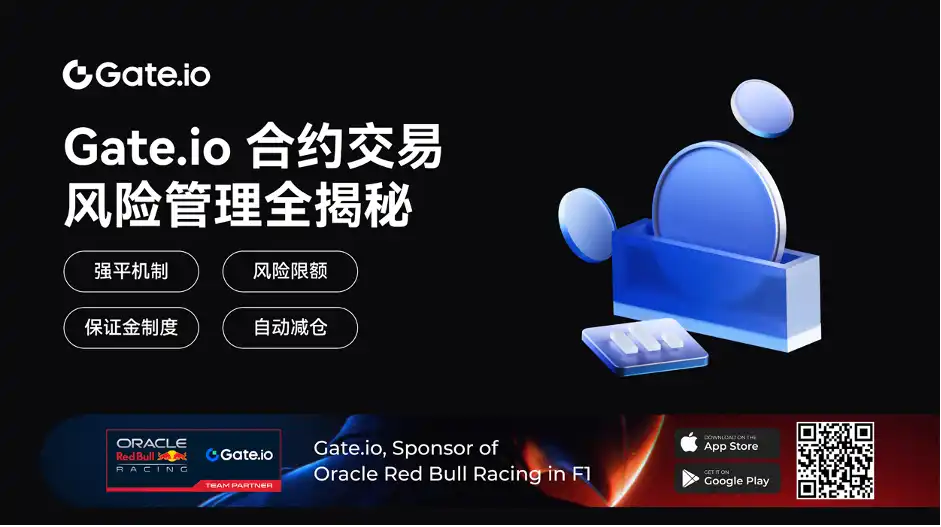
In the cryptocurrency field, contract trading has become an important tool for many investors to pursue high returns due to its high leverage and complexity. However, high leverage also means high risk, as a small market fluctuation can lead to significant losses for investors. Therefore, risk management is crucial in contract trading. It is key for investors to protect their assets and for trading platforms to ensure user safety.
As a leading global digital asset trading platform, Gate.io has accumulated extensive experience in contract trading through its deep technical expertise and professional operations team. The platform provides users with an efficient and convenient trading environment and is committed to safeguarding investors' trading security through a series of comprehensive risk management measures.
This article will delve into Gate.io's risk management strategies in contract trading, covering various aspects such as the liquidation mechanism, risk limits, margin system, and automatic deleveraging mechanism. It will comprehensively explain how Gate.io has built a secure and reliable trading ecosystem to support and protect users.
Liquidation Mechanism: Key Line of Defense for Risk Management
In contract trading, the liquidation mechanism is a key line of defense to maintain market stability and user safety. When a user's margin is insufficient to maintain their position, the liquidation mechanism automatically triggers to prevent further losses. While this mechanism may seem simple, it involves complex risk control logic.
Gate.io has introduced a tiered liquidation mechanism. When a user triggers liquidation and the risk limit is in a high tier, the platform does not immediately close their entire position but instead prioritizes the liquidation of part of the position. The core of this mechanism is to gradually reduce the position, lower the user's leverage, and alleviate margin pressure.
The tiered liquidation mechanism reduces users' direct losses and provides users with more opportunities to adjust their positions. After part of their position is liquidated, users can choose to add margin, adjust their position, or continue holding the remaining position based on market trends and their financial situation.
For liquidation price calculation, Gate.io uses an advanced mark price mechanism. The mark price is the current fair price in the contract market, calculated based on the spot index price and premium index. This price calculation method effectively avoids forced liquidation due to momentary market fluctuations. For example, in the event of a brief and significant market fluctuation, the mark price filters out this disturbance to ensure the rationality of the liquidation price.
Risk Limit: Precisely Managing Trading Risk
The risk limit is an important risk management tool designed to reduce potential risk from market volatility by setting a cap on user position size. In futures trading, the risk limit effectively prevents drastic market price swings resulting from large-scale forced liquidation.
The Gate.io risk limit mechanism is multi-dimensional, taking into account various factors such as trading pairs and market volatility. Additionally, the platform sets differentiated risk limits based on the volatility of different trading pairs.
For example, for stablecoin contracts with low volatility, the risk limit will be relatively relaxed; whereas for popular cryptocurrency contracts with high volatility, the risk limit will be more stringent. This differentiated design not only ensures the overall risk control of the platform but also considers users' individualized needs.
Currently, Gate.io supports users to manually set risk limits. Through this feature, users can adjust risk limits manually based on their risk tolerance and trading strategies. Users can also flexibly set risk limits according to their financial strength, trading experience, and risk preferences to better control trading risk.
Margin System: The Foundation of Fund Security
Margin is the capital required from users when opening a position in futures trading, and initial margin is the minimum deposit required to enter a trade. Initial margin is crucial in futures trading as it not only ensures users have enough funds to cover potential losses, reducing the risk to the trading platform and other users, but also serves as collateral to help users maintain positions during market fluctuations. Moreover, it allows users to control larger positions with less capital, amplifying both potential gains and risks.
Gate.io has introduced a tiered margin ratio mechanism, where the platform sets different margin ratios based on the user's position size. The core of this design is to reduce users' financial pressure and encourage them to manage position sizes reasonably. For instance, when a user's position size is small, the margin ratio is relatively low, allowing users to participate in trading with less capital; as the position size increases, the margin ratio will correspondingly rise to ensure sufficient risk coverage.
To strengthen the margin system, Gate.io has established a risk reserve fund mechanism. The risk reserve fund is a portion of funds extracted from Gate.io's profits and is used to cover potential user losses in extreme market conditions. This mechanism provides additional protection to users so that even in the event of extreme market fluctuations, users need not worry about suffering greater losses due to platform risk.
Auto-Deleveraging (ADL): Balancer in Extreme Market Conditions
Auto-Deleveraging (ADL) is a mechanism where in the event of extreme market conditions or force majeure factors leading to insufficient insurance funds, a forced liquidation mechanism is implemented against counterparties to control the overall platform risk.
Gate.io's Automatic Deleveraging Mechanism adopts a multidimensional deleveraging strategy. When selecting deleveraging targets, the platform will comprehensively consider factors such as user account risk, position risk, and position return rate. For example, for users with higher risk, the platform will prioritize deleveraging their positions; whereas for lower-risk users, deleveraging will be avoided as much as possible.
Gate.io's Automatic Deleveraging Mechanism is highly transparent. Users can monitor their position risks in real time through the platform's provided automatic deleveraging indicator. When a user's position is selected to enter the deleveraging queue, the platform will notify the user through the indicator. Users can check their position in the queue based on the indicator, allowing them to adjust their positions or reduce leverage promptly.
Gate.io Builds a Comprehensive Risk Management Framework
From the above analysis, Gate.io's advantage in contract trading risk management is evident. The platform has built a comprehensive and multi-level risk management system, covering mechanisms such as liquidation, risk limits, margin system, and automatic deleveraging. These measures work together to form an organic whole, effectively addressing complex and changing market conditions, ensuring the security of both the platform and its users' trades.
Gate.io has implemented a series of advanced risk control technologies, including the mark price mechanism and risk limit mechanism. These technical means can not only accurately reflect real-time market conditions but also improve the efficiency and accuracy of risk control. Empowered by technology, Gate.io demonstrates outstanding risk management capabilities in a complex and ever-changing market environment.
It is worth mentioning that Gate.io has a professional risk management team composed of experienced financial experts and technical specialists. They can monitor market dynamics in real time and adjust risk control strategies promptly. The professional risk management team is the core strength of the platform's stable operation. With rich experience and professional knowledge, they provide solid guarantees for the platform and its users.
Rational Trading with Risk Management Prominence
While contract trading offers high-profit potential, it also comes with high risks. Therefore, cryptocurrency investors must prioritize risk management when participating in contract trading. With its robust risk management measures, Gate.io provides users with a reliable trading environment. Gate.io urges investors to maintain rationality when engaging in contract trading, to fully understand the risks, and to operate cautiously based on their risk tolerance.
For cryptocurrency investors, choosing Gate.io not only means experiencing excellent risk management capabilities but also enjoying high-quality trading services. On the journey to explore the world of cryptocurrency, Gate.io has always been a reliable partner for users. The platform is committed to providing investors with a secure and efficient trading environment, helping them steadily advance towards their investment goals amidst market fluctuations.
This content does not constitute any offer, solicitation, or advice. You should always seek independent professional advice before making any investment decision. Please note that Gate.io may restrict or prohibit all or partial services from users in restricted areas. Please read the user agreement for more information.
This article is contributed content and does not represent the views of BlockBeats
You may also like

Claude enforces "facial recognition for household registration," starting in July, no ID card means no access?

After 18 years, blockchain has finally started to head towards the main channel

SpaceX IPO, Nvidia, and Bitcoin: Why Traders Are Watching More Than Just Crypto in 2026

Paul Graham: How to Make a Billion Dollars

If the AI bubble has already burst, who will truly remain?

Morning Report | Prediction market platforms like Kalshi and Polymarket jointly sue Kentucky over 14.25% trading tax; Bridgewater founder discusses decision-making in the AI era: principled thinking should run parallel to AI, human insight remains irre...

What is the connection between Huang Zheng of Pinduoduo and blockchain?

The other side of Musk's trillion-dollar fortune: 85% cannot be sold
The U.S. government prohibits foreigners from using Fable 5, Anthropic issues a rebuttal

Citibank releases "2030 Asset Tokenization Market Outlook": 6 major trends may create a $8.2 trillion market
The trillion-dollar valuation test: Are the three major super IPOs a celebration for tech stocks or a nightmare for the crypto market?
Morning Report | Digital Asset completes $355 million financing led by a16z Crypto; Meta completes operational separation from Manus

a16z Crypto Partner: Cash flow is the moat

Cryptocurrency market makers collectively seek change as it becomes increasingly difficult to make money

How TradeXYZ, xStocks, and Alpaca break down the SpaceX IPO into three different strategies
$75 billion in risk asset redistribution: How will SpaceX's IPO affect U.S. stocks and Bitcoin?
Why Is BlackRock Investing $5 Billion in the SpaceX IPO?
Morning News | CME Group launches Nasdaq Cryptocurrency Index futures; Asset management giant Janus Henderson strategically invests in Ethena
Claude enforces "facial recognition for household registration," starting in July, no ID card means no access?
After 18 years, blockchain has finally started to head towards the main channel
SpaceX IPO, Nvidia, and Bitcoin: Why Traders Are Watching More Than Just Crypto in 2026
Paul Graham: How to Make a Billion Dollars
If the AI bubble has already burst, who will truly remain?
Morning Report | Prediction market platforms like Kalshi and Polymarket jointly sue Kentucky over 14.25% trading tax; Bridgewater founder discusses decision-making in the AI era: principled thinking should run parallel to AI, human insight remains irre...


