
Bitcoin Miner Survival Threshold: Plummeting Transaction Fees and Soaring Costs, What Lies Ahead?

Original Article Title: "Bitcoin Miners' Survival Line: Plunging Transaction Fees and Soaring Costs, What Lies Ahead?"
Original Article Author: Alvis, Mars Finance
Bitcoin is now at a real risk of being "done for" without a new ecological hotspot. Miners' survival pressure has reached its limit, with transaction fees plummeting and costs skyrocketing, causing many small miners to consider shutting down. Once miners start to exit, hash rates decrease, block generation slows down, and the network's security is threatened. Moreover, in a situation of price instability, without new ecological developments to drive demand growth, Bitcoin will fall into a downward spiral.
Income Squeeze: Miners' Profits Face Multiple Pressures
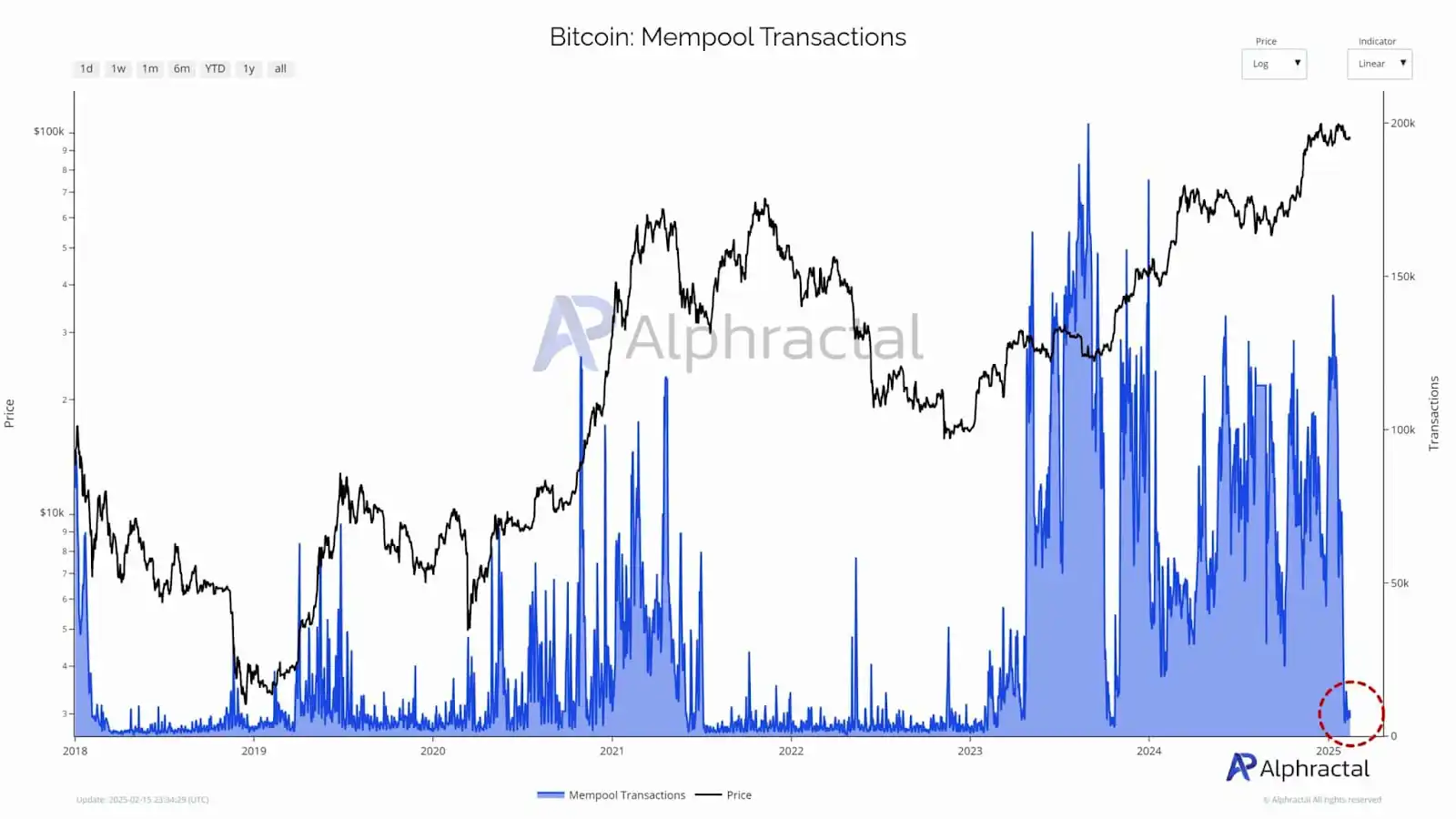
The profitability of Bitcoin mining has significantly deteriorated, with several key indicators showing a weakening profit potential. Firstly, the unconfirmed transactions in the Bitcoin memory pool have dropped to a multi-year low, indicating reduced network demand, directly impacting miners' transaction fee income. Historically, a decrease in transaction activity has often led to a bear market, which, although not necessarily implying a price drop, may suggest structural changes in the network.
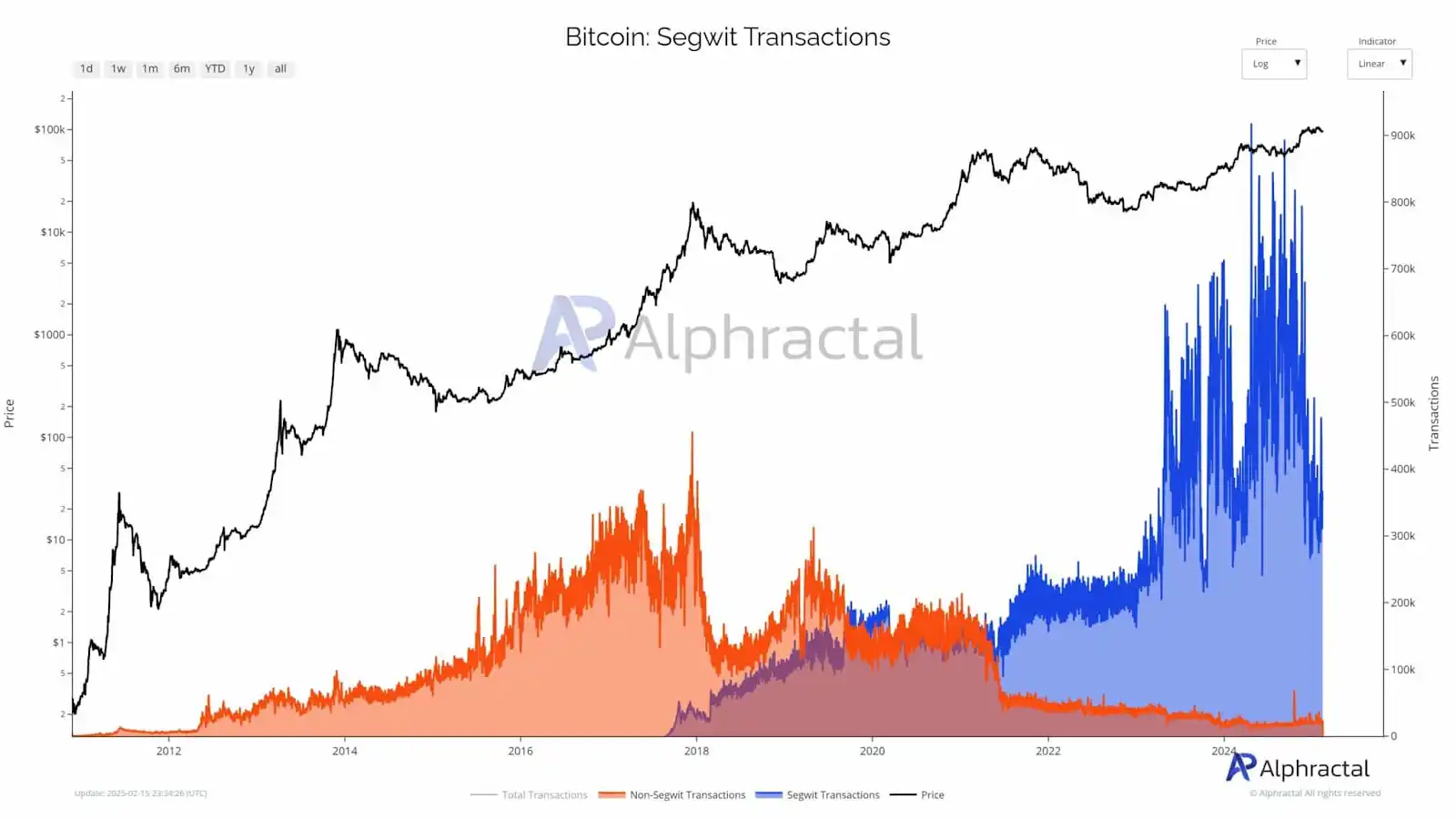
Furthermore, the gradual decline of SegWit transaction types has reduced network efficiency, further increasing block space requirements, squeezing miners' income potential. Despite the rise in Bitcoin prices, the downward trend in revenue highlights the impact of rising network difficulty and intensified competition.
Industry Consolidation Accelerates: Small Miners Face Exit Risk
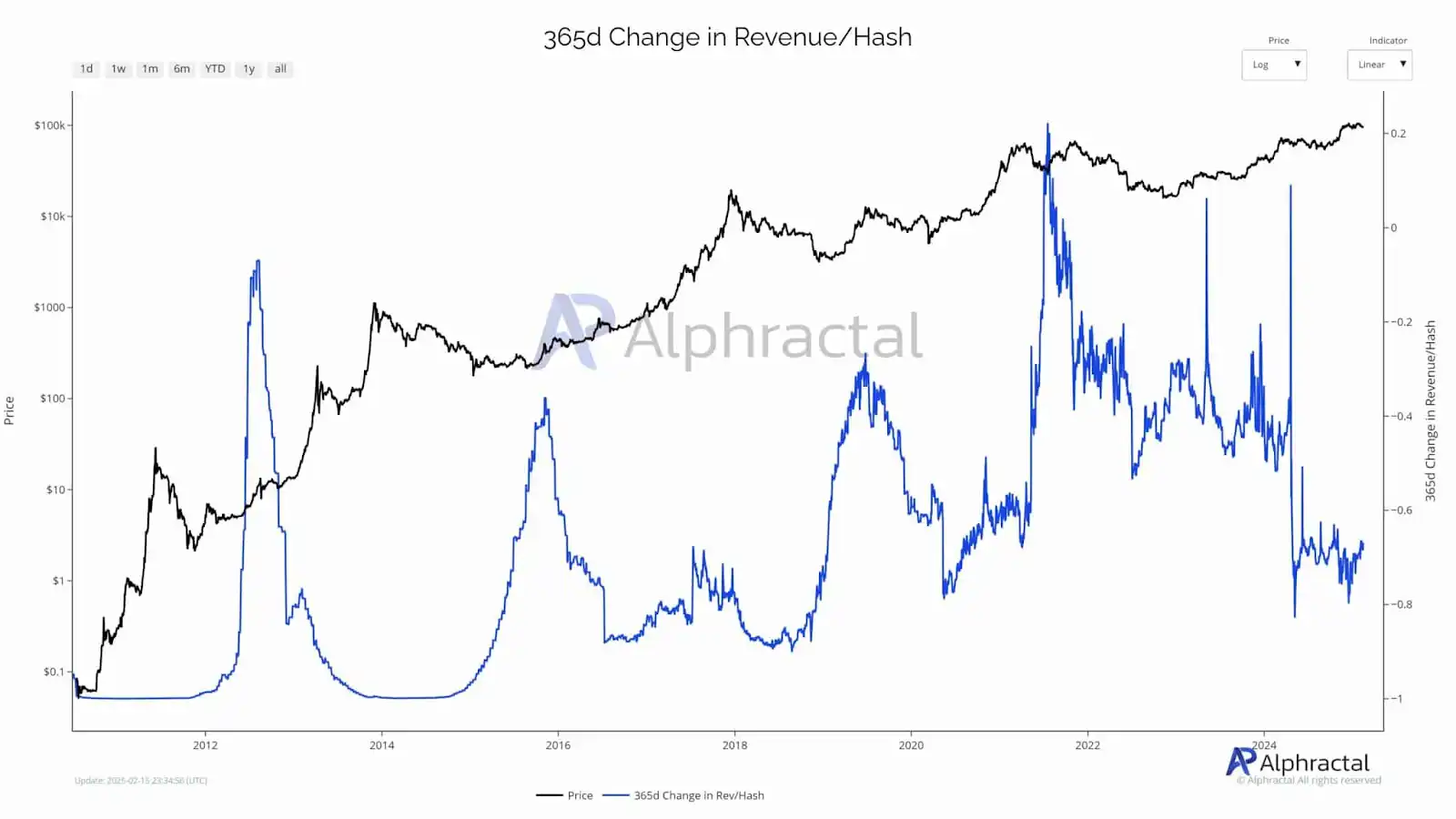
A key miner indicator, revenue/hash rate, is at a historical low, with diminishing returns indicating that rising network difficulty and intensified competition are eroding profitability.
With the block reward halving, particularly small miners are facing survival pressure. Decreased profitability and reduced transaction fee income put small enterprises at risk of exiting the market, accelerating industry consolidation. In the future, only well-capitalized, technologically advanced large miners will be able to maintain competitiveness, leading to increased market concentration.
Network Difficulty Increases: Rising Costs Force Miners to Seek Survival Strategies
Bitcoin network difficulty has hit a new high, putting miners under greater cost pressure. With rising energy and hardware costs, especially for small miners with outdated equipment, survival pressure intensifies. Some miners are turning to low-cost, sustainable energy sources, such as hydroelectric or geothermal power, while some mining companies are seeking breakthroughs through diversified income sources or mergers and acquisitions.
This trend may accelerate the centralization of the industry, where the most well-capitalized and efficient miners will take the lead, impacting Bitcoin's decentralized nature. In the future, changes in miners' geographic distribution and mining security practices may raise concerns about network security.
Market Rebalancing: Increased Industry Threshold
As operating costs continue to rise, inefficient miners will be eliminated, leading to a natural industry "rebalancing." This change may further promote industry centralization, where only large-scale miners can survive in fierce competition, solidifying Bitcoin mining as a high-threshold industry.
However, market centralization also raises questions about Bitcoin's decentralized ethos. The reduction of dominant miners could concentrate network security in the hands of a few miners, potentially affecting the network's long-term stability and resistance to censorship.
Impact on Bitcoin
In the short term, Bitcoin miners face dual pressure from declining transaction fees and rising costs, which may cause small miners to exit the market, leading to a decrease in network hashrate and tightening Bitcoin supply. The compression of miner revenue may affect market confidence in Bitcoin, causing short-term price volatility and possibly threatening the network's decentralization, introducing security risks.
In the long run, with technological innovation and optimized energy costs, miners may regain some profitability, lower operating costs, helping alleviate profit pressures and stabilize the market. While there may be short-term downward price risks, with sustained demand growth and tightened supply, Bitcoin prices may trend upward in the long term, especially as market demand for Bitcoin steadily increases.
Bitcoin currently urgently needs a new ecosystem, clearly more than just speculative trading of "buying the dip." It needs more use cases, smart contracts, decentralized applications, and even a brand-new financial system to support it.
If Bitcoin lacks a strong enough ecosystem, once miners cannot maintain profitability, the entire network's operation will become challenging, and market trust in Bitcoin will be shaken. Miner exodus could be a "crisis" in Bitcoin's future outlook, while ecosystem development flourishing is the key to Bitcoin's survival.
Disclaimer: This article does not constitute investment advice. Users should consider whether any opinions, views, or conclusions in this article are suitable for their specific circumstances and comply with relevant laws and regulations in their country or region.
You may also like

$75 billion in risk asset redistribution: How will SpaceX's IPO affect U.S. stocks and Bitcoin?

How TradeXYZ, xStocks, and Alpaca break down the SpaceX IPO into three different strategies

Why Is BlackRock Investing $5 Billion in the SpaceX IPO?

Cryptocurrency market makers collectively seek change as it becomes increasingly difficult to make money

a16z Crypto Partner: Cash flow is the moat

Citibank releases "2030 Asset Tokenization Market Outlook": 6 major trends may create a $8.2 trillion market

The trillion-dollar valuation test: Are the three major super IPOs a celebration for tech stocks or a nightmare for the crypto market?

Morning Report | Digital Asset completes $355 million financing led by a16z Crypto; Meta completes operational separation from Manus
Morning News | CME Group launches Nasdaq Cryptocurrency Index futures; Asset management giant Janus Henderson strategically invests in Ethena

Bitcoin Layer 2 Network Botanix: Why Did We Choose to Dissolve?

Why did Oracle deliver the strongest financial report in history, yet its stock price fell?
When the P2P illicit funds from ten years ago turned into 60,000 bitcoins

Dialogue with OmenX Founder: Why does the prediction market need an evolution from "spot" to "derivatives"?
Galaxy in-depth report: Is Solana still worth paying attention to?

Young people in South Korea make a "final effort" in the epic bull market
The pricing controversy of Trade.xyz exposes the fatal weakness of Pre-IPO perpetual contracts
How much longer can Ethereum's last big buyer hold on?
World Cup 2026 Coming – WEEX Celebrates with $1M Prize Pool & Michael Owen Live
$75 billion in risk asset redistribution: How will SpaceX's IPO affect U.S. stocks and Bitcoin?
How TradeXYZ, xStocks, and Alpaca break down the SpaceX IPO into three different strategies
Why Is BlackRock Investing $5 Billion in the SpaceX IPO?
Cryptocurrency market makers collectively seek change as it becomes increasingly difficult to make money
a16z Crypto Partner: Cash flow is the moat
Citibank releases "2030 Asset Tokenization Market Outlook": 6 major trends may create a $8.2 trillion market


