
AI Agent's rising star Swarms surged 7x in a week, what are some potential projects in its ecosystem?

Original Article Title: "AI Agent Rising Star Swarms 7x in a Week, What Other Promising Projects Are There in the Ecosystem?"
Original Article Author: Golem, Odaily Planet Daily
In the first week of 2025, the AI Agent track continued its rapid rise, with the two major ecosystems ai16z and Virtual token market caps surpassing $20 billion and $50 billion, respectively, reaching historic highs.
AI innovation is still emerging. Just when people thought the "factional struggle" of AI Agent infrastructure was settled, with all AI agents needing to "pay homage" in these two major ecosystems, a dark horse—Swarms—broke through. In the past week, the Swarms token has surged by over 768%, with a peak market cap of $4.4 billion; currently, Swarms has over 2800 stars on GitHub.
Swarms is a multi-agent collaboration framework that focuses on providing a "framework" as a core component, as well as features such as long-term memory and task decomposition, to help multiple AI agents seamlessly collaborate in the same network to break down and process complex tasks. As Swarms continues to advance ecosystem project development, with the richness of the multi-agent collaboration ecosystem, the early-stage Swarms ecosystem may still hold Alpha opportunities. Odaily Planet Daily will briefly introduce Swarms ecosystem projects and the progress of Swarms itself.
Ecosystem Project Introduction
MCS
Market Cap: $25 million
Number of Holders: 3889
Token Contract: ALHFgnXSenUv17GMdf3dL9gtFW2KKQTz9avpM2Wypump
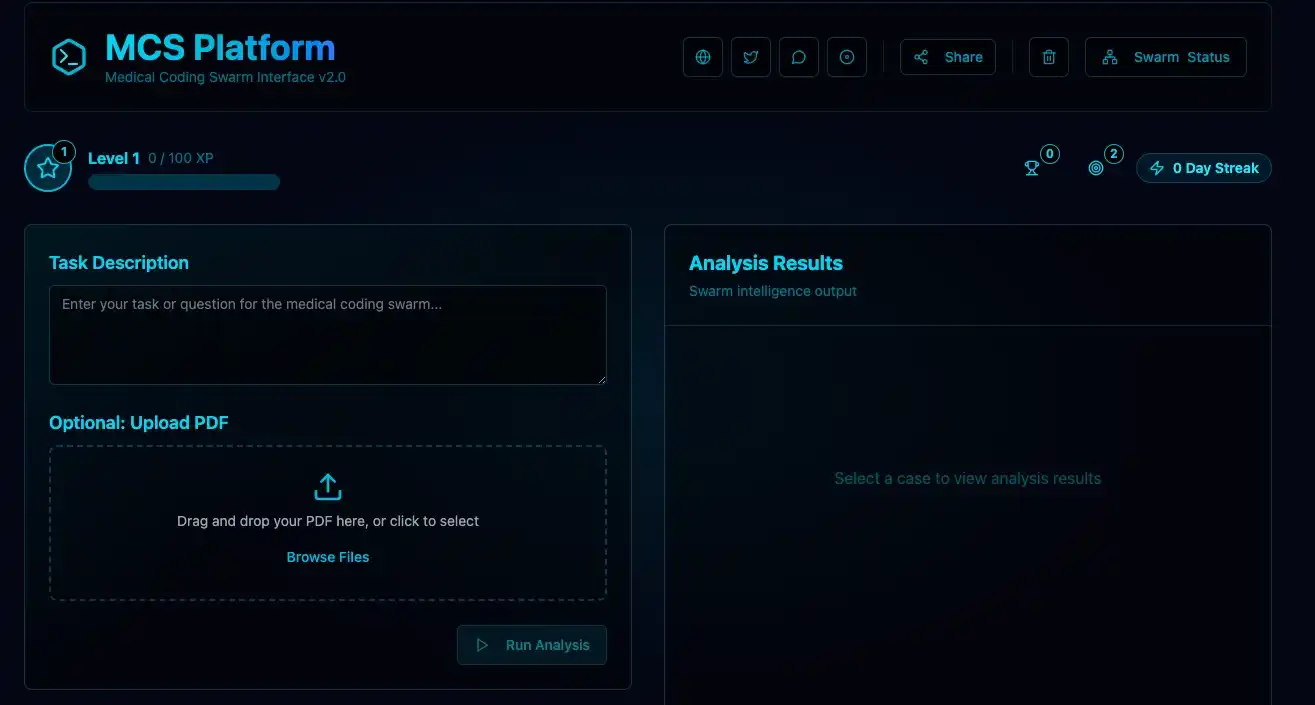
MCS was created by Swarms founder Kye Gomez, and Kye has already added the official MCS Twitter link to his own profile, giving it an official endorsement. MCS is a production-grade multi-agent system built on Swarms for medical diagnosis and coding, allowing users to receive free diagnosis and analysis of medical and healthcare-related issues through interaction with MCS. According to data disclosed by Kye Gomez, MCS has had over 6000 daily active users in the past 2 days, and its API is set to be deployed for one of the largest healthcare providers in the United States.
SPORES
Market Cap: $9.4 Million
Holder Address: 5347
Token Contract: H1koD28XAHg2vuGp7XggehBCR4zP6r6k6EQ3MR6j3kU2
Spores is a token issued by Autonomous Spores, with 10% of the token being transferred to the swarms DAO. The Autonomous Spores project plans to develop four AI agents based on the Swarms framework:
· The first agent is Saya, an AI fund manager built on Swarms Intelligence, which will manage a series of AI agent hedge funds. It has honed its decision-making abilities through vast amounts of trading data in the trading system, and the first fund is set to launch soon;
· The second agent is Oozeborn, inspired by Clanker on Base, which simplifies users' initiation of tokens and creation of AI agents on Twitter by commenting or using the #Oozeborn tag in posts;
· The third agent, Grassian, is a data analysis AI agent built on the Swarms algorithm, focusing primarily on identifying early Alpha bloggers on Twitter and rating these individuals to provide insights into the ecosystem. Grassian also serves as a key source of information for Saya in making trading decisions.
· The fourth agent, Jaguarundi, is a risk assessment AI agent that evaluates risks in the trading system to provide security for Saya. It also runs an insurance fund aimed at mitigating overall trading system losses.
Autonomous Spores harnesses the collective intelligence of these four AI agents through collaboration. Currently, Autonomous Spores has plans to share some of the management fees generated by Saya and the transaction taxes generated by Oozeborn with the community. However, Grassian and Jaguarundi have not yet been launched.

CREATE
Market Cap: $8.8 Million
Holder Address: 4528
Token Contract: 92crE7qiX5T7VtiXhCeagfo1E81UtyguiXM7qCi7pump
create claims to be the ultimate creation engine, but it is actually an AI platform built on Swarm that generates images or audio based on text prompts.

IFSCI
Market Cap: $3.5 Million
Holder Address: 1177
Token Contract: RqGHXg2eh3zPjyzNM7kUyrrSmhb9M9q4mCKFH1mpump
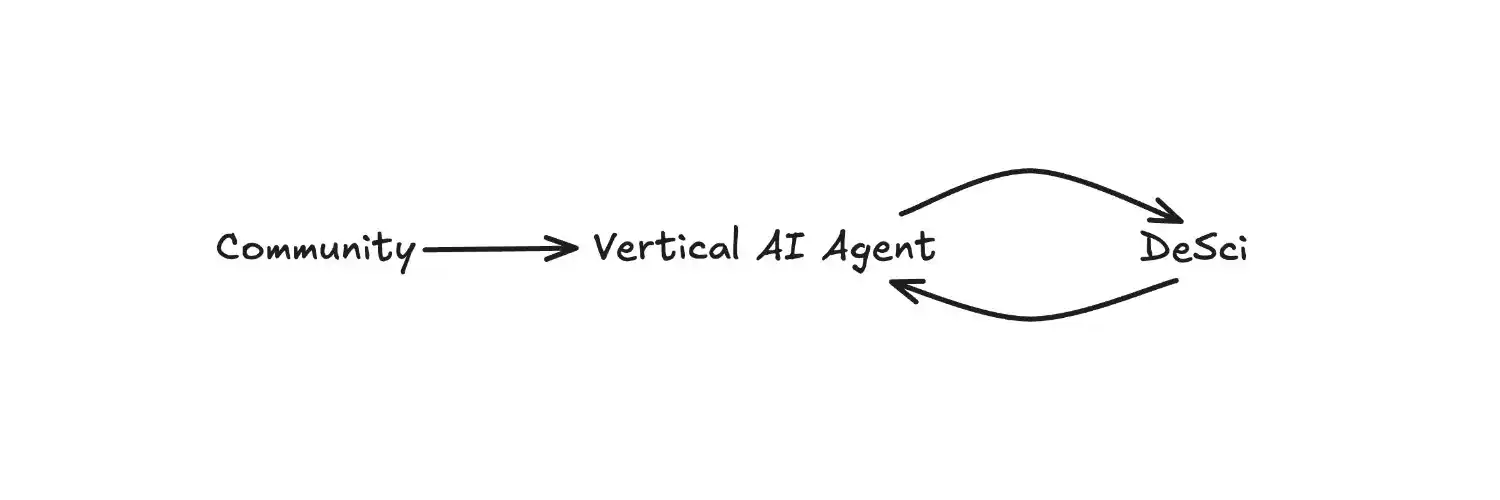
IFSCI claims to be the first vertical AI x DeSci Agent project built on Swarms, aiming to help users personalize their fasting and dietary plans. Users can participate in the AI as food data contributors, health metric providers, or researchers. As a data contributor, users simply need to post their meal photos and corresponding descriptions to the X platform and tag @adesciagent. Users will also be rewarded based on their contributions.
According to the official roadmap, IFSCI is set to launch a fully-featured application in Q3 2025 and expand scientific research globally.
Swarms Ecosystem Development Progress
Today's thriving AI Agent framework projects resemble the early days of Ethereum L2's prosperity. Although the technologies and models differ, the most straightforward way for users to judge their quality is to look at ecosystem prosperity. As a multi-agent collaboration framework, Swarms, to some extent, relies more on a thriving agent ecosystem to "validate" its own value. Compared to ecosystems like ai16z and Virtuals, although Swarms started later, it is currently focusing on ecosystem development.
Today, the Swarms official account posted on the X platform to recruit ecosystem project collaborations, offering technical, marketing, and agent infrastructure support. Additionally, they allocated 10 million Swarms tokens (valued at $3.38 million) as an ecosystem fund. Swarms founder Kye Gomez also stated that he will "personally meet and support all our partner projects, providing technical assistance, marketing guidance, and more."
Kye Gomez also announced today that swarms Marketplace is set to launch new features, including:
· Auto-generate and upload: Seamlessly create agents, tools, and swarms, then upload them directly to the marketplace;
· Paywall integration: Monetize by listing agents at a certain price for others to purchase developer creations;
· swarms Token Integration: Use Phantom to buy and sell agents with swarms tokens, streamlining transactions;
· swarms Auto-Cloud: Launch Swarm API in the cloud with just one prompt;
· Agent Quality Incentives: Earn swarms tokens by releasing high-quality agents, evaluated using advanced frameworks;
· Real-time Chat and API: Provide real-time interaction and API capabilities for each agent, swarm, tool, and prompt;
· Usage Tracking: Monitor real-time agent usage with detailed tracking tools.
While there is still controversy surrounding the originality of Swarms, unwavering development is the best response to controversy. Early on, ai16z was also accused of being a coin issuance conspiracy group, but its current market value has proven its market recognition. "Either continue to soar or decline from now on," whether Swarms can "wrist wrestle" with ai16z in ecosystem development remains to be seen over time.
You may also like

Kalshi Executive Challenges “SBF Backed AI Unicorns” Narrative, Says Leopold Aschenbrenner Was Key Figure
Kalshi executive John Wang questioned the “SBF backed AI unicorns” narrative, saying Leopold Aschenbrenner was the key figure behind major AI investment decisions.

Pantera Capital Partner: How Tokenization is Restructuring the Private Equity and Early Investment Ecosystem?

New York Proposes Stricter Stablecoin Issuer Rules Aligned With Federal GENIUS Act
NYDFS proposed stricter stablecoin issuer rules aligned with the GENIUS Act, covering reserves, custody, redemption timelines, audits, and capital buffers.
Every exchange is a "Universal Exchange."

The counterattack of traditional finance: Alliance chains are quietly reviving

CryptoQuant Says Bitcoin Profitable Supply Is Near 45% Pressure Zone as On-Chain Data Points to Market Repricing
CryptoQuant said Bitcoin’s profitable supply is nearing the 45% pressure zone, signaling rising market stress, unrealized losses, and a possible on-chain repricing phase.

Bitcoin Falls Below 200-Week Moving Average as On-Chain Data Shows Over Half of Supply in Loss
Bitcoin dropped below its 200-week moving average as on-chain data showed over 50% of circulating supply is now in loss, signaling rising market stress.

CFTC Reportedly Plans New Prediction Market Rules Focused on Manipulation Risk and Public Interest Review
The CFTC is reportedly preparing new prediction market rules focused on manipulation risk, public interest review, and retail trader protections.

Meet the new WEEX trial fund—your gateway to greater profits

WEEX Labs Lands at Dutch Blockchain Week: A Disruptive Crypto × AI Conversation Sets Sail in Amsterdam

SK Hynix Reportedly Plans U.S. ADR Listing as Early as August, With SEC Approval Possible in Late June
SK Hynix may pursue a U.S. ADR listing as early as August, with SEC approval reportedly possible in late June amid strong AI chip supply chain demand.

SpaceX vs Tesla vs xAI: Which Elon Musk Trade Has the Biggest Upside in 2026?
OpenAI Reveals It Has Confidentially Submitted an S-1 to the SEC, Keeping the Door Open for a Future IPO
On June 9, according to an OpenAI announcement, the company recently confidentially submitted a draft S-1 registration statement to the U.S. Securities and Exchange Commission (SEC), beginning the preliminary compliance process for a potential initial public offering. OpenAI said it chose to disclose this proactively because it expected the news might leak; however, the company has not yet set a specific listing timeline, and related arrangements may still take some time.

Latest research from 13 top universities including Cornell University: The current state, challenges, and misconceptions of the fusion of Crypto and AI
Deconstructing Anthropic: The Best AI Company, Possibly Also a Type of Organizational Invention
Apollo and Blackstone Reportedly Back $35 Billion Anthropic Chip Financing as Deal Details Remain Unclear
On June 9, according to currently available news alerts, Apollo and Blackstone Group participated in a $35 billion financing for an Anthropic “chip project.” Based on the original wording of the report, the funding has already been raised, but public information remains limited. The financing structure, use of proceeds, project entity, and whether Apollo and Blackstone participated through equity, debt, or project financing have not yet been disclosed.

Humanity Protocol Security Incident Escalates: More Than $31 Million Stolen From Related Addresses as Attacker Continues Selling H for ETH
On June 9, according to monitoring by Onchain Lens, more than $31 million has been stolen from addresses linked to Humanity Protocol, and the attack is still ongoing, with the hacker continuously swapping H tokens for ETH. Project founder Terence Kwok later confirmed the security incident on X, saying the issue involved a private key leak.

Bloomberg: As Bitcoin Weakens, Stablecoins and RWA Continue to Drive Expansion in Crypto Businesses
In June, Bloomberg reported that despite Bitcoin falling below $60,000 last week, wiping out about $235 billion in market value within seven days, and dropping close to 50% from last year’s peak, some core businesses in the crypto industry are still expanding, mainly in stablecoins, real-world asset tokenization (RWA), payments, and infrastructure. The report also noted that overall altcoin activity has contracted significantly: altcoin market capitalization has fallen from a peak of about $431 billion in November 2021 to around $170 billion, and among the tens of millions of tokens issued in recent years, fewer than 1,700 still maintain meaningful trading activity.
Kalshi Executive Challenges “SBF Backed AI Unicorns” Narrative, Says Leopold Aschenbrenner Was Key Figure
Kalshi executive John Wang questioned the “SBF backed AI unicorns” narrative, saying Leopold Aschenbrenner was the key figure behind major AI investment decisions.
Pantera Capital Partner: How Tokenization is Restructuring the Private Equity and Early Investment Ecosystem?
New York Proposes Stricter Stablecoin Issuer Rules Aligned With Federal GENIUS Act
NYDFS proposed stricter stablecoin issuer rules aligned with the GENIUS Act, covering reserves, custody, redemption timelines, audits, and capital buffers.
Every exchange is a "Universal Exchange."
The counterattack of traditional finance: Alliance chains are quietly reviving
CryptoQuant Says Bitcoin Profitable Supply Is Near 45% Pressure Zone as On-Chain Data Points to Market Repricing
CryptoQuant said Bitcoin’s profitable supply is nearing the 45% pressure zone, signaling rising market stress, unrealized losses, and a possible on-chain repricing phase.


