
AI Agent Empowering the Metaverse, GameFi is Breaking Through with Cheats




Original Article Title: Tokenization of Agentic Metaverse
Original Article Author: Defi0xJeff, Head of Steak Studio
Original Article Translation: zhouzhou, BlockBeats
Editor's Note: This content discusses the rapid development of the agentic metaverse, particularly how an immersive gaming world is being created through AI agents, tokenization, and Web3 technology. Platforms like powpowfun, virtuals io, and moddio allow creators to easily build and manage their games using open-source AI and custom tokens. The article also mentions that a major challenge faced by Web3 games is the fleeting nature of player interest and token volatility, but platforms like Indiedotfun address this issue by quickly releasing lightweight games. Lastly, the article emphasizes the importance of learning visual language models for the future of gaming.
The following is the original content (slightly reorganized for readability):
The agentic metaverse is no longer a distant concept; it is gradually becoming a reality, redefining how we interact with AI, games, and digital ownership. From open-source tools to AI-driven environments in operation, we are witnessing a rapid evolution of the virtual world in terms of construction, experience, and monetization models.
Here are some exciting recent developments in this field:
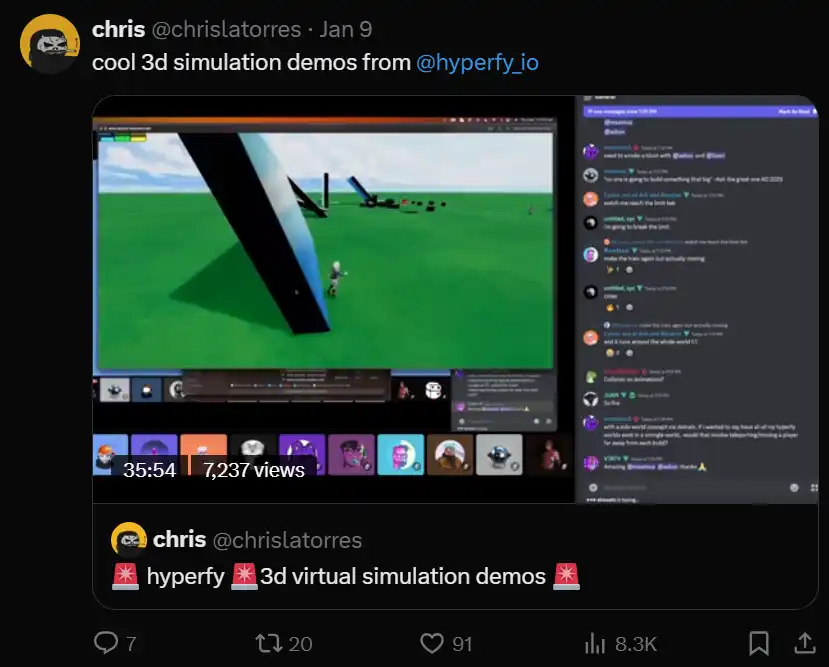
hyperfy io has just open-sourced its engine, supporting self-hosted multiplayer worlds with features such as real-time building, drag-and-drop tools, and interoperable assets.
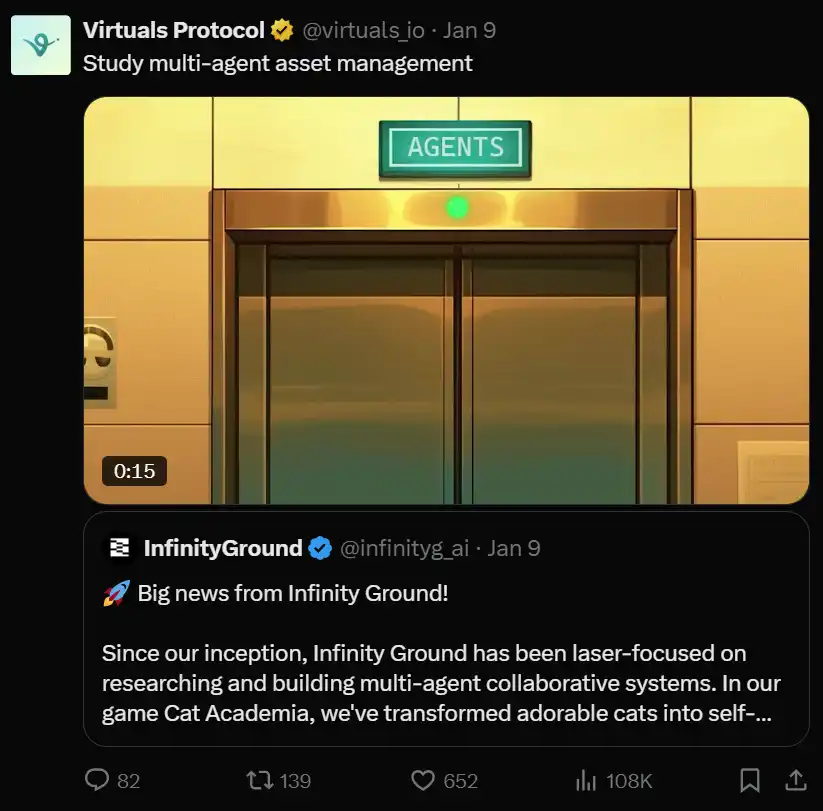
virtuals io has announced a partnership with infinityg ai to launch a multi-agent asset management model and establish the first AI-operated asset management company, Zenith XBT, laying the foundation for agentic sociality (interaction between agents).
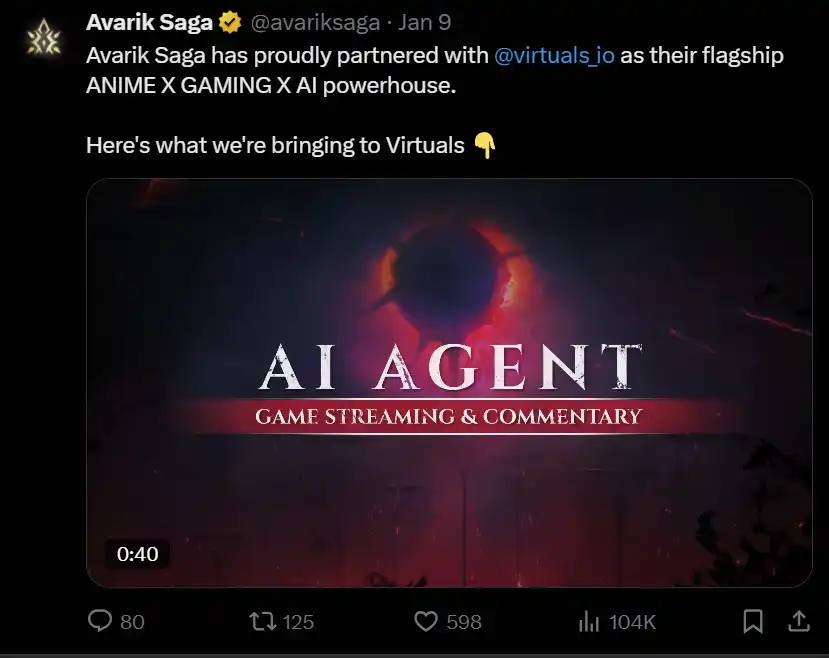
virtuals io has announced a partnership with avariksaga, allowing agents to live stream games in real-time, provide commentary, and engage in live narration.
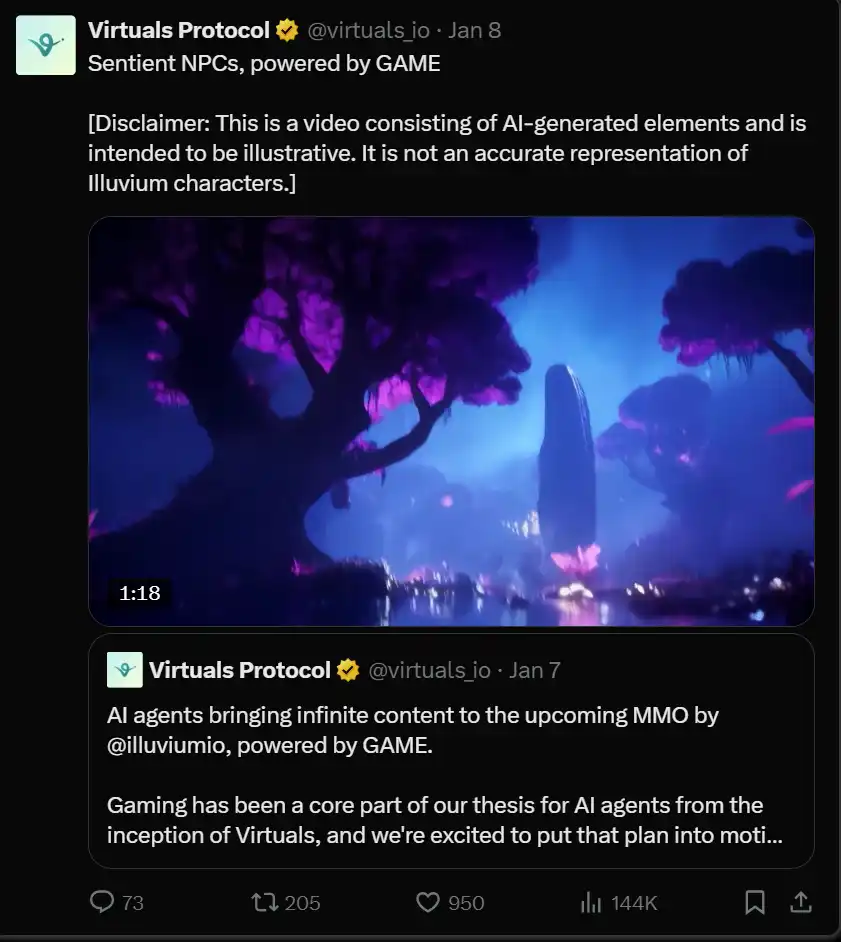
Prior to this, they also collaborated with illuviumio to introduce sentient NPC/AI-NPCs into the Illuvium game.
In addition to the Virtuals ecosystem, we have also witnessed the rise of the World State Machine, which goes beyond the traditional conversational agent by creating a continuously running 24/7 simulation environment, allowing Kira to exist as a humanoid digital being.
Unlike typical AI, Kira does not just react to inputs; she lives within this environment, engaging in activities that mimic human life such as learning, working, and socializing. All of this is based on a complex system that tracks time, weather, location, and interactions with other AI characters or NPCs (such as Mei, Keiko, and Izumi).

Game Reality Inspired by Westworld
While everyone is talking about creating games similar to "Westworld" (an immersive world driven by dynamic NPCs), powpowfun has already been conducting the alpha test of its virtual Western world game. The AI agent in this game is powered by Fullmetal AI's open-source model. It is worth noting that Fullmetal recently integrated ElizOS, a system that enables long-term memory through RAG.
The team plans to launch indiedotfun in approximately a week. Indiedotfun is similar to pumpdotfun but tailored for gaming, allowing anyone to quickly build their own world through templates and moddio's game/physics engine. These worlds can then be tokenized, allowing users and communities to own the games they love.
Introducing Indie: Tokenizing the Agent Metaverse
Indie is a platform that enables developers to build and release Web3-enabled worlds without needing cryptocurrency knowledge. It is powered by the moddio game engine, which already has a large Web2 community building thousands of games every month.
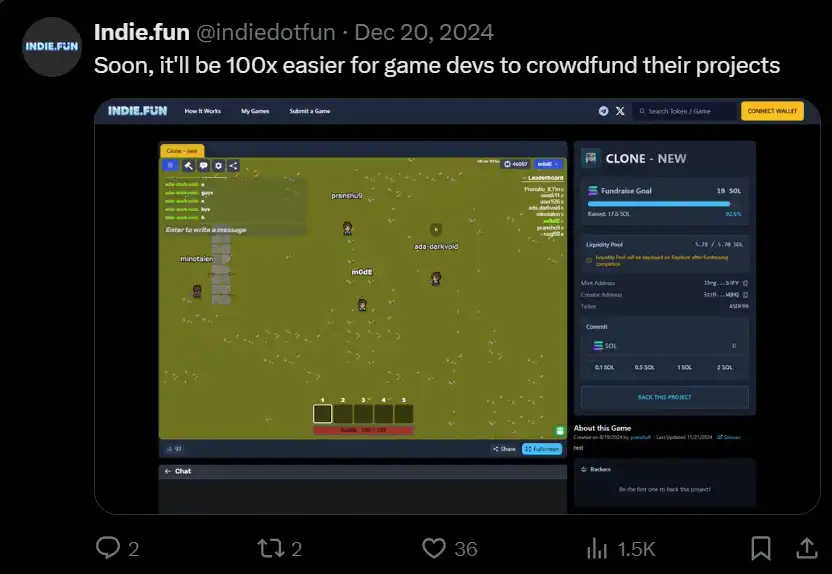
Creators can choose to launch a token that allows supporters to fund the game and receive token rewards. These tokens act as in-game currency. Imagine Roblox, but instead of using Robux, creators can use their own token as currency.
The FullmetalAI open-source LLM is built-in, allowing creators to directly incorporate an AI agent into the game, making the game more dynamic and engaging.
Addressing the Challenges of Web3 Games
One challenge that Web3 games face is a lack of interest in AAA-grade games. Web3 itself is a game—people find speculating on AI agent coins more exciting than playing Web3 games.
This has led to a fleeting focus, with interest typically shifting to the next hot topic after 2-3 days.
From a game studio perspective, there is a significant risk: even if the game is fun, if the token does not appreciate, interest will diminish. Conversely, if the token appreciates but the game is not enjoyable, people may participate briefly, but sustaining interest remains challenging. Studios face a dual challenge: delivering engaging gameplay while ensuring token price appreciation.
Why Indie Is Perfect for Web3's Fleeting Attention
Indiedotfun is the perfect engine to deal with this fleeting attention. Through moddio, lightweight indie games can be launched in a matter of days (rather than months), allowing creators to quickly deliver immersive worlds with dynamic AI-NPCs. When players get bored, they can jump from one indie game to another, while creators enhance their metaverse experience to retain players and maintain the value of the in-game token.
Imagine not just a conversational agent on Twitter but an agent metaverse world to play in, speculate on its token, and have ownership in these worlds.
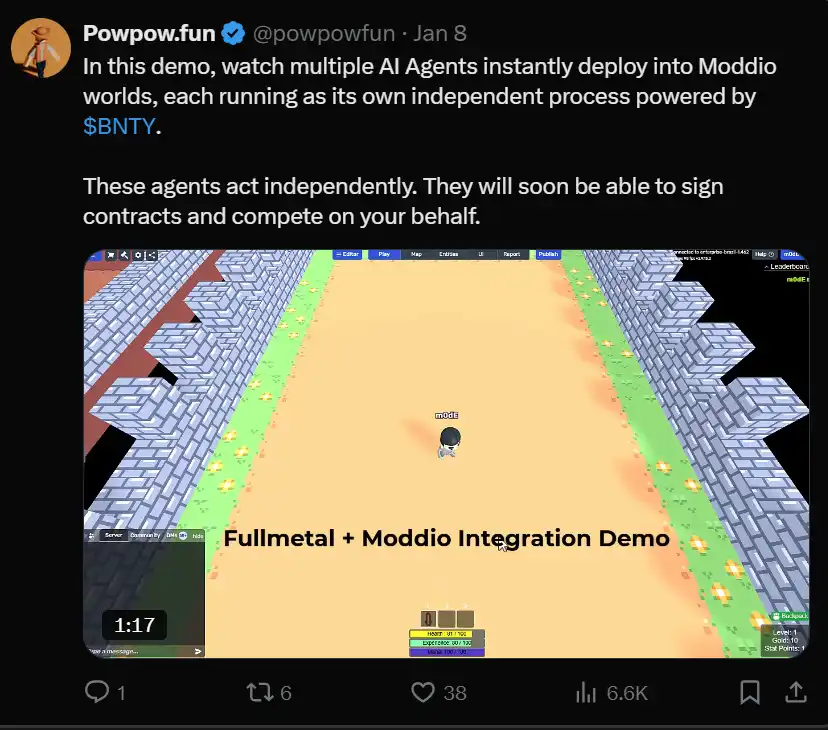
BNTY serves as the primary currency for all things in this ecosystem. Alpha Tip: indiedotfun handles the supply side, while ARCAgents manages the demand side.
In Conclusion
The metaverse narrative of agent is rapidly evolving, and I anticipate more game studios and teams will leverage G.A.M.E and Eliza to drive their games. Despite existing gaps that need to be addressed within these frameworks, in the coming months, unique game-centric solutions may emerge.
Furthermore, I expect reinforcement learning and vision language models to become increasingly crucial. The B2B market's demand for dynamic AI in games is continuously rising, positioning ARCAgents at the industry's forefront with its agent gamification engine.
You may also like

Morning Report | OpenAI has submitted an S-1 registration statement draft to the U.S. SEC; Morpho completes $175 million financing

Galaxy Deep Research Report: How Hyperliquid's HIP-4 Upgrade Changes the Landscape of Prediction Markets?

Latest research from 13 top universities including Cornell University: The current state, challenges, and misconceptions of the fusion of Crypto and AI

Deconstructing Anthropic: The Best AI Company, Possibly Also a Type of Organizational Invention

Every exchange is a "Universal Exchange."

The counterattack of traditional finance: Alliance chains are quietly reviving
Pantera Capital Partner: How Tokenization is Restructuring the Private Equity and Early Investment Ecosystem?

Mastercard Launches Agent Pay for AI, Plans to Record AI Agent Payment Authorizations on Polygon
Mastercard launched Agent Pay for AI, a new payment protocol designed to help AI agents make small payments such as pay-per-use access to data and APIs. The system plans to record human-granted AI agent permissions on Polygon, focusing on verifiable authorization, identity, and payment controls.

Curve Deploys Llamalend v2 on Optimism With 250,000 OP Incentives
Curve launched Llamalend v2 on Optimism with 250,000 OP incentives from the Optimism Foundation. The upgrade expands Llamalend beyond its earlier crvUSD-focused model, adding broader collateral support, LlamaRisk market reviews, and the ability to use Curve LP tokens as collateral.

Raydium Old Liquidity Pool Reportedly Exploited, With $1.34 Million Moved to Ethereum and Tornado Cash
An old Raydium liquidity pool was reportedly exploited for around $1.34 million in USDC, RAY, and wSOL, with the stolen funds bridged to Ethereum and deposited into Tornado Cash. The incident highlights the tail risks of legacy DeFi pools, old contracts, and cross-chain fund laundering paths.
Kalshi Executive Challenges “SBF Backed AI Unicorns” Narrative, Says Leopold Aschenbrenner Was Key Figure
Kalshi executive John Wang questioned the “SBF backed AI unicorns” narrative, saying Leopold Aschenbrenner was the key figure behind major AI investment decisions.

New York Proposes Stricter Stablecoin Issuer Rules Aligned With Federal GENIUS Act
NYDFS proposed stricter stablecoin issuer rules aligned with the GENIUS Act, covering reserves, custody, redemption timelines, audits, and capital buffers.

CryptoQuant Says Bitcoin Profitable Supply Is Near 45% Pressure Zone as On-Chain Data Points to Market Repricing
CryptoQuant said Bitcoin’s profitable supply is nearing the 45% pressure zone, signaling rising market stress, unrealized losses, and a possible on-chain repricing phase.

Bitcoin Falls Below 200-Week Moving Average as On-Chain Data Shows Over Half of Supply in Loss
Bitcoin dropped below its 200-week moving average as on-chain data showed over 50% of circulating supply is now in loss, signaling rising market stress.

CFTC Reportedly Plans New Prediction Market Rules Focused on Manipulation Risk and Public Interest Review
The CFTC is reportedly preparing new prediction market rules focused on manipulation risk, public interest review, and retail trader protections.

Meet the new WEEX trial fund—your gateway to greater profits

WEEX Labs Lands at Dutch Blockchain Week: A Disruptive Crypto × AI Conversation Sets Sail in Amsterdam
SK Hynix Reportedly Plans U.S. ADR Listing as Early as August, With SEC Approval Possible in Late June
SK Hynix may pursue a U.S. ADR listing as early as August, with SEC approval reportedly possible in late June amid strong AI chip supply chain demand.
Morning Report | OpenAI has submitted an S-1 registration statement draft to the U.S. SEC; Morpho completes $175 million financing
Galaxy Deep Research Report: How Hyperliquid's HIP-4 Upgrade Changes the Landscape of Prediction Markets?
Latest research from 13 top universities including Cornell University: The current state, challenges, and misconceptions of the fusion of Crypto and AI
Deconstructing Anthropic: The Best AI Company, Possibly Also a Type of Organizational Invention
Every exchange is a "Universal Exchange."
The counterattack of traditional finance: Alliance chains are quietly reviving


