
- Buy Crypto
- Markets
- Futures
- Spot
- Copy Trade
 Earn
Earn- More
AI and Cryptocurrency: Pillars of Modern Economic Dynamics

Key Takeaways
- The current economic stability heavily relies on artificial intelligence (AI) investments, as traditional growth drivers falter.
- Market volatility is increasingly influenced by capital flows, deviating from traditional economic indicators.
- Energy, not computing power, is the primary bottleneck in AI scalability, demanding infrastructural expansion.
- Cryptocurrency’s potential for growth positions it as a pivotal political and economic asset for younger generations.
WEEX Crypto News, 2025-12-01 10:25:18
In the intricate landscape of today’s economy, the role of artificial intelligence (AI) and cryptocurrency has emerged as focal points driving shifts and contending with systemic challenges. The intricate dance between market forces and technological innovation is reshaping how economies grow, interact, and stabilize. This article examines the nuanced roles AI and cryptocurrencies play in today’s economy, shedding light on their impacts and future prospects.
AI as the Beacon of Economic Stability
Artificial intelligence is steering the current economic ship through turbulent waters, primarily acting as the primary engine for GDP growth while other traditional sectors lag. The reliance on AI investments to stave off economic downturns is emphatically illustrated by the diminishing role of other economic spheres, which include labor markets and consumer finance. This situation paints a stark picture: without AI, the structure supporting the economic edifice would be significantly weaker.
AI investments have begun to substitute for workforce hiring, enhancing company profitability despite a weakening labor market. The automation AI introduces often covers roles involving low skill and routine tasks, which usually face the brunt of recession impacts first. Consequently, even as these jobs diminish, productivity and company earnings get a boost. Therefore, income starts shifting from labor toward capital, maintaining GDP number appearances while underlying employment dynamics shift unsustainably.
AI’s role doesn’t stop here; it has also insulated segments of the economy that could otherwise signal or suffer from economic distress. By propping up productivity and squeezing inefficiencies out of systems, AI maintains an illusion of stability and masks underlying vulnerabilities, such as rising inequality and stagnant wages. The stakes for policy-makers are high. They recognize that should AI expenditures falter, the broader economy would also face steep declines. Hence, policies supporting AI expansion are poised to become crucial leverage points.
Cryptocurrency: From Financial to Political Asset
Cryptocurrencies are undergoing significant transformation, transcending their role as mere financial instruments to becoming powerful political assets, especially among younger demographics. The high growth potential of these digital currencies positions them uniquely as mechanisms through which younger generations might seek financial upside amid broader economic instability and inequality.
The political significance of cryptocurrency lies in its ability to offer a semblance of capital access, in contrast to traditional assets, which baby boomers predominantly control, widening the generational wealth gap. As costs for essentials like childcare and housing rise, leaving many financially strained, cryptocurrencies present an alternative avenue for wealth creation. This dynamic prompts policy circles to seriously consider digital currencies within the broader framework of economic reform and intergenerational equity.
This political asset classification means cryptocurrencies could impact legislative priorities and regulatory frameworks substantially. Governments may find themselves pressured to accommodate and integrate crypto-economic activities into mainstream financial systems to promote fairness and stimulate the economy.
Market Dynamics: Untethered from Traditional Fundamentals
A recent examination of market behaviors indicates a detachment from traditional economic fundamentals. Volatility has reigned supreme, driven more by institutional capital flows than by economic data or company performances. This trend underscores a market environment where sentiment and liquidity controls bypass fundamental indicatives, allowing for dramatic price shifts based on speculative trading or central bank communications.
Several trends exemplify this disconnect: AI-driven trades react mechanically to price volatilities, while commodity trading advisors (CTAs) implement shifts based on predefined price thresholds, impacting broader market indices. Furthermore, stock buybacks have emerged as a prime force underpinning equity demands, overshadowing individual and institutional direct investments.
The Volatility Index (VIX), often perceived as a gauge of market fear, now contrasts this notion. Its spikes no longer solely reflect panic but rather indicate surges in hedging and repositioning activity, often unrelated to broader market sentiment. The market, hence, is in a cycle, feeding off self-created volatility rather than depicting an organic economic narrative.
The Energy Requirement of AI
While AI’s potential is vast, its scalability faces a significant constraint: energy. As discussions around AI scalability often focus on computational power—specifically, graphics processing units (GPUs)—the actual limiting factor lies within energy infrastructure capabilities. As AI expands, its energy needs skyrocket, necessitating massive investments in power supply, grid capacities, and innovative energy sources like nuclear or natural gas.
Addressing these requirements involves substantial investment not only from a financial perspective but also concerning regulatory and strategic planning. Over the next decade, expanding energy availability and modernizing power distribution networks stand to serve as pivotal projects for advancing AI scalability effectively. Investment strategies and policy decisions now must align with this reality to leverage AI’s full economic benefits without hitting a resource wall.
Toward a Dual-Track Economic Future
The unfolding economic landscape presents a dual track: one dominated by capital-driven AI enterprises, another by labor-reliant traditional sectors. This divide is not only operational, with AI sectors enjoying high production and profitability with minimal employee dependency, but also strategic, receiving heightened protection and investment.
In contrast, traditional sectors struggle under increasing strain, contending with feeble labor absorption, consumer stresses, and steep liquidity challenges. The interplay between these economic tracks predicts future value shifts, bolstering entities adept at bridging these divisions or capitalizing on their separation. This bifurcated economy compels businesses to innovate creatively, amalgamating AI advancements within practical economic frameworks.
Looking Forward: Strategic Implications
AI continues receiving policy support to prevent economic downturns, shielding it from the economic repercussions of stagnant broad-based growth. AI’s perceived inevitability and importance secure governmental and financial backing, making it a cornerstone of strategic planning. This expectation of unwavering support underscores a commitment to avoid recession-driven setbacks.
Simultaneously, financial flows influencing market dynamics are predicted to evolve, as traditional monetary policies like Quantitative Easing (QE) take a backseat to liquidity movements orchestrated by government financial departments. Over the next 12 to 18 months, market trajectories will likely trail these liquidity pathways more than predictive economic roadmaps or fundamental analyses.
Cryptocurrencies, meanwhile, gain ground as significant asset classes tied intricately to economic and political movements. Their integration into financial systems calls for cautious regulation balancing innovation with stability, promoting equitable wealth access across generations.
FAQ
How is AI impacting the current economy?
AI significantly influences the economy by driving productivity and profitability while compensating for shortcomings in labor market growth. It replaces routine tasks, thereby enhancing corporate efficiency, but also redirects wealth from labor toward capital, necessitating policy intervention.
Why is energy a bottleneck for AI development?
AI’s scalability is constrained primarily by energy requirements. As AI systems demand extensive power, infrastructural advancements in energy production and distribution become crucial to support ongoing AI deployment and growth.
What role does cryptocurrency play in modern economies?
Cryptocurrencies serve as alternative investment vehicles primarily appealing to younger generations, providing potential capital growth amidst economic inequality. Their rising political and financial relevance suggests impending regulatory adjustments to integrate digital assets within established economic systems.
How have market behaviors shifted recently?
Market movements are increasingly dictated by capital flow strategies rather than traditional economic fundamentals. This shift reflects a growing emphasis on liquidity management, speculation, and hedging over economic indicators, challenging conventional market analysis.
What are the challenges in addressing economic duality?
The economic dichotomy between AI-driven sectors and labor-reliant industries exposes challenges in balancing innovation with sustainable employment. Bridging this divide requires businesses to synthesize advancements holistically, aligning technological integration with economic stability efforts.
You may also like

First Zero, First Revival: A Real Story from the WEEX Global AI Trading Hackathon Preliminary Round
WEEX Labs, the innovation arm of the global crypto exchange WEEX, launched the preliminary round of its flagship AI trading hackathon, AI Wars: WEEX Alpha Awakens, on January 12, 2026. Backed by world-class sponsors including AWS, the prize pool has reached $1.88 million, with a Bentley Bentayga S awaiting the champion in Dubai. Already, 788 elite teams worldwide are battling for a spot in the finals. This is more than a hackathon — it is a real-market stress test for AI trading. Registration remains open until January 18. If you want your AI to face real volatility, this is your moment.
AI Wars: WEEX Alpha Awakens – Insights, Top Strategies, and Real-Market Execution Takeaways
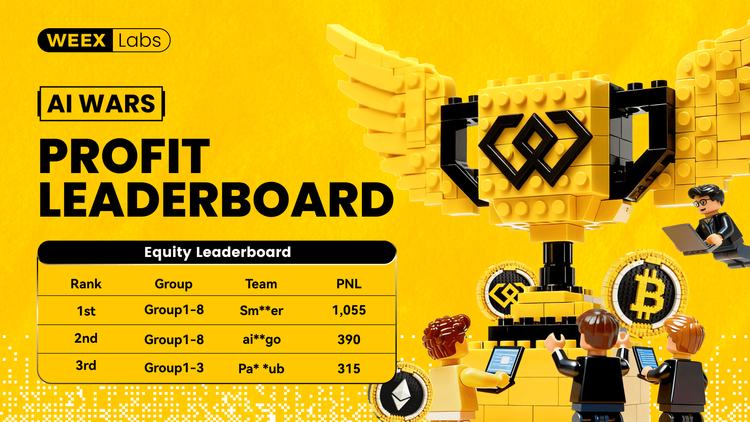
WEEX Labs has officially launched the preliminary round of its global AI trading hackathon, AI Wars: WEEX Alpha Awakens, bringing together hundreds of elite teams to compete in real-market conditions. With a record-breaking $1.88 million prize pool and backing from top-tier sponsors like AWS, the event has quickly become a global proving ground for AI-powered trading strategies. As competition intensifies and standout teams emerge on the leaderboard, the hackathon not only showcases cutting-edge AI execution and risk management, but also offers valuable insights and inspiration for traders looking to build or refine their own AI-driven systems.

WEEX P2P now supports Polish zloty (PLN)—new users and merchant rewards
To make crypto deposits easier, WEEX has officially launched its P2P trading platform and continues to expand fiat support. We're excited to announce that the Polish Zloty (PLN) is now available on WEEX P2P!

Sentient Reveals Tokenomics, How Will the Market Price It?

AI in the Crypto Market: How Artificial Intelligence is Changing Trading Strategies
This article explores how AI contributes to these movements and share practical strategies to help you navigate an AI-powered crypto market.

Fact Check: How Much Money Did the University of Chicago Lose in its Crypto Investment?

VanEck Q1 Market Outlook: Long-Term Bullish on Cryptocurrency, Strong Gold Demand

$200K Annual Salary Hiring, Predicting Market Will See Wall Street Players

Senate Committee Delays Crypto Bill Due to Coinbase’s Objections
Key Takeaways The Senate Banking Committee has postponed its planned markup of a major crypto market structure bill…

Eric Adams Denies “Rug Pull” Allegations Linked to NYC Token Despite Significant Losses
Key Takeaways: Eric Adams firmly denies allegations implying that money was moved out of the NYC Token. Market…
Transforming the Cryptocurrency Landscape: A 2026 Outlook
Key Takeaways Cryptocurrency systems have seen expansive growth and technological innovation. The introduction of new regulations has reshaped…

BonkFun Cuts Creator Fees to Zero: Are We Witnessing a New Era in Meme Coin Launchpad Wars?
Key Takeaways BonkFun has eliminated creator fees for its “BONK Classic” launches, with a reduced swap fee of…
Mantra Slashes Staff and Restructures Following ‘Brutal’ OM Token Collapse
Key Takeaways The OM token experienced a dramatic price collapse, prompting a significant restructure within Mantra, including job…

Senate Crypto Bill Hands Treasury “Patriot Act–Style” Surveillance Powers
Key Takeaways The Senate crypto bill proposes new sweeping surveillance powers for the U.S. Treasury, reminiscent of the…

Animoca Brands Acquires Somo to Advance Web3 Collectibles Strategy
Key Takeaways: Animoca Brands has acquired Somo, a gaming and collectibles studio, to fortify its position in the…

Current Landscape of Cryptocurrency Exchanges in 2026
Key Takeaways The cryptocurrency exchange market is notably competitive, with each platform offering unique strengths to attract users.…

An Insight into the Dynamics of Crypto Market Trends
Key Takeaways The article provides a comprehensive look at the latest developments in the cryptocurrency market. Insight is…
Senate Crypto Bill Markup Rescheduled to January 27 Amid Legislative Momentum
Key Takeaways The Senate Agriculture Committee has rescheduled the release of the legislative text for crypto market structure…
First Zero, First Revival: A Real Story from the WEEX Global AI Trading Hackathon Preliminary Round
WEEX Labs, the innovation arm of the global crypto exchange WEEX, launched the preliminary round of its flagship AI trading hackathon, AI Wars: WEEX Alpha Awakens, on January 12, 2026. Backed by world-class sponsors including AWS, the prize pool has reached $1.88 million, with a Bentley Bentayga S awaiting the champion in Dubai. Already, 788 elite teams worldwide are battling for a spot in the finals. This is more than a hackathon — it is a real-market stress test for AI trading. Registration remains open until January 18. If you want your AI to face real volatility, this is your moment.
AI Wars: WEEX Alpha Awakens – Insights, Top Strategies, and Real-Market Execution Takeaways
WEEX Labs has officially launched the preliminary round of its global AI trading hackathon, AI Wars: WEEX Alpha Awakens, bringing together hundreds of elite teams to compete in real-market conditions. With a record-breaking $1.88 million prize pool and backing from top-tier sponsors like AWS, the event has quickly become a global proving ground for AI-powered trading strategies. As competition intensifies and standout teams emerge on the leaderboard, the hackathon not only showcases cutting-edge AI execution and risk management, but also offers valuable insights and inspiration for traders looking to build or refine their own AI-driven systems.
WEEX P2P now supports Polish zloty (PLN)—new users and merchant rewards
To make crypto deposits easier, WEEX has officially launched its P2P trading platform and continues to expand fiat support. We're excited to announce that the Polish Zloty (PLN) is now available on WEEX P2P!
Sentient Reveals Tokenomics, How Will the Market Price It?
AI in the Crypto Market: How Artificial Intelligence is Changing Trading Strategies
This article explores how AI contributes to these movements and share practical strategies to help you navigate an AI-powered crypto market.


 App
App