
- Buy Crypto
- Markets
- Futures
- Spot
- Copy Trade
 Earn
Earn- More
How AI is Revolutionizing the Tech World: Insights from Benedict Evans

Key Takeaways:
- AI is driving a significant platform shift in the tech world, reminiscent of past transformative changes from mainframes to PCs, and from the web to smartphones.
- The financial commitment to AI infrastructure by tech giants is unprecedented, with capital expenditure reaching $400 billion by 2025, surpassing global telecom investments.
- The convergence of model performance could lead to AI becoming commoditized, challenging companies to redefine their competitive advantages.
- Despite significant user numbers, AI technologies like ChatGPT face challenges in securing high user engagement, depicting a gap between early interest and regular use.
- AI’s future promises to restructure industries significantly, but its complete impact remains unpredictable, aligning with historical patterns where new tech eventually integrates as infrastructure.
WEEX Crypto News, 2025-11-27 09:13:23
Introduction: AI’s Unseen Potential
In the rapidly evolving sphere of technology, artificial intelligence (AI) stands as a monumental force reshaping industries. Despite its pervasive influence, AI’s true form and future implications remain only partially understood. In a compelling report titled “AI Eats the World” by renowned tech analyst and former a16z partner Benedict Evans, AI is projected to trigger the next significant shift in the tech industry’s evolution — a seismic transition that occurs every ten to fifteen years. These shifts have historically redefined industry landscapes: from the dominance of mainframes to the ascendance of personal computers (PCs), and later, to the nearly ubiquitous presence of smartphones and the internet.
As Evans explains, the unexpected emergence of technologies like ChatGPT in 2022 might just be the catalyst for this new era of profound transformation. This article digs deeper into the insights presented by Evans, exploring the historical cycles of technological shifts, the unprecedented capital investments in AI by major corporations, the challenges of AI becoming commoditized, and the complex landscape of user engagement.
The Historical Pattern of Technological Shifts
History has shown that approximately every decade and a half, a major technological shift or platform transition occurs, revolutionizing the tech world. These transitions have historically altered the industry’s core structures, paving the way for novel interactions and business models.
For instance, Microsoft, once a dominant force in the PC era, found itself significantly diminished in the mobile era. Its operating system market share plummeted from nearly universal coverage to less than 20% by 2025. Similarly, Apple, which initially led the personal computer market, was sidelined by IBM-compatible machines. This cycle illustrates a harsh reality: companies leading in one era often struggle or fail to maintain their leadership post-transition.
As a new wave of AI technologies builds momentum, tech giants face the challenge of navigating these shifts or risking obsolescence. Evans, in his report, identifies this recurring theme — while the exact implications of the current AI-driven shift are uncertain, its historical inevitability is clear.
The Unprecedented Investment in AI Infrastructure
The transformative potential of AI is mirrored in the massive financial commitments from leading tech firms like Microsoft, Amazon’s AWS, Google, and Meta. These companies are collectively projected to invest $400 billion in AI infrastructure by 2025, dwarfing the annual $300 billion investment in the telecom sector. This fervent investment underscores the industry’s recognition of AI as not just an incremental advancement, but rather an existential pivot for the tech landscape.
The construction of cutting-edge data centers in the U.S. exemplifies this trend. These facilities are rapidly outpacing the construction of traditional office spaces, highlighting a shift in what drives investment cycles. Companies like Nvidia are hitting supply bottlenecks as they strive to meet this surging demand, often surpassing the long-established revenue benchmarks set by industry stalwarts like Intel.
One of the critical bottlenecks in this infrastructure push is the availability of power supply, semiconductor components, and fiber-optic access, which are essential for data center expansion. Despite a modest increase in the U.S. power supply, AI’s demands represent an additional 1% of energy needs, posing unique challenges and requiring swift adaptation in infrastructure capabilities.
AI as a Commodity: The Vanishing Moat
Despite extensive investment, a fascinating dilemma emerges: large language models’ performance differences are narrowing, raising concerns about AI becoming a ‘commodity’. Evans highlights the potential implication of this convergence — market leaders in AI performance shift frequently as their technical capabilities begin to match closely.
In commoditized markets, traditional competitive advantages lose potency. For AI companies, this means rethinking strategies to build new moats around their offerings. Possibilities include innovation in compute capacity, vertical datasets, superior product experiences, or diversified distribution channels. Without these differentiators, the future of AI could see value capture redistributed among new and existing players, altering competitive dynamics in the tech sector.
The Engagement Conundrum: The Story of ChatGPT
ChatGPT’s claim of having 8 billion weekly active users paints a picture of widespread adoption and engagement. Yet, detailed user involvement studies present a more nuanced reality. While impressive in reach, ChatGPT and similar AI technologies face hurdles in translating their sizable user base into high engagement. In the U.S., only a fraction of users interact with AI chatbots daily. Instead, many users explore these technologies sporadically, indicating an initial curiosity rather than consistent utility.
Evans categorizes this trend as the ‘engagement illusion.’ It’s a familiar story where emerging technologies experience rapid initial uptake, yet struggle to cement their place in users’ everyday lives. The gap between capability and practical application remains substantial, highlighting the need for intuitive integration into diverse workflows and daily routines.
Corporations reflect this gradual adoption curve as well. Despite widespread enthusiasm for AI integration, a smaller portion has moved past experimental phases into full production deployment. Survey data indicates that while 25% of enterprises have deployed AI applications, the majority still remain in planning stages, set for post-2025 implementation. Current successes largely involve piecemeal applications such as coding support and customer service automation—areas yet to herald a full-scale business transformation.
AI’s Impact on Advertising and Recommendation Systems
The advertising and recommendation landscape is perhaps the sector most poised for disruption by AI. Traditional systems relied heavily on ‘relevance’, a model that AI can supplant with the nuanced understanding of ‘user intent’. This shift promises to upend the foundational mechanisms of the trillion-dollar advertisement industry.
Early data from giants like Google and Meta underscore significant performance boosts when deploying AI-driven strategies. Reported improvements in conversion rates range from 3% to 14%, showcasing AI’s potential to revolutionize ad targeting efficacy. Moreover, the cost associated with ad creative production is likely to see reductions, courtesy of automated content generation capabilities.
Lessons from Automation: When AI Fades into the Background
Reflecting on historical precedents, Evans draws parallels to past automation milestones that sparked initial debates but quietly integrated into the societal infrastructure over time. The transformation of enemies turned allies could be seen in the disappearance of elevator operators and the adoption of barcodes in inventory management, reshaping how businesses operated from behind the scenes.
This historical lens reiterates a crucial point: technologies pivotal in their time often fade into ubiquity, ceasing to be seen as ‘tech’ as they become intrinsic to daily operations. Similarly, AI may eventually become another layer in the fabric of daily operations, losing its standalone label as ‘AI’.
Projecting AI’s Future Role and Value Capture
Evans posits that as AI continues its ascent, it’s on track to redefine industries while still grappling with uncertainty about its ultimate form. Companies may engage in a strategic pivot from network-driven successes towards battles over resources and investment capabilities.
Three primary pathways could emerge in this environment: businesses might leverage economies of scale for downstream dominance, exploit network effects for upstream success, or venture into innovative competitive arenas. An examination of Microsoft’s evolving strategies reveals this transition from network-centric to capital-centric models of competition, where increasing capital expenditures signal a fundamental shift in sustaining leadership.
OpenAI’s broad-spectrum strategy — involving infrastructure partnerships with companies like Oracle, technological milestones with Nvidia and Intel, and platform integrations across varied digital environments — exemplifies the comprehensive engagements necessary for thriving in this evolving AI landscape.
Conclusion: A New Era in Tech Evolution
As the AI narrative unfolds, it draws us into a future both familiar and unknown. While parallels to past shifts offer guidance, AI’s unique complexities present fresh challenges and opportunities. Evans emphasizes that the unfolding AI revolution is set to not only modify existing paradigms but also to potentially craft entirely new sectors. As we stand on this cusp of technological transformation, the full script of AI’s impact and integration remains unwritten, promising a captivating evolution for industries and societies alike.
FAQs
What is driving the current investment surge in AI by tech giants?
The current investment surge in AI by tech giants is driven by the recognition of AI’s transformative potential across industries. These investments are seen as critical for building the necessary infrastructure to support AI’s integration and to maintain a competitive edge in a rapidly evolving tech landscape.
Why is AI becoming commoditized, and what does this mean for the industry?
AI is becoming commoditized because the differences in performance among leading large language models are diminishing. This convergence challenges companies to find new competitive advantages, as traditional differentiators lose significance. It signals a shift where innovation in computing power, specialized datasets, and product experience becomes crucial for maintaining market leadership.
How does AI’s impact on advertising differ from traditional systems?
AI impacts advertising by shifting the focus from mere relevance to understanding user intent, providing deeper insights into consumer behavior. This approach enhances targeting precision and efficiency, leading to higher conversion rates and reduced costs in ad production, fundamentally reshaping the advertising industry.
What are the historical precedents for technology becoming infrastructure?
Historical precedents for technology transitioning to infrastructure include the disappearance of elevator operators due to automation and the integration of barcodes in supply chains. These technologies, once revolutionary, became deeply embedded and ceased to be recognized as standalone innovations.
What are the future implications of AI for businesses and industries?
The future implications of AI for businesses and industries include significant transformations in operational processes, customer engagement, and market strategies. While AI’s full impact remains uncertain, it is clear that it will drive substantial changes, requiring strategic adaptation and investment to harness its potential fully.
You may also like

First Zero, First Revival: A Real Story from the WEEX Global AI Trading Hackathon Preliminary Round
WEEX Labs, the innovation arm of the global crypto exchange WEEX, launched the preliminary round of its flagship AI trading hackathon, AI Wars: WEEX Alpha Awakens, on January 12, 2026. Backed by world-class sponsors including AWS, the prize pool has reached $1.88 million, with a Bentley Bentayga S awaiting the champion in Dubai. Already, 788 elite teams worldwide are battling for a spot in the finals. This is more than a hackathon — it is a real-market stress test for AI trading. Registration remains open until January 18. If you want your AI to face real volatility, this is your moment.
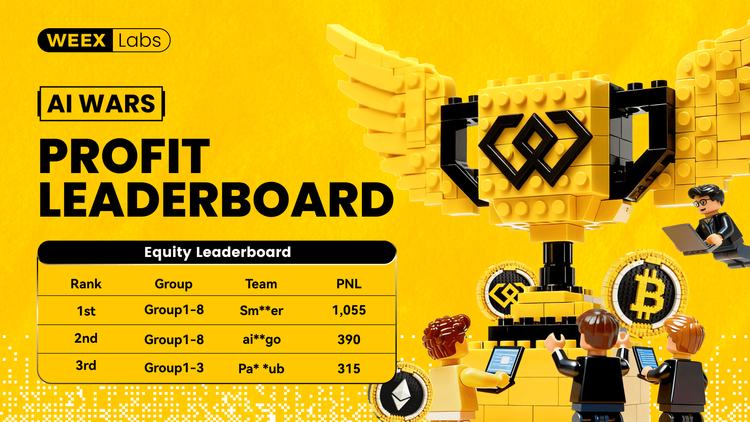
AI Wars: WEEX Alpha Awakens – Insights, Top Strategies, and Real-Market Execution Takeaways
WEEX Labs has officially launched the preliminary round of its global AI trading hackathon, AI Wars: WEEX Alpha Awakens, bringing together hundreds of elite teams to compete in real-market conditions. With a record-breaking $1.88 million prize pool and backing from top-tier sponsors like AWS, the event has quickly become a global proving ground for AI-powered trading strategies. As competition intensifies and standout teams emerge on the leaderboard, the hackathon not only showcases cutting-edge AI execution and risk management, but also offers valuable insights and inspiration for traders looking to build or refine their own AI-driven systems.

WEEX P2P now supports Polish zloty (PLN)—new users and merchant rewards
To make crypto deposits easier, WEEX has officially launched its P2P trading platform and continues to expand fiat support. We're excited to announce that the Polish Zloty (PLN) is now available on WEEX P2P!

Sentient Reveals Tokenomics, How Will the Market Price It?

AI in the Crypto Market: How Artificial Intelligence is Changing Trading Strategies
This article explores how AI contributes to these movements and share practical strategies to help you navigate an AI-powered crypto market.

Fact Check: How Much Money Did the University of Chicago Lose in its Crypto Investment?

VanEck Q1 Market Outlook: Long-Term Bullish on Cryptocurrency, Strong Gold Demand

$200K Annual Salary Hiring, Predicting Market Will See Wall Street Players

Senate Committee Delays Crypto Bill Due to Coinbase’s Objections
Key Takeaways The Senate Banking Committee has postponed its planned markup of a major crypto market structure bill…

Eric Adams Denies “Rug Pull” Allegations Linked to NYC Token Despite Significant Losses
Key Takeaways: Eric Adams firmly denies allegations implying that money was moved out of the NYC Token. Market…
Transforming the Cryptocurrency Landscape: A 2026 Outlook
Key Takeaways Cryptocurrency systems have seen expansive growth and technological innovation. The introduction of new regulations has reshaped…

BonkFun Cuts Creator Fees to Zero: Are We Witnessing a New Era in Meme Coin Launchpad Wars?
Key Takeaways BonkFun has eliminated creator fees for its “BONK Classic” launches, with a reduced swap fee of…
Mantra Slashes Staff and Restructures Following ‘Brutal’ OM Token Collapse
Key Takeaways The OM token experienced a dramatic price collapse, prompting a significant restructure within Mantra, including job…

Senate Crypto Bill Hands Treasury “Patriot Act–Style” Surveillance Powers
Key Takeaways The Senate crypto bill proposes new sweeping surveillance powers for the U.S. Treasury, reminiscent of the…

Animoca Brands Acquires Somo to Advance Web3 Collectibles Strategy
Key Takeaways: Animoca Brands has acquired Somo, a gaming and collectibles studio, to fortify its position in the…

Current Landscape of Cryptocurrency Exchanges in 2026
Key Takeaways The cryptocurrency exchange market is notably competitive, with each platform offering unique strengths to attract users.…

An Insight into the Dynamics of Crypto Market Trends
Key Takeaways The article provides a comprehensive look at the latest developments in the cryptocurrency market. Insight is…
Senate Crypto Bill Markup Rescheduled to January 27 Amid Legislative Momentum
Key Takeaways The Senate Agriculture Committee has rescheduled the release of the legislative text for crypto market structure…
First Zero, First Revival: A Real Story from the WEEX Global AI Trading Hackathon Preliminary Round
WEEX Labs, the innovation arm of the global crypto exchange WEEX, launched the preliminary round of its flagship AI trading hackathon, AI Wars: WEEX Alpha Awakens, on January 12, 2026. Backed by world-class sponsors including AWS, the prize pool has reached $1.88 million, with a Bentley Bentayga S awaiting the champion in Dubai. Already, 788 elite teams worldwide are battling for a spot in the finals. This is more than a hackathon — it is a real-market stress test for AI trading. Registration remains open until January 18. If you want your AI to face real volatility, this is your moment.
AI Wars: WEEX Alpha Awakens – Insights, Top Strategies, and Real-Market Execution Takeaways
WEEX Labs has officially launched the preliminary round of its global AI trading hackathon, AI Wars: WEEX Alpha Awakens, bringing together hundreds of elite teams to compete in real-market conditions. With a record-breaking $1.88 million prize pool and backing from top-tier sponsors like AWS, the event has quickly become a global proving ground for AI-powered trading strategies. As competition intensifies and standout teams emerge on the leaderboard, the hackathon not only showcases cutting-edge AI execution and risk management, but also offers valuable insights and inspiration for traders looking to build or refine their own AI-driven systems.
WEEX P2P now supports Polish zloty (PLN)—new users and merchant rewards
To make crypto deposits easier, WEEX has officially launched its P2P trading platform and continues to expand fiat support. We're excited to announce that the Polish Zloty (PLN) is now available on WEEX P2P!
Sentient Reveals Tokenomics, How Will the Market Price It?
AI in the Crypto Market: How Artificial Intelligence is Changing Trading Strategies
This article explores how AI contributes to these movements and share practical strategies to help you navigate an AI-powered crypto market.


 App
App