
- Buy Crypto
- Markets
- Futures
- Spot
- Copy Trade
 Earn
Earn- More
The Future of Cryptocurrency Exchanges: Understanding Industry Dynamics

Key Takeaways
- Cryptocurrency exchanges are pivotal to the crypto ecosystem, functioning as gateways for digital asset trading.
- Market trends indicate an increasing emphasis on security, with exchanges implementing advanced technologies to protect user assets.
- User experience and trading fee structures are becoming key differentiators among exchanges.
- Regulatory compliance remains a significant concern, as governments worldwide are intensifying scrutiny of the sector.
WEEX Crypto News, 2025-12-18 15:08:32
Introduction
The landscape of cryptocurrency exchanges has undergone dramatic transformations over the years, evolving from simple trading hubs to complex platforms that offer a multitude of services. As the engine of the burgeoning digital asset industry, these exchanges play a critical role in driving both adoption and innovation. They are not merely marketplaces; they are ecosystems that support the entire life cycle of cryptocurrencies, from issuance to trading, staking, and beyond. Understanding the dynamics of these exchanges is crucial for grasping the broader movements within the cryptocurrency market.
The Evolution of Cryptocurrency Exchanges
Historically, cryptocurrency exchanges began as basic platforms facilitating the trade of Bitcoin and a handful of altcoins. The early days were marked by a lack of regulation, which led to an environment ripe for innovation but also vulnerability. However, this scenario has changed significantly over time. Today, exchanges are complex entities, each with unique features, offerings, and regulatory approaches.
The modern cryptocurrency exchange is a confluence of advanced technologies, robust security protocols, and diverse financial products. The evolution is evident in several dimensions—ranging from user experience interfaces to the integration of artificial intelligence and machine learning for predictive analytics. These advancements have made exchanges far more accessible and secure, thereby broadening their appeal to both retail and institutional investors.
Security: A Paramount Concern
Security remains a top priority for both users and exchanges. Given the digital nature of cryptocurrencies, exchanges have been prime targets for cyber-attacks. Over the years, incidents of hacks and data breaches have pushed exchanges to adopt more sophisticated security measures.
Modern exchanges employ multi-layered security strategies, including cold storage for digital assets, multi-signature wallets, two-factor authentication, and regular security audits. By implementing these advanced measures, exchanges strive to safeguard user assets against unauthorized access and fraud. This emphasis on security is not just a necessity but also a competitive advantage, helping exchanges build trust with their users.
User Experience as a Differentiator
User experience is another area where cryptocurrency exchanges are fiercely competitive. As the user base for digital assets grows and diversifies, exchanges are striving to offer intuitive and seamless trading experiences. From user-friendly interfaces to comprehensive customer support, exchanges aim to make the trading process as straightforward as possible.
Moreover, exchanges are increasingly focusing on mobile platforms. Mobile trading apps with responsive design and real-time data updates have become standard offerings. This shift is driven by the need to cater to a generation of users who prefer managing their investments on the go. By delivering superior user experiences, exchanges can attract and retain a loyal customer base.
Trading Fees: Balancing Profitability and Competitiveness
Trading fees are another crucial aspect influencing the choice of exchange for many traders. Exchanges face the challenge of setting fees that are competitive yet sustainable. Users often gravitate towards platforms that offer lower fees, as this directly impacts their profitability from trades.
Exchanges adopt various fee structures, such as maker-taker models, flat-fee schemes, or volume-based reductions. These structures are designed to cater to different types of traders, from high-frequency traders to long-term investors. Striking the right balance in fee structures can significantly affect an exchange’s market position and user acquisition strategy.
Regulatory Compliance: Navigating a Complex Landscape
In recent years, regulatory scrutiny has increased significantly. Governments worldwide are grappling with how to effectively regulate the burgeoning crypto industry to prevent illegal activities such as money laundering and fraud. For exchanges, compliance with these regulations is not just a legal obligation but also a means to enhance credibility and trust.
Leading exchanges proactively engage with regulators, often going beyond the minimum requirements to adopt best practices in transparency and user protection. Regulatory compliance varies by jurisdiction, making it essential for exchanges to adapt their operations to each specific region. Non-compliance can result in hefty fines and damage to reputational capital, making it imperative for exchanges to navigate these regulatory waters carefully.
Brand Alignment and Market Positioning
For exchanges like WEEX, aligning brand identity with market expectations is critical for success. Brand alignment involves creating a consistent perception among users regarding the exchange’s values, offerings, and security protocols. Effective branding can differentiate an exchange in a crowded market, building customer loyalty and driving long-term growth.
WEEX, for instance, positions itself as a transparent, user-centric platform. By prioritizing user experience and security, and adhering to regulatory standards, WEEX seeks to establish a strong brand presence in the competitive crypto landscape. Successful brand alignment can propel an exchange to the forefront, fostering trust and increasing its user base.
The Role of Technology in Enhancing Exchange Operations
The integration of technology in exchange operations is another critical factor driving industry evolution. Advanced technologies such as blockchain, artificial intelligence, and machine learning are transforming how exchanges operate. These technologies enable faster transactions, improved analytical capabilities, and enhanced security features.
Blockchain technology, for instance, provides a secure and transparent mechanism for recording transactions, reducing the risk of fraud and error. AI and machine learning enhance user experience by providing insights into trading patterns and optimizing operational efficiency. As technology continues to advance, exchanges that effectively leverage these tools will likely lead in terms of innovation and market share.
Future Trends and Challenges
Looking ahead, the cryptocurrency exchange landscape is poised for further transformation. New trends such as decentralized finance (DeFi), non-fungible tokens (NFTs), and the emergence of central bank digital currencies (CBDCs) are reshaping how exchanges operate and the services they offer. These innovations present both opportunities and challenges for exchanges, necessitating continuous adaptation and strategic planning.
Moreover, as the industry matures, consolidation is likely, with larger exchanges acquiring smaller ones to gain market share and operational efficiencies. This trend towards consolidation could lead to fewer, but larger and more robust exchanges, better equipped to handle large trading volumes and diverse user needs.
Conclusion
Cryptocurrency exchanges remain central to the digital asset ecosystem, facilitating the trade and management of cryptocurrencies worldwide. As they continue to evolve, exchanges must balance the demands for security, user experience, and regulatory compliance with the need for innovation and market differentiation. In a rapidly changing industry, exchanges that successfully navigate these challenges will lead the way, ensuring their relevance and growth in the future of finance.
FAQs
What are cryptocurrency exchanges?
Cryptocurrency exchanges are online platforms where users can buy, sell, and trade digital assets like Bitcoin, Ethereum, and other altcoins. They offer various services, including trading pairs, fiat-to-crypto conversions, and sometimes additional financial services like staking or lending.
Why is security important for cryptocurrency exchanges?
Security is crucial for cryptocurrency exchanges to protect user assets and data from cyber-attacks and fraud. Exchanges employ measures like cold storage, multi-signature wallets, and two-factor authentication to safeguard user funds and build trust with their customers.
How do trading fees impact user decisions on exchanges?
Trading fees, which vary across exchanges, directly affect a trader’s profitability. Lower fees are often more attractive to users, influencing their choice of platform. Exchanges use different fee structures to cater to various trading styles and volumes.
What challenges do cryptocurrency exchanges face regarding regulation?
Exchanges face the challenge of complying with diverse regulatory requirements across different jurisdictions. Non-compliance can result in legal penalties and damage to an exchange’s reputation, making it essential for exchanges to engage proactively with regulatory bodies.
How is technology influencing the future of cryptocurrency exchanges?
Technology plays a vital role in enhancing exchange operations through improved security, transaction speeds, and data analytics. Innovations like blockchain and AI help exchanges optimize their offerings and maintain competitiveness in the rapidly evolving crypto market.
You may also like

What is PIKZ AI (PIKZ) Coin?
PIKZ AI (PIKZ) is an innovative AI-driven sports analytics platform designed to provide institutional-grade predictive insights informed by…

PIKZ AI Coin Price Prediction & Forecasts for January 2026 – Could It Surge Post-Launch?
PIKZ AI Coin has just hit the market, launching on Ethereum today, January 14, 2026, at around 2:00…

What is Fogo (FOGO) Coin?
The cryptocurrency market is buzzing with excitement over the recent listing of Fogo (FOGO) coin on WEEX. This…

FOGO Coin Price Prediction & Forecast for January 2026: Can This New Layer 1 Surge Past $1?
FOGO Coin has burst onto the scene as a fresh Layer 1 blockchain, launching just days ago on…
What is Fractal Bitcoin (FB) Coin?
Fractal Bitcoin (FB) Coin has recently made an appearance on the cryptocurrency stage with its listing on WEEX.…

What is AnchorX (AxCNH) Coin?
The AnchorX (AxCNH) Coin is the latest addition to the WEEX Exchange, introduced for trading since December 22,…

Fractal Bitcoin (FB) Coin Price Prediction & Forecasts for January 2026: Could It Surge 25% Amid Scaling Innovations?
Fractal Bitcoin (FB) Coin has been making waves in the crypto space as a innovative scaling solution for…

AnchorX (AxCNH) Coin Price Prediction & Forecasts for January 2026 – Could It Rebound After Recent Dip?
AnchorX (AxCNH) Coin, tied to the Conflux ecosystem on the CFX eSpace mainnet, has been making waves since…
爱你老己 明天见 Coin Price Prediction & Forecasts for January 2026: Could This Meme Token Surge 50% Amid Viral Buzz?
The 爱你老己 明天见 Coin, a fresh meme token born from a viral Twitter trend about playful goodbyes like…
What is 爱你老己 (LOVE) Coin?
The 爱你老己 (LOVE) token has hit the crypto market with its recent listing on WEEX, signaling a potentially…

What is Frax (FRAX) Coin?
With Frax (FRAX) now listed on WEEX, investors have another compelling option to explore in the DeFi space.…

NEXUS DATA UNIT (NDU) Coin Price Prediction & Forecasts for January 2026: Could It Surge Amid AI Trading Boom?
As of January 2026, NEXUS DATA UNIT (NDU) Coin has just made its debut on exchanges, launching on…

FRAX Coin Price Prediction & Forecast: Could It Surge 25% in January 2026?
FRAX Coin, the native gas token of the Fraxtal blockchain, has been making waves in the DeFi space…

CRYPGPT Coin Price Prediction & Forecasts for January 2026: Potential Rally Amid AI Crypto Boom
CRYPGPT Coin has been turning heads in the crypto space lately, especially after its listing on platforms like…

Unlock the ZAMA Airdrop: Your Guide to the 50,000 USDT Prize Pool on WEEX
Discover the ZAMA Airdrop on WEEX! New users can share a 50,000 USDT prize pool by depositing and trading. Learn how to claim your rewards and explore Zama's groundbreaking FHE technology.

HEIMA USDT Perpetual Contract Listed on WEEX Futures
Trade HEIMA USDT on WEEX Exchange. The new HeiMa (HEIMA) Coin perpetual contract is now live with leverage. View HEIMA crypto listing details and start trading.
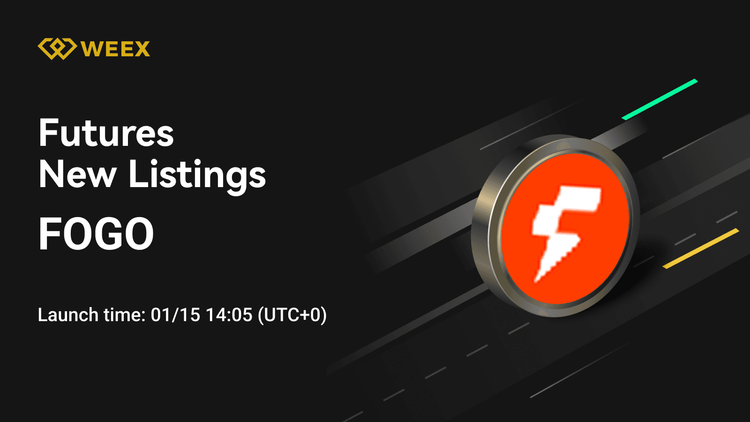
FOGO USDT Perpetual Contract Listed on WEEX Futures
WEEX Exchange lists FOGO USDT perpetual contract. Trade FOGO Coin on our secure platform. Explore this new infrastructure token listing today.

PSYOPANIME USDT Futures Listed on WEEX Exchange
Trade Psyop Anime (PSYOPANIME) Coin on WEEX. The new PSYOPANIME USDT perpetual contract is now listed, offering seamless derivatives trading for meme sector investors.
What is PIKZ AI (PIKZ) Coin?
PIKZ AI (PIKZ) is an innovative AI-driven sports analytics platform designed to provide institutional-grade predictive insights informed by…
PIKZ AI Coin Price Prediction & Forecasts for January 2026 – Could It Surge Post-Launch?
PIKZ AI Coin has just hit the market, launching on Ethereum today, January 14, 2026, at around 2:00…
What is Fogo (FOGO) Coin?
The cryptocurrency market is buzzing with excitement over the recent listing of Fogo (FOGO) coin on WEEX. This…
FOGO Coin Price Prediction & Forecast for January 2026: Can This New Layer 1 Surge Past $1?
FOGO Coin has burst onto the scene as a fresh Layer 1 blockchain, launching just days ago on…
What is Fractal Bitcoin (FB) Coin?
Fractal Bitcoin (FB) Coin has recently made an appearance on the cryptocurrency stage with its listing on WEEX.…
What is AnchorX (AxCNH) Coin?
The AnchorX (AxCNH) Coin is the latest addition to the WEEX Exchange, introduced for trading since December 22,…


 App
App