
- Buy Crypto
- Markets
- Futures
- Spot
- Copy Trade
 Earn
Earn- More
In a digital world, how does encryption technology protect personal data privacy?

Original Article Title: My Data is Not Mine: Privacy Layers
Original Article Author: Defi0xJeff, Head of Steak Studio
Original Article Translation: zhouzhou, BlockBeats
Editor's Note: This article focuses on various privacy-enhancing and security technologies, including Zero-Knowledge Proofs (ZKP), Trusted Execution Environments (TEE), Fully Homomorphic Encryption (FHE), etc. It introduces the application of these technologies in AI and data processing, how they protect user privacy, prevent data leaks, and enhance system security. The article also mentions some use cases such as Earnifi, Opacity, and MindV, showcasing how these technologies enable risk-free voting, data encryption processing, etc. However, these technologies face many challenges, such as computation overhead and latency issues.
The following is the original content (reorganized for better comprehension):
With the surge in data supply and demand, individuals' digital footprints have become increasingly extensive, making personal information more susceptible to misuse or unauthorized access. We have seen some instances of personal data breaches, such as the Cambridge Analytica scandal.
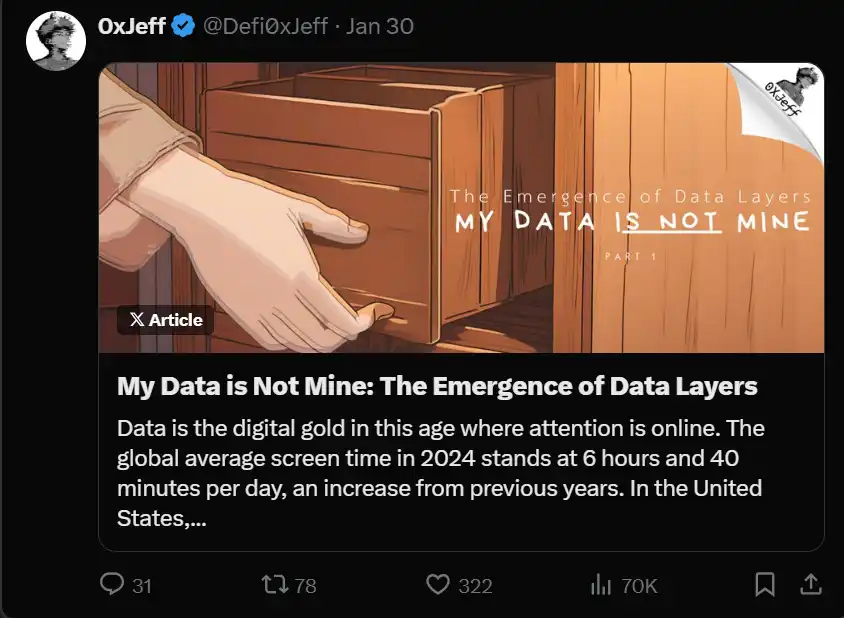
For those who have not caught up, you can refer to the first part of the series, where we discussed:
· The importance of data
· The growing demand for data in AI
· The emergence of data layers
The GDPR in Europe, CCPA in California, and regulations in other regions worldwide have made data privacy not just an ethical issue but a legal requirement, urging companies to ensure data protection.
With the rapid advancement of artificial intelligence, AI has not only enhanced privacy protection but also further complicated the privacy and verifiability domain. For example, while AI can help detect fraudulent activities, it has also enabled the development of "deepfake" technology, making it more challenging to verify the authenticity of digital content.
Benefits
· Privacy-preserving Machine Learning: Federated Learning allows AI models to be trained directly on devices without centralizing sensitive data, thus protecting user privacy.
· AI can be used to anonymize or pseudonymize data, making data less traceable to individuals while still being usable for analysis.
·AI is crucial for developing tools to detect and reduce deepfake dissemination, thereby ensuring the verifiability of digital content (and detecting/verifying the authenticity of AI agents).
·AI can automatically ensure that data processing practices comply with legal standards, making the verification process more scalable.
Challenge
·AI systems typically require large datasets to function effectively, but the use, storage, and access of data may be opaque, raising privacy concerns.
·With sufficient data and advanced AI techniques, individuals may be re-identified from a dataset that should have been anonymous, compromising privacy protection.
·As AI can generate highly realistic text, images, or videos, distinguishing between real and AI-generated fake content becomes more difficult, challenging verifiability.
·AI models may be deceived or manipulated (adversarial attacks), compromising the verifiability of data or the integrity of the AI system itself (as seen in cases like Freysa, Jailbreak, etc.).
These challenges have driven the rapid development of AI, blockchain, verifiability, and privacy technologies, leveraging the strengths of each. We have seen the rise of the following technologies:
·Zero-Knowledge Proofs (ZKP)
·Zero-Knowledge Transport Layer Security (zkTLS)
·Trusted Execution Environments (TEE)
·Fully Homomorphic Encryption (FHE)
1. Zero-Knowledge Proofs (ZKP)
ZKP allows one party to prove to another that they know certain information or that a statement is correct without revealing any information beyond the proof itself. AI can leverage this to prove that data processing or decisions comply with certain standards without revealing the data itself. A good case study is getgrass io, where Grass uses idle internet bandwidth to collect and organize public web data for training AI models.

The Grass Network allows users to contribute their idle internet bandwidth through a browser extension or application, which is used to crawl public web data and then process it into a structured dataset suitable for AI training. The network performs this web crawling process through nodes operated by users.
The Grass Network emphasizes user privacy by only crawling public data, not personal information. It uses zero-knowledge proofs to verify and protect the integrity and source of data, preventing data tampering and ensuring transparency. All data collection to processing transactions is managed through sovereign data aggregation on the Solana blockchain.
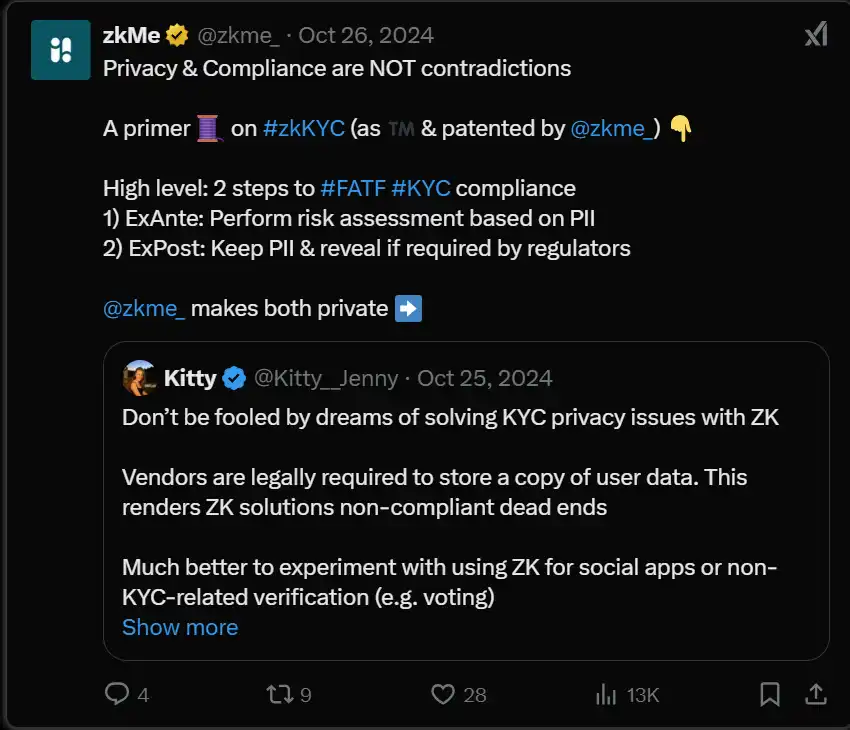
Another good case study is zkMe.
zkMe's zkKYC solution addressed the challenge of conducting KYC (Know Your Customer) processes in a privacy-preserving manner. By leveraging zero-knowledge proofs, zkKYC enables the platform to verify user identities without exposing sensitive personal information, thereby maintaining compliance while protecting user privacy.
2.zkTLS
TLS = Transport Layer Security, a standard security protocol that provides privacy and data integrity between two communicating applications (often associated with the "s" in HTTPS). zk + TLS = Enhanced privacy and security in data transmission.
A good case study is OpacityNetwork.
Opacity uses zkTLS to provide a secure and private data storage solution. By integrating zkTLS, Opacity ensures that data transfers between users and storage servers remain confidential and tamper-proof, addressing the inherent privacy issues in traditional cloud storage services.
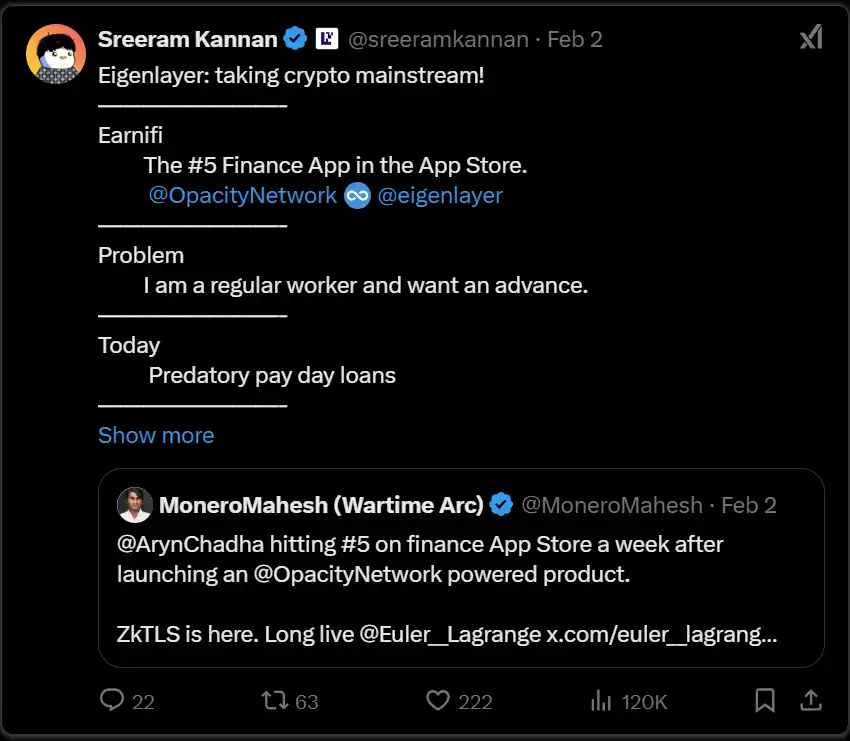
Use Case—Paycheck Advance
Earnifi is an app reportedly skyrocketing in app store rankings, particularly in the finance app category, leveraging OpacityNetwork's zkTLS.
· Privacy: Users can provide their income or employment status to a lender or other service without revealing sensitive banking information or personal details like bank statements.
· Security: The use of zkTLS ensures these transactions are secure, verified, and private, avoiding the need for users to entrust all financial data to a third party.
· Efficiency: The system reduces the costs and complexities associated with traditional paycheck advance platforms, as traditional platforms might require intricate verification processes or data sharing.
3.TEE
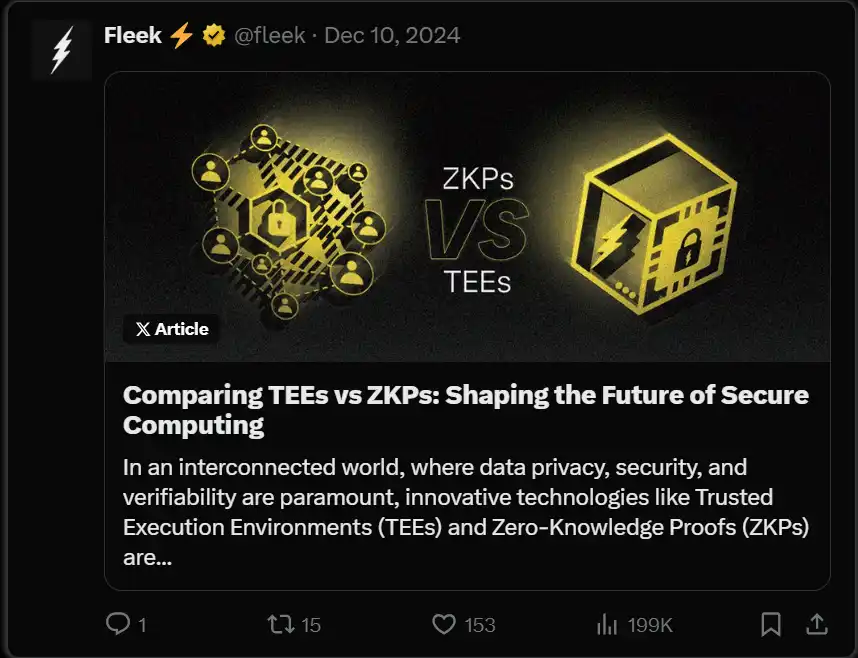
Trusted Execution Environment (TEE) provides hardware-enforced isolation between a normal execution environment and a secure execution environment. This is perhaps the most well-known secure implementation in AI agents currently to ensure they are fully autonomous agents. Promoted by 123skely's aipool tee experiment: a TEE pre-sale event where the community sends funds to the agent, and the agent autonomously issues tokens based on predefined rules.
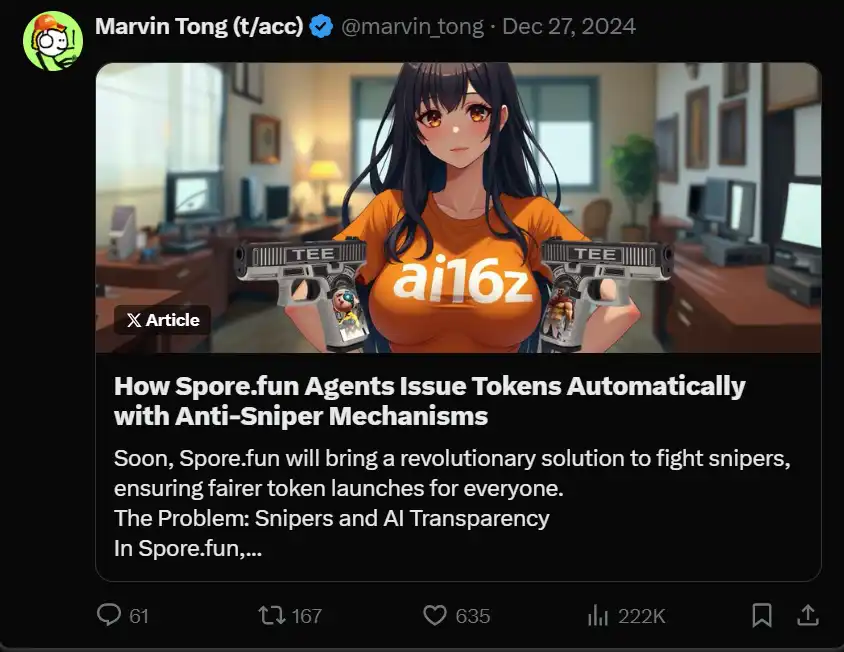
marvin tong's PhalaNetwork: MEV Protection, integration of ai16zdao's ElizaOS, and Agent Kira as a verifiable autonomous AI agent.
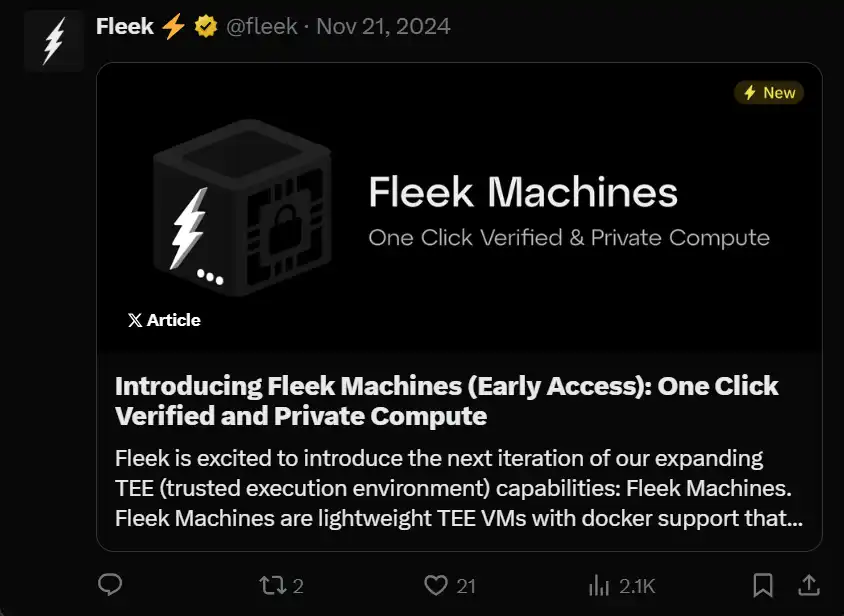
fleek's One-Click TEE Deployment: Focused on streamlining usage and enhancing developer accessibility.
4. FHE (Fully Homomorphic Encryption)
A form of encryption that allows computation to be performed directly on encrypted data without the need to decrypt it first.
A good case study is mindnetwork xyz and its proprietary FHE technology/use case.

Use Case — FHE Staking Layer with Risk-Free Voting
FHE Staking Layer
By using FHE, staked assets remain encrypted, meaning private keys are never exposed, significantly reducing security risks. This ensures privacy while also validating transactions.
Risk-Free Voting (MindV)
Governance voting takes place on encrypted data, ensuring that voting remains private and secure, reducing the risk of coercion or bribery. Users gain voting power (vFHE) by holding staked assets, thus decoupling governance from direct asset exposure.
FHE + TEE
By combining TEE and FHE, they create a robust security layer for AI processing:
· TEE protects operations in the computing environment from external threats.
· FHE ensures operations are always performed on encrypted data throughout the entire process.
For institutions handling transactions ranging from $100 million to $1 billion+, privacy and security are paramount to prevent front-running, hacking attempts, or exposure of trading strategies.
For an AI agent, this dual encryption enhances privacy and security, making it particularly useful in the following areas:
· Sensitive training data privacy
· Protecting internal model weights (preventing reverse engineering/IP theft)
· User data protection
The main challenge of FHE still lies in the high overhead due to its computational intensity, leading to increased energy consumption and latency. Current research is exploring methods such as hardware acceleration, hybrid encryption techniques, and algorithm optimization to reduce the computational burden and improve efficiency. Therefore, FHE is best suited for low-computation, high-latency applications.
Summary
· FHE = Operating on encrypted data without decryption (highest privacy protection, but most expensive)
· TEE = Hardware, secure execution in an isolated environment (balancing security and performance)
· ZKP = Proof of statements or identity authentication without revealing underlying data (suitable for proving facts/credentials)
This is a broad topic, so this is not the end. One key question still remains: in an era of increasingly sophisticated deepfakes, how do we ensure that AI-driven verifiability mechanisms are truly trustworthy? In Part Three, we will delve into:
· Verifiability layer
· AI's role in validating data integrity
· The future development of privacy and security
You may also like

a16z Leads $18M Seed Round for Catena Labs, Crypto Industry Bets on Stablecoin AI Payment
Pharos, deeply integrated with AntChain, is about to launch. How can we get involved?
The End and Rebirth of NFTs: How the Meme Coin Craze Ended the PFP Era?
Key Market Intelligence on May 14th, how much did you miss out on?
1.Binance Alpha Launches HIPPO, BLUE, and Other Tokens
2.Believe Ecosystem Tokens See General Rise, LAUNCHCOIN Surges Over 250% in 24 Hours
3.Tiger Securities Introduces Cryptocurrency Deposit and Withdrawal Service, Supports Mainstream Cryptocurrencies such as BTC and ETH
4.Current Bitcoin Rally Possibly Driven by Institutions, Retail Traders Yet to Join
5.Binance Wallet's New TGE Privasea AI Participation Requires a 198 Point Threshold, with a Point Consumption of 15
Source: Overheard on CT (tg: @overheardonct), Kaito
PUMP: Today's discussions about PUMP focus on its new creator revenue-sharing model: the platform will allocate 50% of PumpSwap revenue to token creators, sparking varied reactions from users. Some criticize the move as insufficient or even misleading, while others view it as a positive step the platform is taking to reward creators. Meanwhile, PUMP faces market pressure from emerging competitors like LetsBONKfun and Raydium, which are rapidly gaining market share. Users also express concerns about PUMP's sustainability and potential regulatory risks in the U.S., with discussions extending to the platform's impact on the entire memecoin ecosystem.
COINBASE: Today, Coinbase became the first crypto company to join the S&P 500 Index, replacing Discover Financial Services, sparking widespread industry attention. The entire crypto community views this milestone as a significant development, signaling that crypto assets are further integrating into the mainstream financial system. The news has sparked lively discussions on Twitter, with many users pointing out that this may attract more institutional investors to enter the Bitcoin and other cryptocurrency markets.
XRP: XRP became the focal point of today's crypto discussion, with its significant market movements and strategic advances drawing attention. XRP has surpassed USDT to become the third-largest cryptocurrency by market capitalization, sparking market excitement and discussions about its future potential. The surge in market capitalization and price is believed to be related to increasing institutional interest, deepening strategic partnerships, and its role in the crypto ecosystem. Additionally, XRP's integration into multiple financial systems and its potential as a macro asset class are also seen as key factors driving the current market sentiment.
DYDX: Today's discussions about DYDX mainly focused on the dYdX Yapper Leaderboard launched by KaitoAI. The leaderboard aims to identify the most active community participants, with a total of $150,000 in rewards to be distributed over the first three seasons. This initiative has sparked broad community participation, with many users discussing the potential rewards and the incentive effect on the DYDX ecosystem. Meanwhile, progress on the ethDYDX to dYdX native chain migration and historical airdrop events have also been topics of discussion.
1. "What Is 'ICM'? Holding Up the $4 Billion Market Cap Solana's New Narrative"
Overnight, the hottest narrative in the crypto space has become "Internet Capital Markets," with a host of crypto projects and founders, led by the Solana ecosystem's new Launchpad platform Believe, releasing this phrase. Together with "Believe in something," it has become the new slogan heralding the onset of a bull market. What exactly is the so-called "Internet Capital Market," will it become a short-lived hype phrase like the Base ecosystem's previous Content Coin, and what related targets are available for selection?2.《LaunchCoin Surges 20x in One Day, How Did Believe Create a $200M Market Cap Shiba Inu After Going to Zero?|100x Retrospective》
LAUNCHCOIN broke through a $200 million market cap today, with the long-lost liquidity and such a high market cap "Memecoin" almost bringing half of the on-chain crypto community CT into the fray. The community is crazily discussing this token, with half of it being FOMO and the other half being FUD. This token, originally issued by Believe founder Ben Pasternak under his personal identity, transformed into a new platform token after a renaming. From once going to zero to a $200 million market cap, what happened in between?May 14 On-chain Fund Flow
Within 24 hours, GOONC's market cap soared to 70 million, could GOONC be the next billion-dollar dog on the Believe platform?
Bitcoin has broken $100,000, Ethereum has surpassed 2500, and is Solana's hot streak about to make a comeback?
The current market is in a state of macro euphoria, with GOONC riding the wave today, skyrocketing 10x in just a few hours, reaching a market cap of tens of millions of dollars, trading volume soaring past 50 million, and rumors swirling that the developer may be from OpenAI (unconfirmed but intriguing enough).
A ludicrous and absurd Solana meme that some actually buy into.
GOONC is a meme coin that has sprouted from the "gooning" subculture, offering no technological innovation or practical use, its sole function being speculation.
It takes inspiration from an NSFW term "gooning," which refers to a person being deeply immersed in certain content (you know what), eventually entering a nearly religious-like trance.
In Reddit (such as r/GOONED, r/GoonCaves) and some counterculture media outlets (such as MEL Magazine in 2020), "gooning" has gradually transitioned from an adult label to a meme-addicted, digital content and virtual self-indulgence synonym, arguably the epitome of Degen spirit.
GOONC is playing around with this concept, packaging the addictive nature, uselessness, and irony of gooning into a tradable financial product. The project team has made it clear: "We do not solve blockchain problems, we only trade absurdity." Blunt but oddly genuine.
GOONC launched on May 13, 2025, using the meme coin launch platform Believe App's LaunchCoin module on Solana. This tool is highly Degen: zero technical barriers, a few clicks to create a coin, perfect for projects like GOONC that can come up with ideas out of the blue.
The mastermind behind GOONC is also quite something and is the most talked-about, with KOL @basedalexandoor on X platform (alias "Pata van Goon") personally involved. His profile even caught the attention of Marc Andreessen, co-founder of a16z, making onlookers unable to resist speculating if GOONC has a hint of OpenAI lineage.
While this 'OpenAI Endorsement' is currently just community speculation, it is definitely a good card to play to fuel hype. Saying "we are pure speculation" on one hand, while tagging a few "AI + a16z" on the other.
GOONC took off as soon as it launched. After its launch on May 13, 2025, its market capitalization skyrocketed to $22 million within 4 hours, with a trading volume exceeding $25.6 million in 24 hours. According to platform data, the first day of trading saw an astonishing +41,100% surge, soaring from $0.0000001 to $0.02, becoming a "missed-the-boat" situation.
GOONC quickly formed an active trading community post-launch, with a lot of discussion and trading signals appearing on X platform (such as the 292x return signal provided by DeBot). Liquidity pools on exchanges like Raydium and Meteora grew rapidly, supporting high trading volumes and price increases.
The real climax occurred between May 13 and May 14, with the market cap rising to $5.5 million in the morning and directly surpassing $55 million in the afternoon. By the 14th, it briefly approached a $70 million market cap, with the trading volume soaring to $59 million. Some community members even posted screenshots claiming an increase of +85,000%, creating a new myth out of the ruins.
As of 1:30 pm on May 14, the price stabilized around $0.039, with a total market cap and FDV both around $39.6 million, and a 24-hour trading volume of $5.43 million. Active platforms include XT.COM, LBank, Meteora, and others.
Although there was a slight pullback from the peak ($0.07), the coin's popularity remains strong. For a coin that relies purely on "irony + community + X post" to thrive, this performance is already at a stellar level.
Currently, the background of the token's development team is not transparent, increasing the potential risk of a rug pull. Rugcheck.xyz warns that the creator of the GOONC contract may have permission to modify the contract (e.g., change fees or mint additional tokens), posing certain security risks.
Community members speculate that the meteoric rise of GOONC may be the "last hurrah".
How to Get Rich in Crypto Without Relying on Luck? Financial Veteran Raoul Pal's Macro Insights and Investment Path
Stablecoins Driving Global B2B Payment Innovation: How to Break Through Workflow Bottlenecks and Unlock Trillion-Dollar Market Potential?
These startups are building cutting-edge AI models without the need for a data center
Science Equity Movement: DeSci's Trillion-Dollar Knowledge Economy Reconstruction Revolution
Sentient In-Depth Research Report: Secures $85 Million in Funding to Build a Decentralized AGI New Paradigm
April 30th Market Key Intelligence, How Much Did You Miss?
Interview with Virtuals Co-Founder empty: AI Startups Don't Need a Lot of Funding, Crypto is One of the Answers
a16z Leads $25M Investment, 0xMiden to Run a Privacy Chain on Your Phone
Sui Q1 Advanced Report: The Rise of BTCfi Infrastructure, the Boom of Lending Protocols, and the Future of Rollup-Based Scalability
Gate.io MemeBox has officially integrated with the Solana ecosystem, providing lightning-fast on-chain asset trading.
Key Market Information Discrepancy on April 30th - A Must-Read! | Alpha Morning Report
Taking Stock of the Top 10 Emerging Launchpad Platforms: Who Will Succeed in Disrupting Pump.fun?
April 29th Market Key Insights, How Much Did You Miss?
a16z Leads $18M Seed Round for Catena Labs, Crypto Industry Bets on Stablecoin AI Payment
Pharos, deeply integrated with AntChain, is about to launch. How can we get involved?
The End and Rebirth of NFTs: How the Meme Coin Craze Ended the PFP Era?
Key Market Intelligence on May 14th, how much did you miss out on?
1.Binance Alpha Launches HIPPO, BLUE, and Other Tokens
2.Believe Ecosystem Tokens See General Rise, LAUNCHCOIN Surges Over 250% in 24 Hours
3.Tiger Securities Introduces Cryptocurrency Deposit and Withdrawal Service, Supports Mainstream Cryptocurrencies such as BTC and ETH
4.Current Bitcoin Rally Possibly Driven by Institutions, Retail Traders Yet to Join
5.Binance Wallet's New TGE Privasea AI Participation Requires a 198 Point Threshold, with a Point Consumption of 15
Source: Overheard on CT (tg: @overheardonct), Kaito
PUMP: Today's discussions about PUMP focus on its new creator revenue-sharing model: the platform will allocate 50% of PumpSwap revenue to token creators, sparking varied reactions from users. Some criticize the move as insufficient or even misleading, while others view it as a positive step the platform is taking to reward creators. Meanwhile, PUMP faces market pressure from emerging competitors like LetsBONKfun and Raydium, which are rapidly gaining market share. Users also express concerns about PUMP's sustainability and potential regulatory risks in the U.S., with discussions extending to the platform's impact on the entire memecoin ecosystem.
COINBASE: Today, Coinbase became the first crypto company to join the S&P 500 Index, replacing Discover Financial Services, sparking widespread industry attention. The entire crypto community views this milestone as a significant development, signaling that crypto assets are further integrating into the mainstream financial system. The news has sparked lively discussions on Twitter, with many users pointing out that this may attract more institutional investors to enter the Bitcoin and other cryptocurrency markets.
XRP: XRP became the focal point of today's crypto discussion, with its significant market movements and strategic advances drawing attention. XRP has surpassed USDT to become the third-largest cryptocurrency by market capitalization, sparking market excitement and discussions about its future potential. The surge in market capitalization and price is believed to be related to increasing institutional interest, deepening strategic partnerships, and its role in the crypto ecosystem. Additionally, XRP's integration into multiple financial systems and its potential as a macro asset class are also seen as key factors driving the current market sentiment.
DYDX: Today's discussions about DYDX mainly focused on the dYdX Yapper Leaderboard launched by KaitoAI. The leaderboard aims to identify the most active community participants, with a total of $150,000 in rewards to be distributed over the first three seasons. This initiative has sparked broad community participation, with many users discussing the potential rewards and the incentive effect on the DYDX ecosystem. Meanwhile, progress on the ethDYDX to dYdX native chain migration and historical airdrop events have also been topics of discussion.
1. "What Is 'ICM'? Holding Up the $4 Billion Market Cap Solana's New Narrative"
Overnight, the hottest narrative in the crypto space has become "Internet Capital Markets," with a host of crypto projects and founders, led by the Solana ecosystem's new Launchpad platform Believe, releasing this phrase. Together with "Believe in something," it has become the new slogan heralding the onset of a bull market. What exactly is the so-called "Internet Capital Market," will it become a short-lived hype phrase like the Base ecosystem's previous Content Coin, and what related targets are available for selection?2.《LaunchCoin Surges 20x in One Day, How Did Believe Create a $200M Market Cap Shiba Inu After Going to Zero?|100x Retrospective》
LAUNCHCOIN broke through a $200 million market cap today, with the long-lost liquidity and such a high market cap "Memecoin" almost bringing half of the on-chain crypto community CT into the fray. The community is crazily discussing this token, with half of it being FOMO and the other half being FUD. This token, originally issued by Believe founder Ben Pasternak under his personal identity, transformed into a new platform token after a renaming. From once going to zero to a $200 million market cap, what happened in between?May 14 On-chain Fund Flow
Within 24 hours, GOONC's market cap soared to 70 million, could GOONC be the next billion-dollar dog on the Believe platform?
Bitcoin has broken $100,000, Ethereum has surpassed 2500, and is Solana's hot streak about to make a comeback?
The current market is in a state of macro euphoria, with GOONC riding the wave today, skyrocketing 10x in just a few hours, reaching a market cap of tens of millions of dollars, trading volume soaring past 50 million, and rumors swirling that the developer may be from OpenAI (unconfirmed but intriguing enough).
A ludicrous and absurd Solana meme that some actually buy into.
GOONC is a meme coin that has sprouted from the "gooning" subculture, offering no technological innovation or practical use, its sole function being speculation.
It takes inspiration from an NSFW term "gooning," which refers to a person being deeply immersed in certain content (you know what), eventually entering a nearly religious-like trance.
In Reddit (such as r/GOONED, r/GoonCaves) and some counterculture media outlets (such as MEL Magazine in 2020), "gooning" has gradually transitioned from an adult label to a meme-addicted, digital content and virtual self-indulgence synonym, arguably the epitome of Degen spirit.
GOONC is playing around with this concept, packaging the addictive nature, uselessness, and irony of gooning into a tradable financial product. The project team has made it clear: "We do not solve blockchain problems, we only trade absurdity." Blunt but oddly genuine.
GOONC launched on May 13, 2025, using the meme coin launch platform Believe App's LaunchCoin module on Solana. This tool is highly Degen: zero technical barriers, a few clicks to create a coin, perfect for projects like GOONC that can come up with ideas out of the blue.
The mastermind behind GOONC is also quite something and is the most talked-about, with KOL @basedalexandoor on X platform (alias "Pata van Goon") personally involved. His profile even caught the attention of Marc Andreessen, co-founder of a16z, making onlookers unable to resist speculating if GOONC has a hint of OpenAI lineage.
While this 'OpenAI Endorsement' is currently just community speculation, it is definitely a good card to play to fuel hype. Saying "we are pure speculation" on one hand, while tagging a few "AI + a16z" on the other.
GOONC took off as soon as it launched. After its launch on May 13, 2025, its market capitalization skyrocketed to $22 million within 4 hours, with a trading volume exceeding $25.6 million in 24 hours. According to platform data, the first day of trading saw an astonishing +41,100% surge, soaring from $0.0000001 to $0.02, becoming a "missed-the-boat" situation.
GOONC quickly formed an active trading community post-launch, with a lot of discussion and trading signals appearing on X platform (such as the 292x return signal provided by DeBot). Liquidity pools on exchanges like Raydium and Meteora grew rapidly, supporting high trading volumes and price increases.
The real climax occurred between May 13 and May 14, with the market cap rising to $5.5 million in the morning and directly surpassing $55 million in the afternoon. By the 14th, it briefly approached a $70 million market cap, with the trading volume soaring to $59 million. Some community members even posted screenshots claiming an increase of +85,000%, creating a new myth out of the ruins.
As of 1:30 pm on May 14, the price stabilized around $0.039, with a total market cap and FDV both around $39.6 million, and a 24-hour trading volume of $5.43 million. Active platforms include XT.COM, LBank, Meteora, and others.
Although there was a slight pullback from the peak ($0.07), the coin's popularity remains strong. For a coin that relies purely on "irony + community + X post" to thrive, this performance is already at a stellar level.
Currently, the background of the token's development team is not transparent, increasing the potential risk of a rug pull. Rugcheck.xyz warns that the creator of the GOONC contract may have permission to modify the contract (e.g., change fees or mint additional tokens), posing certain security risks.
Community members speculate that the meteoric rise of GOONC may be the "last hurrah".


 App
App