
- Buy Crypto
- Markets
- Futures
- Spot
- Copy Trade
 Earn
Earn- More
Former Star Public Blockchain Berachain in Crisis: Price Collapse, Layoffs, Developer Exodus

Original Article Title: "Price Crash, Project Layoffs, Developer Exodus, Is Berachain Becoming a Dead Public Chain?"
Original Article Author: Mach, Foresight News
On January 14, BERA experienced a short-term surge, skyrocketing from $0.5 to $0.9, a rare event considering its previous 12 consecutive weeks of decline on the weekly chart. On that day, the Berachain Foundation released its 2025 year-end review, highlighting ecosystem expansion, technical optimization, and community engagement post-mainnet launch, but also acknowledging various pressures brought about by market fluctuations.

After the Berachain mainnet launch, both TVL and token price experienced significant volatility. Perhaps this is not only due to market cycles but also a result of a combination of internal strategies and external pressures.
TVL Drops from $30 Billion to $1.8 Billion, Chain's 24-Hour Revenue at $84
In February 2025, Berachain officially launched its mainnet, introducing the innovative Proof of Liquidity (PoL) consensus mechanism, which aims to incentivize applications and user participation through liquidity proof rather than traditional Proof of Stake, making Berachain a Layer 1 chain designed specifically for DeFi applications to improve capital efficiency and user adoption. In the early stages of the launch, the ecosystem rapidly expanded, attracting hundreds of dApps, including DEXs like BEX, lending protocols, and NFT markets.
TVL once surged to $33 billion, with over 140,000 active addresses and a transaction volume of 9.59 million. The Foundation also supported multiple ecosystem projects through Request for Application (RFA) and Request for Comment (RFC) processes and partnered with institutions like BitGo to provide custody services, enhancing the project's professionalism. Additionally, Berachain's community building and marketing strategies showed strong performance in the early stages. The bear-themed NFT series (such as Bong Bears) attracted a large number of users, and airdrops and incentive programs further stimulated participation. These initiatives helped Berachain become a DeFi hotspot in the first half of 2025, ranking as the sixth-largest DeFi chain.
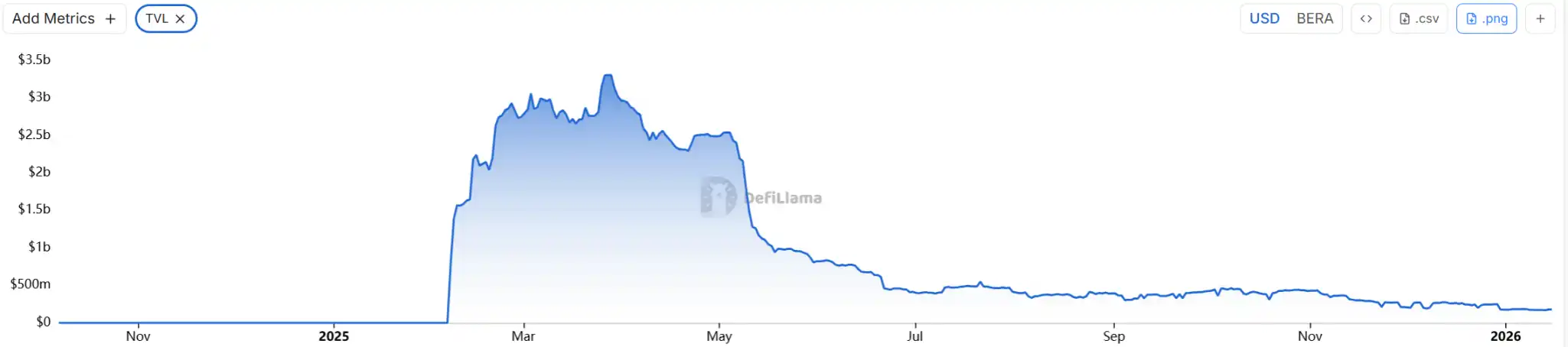
However, as the token price continued to decline, according to DefiLlama data, its TVL has dropped to $1.8 billion, with a 24-hour on-chain revenue of $84 and a total supply of on-chain stablecoins amounting to $153.5 million.
Retail Investors Last? Token Majority Owned by VCs, Facing Large Unlock in February
In its year-end update, the Berachain Foundation acknowledged that the overall impact of the cryptocurrency market's "retail investors first" strategy had been poor, leading to a reallocation of resources. This directly resulted in a series of issues. The first was layoffs and team restructuring. As part of a strategic adjustment, the Berachain Foundation laid off most of its retail investor marketing team, shifting focus to core development. Berachain's lead developer, Alberto, will also depart to start a Web2 company with former banking colleagues.
The foundation emphasized that the departures were amicable, but it undoubtedly weakened the project's core technical strength. Within the community, some developers have switched to other chains like Monad, further exacerbating talent drain.
Perhaps the "retail investors first" strategy promoted by the Berachain Foundation was never truly implemented.
While the project initially emphasized community-driven efforts, in practice, the incentive mechanisms failed to consistently attract users, leaving retail investors sidelined in token distribution.
Although the PoL mechanism was innovative, its complexity (such as a multi-token model including BERA and BGT) made users hesitant, leading to a sharp decline in network activity. In November 2025, the project suffered a network suspension due to a Balancer protocol vulnerability, fortunately without impacting user funds' security.
The BERA token price has plummeted from its $9 peak to the current $0.7, experiencing over a 10x drop in just a year. The former self-proclaimed king of public chain tokens has seen a significant decline.
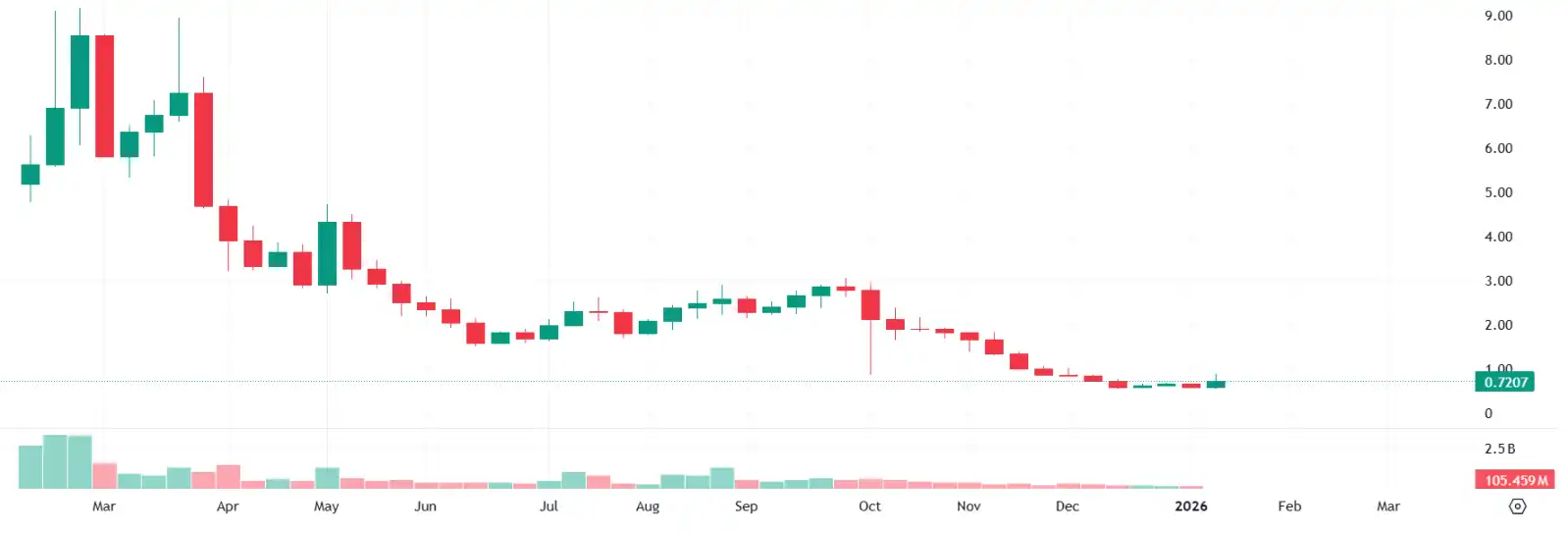
This collapse stemmed from a low circulation and high FDV model, causing an artificial price inflation followed by a rapid collapse, with these issues originating from Berachain's token distribution mechanism. Early contributors received 16.82% of the total supply, private sale investors got an astonishing 34.31% share, a very typical VC coin scenario. Furthermore, NFT holders could receive tens of millions of dollars in tokens, while testnet users were airdropped only $60, sparking a controversy over the wealth gap, with some loyal users being marginalized.
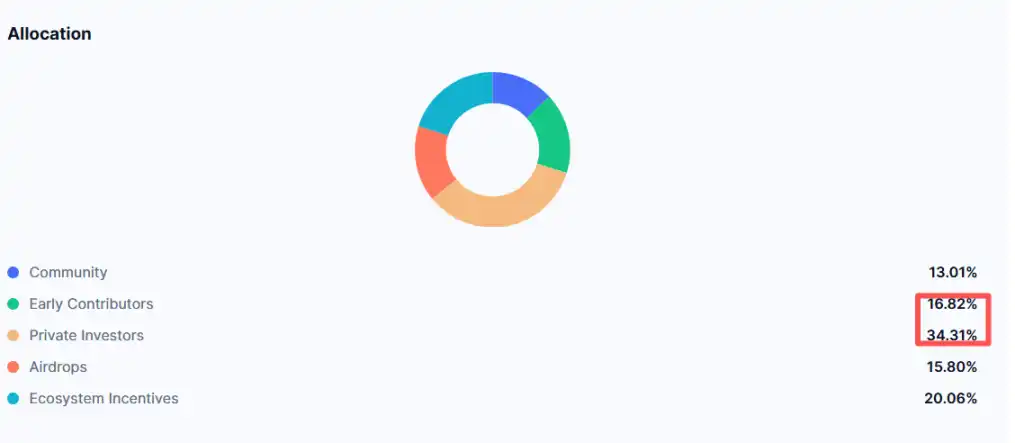
This goes against the "retail investors first" slogan, with the project fundamentally following a VC-driven low circulation high FDV model: early investors entered at $0.82, getting 10-15x returns, while retail investors suffered the collapse. Foundation founder Smokey admitted that if given another chance, they would not sell as many tokens to VCs and have already repurchased some to reduce dilution. In October 2025, the Berachain Foundation partnered with Greenlane Holdings to launch BeraStrategy, attempting to use BERA as a reserve asset but struggling to reverse the coin's price decline.
Furthermore, VCs like Brevan Howard's Nova Fund have a refund right, allowing them to request a full refund of $25 million before February 2026, further highlighting Berachain's bias toward VCs.
Community discontent is rising, with many users referring to it as the "ultimate L1 fraud."
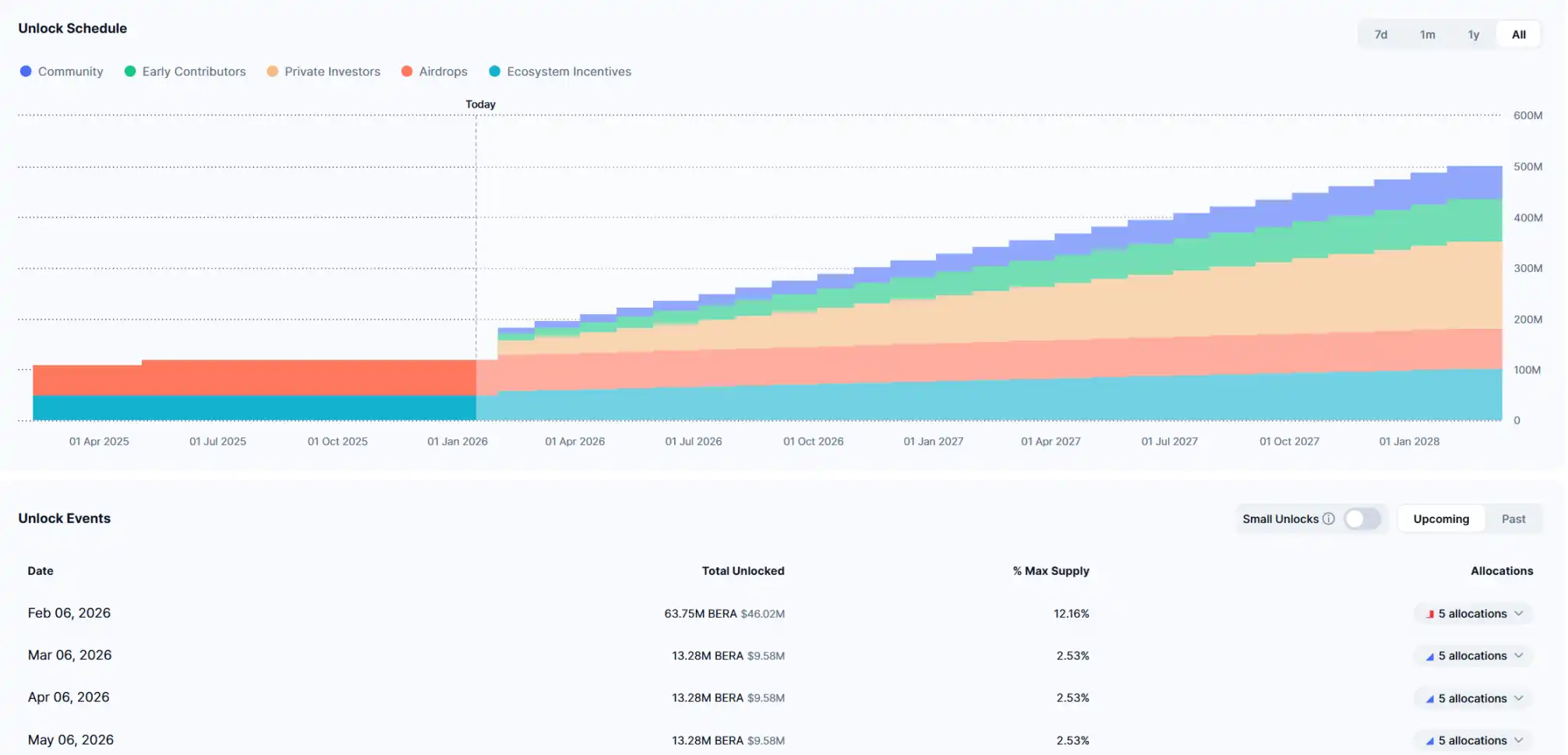
On February 6 this year, Berachain will unlock 63.75 million BERA, about 12.16% of the current circulation, including 28.58 million unlocked for private investors. Starting from March this year, the monthly unlocked share of BERA will be 2.53% of the total supply. Considering the current liquidity drought, continued large-scale unlocks this year may trigger significant selling pressure.
You may also like

Coinbase CEO Raises Red Flags Regarding US Crypto Bill
Key Takeaways Coinbase CEO Brian Armstrong voices opposition to the proposed Senate crypto bill, citing significant concerns. The…

Transforming the Cryptocurrency Landscape: A 2026 Outlook
Key Takeaways Cryptocurrency systems have seen expansive growth and technological innovation. The introduction of new regulations has reshaped…
New ChatGPT Forecasts for XRP, Ethereum, and Solana by 2026
Key Takeaways ChatGPT predicts a potential bull market for XRP, Ethereum, and Solana by 2026, supported by the…

An Insight into the Dynamics of Crypto Market Trends
Key Takeaways The article provides a comprehensive look at the latest developments in the cryptocurrency market. Insight is…

Senate Crypto Bill Markup Rescheduled to January 27 Amid Legislative Momentum
Key Takeaways The Senate Agriculture Committee has rescheduled the release of the legislative text for crypto market structure…

CLARITY Act Hearing Suddenly Postponed – Where Does the Disagreement Lie?

YO Protocol’s Automated Conversion Error Resolves $3.7 Million Shortfall
Key Takeaways YO Protocol, a decentralized finance platform, recently experienced an automated conversion operation error, resulting in a…

Sonic Labs Recovers and Redistributes Millions in Stolen Assets
Key Takeaways Sonic Labs has successfully recovered 5,829,196 stolen S tokens after a November 2025 exploit. These recovered…

Dolomite Surges with Prominent Integrations Boosting Market Value
Key Takeaways Dolomite (DOLO) has seen a significant 24.60% price increase in the last 24 hours, currently trading…

YO Protocol Suffers $3.7 Million Loss in Unfortunate Swap Incident
Key Takeaways YO Protocol experienced a $3.7 million loss due to a mistaken swap involving YoUSD. The incident…

Gate Alpha Launches 144th Points Airdrop: How to Claim GT Tokens
Key Takeaways Gate Alpha begins its 144th points airdrop with different tiers for users based on their Gate…

Base releases new roadmap, Solana integrates private swap feature, what are the updates in the mainstream ecosystem?

Which Protocols Drained the Crypto Market in 2025?

AI Crypto Trading in 2026: How AI Agents Use Stablecoins for Capital Management and Settlement
Learn how AI agents use stablecoins for crypto trading in 2026 — managing capital, settling transactions, and operating across exchanges and DeFi protocols.

US Senate Agriculture Committee Schedules January 27 for Crypto Market Structure Hearing
Key Takeaways The Senate Agriculture Committee will release its crypto market structure bill on January 21, followed by…
XRP Price Analysis and Outlook: Unpacking the Gravestone Doji
Key Takeaways The gravestone doji, a rare chart pattern, has recently appeared on XRP’s weekly chart, indicating potential…
Fogo Launch and Market Cap Potential: A Deeper Dive into Binance’s Prime Sale and High-Performance Blockchain
Key Takeaways The Fogo public chain launched its FOGO token sale on Binance Wallet’s Pre-TGE Prime Sale, set…

Cryptocurrency Trading and Market Trends
Key Takeaways Current cryptocurrency trading landscape offers diverse opportunities for investors. Technological innovations continue to drive market evolution,…
Coinbase CEO Raises Red Flags Regarding US Crypto Bill
Key Takeaways Coinbase CEO Brian Armstrong voices opposition to the proposed Senate crypto bill, citing significant concerns. The…
Transforming the Cryptocurrency Landscape: A 2026 Outlook
Key Takeaways Cryptocurrency systems have seen expansive growth and technological innovation. The introduction of new regulations has reshaped…
New ChatGPT Forecasts for XRP, Ethereum, and Solana by 2026
Key Takeaways ChatGPT predicts a potential bull market for XRP, Ethereum, and Solana by 2026, supported by the…
An Insight into the Dynamics of Crypto Market Trends
Key Takeaways The article provides a comprehensive look at the latest developments in the cryptocurrency market. Insight is…
Senate Crypto Bill Markup Rescheduled to January 27 Amid Legislative Momentum
Key Takeaways The Senate Agriculture Committee has rescheduled the release of the legislative text for crypto market structure…


 App
App