
- Buy Crypto
- Markets
- Futures
- Spot
- Copy Trade
 Earn
Earn- More
Bitcoin in the Shadow of a Trade War: How to Find a Balance Between Risk and Hedging?

Original Article Title: "Bitcoin in the Shadow of Trade Wars: How to Find a Balance Between Risk and Hedge?"
Original Article Author: Andrew Singer, Block Unicorn

A few years ago, many in the crypto community described Bitcoin as a "hedge" asset. Today, fewer people use that term to describe it.
A hedge asset retains or increases in value during times of economic stress. It can be government bonds, currencies like the US dollar, commodities like gold, or even blue-chip stocks.
The US-led global trade war and unsettling economic reports have led to stock market crashes, and Bitcoin has followed suit – something that should not happen to a "hedge" asset.
Bitcoin has also underperformed compared to gold. "Since January 1, the price of gold has risen +10%, while Bitcoin has fallen -10%," the Kobeissi Letter pointed out on March 3. "Cryptocurrency is no longer seen as a hedge tool." (Bitcoin fell even more last week.)
But some market observers say this is not entirely unexpected.
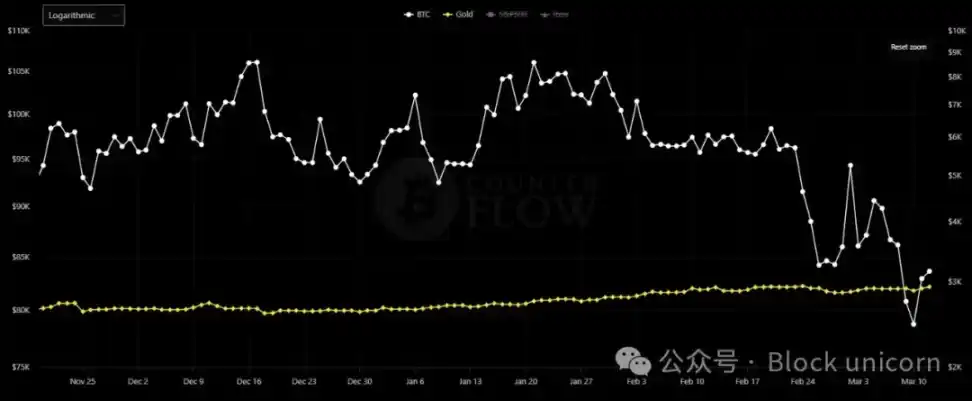
Bitcoin (white) and Gold (yellow) price chart from December 1 to March 13. Source: Bitcoin Counter Flow
Was Bitcoin Ever a Hedge Asset?
"I have never considered Bitcoin a 'hedge asset,'" Paul Schatz, Founder and President of Heritage Capital, told us. "The volatility of Bitcoin is too great to fit into the hedge category, although I do believe investors can and should have an overall allocation to this asset class."
"To me, Bitcoin is still a speculative tool, not a hedge asset," Jochen Stanz, Chief Market Analyst at CMC Markets (Germany), told us. "Hedge investments like gold have intrinsic value that will never be zero. Bitcoin could drop 80% in a major correction. I don't think gold will do that."
"Cryptocurrencies, including Bitcoin, have never been a hedge tool in my opinion," Buvaneshwaran Venugopal, Assistant Professor of Finance at the University of Central Florida, told us.
However, things are not always as clear-cut as they may initially seem, especially when it comes to cryptocurrency.
People may think of different types of safe-haven assets: one for geopolitical events such as war, pandemics, and economic downturns, and another for severe financial events such as bank failures or a weakening US dollar.
The perception of Bitcoin may be shifting. By 2024, with the issuance of exchange-traded funds (ETFs) from major asset management companies like BlackRock and Fidelity, it is being included, broadening its ownership base but potentially also altering its 'narrative'.
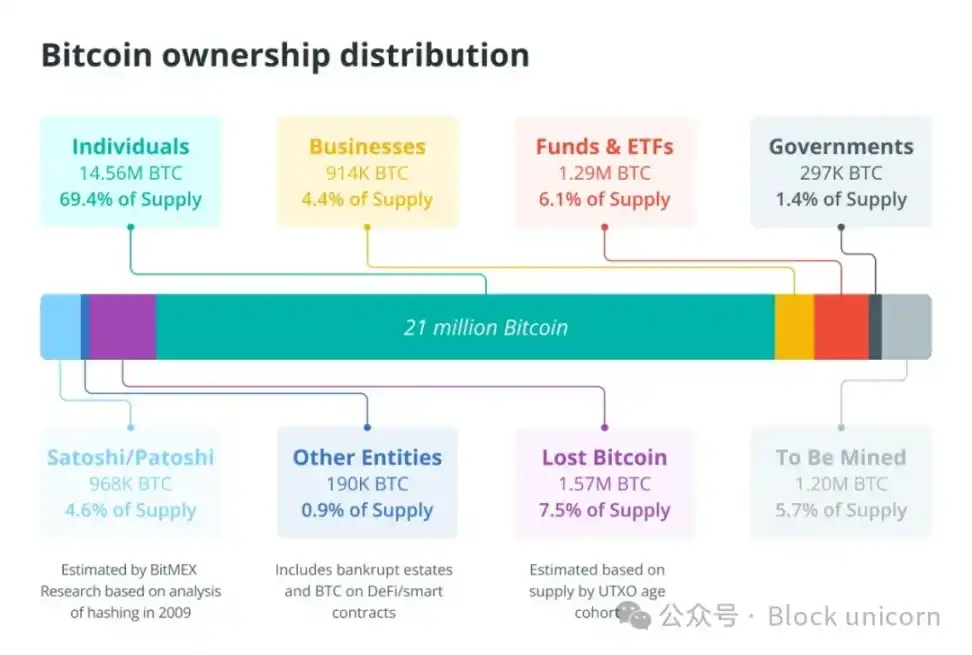
Now, it is more widely seen as a speculative or 'risk-on' asset, akin to tech stocks.
"Bitcoin and the entire cryptocurrency space have become highly correlated with risk assets and are usually inversely correlated to safe-haven assets like gold," Adam Kobeissi, editor of the Kobeissi Letter, told us.
He further noted that with "more institutional involvement and leverage," there is significant uncertainty about Bitcoin's future, and the narrative has shifted from Bitcoin being seen as 'digital gold' to a more speculative asset.
People might think that the acceptance by traditional financial giants like BlackRock and Fidelity would make Bitcoin's future more secure, enhancing its safe-haven narrative - but according to Venugopal, this is not the case:
"The entry of large corporations into Bitcoin does not make it safer. In fact, it means that Bitcoin is becoming more like any other asset institutional investors tend to invest in."
Venugopal continued to say that it would be more influenced by the regular trading and drawdown strategies used by institutional investors. "If there is anything different, Bitcoin is now more correlated with risk assets in the market."
Bitcoin's Dual Nature
Few would argue against Bitcoin and other cryptocurrencies still being subject to significant price swings, recently driven by increased retail adoption of cryptocurrency, particularly fueled by the meme coin craze, which, as Kobeissi pointed out, is one of the largest cryptocurrency onboarding events in history. But perhaps that is the wrong focus.
"Safe-haven assets are always long-term assets, which means short-term volatility is not an intrinsic feature," Noelle Acheson, author of the Crypto is Macro Now newsletter, told us.
The biggest question is whether Bitcoin can maintain its value against fiat currency in the long term, and it has already been able to do so. "Its digital proof of work is proven—it has outperformed gold and U.S. stocks in almost any four-year time frame," Acheson said, adding:
“Bitcoin has always had two key narratives: it is a short-term risk asset, sensitive to liquidity expectations and overall sentiment. It is also a long-term store of value. It can be both, as we are seeing.”
Another possibility is that Bitcoin may be a hedge asset for certain events but not for others.
Gold can serve as a hedge against geopolitical issues (such as trade wars), and both Bitcoin and gold can serve as hedges against inflation. "Therefore, both are useful hedge assets in a portfolio," Kendrick added.
Others, including Ark Investment's Cathie Wood, also agreed that Bitcoin acted as a hedge asset during the run on SVB and Signature banks in March 2023. According to CoinGecko data, when SVB collapsed on March 10, 2023, Bitcoin was priced at around $20,200. A week later, it was close to $27,400, up about 35%.
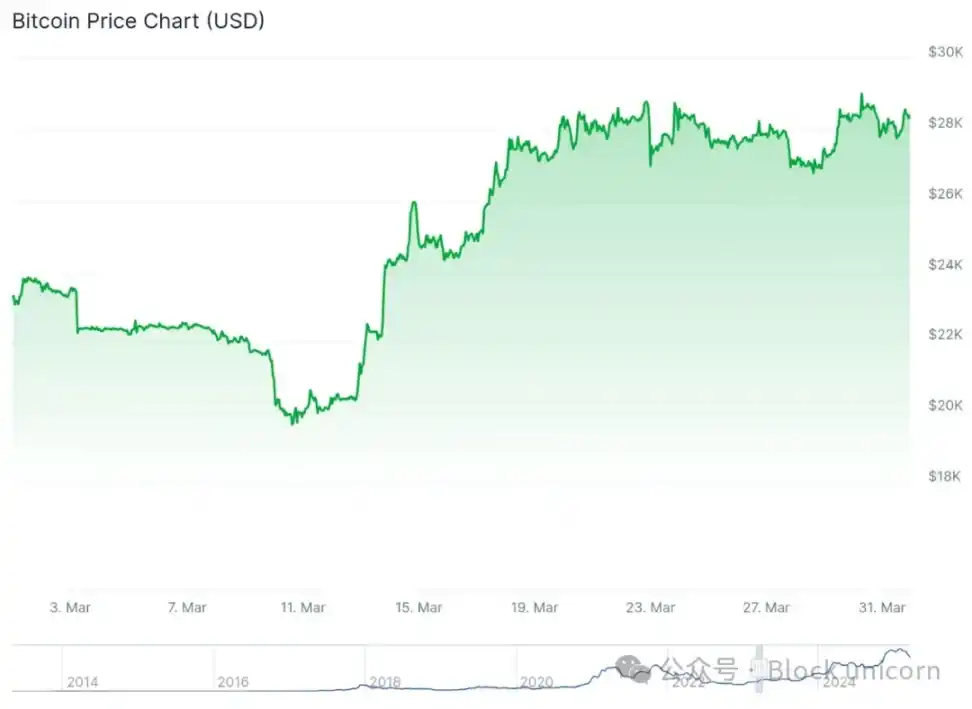
Bitcoin price fell on March 10 and rebounded a week later. Source: CoinGecko
Schatz does not believe that Bitcoin is a tool to hedge against inflation. The events of 2022, when FTX and other crypto companies collapsed, marking the beginning of the crypto winter, "severely challenged this argument."
Perhaps it is a tool to hedge against the U.S. dollar and treasuries? "This is possible, but these scenarios are quite bleak and hard to imagine," Schatz added.
Don't Overreact
Kobeissi agrees that short-term volatility in asset classes "is usually the least correlated over long-term timeframes." Despite some recent pullback, many of Bitcoin's fundamentals remain positive: a crypto-friendly U.S. government, announcements of U.S. Bitcoin reserves, and the surge in cryptocurrency adoption.
The biggest issue facing market participants is: "What is the next major catalyst for upward momentum?" Kobeissi told us. "This is the reason for market pullbacks and consolidation: looking for the next major catalyst."
“Since macro investors started viewing Bitcoin as a high-volatility, liquidity-sensitive risk asset, it has behaved like a risk asset,” Acheson added. Furthermore, “It’s almost always short-term traders setting the final price, and if they’re in the process of unwinding risk assets, we’ll see weakness in Bitcoin.”
The market overall is struggling. “The reappearance of the inflation specter and a severe economic slowdown have greatly impacted expectations,” which has also affected Bitcoin’s price. Acheson further noted:
“Given this backdrop, and Bitcoin’s dual nature as both a risk asset and a long-term hedge, I’m surprised it didn’t drop further.”
Venugopal stated that Bitcoin hasn’t been a short-term hedge or safe haven asset since 2017. As for the long-standing argument of Bitcoin being digital gold due to its 21 million supply cap, this only holds true “if a majority of investors collectively expect Bitcoin to appreciate over time,” and “this may or may not be the case.”
You may also like

Delphi Digital's Top 10 Predictions for 2026: Perp DEX Eats Wall Street, AI Agents Usher in Era of Autonomous Trading

X Pulls the Plug — the Era of “Talking Your Way to Traffic” Comes to an End.
Other people’s traffic will always belong to them—not to you.

First Zero, First Revival: A Real Story from the WEEX Global AI Trading Hackathon Preliminary Round
WEEX Labs, the innovation arm of the global crypto exchange WEEX, launched the preliminary round of its flagship AI trading hackathon, AI Wars: WEEX Alpha Awakens, on January 12, 2026. Backed by world-class sponsors including AWS, the prize pool has reached $1.88 million, with a Bentley Bentayga S awaiting the champion in Dubai. Already, 788 elite teams worldwide are battling for a spot in the finals. This is more than a hackathon — it is a real-market stress test for AI trading. Registration remains open until January 18. If you want your AI to face real volatility, this is your moment.
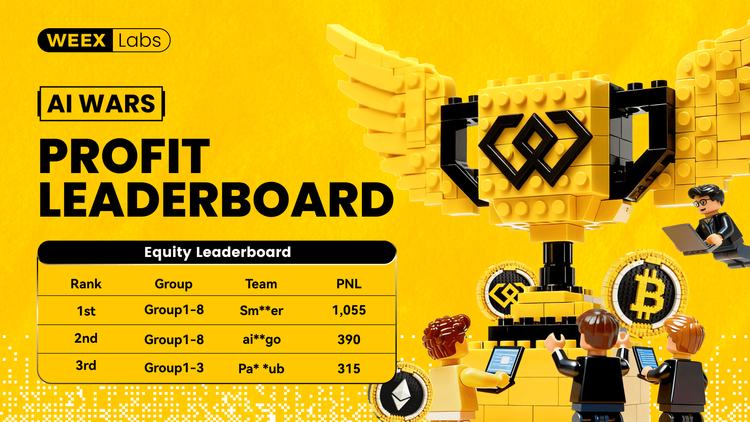
AI Wars: WEEX Alpha Awakens – Insights, Top Strategies, and Real-Market Execution Takeaways
WEEX Labs has officially launched the preliminary round of its global AI trading hackathon, AI Wars: WEEX Alpha Awakens, bringing together hundreds of elite teams to compete in real-market conditions. With a record-breaking $1.88 million prize pool and backing from top-tier sponsors like AWS, the event has quickly become a global proving ground for AI-powered trading strategies. As competition intensifies and standout teams emerge on the leaderboard, the hackathon not only showcases cutting-edge AI execution and risk management, but also offers valuable insights and inspiration for traders looking to build or refine their own AI-driven systems.

WEEX P2P now supports Polish zloty (PLN)—new users and merchant rewards
To make crypto deposits easier, WEEX has officially launched its P2P trading platform and continues to expand fiat support. We're excited to announce that the Polish Zloty (PLN) is now available on WEEX P2P!

Layoffs of 30%, But Spending $250 Million to Buy a Company - What Is Polygon Thinking?

Sentient Reveals Tokenomics, How Will the Market Price It?

AI in the Crypto Market: How Artificial Intelligence is Changing Trading Strategies
This article explores how AI contributes to these movements and share practical strategies to help you navigate an AI-powered crypto market.
Yen Weakness Nears Inflation Red Line: Bank of Japan May Be Forced to Hike Early

Cross-chain Collaboration: Tom Lee Invests $200 Million, Joins Forces with Global Top Streamer Mr. Beast

Interactive Brokers Integrates USDC, US Bank Questions Stablecoin, What's the Overseas Buzz?

Trump Waves Hand, Stirs Venezuela's Game Hurricane
The Genius Stopping Law: Why Did Coinbase Backpedal at the Eleventh Hour?

Fact Check: How Much Money Did the University of Chicago Lose in its Crypto Investment?

Rumor has it that Coinbase is set to acquire Farcaster, still an Acquihire.

VanEck Q1 Market Outlook: Long-Term Bullish on Cryptocurrency, Strong Gold Demand
In the span of a week, what does Twitter's continuous updating on the Coin Circle Plate reform and Musk's intentions mean?

By seizing the first five seconds of Gold Dog, "Dry Sitting P Junior" earns $430,000 in 30 days.
Delphi Digital's Top 10 Predictions for 2026: Perp DEX Eats Wall Street, AI Agents Usher in Era of Autonomous Trading
X Pulls the Plug — the Era of “Talking Your Way to Traffic” Comes to an End.
Other people’s traffic will always belong to them—not to you.
First Zero, First Revival: A Real Story from the WEEX Global AI Trading Hackathon Preliminary Round
WEEX Labs, the innovation arm of the global crypto exchange WEEX, launched the preliminary round of its flagship AI trading hackathon, AI Wars: WEEX Alpha Awakens, on January 12, 2026. Backed by world-class sponsors including AWS, the prize pool has reached $1.88 million, with a Bentley Bentayga S awaiting the champion in Dubai. Already, 788 elite teams worldwide are battling for a spot in the finals. This is more than a hackathon — it is a real-market stress test for AI trading. Registration remains open until January 18. If you want your AI to face real volatility, this is your moment.
AI Wars: WEEX Alpha Awakens – Insights, Top Strategies, and Real-Market Execution Takeaways
WEEX Labs has officially launched the preliminary round of its global AI trading hackathon, AI Wars: WEEX Alpha Awakens, bringing together hundreds of elite teams to compete in real-market conditions. With a record-breaking $1.88 million prize pool and backing from top-tier sponsors like AWS, the event has quickly become a global proving ground for AI-powered trading strategies. As competition intensifies and standout teams emerge on the leaderboard, the hackathon not only showcases cutting-edge AI execution and risk management, but also offers valuable insights and inspiration for traders looking to build or refine their own AI-driven systems.
WEEX P2P now supports Polish zloty (PLN)—new users and merchant rewards
To make crypto deposits easier, WEEX has officially launched its P2P trading platform and continues to expand fiat support. We're excited to announce that the Polish Zloty (PLN) is now available on WEEX P2P!


 App
App